
Marketing-savvy small business owners often face frustrating challenges with email campaigns: low open rates, increasing unsubscribes, and confusing compliance rules. Effective email marketing in 2026 demands clean subscriber lists, smart personalization, automation workflows, mobile-first design, and strict privacy adherence. This guide provides a proven, step-by-step framework to transform your email strategy into a powerful engine for engagement and revenue growth.
Table of Contents
- Prerequisites: What You Need Before Starting Email Marketing
- Building and Maintaining Your Email List
- Creating Personalized and Mobile-Optimized Email Content
- Automation and Testing for Campaign Optimization
- Common Mistakes and Troubleshooting Email Campaigns
- Expected Results and Measuring Success
- Boost Your Marketing Success With Lind Creative
- Frequently Asked Questions
Key takeaways
| Point | Details |
|---|---|
| Prerequisites matter | Set up email authentication, double opt-in, and privacy compliance before launching campaigns. |
| Build quality lists | Grow segmented, consented subscriber bases using organic methods and regular list cleaning. |
| Personalize for mobile | Create dynamic, mobile-optimized emails with clear calls-to-action that drive conversions. |
| Automate and test | Use triggered workflows and A/B testing to optimize performance and save time. |
| Monitor and refine | Track engagement metrics and clean inactive subscribers to sustain high ROI. |
Prerequisites: what you need before starting email marketing
Before sending your first campaign, establish critical technical and legal foundations. Proper email authentication using SPF, DKIM, and DMARC protocols correlates strongly with improved inbox placement and sender reputation. These protocols verify your identity to email providers, preventing your messages from landing in spam folders.
Double opt-in confirmation builds a high-quality, consented subscriber base. When users confirm their signup through a verification email, you eliminate invalid addresses and reduce spam complaints. This approach aligns with the role of email marketing in creating genuine customer relationships.
Compliance with US email privacy laws protects your business and builds subscriber trust. Understand CAN-SPAM requirements, including visible unsubscribe links and accurate sender information. Choose an email marketing platform offering automation features, segmentation tools, and mobile-responsive templates that simplify campaign management.
Pro Tip: Most modern email platforms include built-in compliance features like automatic unsubscribe handling and privacy policy generators, saving you legal headaches and administrative time.
“Authentication and consent form the bedrock of successful email marketing. Without these foundations, even brilliant content struggles to reach inboxes.”
With these foundational prerequisites in place, we move on to how you can build and maintain a healthy, engaged email list.
Building and maintaining your email list
Growing an organic subscriber base requires strategic placement of signup opportunities across your digital presence. Use pop-ups on high-traffic pages, offer valuable lead magnets like guides or discount codes, and promote signups through social media channels. Every subscriber should arrive through transparent consent processes.
Segmentation transforms generic broadcasts into targeted conversations. Divide your list based on purchase history, browsing behavior, geographic location, and engagement patterns. This customer segmentation strategy increases relevance and response rates dramatically.
List hygiene maintains deliverability and engagement quality. Remove subscribers who haven’t opened emails in 6 to 12 months, as inactive contacts hurt your sender reputation. Double opt-in confirmation prevents invalid or mistyped addresses from cluttering your database.
Pro Tip: Track individual subscriber activity levels to identify who needs re-engagement campaigns versus permanent removal, maximizing your list’s revenue potential.
Regular list maintenance also reduces costs, as most platforms charge based on subscriber count. Focus on quality over quantity, prioritizing engaged contacts who actually want your content.
After establishing and growing your list, crafting personalized and mobile-optimized email content becomes critical for engagement.
Creating personalized and mobile-optimized email content
Mobile devices account for over 60% of email opens in 2026, making mobile-first design non-negotiable. Use single-column layouts that render cleanly on small screens, choose fonts sized at least 14 pixels, and design buttons large enough for easy tapping. The impact of responsive design extends directly to email performance.

Dynamic content blocks automatically adapt messaging based on subscriber data. Show different product recommendations to customers based on past purchases, adjust content by location, or personalize greetings using merge tags. These touches make recipients feel valued rather than mass-marketed.
Subject lines and preheaders deserve intense focus. Keep subject lines under 50 characters, use conversational language, and include personalization tokens like first names when appropriate. Your preheader text should complement the subject line, not repeat it.
Every email needs one clear call-to-action. Multiple competing CTAs confuse readers and reduce conversion rates. Whether you want clicks to a product page, event registration, or content download, make that singular goal obvious and compelling.
Brand consistency across emails reinforces recognition and trust. Align your email design with digital branding essentials and follow mobile-friendly design tips to maintain professional cohesion.
With powerful content ready, the next step focuses on automating your campaigns and optimizing performance through testing.
Automation and testing for campaign optimization
Triggered email sequences respond automatically to subscriber actions, delivering timely, relevant messages without manual intervention. Set up workflows for:
- Welcome series for new subscribers introducing your brand and offerings
- Abandoned cart reminders nudging customers to complete purchases
- Post-purchase follow-ups requesting reviews or suggesting complementary products
- Re-engagement campaigns targeting inactive subscribers before removal
- Birthday or anniversary emails celebrating customer milestones
AI-powered optimization tools analyze subscriber behavior patterns to determine ideal send times for individual recipients. These systems also predict content preferences, improving relevance and engagement rates automatically.
A/B testing removes guesswork from campaign decisions. Test subject line variations, different CTA button colors, email length, image placement, and sending times. Run tests on statistically significant sample sizes before rolling winners to your full list.
Monitor four critical metrics consistently: open rates indicating subject line effectiveness, click-through rates showing content relevance, unsubscribe rates revealing frequency or targeting issues, and complaint rates signaling serious content or permission problems. These metrics guide your digital marketing workflow improvements and help you understand ROI in marketing.
Pro Tip: Automate routine nurture sequences and follow-up emails to maintain consistent touchpoints while freeing your time for strategic campaign planning and creative development.
Once optimized, knowing how to avoid common pitfalls and troubleshoot effectively will sustain your email marketing success.
Common mistakes and troubleshooting email campaigns
Purchasing email lists or adding non-consented contacts destroys sender reputation and violates privacy laws. Build organic lists exclusively through double opt-in processes, even though growth feels slower initially. Quality always beats quantity in email marketing.
Authentication errors send legitimate emails to spam folders. Monitor your SPF, DKIM, and DMARC settings regularly, fixing configuration issues immediately. Most email platforms provide dashboard warnings when authentication fails.
Excessive sending frequency annoys subscribers and triggers unsubscribes. Generic, irrelevant content produces the same result. Segment your list carefully and adjust frequency based on engagement patterns rather than arbitrary schedules.
List hygiene prevents deliverability decay. Remove inactive subscribers who haven’t engaged in 6 to 12 months, as they drag down your sender score and waste resources. The inbound marketing benefits include naturally attracting engaged subscribers who want your content.
Pro Tip: Watch complaint and unsubscribe rates as early warning indicators. Sudden spikes signal content, targeting, or frequency problems requiring immediate investigation and adjustment.
“Email marketing success comes from respecting subscriber preferences and delivering consistent value. Technical excellence means nothing if your content doesn’t resonate.”
Having addressed common challenges, you’ll want to understand what results to expect and how to measure your email marketing success.
Expected results and measuring success
Realistic expectations prevent premature campaign abandonment. Expect 3 to 6 months of consistent execution before seeing measurable engagement improvements and sales growth. Email marketing rewards patience and persistence, not overnight wins.
Industry benchmarks help you evaluate performance objectively. Target open rates above 20% to 25% for most business categories, click-through rates exceeding 5%, unsubscribe rates below 0.5%, and complaint rates under 0.1%. These numbers vary by industry and audience maturity.
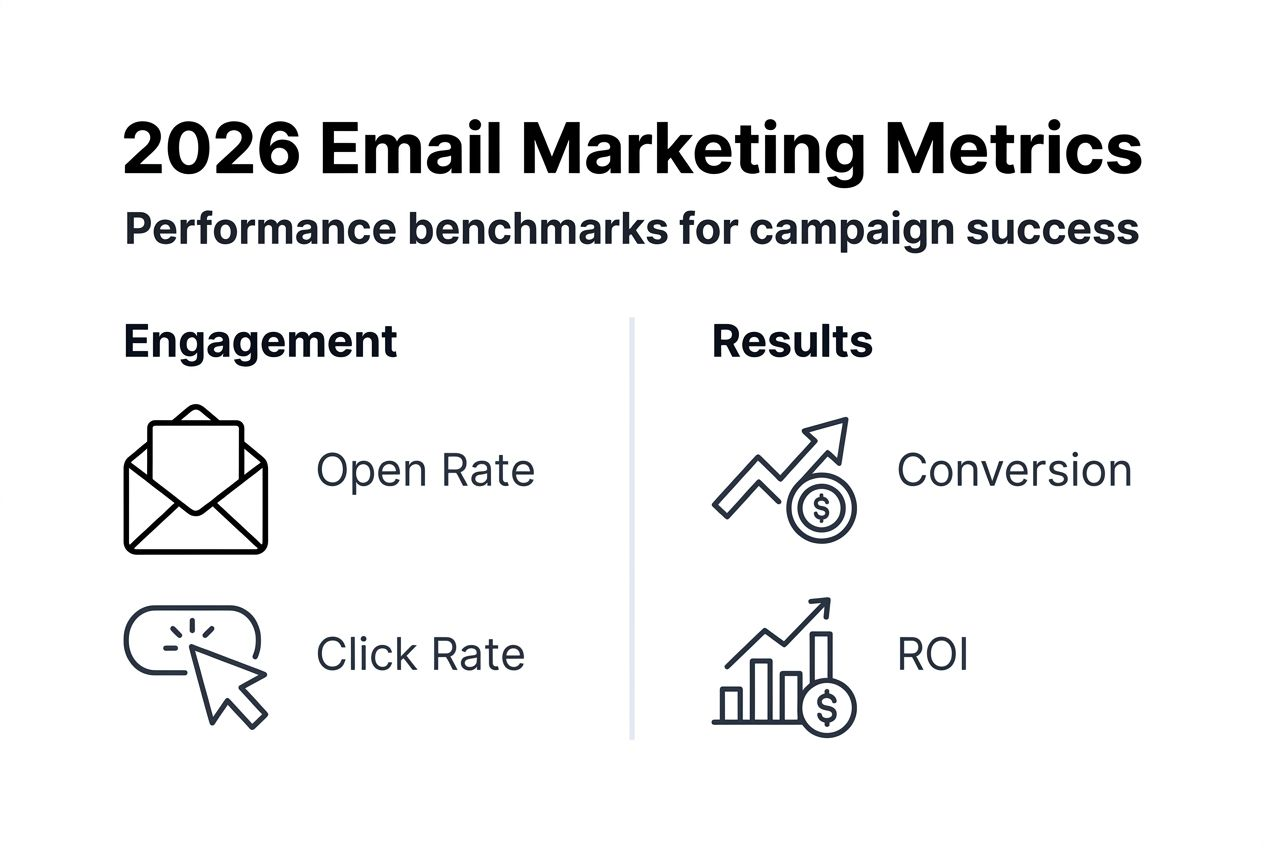
Email marketing delivers exceptional ROI potential. Small businesses typically see approximately $38 return for every $1 invested in email campaigns, making it one of the most cost-effective marketing ROI benchmarks available. This performance scales as your list and automation sophistication grow.
| Metric | Target Range | What It Indicates |
|---|---|---|
| Open Rate | 20% to 30% | Subject line effectiveness and sender reputation |
| Click-Through Rate | 5% to 10% | Content relevance and CTA strength |
| Unsubscribe Rate | Below 0.5% | List quality and sending frequency appropriateness |
| Complaint Rate | Below 0.1% | Permission quality and content alignment |
| Conversion Rate | 2% to 5% | Overall campaign effectiveness and landing page performance |
Track trends over time rather than obsessing over individual campaign numbers. Consistent improvement matters more than single-campaign perfection. Use unsubscribe and complaint rates as quality signals, adjusting segmentation and content when these metrics rise.
Understand that scalable marketing ROI and inbound marketing ROI compound as your email program matures, making early investment worthwhile even when immediate returns seem modest.
With a clear understanding of expected outcomes, the following section connects these insights to Lind Creative’s solutions for business growth.
Boost your marketing success with Lind Creative
Maximizing email marketing ROI requires integrating campaigns into a comprehensive digital ecosystem. Lind Creative’s website redesign guide and digital marketing workflow solutions ensure your emails drive traffic to optimized landing pages that convert.
Our team builds high-converting websites, powerful brand identities, and complete marketing automation systems tailored to small business needs. Whether you need strategic guidance on website design essentials or full-service implementation, we deliver measurable results that grow your business in 2026 and beyond.
To round out your email marketing mastery, review commonly asked questions and practical answers in the FAQ below.
Frequently asked questions
How do I ensure my email list is compliant with privacy laws?
Use double opt-in forms requiring subscribers to confirm their signup through verification emails. Include transparent opt-in disclosures explaining exactly what subscribers will receive. Regularly update your privacy policy to reflect current practices and follow US email privacy regulations like CAN-SPAM, including visible unsubscribe links in every message.
What is the ideal frequency for sending marketing emails?
Send emails consistently but avoid excessive frequency; typically once per week or less works best for most small businesses. Focus on relevance and segmentation rather than arbitrary schedules. Monitor unsubscribe rates and engagement metrics to find your audience’s tolerance level, adjusting frequency to maintain subscriber interest and reduce churn.
How does AI improve email personalization?
AI enables dynamic content adaptation based on individual subscriber behavior, purchase history, and engagement patterns. It optimizes send times by analyzing when each recipient typically opens emails, increasing visibility. AI also predicts customer interests and recommends products or content likely to resonate, boosting both engagement rates and conversion performance.
How long until I see results from email marketing campaigns?
Expect measurable improvements in open rates and click-through performance within 3 to 6 months of consistent, quality campaign execution. Revenue impact often takes longer as subscribers move through nurture sequences. Email marketing ROI compounds over time as your list grows, automation workflows mature, and you refine targeting based on performance data.
Recommended
- Build a High-Converting Digital Marketing Workflow – Lind Creative
- Role of Email Marketing in Luxury Hospitality – Lind Creative
- Build a Results-Driven Digital Marketing Strategy 2025 – Lind Creative
- How to Optimize Website Conversions for eCommerce Success – Lind Creative