
Every American eCommerce brand faces the challenge of keeping pace with shifting consumer expectations and technology. Growth marketing goes beyond standard advertising, combining continuous experimentation and deep analytics to drive measurable business expansion. Brands that prioritize digital transformation and personalized journeys find greater success in acquisition and retention. This article explains what makes growth marketing distinct, why it matters for sustained brand performance, and how strategic automation can shape the future of your customer pipeline.
Table of Contents
- What Growth Marketing Means for Brands
- Core Channels and Tactics Explained
- Automating Lead Capture and Nurturing
- Measuring Success and ROI Effectively
- Pitfalls to Avoid in Growth Marketing
Key Takeaways
| Point | Details |
|---|---|
| Focus on Data-Driven Techniques | Growth marketing emphasizes data analytics and continuous experimentation to drive business expansion, unlike traditional marketing approaches focused on broad awareness. |
| Embrace Multi-Channel Engagement | A successful growth marketing strategy integrates various digital channels, each targeting unique customer behaviors for optimal customer acquisition and retention. |
| Automate Lead Nurturing | Implementing automation in lead nurturing processes enhances engagement and conversion while minimizing manual efforts through targeted and triggered communications. |
| Measure Performance Effectively | Utilizing comprehensive analytics frameworks to measure key performance metrics enables brands to connect marketing efforts directly to revenue generation and inform strategic adjustments. |
What Growth Marketing Means for Brands
Growth marketing represents a strategic evolution beyond traditional marketing approaches, focusing on data-driven techniques that systematically drive business expansion. Unlike conventional marketing methods that prioritize broad awareness, growth marketing centers on precise, measurable strategies designed to accelerate brand performance and customer acquisition.
The core principles of growth marketing are fundamentally different from traditional marketing paradigms. Key characteristics include:
- Continuous experimentation and optimization
- Deep data analytics and customer behavior insights
- Integrated cross-channel marketing strategies
- Rapid iteration based on measurable outcomes
- Holistic focus on customer lifetime value
Brands adopting growth marketing techniques recognize that modern consumers demand personalized, responsive interactions. Digital transformation has dramatically reshaped consumer expectations, requiring businesses to develop agile, technology-enabled marketing approaches that can quickly adapt to changing market dynamics.
Here is a comparison of traditional marketing vs. growth marketing approaches for brands:
| Aspect | Traditional Marketing | Growth Marketing |
|---|---|---|
| Main Focus | Broad awareness | Business expansion |
| Strategy Style | Fixed, campaign-based | Iterative and data-driven |
| Personalization | Minimal | High, tailored journeys |
| Measurement | Basic metrics | Deep analytics |
| Response to Change | Slow to adapt | Rapid, agile adjustments |
Customer acquisition strategies now demand sophisticated, multi-dimensional approaches that go far beyond simple advertising. Growth marketers leverage advanced analytics, machine learning, and targeted engagement tactics to create more efficient, cost-effective customer journeys.

Pro tip: Implement a robust analytics framework that tracks customer interactions across multiple touchpoints to develop more nuanced, responsive marketing strategies.
Core Channels and Tactics Explained
Growth marketing for eCommerce demands a strategic approach to digital marketing channels and engagement tactics. These channels represent the critical touchpoints where brands can effectively connect with potential customers, drive conversions, and build long-term relationships.
The primary digital marketing channels for eCommerce growth include:
- Ecommerce Website: The central hub for brand storytelling and conversion
- Social Media Platforms: Engagement and targeted advertising channels
- Email Marketing: Personalized communication and retention strategy
- Marketplace Platforms: Expanded reach and alternative sales channels
- Search Engine Marketing: Visibility and targeted customer acquisition
Successful growth marketing requires a multi-channel approach that seamlessly integrates these platforms. Each channel serves a unique purpose in the customer acquisition and retention funnel, demanding tailored strategies that leverage platform-specific strengths and audience behaviors.
This table summarizes the main marketing channels and their unique roles in eCommerce growth:
| Channel | Primary Role | Key Benefit |
|---|---|---|
| Ecommerce Website | Conversion hub | Drives sales directly |
| Social Media | Audience engagement | Enables targeted ads |
| Email Marketing | Customer retention | Nurtures repeat buyers |
| Marketplaces | Additional reach | Access to new audiences |
| SEM | Customer acquisition | Boosts online visibility |
Advanced tactics within these channels involve sophisticated techniques like retargeting, personalization, and data-driven optimization. Mobile optimization has become particularly critical, with increasing consumer preferences for seamless smartphone shopping experiences. Brands must develop responsive design, fast-loading interfaces, and intuitive mobile purchase pathways to effectively capture and convert digital audiences.
Pro tip: Implement cross-channel tracking and attribution models to understand how different marketing channels interact and contribute to overall customer conversion strategies.
Automating Lead Capture and Nurturing
Growth marketing hinges on the ability to effectively automate lead nurturing processes. Automation transforms how businesses engage potential customers, creating systematic approaches that maximize conversion potential while minimizing manual intervention.
Key components of an effective lead nurturing automation strategy include:
- Audience Segmentation: Categorizing leads based on behavior, demographics, and engagement
- Personalized Workflows: Creating targeted communication paths
- Triggered Communications: Automated responses based on specific user actions
- Lead Scoring: Quantifying potential customer value and readiness
- Multi-channel Engagement: Coordinating interactions across different platforms
Successful automation requires sophisticated marketing technology ecosystems that integrate customer data, behavioral tracking, and intelligent communication protocols. These systems enable businesses to deliver precisely timed, contextually relevant content that moves potential customers through the purchasing funnel with minimal manual intervention.
Advanced marketing automation tools facilitate scalable lead nurturing strategies that adapt to individual customer journeys. By leveraging machine learning and predictive analytics, brands can create dynamic engagement models that respond in real-time to changing customer behaviors and preferences.
Pro tip: Implement a robust customer data platform that integrates multiple touchpoints to create a unified view of lead interactions and behaviors.
Measuring Success and ROI Effectively
Growth marketing demands a sophisticated approach to measuring marketing effectiveness and performance. Understanding true business impact requires more than superficial metrics, demanding comprehensive analytics that reveal deep insights into customer behavior and campaign performance.
Key performance metrics for growth marketing include:
- Customer Acquisition Cost (CAC): Total expense of acquiring a new customer
- Customer Lifetime Value (CLTV): Predicted total revenue from a customer relationship
- Conversion Rates: Percentage of leads transforming into paying customers
- Retention Rates: Percentage of customers who continue doing business
- Return on Marketing Investment (ROMI): Direct revenue generated from marketing efforts
Strategic analytics enable businesses to move beyond vanity metrics, creating data-driven frameworks that connect marketing activities directly to revenue generation. These advanced measurement approaches help brands understand which strategies generate meaningful business growth and which require recalibration.
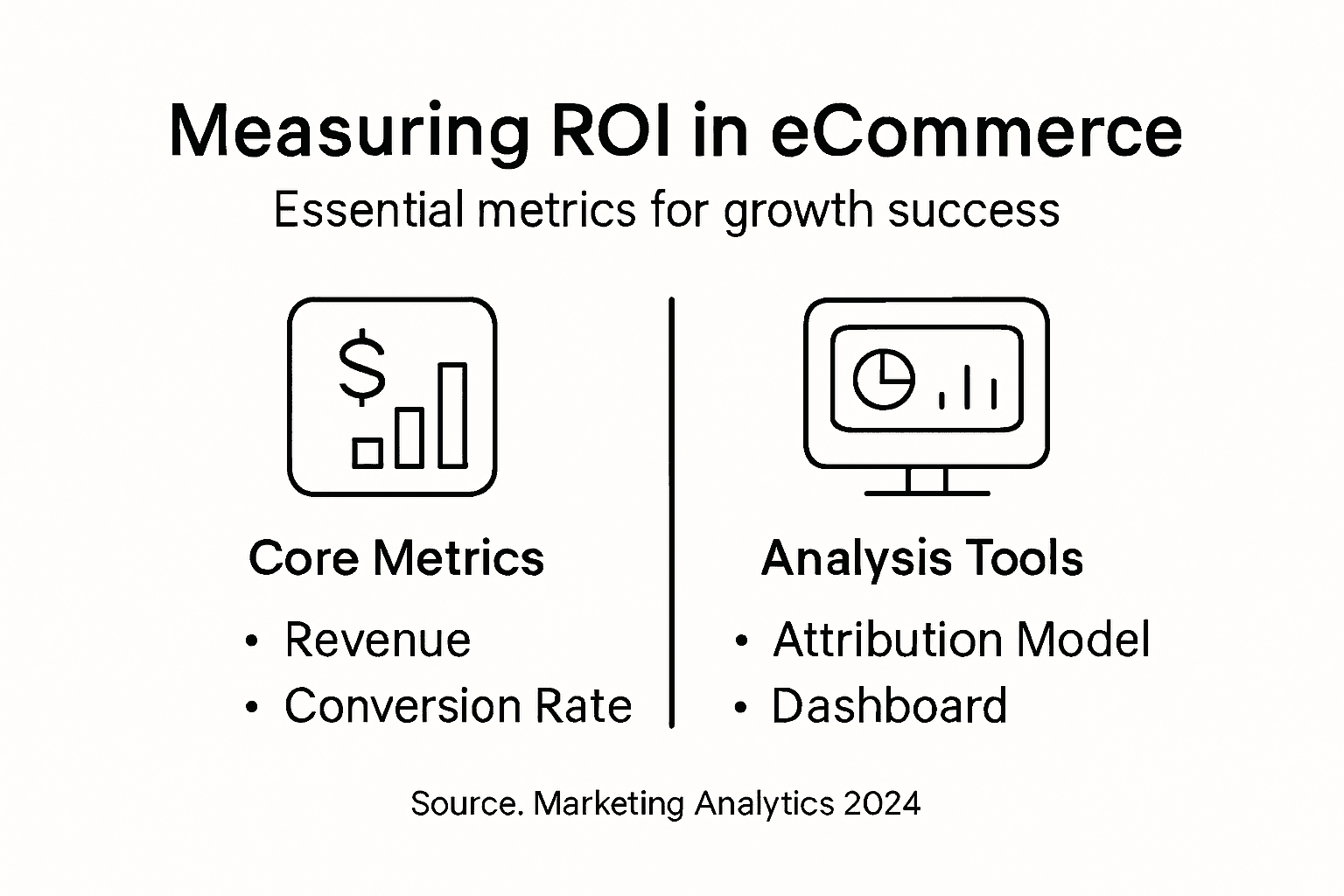
Companies can optimize growth marketing strategies by implementing robust attribution models that track customer interactions across multiple touchpoints. By leveraging sophisticated analytics tools, marketers can develop nuanced understanding of how different channels and tactics contribute to overall business performance.
Pro tip: Develop a comprehensive dashboard that integrates multiple data sources to provide a holistic view of marketing performance and customer journey dynamics.
Pitfalls to Avoid in Growth Marketing
Growth marketing success depends on avoiding common strategic mistakes. Recognizing and mitigating potential pitfalls can transform marketing efforts from ineffective campaigns to strategic, high-performance initiatives that drive meaningful business growth.
Critical pitfalls in growth marketing include:
- Poor Audience Research: Creating campaigns without deep customer understanding
- Weak Performance Tracking: Failing to measure and analyze campaign effectiveness
- Inconsistent Strategies: Lack of cohesive, data-driven marketing approaches
- Customer Retention Neglect: Focusing exclusively on acquisition over long-term relationships
- Budget Misallocation: Spending without clear return on investment targets
For eCommerce brands specifically, critical growth marketing challenges emerge around building customer trust and creating seamless purchasing experiences. Social proof plays a crucial role in overcoming these challenges, with customer reviews, testimonials, and transparent communication becoming essential trust-building mechanisms.
Successful growth marketers understand that avoiding pitfalls requires continuous learning, adaptive strategies, and a commitment to data-driven decision-making. This means constantly refining targeting, testing hypotheses, and maintaining flexibility in marketing approaches.
Pro tip: Implement a quarterly marketing audit that critically evaluates campaign performance, audience engagement, and alignment with core business objectives.
Unlock Scalable ROI With Strategic Growth Marketing
Many eCommerce brands face challenges like poorly integrated marketing channels, slow adaptation to change, and inefficient lead nurturing as highlighted in the article. If you want to overcome these pain points and maximize your customer lifetime value through data-driven, personalized strategies then embracing a holistic growth marketing approach is critical. Lind Creative specializes in crafting strategy-driven designs and marketing solutions that align with these exact principles, offering an agile digital marketing system to automate lead capture, enhance customer engagement, and fuel rapid business expansion.

Ready to transform your brand with proven growth marketing tactics and technology? Explore how our expert team integrates sophisticated analytics, multi-channel digital marketing, and seamless automation to help you drive measurable results today. Learn more about the latest Digital Marketing – Lind Creative, stay ahead with insights from Industry Trends – Lind Creative, or start building your scalable growth plan now at Lind Creative. Let us help your eCommerce business attract, convert, and grow with confidence.
Frequently Asked Questions
What is growth marketing in eCommerce?
Growth marketing in eCommerce refers to a strategic approach that focuses on data-driven techniques to systematically drive customer acquisition and business expansion, going beyond traditional marketing methods.
How does growth marketing differ from traditional marketing?
Growth marketing emphasizes continuous experimentation, deep data analytics, and a holistic focus on customer lifetime value, whereas traditional marketing is more fixed and campaign-based, prioritizing broad awareness without deeply personalized strategies.
What are some core channels used in growth marketing for eCommerce?
Key channels in growth marketing for eCommerce include the ecommerce website, social media platforms, email marketing, marketplace platforms, and search engine marketing. Each channel plays a unique role in driving customer engagement and conversions.
How can automation improve lead capture and nurturing in growth marketing?
Automation improves lead capture and nurturing by creating systematic approaches that deliver personalized, timely communications based on specific user actions, thus maximizing conversion potential while minimizing manual interventions.
Recommended
- How to Optimize Website Conversions for eCommerce Success – Lind Creative
- Content Creation Workflow for eCommerce ROI Success – Lind Creative
- Why Build a Scalable Website: Complete Guide – Lind Creative
- 7 Essential Ecommerce Website Design Tips for Growth – Lind Creative
- 2026 Is the Year of Fast Merch Small Runs Big Margins – DIYPRINTZ