
Did you know that users form an opinion about your website in just fifty milliseconds? A site’s design can make or break that critical first impression. With more businesses relying on digital platforms to reach and serve customers, website design shapes not only brand perception but also conversion and growth. By understanding the impact of design choices, you can build online spaces that stand out, drive action, and turn visitors into loyal customers.
Table of Contents
- Defining Website Design and Its Role
- Common Types of Website Design Solutions
- Core Elements of High-Converting Websites
- Measuring ROI and Business Impact
- Website Design Costs and Investment Risks
- Avoiding Common Website Design Mistakes
Key Takeaways
| Point | Details |
|---|---|
| Holistic Approach to Design | Effective website design integrates aesthetics and functionality to enhance user experience and drive business objectives. |
| Responsive and Adaptive Strategies | Choose between responsive and adaptive design solutions based on user needs and device compatibility to optimize engagement. |
| Core Elements for Conversion | High-converting websites prioritize intuitive navigation, compelling calls to action, and fast loading speeds to guide users on their journey. |
| Continuous Improvement | Treat website design as a dynamic investment that evolves with user needs and technological advancements for sustained business growth. |
Defining Website Design and Its Role
Website design is the strategic process of crafting digital experiences that blend visual aesthetics with functional performance. According to Digital.gov, effective design involves meticulously planning visual and functional aspects to facilitate user tasks and enhance overall user experience.
At its core, website design transcends mere visual decoration. It represents a complex intersection of art and technology where graphic elements, user interface principles, and technical development converge. As Southern New Hampshire University explains, web design combines aesthetics, functionality, and user experience to create engaging digital platforms that communicate brand stories and solve user needs.
The fundamental elements of website design include:
- Visual layout and composition
- Color psychology and branding
- Navigation architecture
- Responsive design principles
- User interaction and experience optimization
Successful website design requires a holistic approach that considers not just how a site looks, but how it performs across different devices and meets the strategic objectives of the business. Intuitive design transforms websites from static digital brochures into dynamic, interactive experiences that guide users seamlessly toward desired actions.
With modern website design trends continuously evolving, businesses must remain adaptable and user-focused. The most effective websites anticipate user needs, communicate brand identity clearly, and provide frictionless digital journeys that convert visitors into loyal customers.
Common Types of Website Design Solutions
Website design solutions have evolved dramatically, offering businesses multiple approaches to create compelling digital experiences. According to GeeksforGeeks, two primary design strategies dominate the digital landscape: responsive design and adaptive design. Responsive design ensures seamless compatibility across various devices by automatically adjusting layout and elements to different screen sizes, while adaptive design creates distinct layouts tailored specifically for individual device types.
Design systems represent another sophisticated approach to website development. Digital.gov highlights that these pre-built visual frameworks enable designers to create consistent and efficient websites without starting from scratch. By providing standardized components and style guidelines, design systems help organizations maintain visual coherence and streamline the web development process.
The most common website design solutions include:
Here’s a comparison of the most common website design solutions and their primary attributes:
| Design Solution | Key Features | Ideal For |
|---|---|---|
| Responsive Design | Fluid layouts Device adaptability |
Modern businesses Multi-device users |
| Adaptive Design | Device-specific layouts Custom experience |
Complex needs Diverse audiences |
| Single Page Applications | App-like interaction Seamless navigation |
Interactive sites Fast updates |
| Static Websites | Simple structure Fast load times |
Brochure sites Limited content |
| CMS Designs | Content management Scalable updates |
Blogs News platforms |
| E-commerce Websites | Seamless purchasing Secure transactions |
Online stores Product catalogs |
- Responsive Design: Fluid layouts that adapt dynamically
- Adaptive Design: Device-specific layouts
- Single Page Applications (SPAs)
- Static Websites
- Content Management System (CMS) Designs
- E-commerce Websites
Choosing the right design solution depends on multiple factors such as business goals, target audience, budget, and technical requirements. What Is a Responsive Website? Complete Guide demonstrates that modern businesses increasingly prioritize flexible design approaches that provide optimal user experiences across multiple platforms.
Each design solution offers unique advantages.
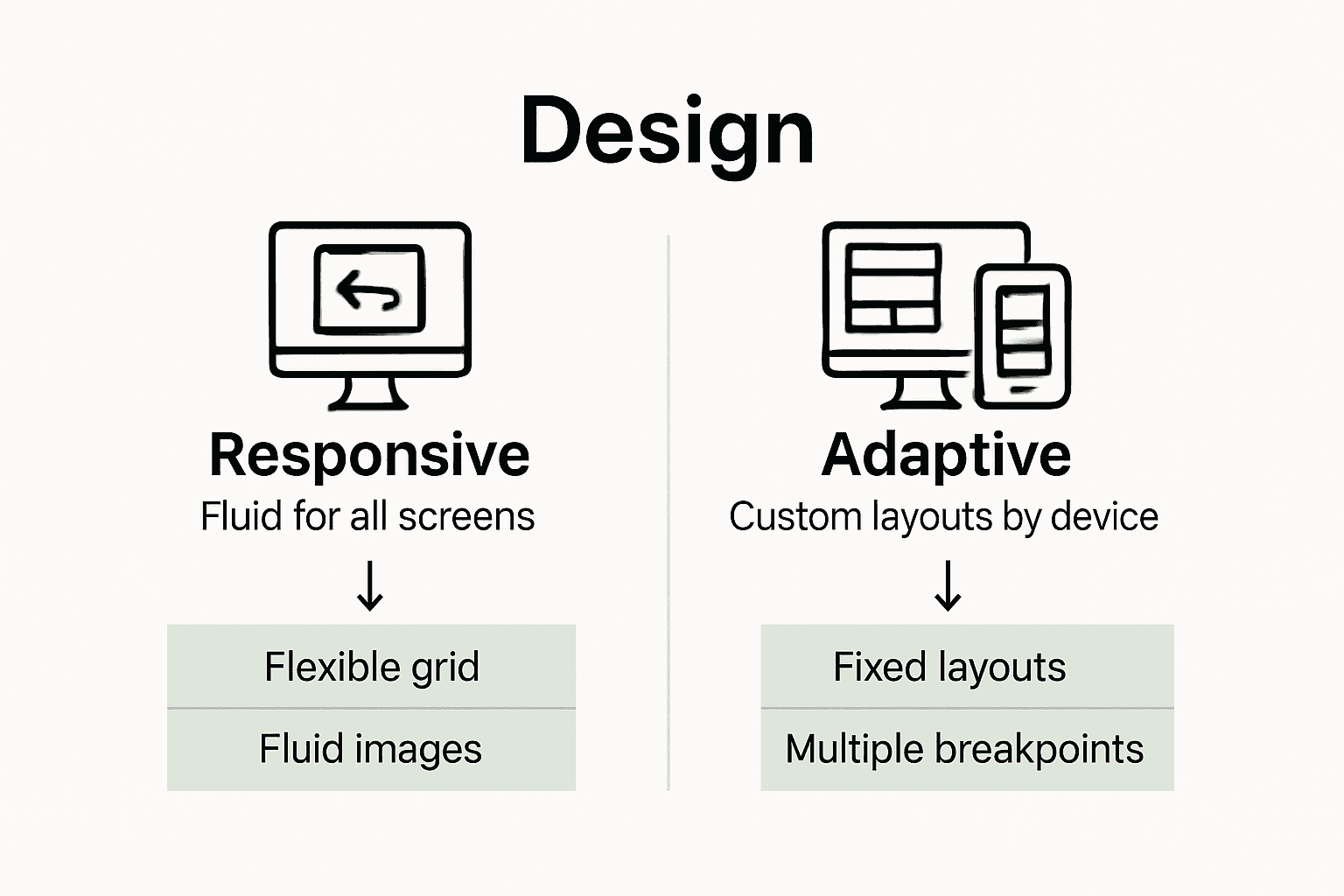 Static websites excel in speed and simplicity, while dynamic CMS platforms provide robust content management capabilities. Single Page Applications deliver smooth, app-like interactions, and e-commerce designs focus on creating seamless purchasing experiences. The key is selecting a design approach that aligns perfectly with your specific business objectives and user expectations.
Core Elements of High-Converting Websites
Building a high-converting website requires strategic design that goes beyond aesthetic appeal. According to Digital.gov, successful websites are characterized by consistent user experiences, regular usability testing, and device-agnostic designs that enhance user satisfaction and trust.
The foundational elements of a high-converting website blend technical performance with strategic communication. UKRI emphasizes the importance of professional design that authentically reflects brand identity, utilizing accessible fonts, clear navigation, and avoiding distracting design elements that could compromise user engagement.
Core conversion-driving elements include:
- Clear and compelling value proposition
- Intuitive navigation structure
- Strategic call-to-action placement
- Fast loading speeds
- Mobile responsiveness
- Trust-building visual elements
- Minimal friction in user journey
Website optimization strategies demonstrate that conversion is not just about design, but about creating a seamless, purposeful user experience. Successful websites anticipate user needs, eliminate potential obstacles, and guide visitors toward desired actions with psychological precision.
Ultimately, high-converting websites are living ecosystems that continuously adapt. They balance aesthetic sophistication with functional clarity, using design as a strategic tool to communicate brand value, build trust, and transform casual visitors into committed customers. The most effective websites don’t just look good—they create intuitive, frictionless pathways that make taking action feel natural and compelling.

Measuring ROI and Business Impact
Measuring the return on investment (ROI) of website design requires a comprehensive approach that goes beyond simple metrics. According to Digital.gov, strategic website management plays a critical role in ensuring that digital platforms align with core business objectives and effectively serve customer needs.
Key performance indicators for measuring website ROI encompass multiple dimensions of business impact. Design System highlights how strategic design directly influences user engagement and satisfaction, translating into tangible business outcomes. Businesses must look beyond surface-level analytics to understand the true value of their digital investments.
Critical metrics for evaluating website performance include:
- Conversion rate
- Customer acquisition cost
- Average session duration
- Bounce rate
- Revenue generated through digital channels
- Lead quality and volume
- Customer lifetime value
Website optimization strategies reveal that successful ROI measurement requires a holistic approach. It’s not just about tracking numbers, but understanding the deeper connections between design, user experience, and business growth.
Ultimately, a high-performing website is an investment that continuously generates value. By implementing robust tracking mechanisms, businesses can transform their digital presence from a cost center into a strategic asset that drives meaningful growth, attracts ideal customers, and creates sustainable competitive advantage. The most successful organizations view their website not as a static digital brochure, but as a dynamic engine of business performance.
Website Design Costs and Investment Risks
Navigating the financial landscape of website design requires a strategic approach that balances potential costs with long-term value creation. According to Digital.gov, adopting a design system can significantly mitigate development risks by ensuring quality, consistency, and streamlining the entire design process.
The cost of website design varies dramatically based on complexity, functionality, and strategic objectives. University of Oregon Digital suggests that smart design choices like implementing responsive design and limiting font usage can enhance performance while simultaneously reducing long-term maintenance expenses. These strategic decisions transform website development from a pure cost center into a potential revenue generation platform.
Key cost and risk considerations include:
- Initial development and design expenses
- Ongoing maintenance and update costs
- Potential revenue generation potential
- Scalability of design infrastructure
- Compliance and security investments
- Technology integration expenses
- Performance optimization costs
Why Update Your Website: Complete Guide demonstrates that website investments are not static expenses but dynamic opportunities for business growth. Smart businesses view their digital presence as a strategic asset that requires continuous refinement and investment.
Ultimately, website design costs should be evaluated through a comprehensive lens of potential return on investment. The most successful organizations understand that a well-designed website is not an expense, but a powerful marketing tool that can dramatically accelerate business growth, attract ideal customers, and create sustainable competitive advantages in an increasingly digital marketplace.
Avoiding Common Website Design Mistakes
Designing an effective website requires more than aesthetic appeal; it demands strategic thinking and user-centered approach. According to Digital.gov, many poorly designed websites fail because they present information from an organizational perspective, creating communication barriers and user confusion.
UKRI emphasizes that website design mistakes often stem from overlooking fundamental user experience principles. Critical errors include using unreadable fonts, implementing inaccessible color schemes, and introducing distracting design elements that compromise user engagement and site functionality.
Common website design pitfalls to avoid include:
- Cluttered and overwhelming page layouts
- Inconsistent branding and visual elements
- Non-responsive mobile design
- Slow page loading speeds
- Complex and confusing navigation
- Poor color contrast
- Lack of clear call-to-action buttons
The Impact of Responsive Design on User Experience demonstrates that successful web design is about creating seamless, intuitive experiences across all devices. Smart designers anticipate potential user friction points and proactively design solutions that feel natural and effortless.
Ultimately, avoiding design mistakes requires continuous learning and user-centric thinking. The most successful websites are those that prioritize clarity, accessibility, and meaningful interaction over trendy design gimmicks. By focusing on solving user problems and creating genuine value, businesses can transform their digital presence from a potential liability into a powerful competitive advantage.
Elevate Your Online Presence with Strategic Website Design
Every business faces the challenge of turning visitors into loyal customers through seamless, conversion-focused websites. This article uncovered key pain points such as choosing the right design solution, avoiding common website mistakes, and measuring true ROI — all areas where many brands struggle to find clarity and consistent growth. If you crave a website that not only looks stunning but also performs flawlessly across all devices with intuitive navigation and fast loading times, then smart, strategy-driven design is essential.
Lind Creative understands these challenges deeply and blends creativity, technology, and proven strategy to build high-converting websites tailored to your unique goals. Explore expert insights and stay ahead by visiting our Industry Trends – Lind Creative page or dive deeper into how effective development elevates design at Web Development – Lind Creative. Check out our dedicated Web Design – Lind Creative section to see how great design drives business results every day.
Ready to transform your website into a powerful asset that captivates visitors and accelerates growth? Visit Lind Creative now to start your journey with a full-service digital agency committed to delivering real ROI through strategy-driven design and marketing. Don’t settle for a static site. Take action today and build a digital experience your customers will trust and love.
Frequently Asked Questions
What is website design?
Website design is the strategic process of creating digital experiences that combine visual aesthetics and functional performance to enhance user experience and meet business objectives.
What are the different types of website design solutions?
Common types of website design solutions include responsive design, adaptive design, single page applications, static websites, CMS designs, and e-commerce websites, each catering to different needs and functionalities.
How can I improve my website’s conversion rate?
Improving your website’s conversion rate involves ensuring a clear value proposition, intuitive navigation, strategic call-to-action placement, fast loading speeds, and optimizing for mobile responsiveness to enhance user experience.
What are the common mistakes to avoid in website design?
Common website design mistakes include cluttered layouts, inconsistent branding, non-responsive designs, slow loading speeds, confusing navigation, poor color contrast, and failure to include clear call-to-action buttons.
Recommended
- Modern Website Design Explained: Key Elements & Trends – Lind Creative
- What Is a Responsive Website? Complete Guide – Lind Creative
- The Impact of Responsive Design on User Experience: Optimizing for a Multi-Device World – Lind Creative
- Rol van Webdesign: Everything You Need to Know – Betaalbare Websites die Scoren | WebBuildingFirm.com