
Frustrated guests abandon reservations when hospitality websites feel confusing or impersonal. For American hospitality brands, every interaction shapes perception and revenue. By focusing on user-centered digital experiences, you can turn ordinary bookings into memorable journeys, build guest loyalty, and set your property apart in a crowded market.
Table of Contents
- What Is UX Design in Hospitality
- Key Types of UX for Hospitality Websites
- How UX Enhances Guest Experience
- UX’s Role in Driving Conversions
- Risks of Poor UX and Common Pitfalls
- Comparing UX Approaches in Hospitality
Key Takeaways
| Point | Details |
|---|---|
| UX Design Prioritizes Guest Experience | Focus on creating intuitive interfaces and personalized interactions to enhance guest comfort and satisfaction. |
| Anticipatory Service Design | Leverage data insights to predict and proactively meet guest needs, transforming standard interactions into memorable experiences. |
| Responsive and Personalized Design | Ensure websites adapt seamlessly across devices and provide tailored recommendations to drive bookings and enhance loyalty. |
| Emotional Engagement in UX | Create digital environments that resonate emotionally with guests, fostering trust and inspiring excitement about their travel experiences. |
What Is UX Design in Hospitality
User Experience (UX) Design in hospitality represents a strategic approach to crafting digital and physical interactions that prioritize guest comfort, satisfaction, and seamless navigation through hospitality services. At its core, UX design transforms complex systems into intuitive, enjoyable experiences that anticipate and exceed guest expectations.
In the hospitality context, UX design encompasses every touchpoint a guest encounters – from website booking interfaces to mobile check-in processes, room navigation systems, and digital concierge services. User experience in luxury hospitality fundamentally revolves around understanding guest preferences, eliminating friction points, and creating personalized interactions that make travelers feel valued and understood.
The primary objectives of UX design in hospitality include streamlining customer journeys, reducing cognitive load during booking and travel experiences, and creating memorable interactions that differentiate a brand from competitors. This involves meticulous research into guest behaviors, pain points, and technological preferences to develop solutions that feel effortless and intuitive.
Designers must consider multiple dimensions when crafting hospitality UX, including digital interfaces, physical space design, technological integrations, and emotional connection strategies. Successful implementations transform potentially stressful travel experiences into smooth, enjoyable interactions that inspire customer loyalty and positive word-of-mouth recommendations.
Pro tip: Conduct regular user journey mapping to identify and eliminate potential friction points in your hospitality experience, ensuring each guest interaction feels seamless and personalized.
Key Types of UX for Hospitality Websites
Hospitality websites require specialized UX design approaches that cater to diverse user needs and complex booking journeys. The primary types of UX design for hospitality websites focus on creating intuitive, responsive, and personalized digital experiences that simplify travel planning and booking processes.
The first critical UX type is Booking Interface Design, which involves creating seamless, user-friendly reservation systems that minimize friction and complexity. Customer journey mapping plays a crucial role in understanding how travelers interact with online booking platforms, helping designers eliminate potential pain points and streamline navigation.

Another essential UX type is Mobile Responsive Design, which ensures that hospitality websites function perfectly across different devices and screen sizes. This approach recognizes that modern travelers frequently research and book accommodations using smartphones and tablets, requiring fluid, adaptive interfaces that provide consistent experiences regardless of the device being used.
The third key UX design type is Personalization and Recommendation Systems, which leverage user data and behavioral insights to create tailored experiences. These systems can suggest relevant room types, recommend additional services, and provide customized pricing options that increase conversion rates and enhance overall user satisfaction.
Here’s a concise comparison of key UX design types for hospitality websites and their business benefits:
| UX Design Type | Core Purpose | Main Business Impact |
|---|---|---|
| Booking Interface Design | Simplifies reservations | Increases completed bookings |
| Mobile Responsive Design | Ensures usability on any device | Expands mobile conversions |
| Personalization & Recommendations | Delivers tailored suggestions | Boosts upselling and loyalty |
Pro tip: Implement progressive profiling techniques to gradually collect user preferences without overwhelming guests during the booking process, creating more personalized and engaging interactions.
How UX Enhances Guest Experience
User Experience (UX) design transforms the hospitality journey by creating emotionally resonant and functionally seamless interactions that address guests’ deepest needs and expectations. By strategically mapping and anticipating customer touchpoints, hospitality brands can convert ordinary interactions into memorable, delightful experiences that drive loyalty and positive recommendations.
The primary way UX enhances guest experience is through Anticipatory Service Design, which uses data and behavioral insights to predict and proactively address guest preferences. User experience improvement strategies enable hospitality brands to create personalized interactions that make guests feel uniquely understood and valued, well before they complete their booking or arrive at the property.
Technology plays a critical role in elevating guest experiences through intelligent UX design. Advanced interfaces can now provide real-time communication channels, contextualized recommendations, and seamless service integration that eliminate traditional friction points. For instance, mobile apps that allow pre-arrival room customization, digital check-in, and personalized welcome messages demonstrate how thoughtful UX can transform standard transactional interactions into meaningful, individualized experiences.
Emotional connection represents the most profound way UX enhances guest experience. By understanding and designing for psychological needs like comfort, safety, and recognition, hospitality brands can create digital and physical environments that not only meet functional requirements but also generate positive emotional responses. This approach goes beyond mere utility, crafting experiences that resonate on a deeper, more personal level with travelers.
Pro tip: Implement machine learning algorithms to continuously refine your UX design by analyzing guest interaction patterns and feedback, creating increasingly sophisticated and personalized experiences.
UX’s Role in Driving Conversions
User Experience (UX) design serves as a critical catalyst for driving conversions in the hospitality industry by systematically removing barriers, reducing cognitive friction, and creating intuitive pathways that guide potential guests toward booking decisions. The strategic alignment of design elements, user psychology, and technological functionality can transform casual website visitors into confirmed reservations.
Conversion optimization begins with understanding the critical psychological triggers that influence booking behavior. High-converting website elements play a pivotal role in creating seamless user journeys that address potential guests’ underlying motivations, concerns, and decision-making processes. By strategically designing interfaces that anticipate and resolve user hesitations, hospitality brands can significantly increase their conversion potential.
Technology enables sophisticated conversion strategies through intelligent UX design that personalizes the booking experience. Advanced interfaces can now dynamically adjust content, pricing, and recommendations based on user behavior, creating a sense of individualized attention that increases the likelihood of completing a reservation. Features like real-time availability displays, transparent pricing, and contextual social proof work synergistically to build user confidence and reduce booking abandonment rates.
The most effective UX conversion strategies focus on emotional engagement alongside functional design. By creating digital experiences that generate positive feelings of excitement, comfort, and anticipation, hospitality websites can transform transactional interactions into compelling narratives that motivate users to take action. This approach goes beyond traditional conversion tactics, creating meaningful connections that resonate with travelers’ deeper desires and aspirations.
Pro tip: Implement A/B testing on critical conversion elements like booking buttons, form layouts, and pricing displays to systematically optimize your website’s user experience and conversion performance.
Risks of Poor UX and Common Pitfalls
Poor User Experience (UX) design in hospitality can create significant barriers that directly undermine conversion potential, customer satisfaction, and brand reputation. These design failures manifest through complex navigation, confusing interfaces, and user journeys that frustrate potential guests and ultimately drive them toward competitors.
One of the most critical risks involves creating website design barriers that impede user decision-making. Common pitfalls include overcomplicated booking forms, unclear pricing structures, slow-loading pages, and non-intuitive navigation that overwhelm users and increase abandonment rates. These design mistakes can cause potential guests to lose confidence in a brand within seconds of landing on a website.
Technological limitations represent another substantial risk in hospitality UX design. Websites and mobile platforms that fail to provide responsive, adaptive experiences across different devices create immediate friction. Poorly optimized interfaces that do not adjust seamlessly to smartphones, tablets, and desktop computers can eliminate up to 70% of potential booking opportunities, as modern travelers expect instantaneous, device-agnostic interactions.
Emotional disconnection emerges as a profound yet often overlooked pitfall in hospitality UX design. When digital experiences feel transactional, impersonal, or generic, they fail to generate the emotional engagement necessary for conversion. Successful hospitality brands understand that UX is not merely about functionality but about creating digital environments that inspire trust, excitement, and anticipation of upcoming travel experiences.
Pro tip: Conduct quarterly comprehensive UX audits using real user testing and heatmap analysis to identify and systematically eliminate potential friction points in your digital guest experience.
Comparing UX Approaches in Hospitality
Hospitality brands employ distinctly different UX approaches that range from transactional, functionality-focused designs to holistic, emotionally intelligent experiences that transform digital interactions into compelling narratives. These approaches represent strategic choices that significantly impact customer engagement, conversion rates, and long-term brand perception.
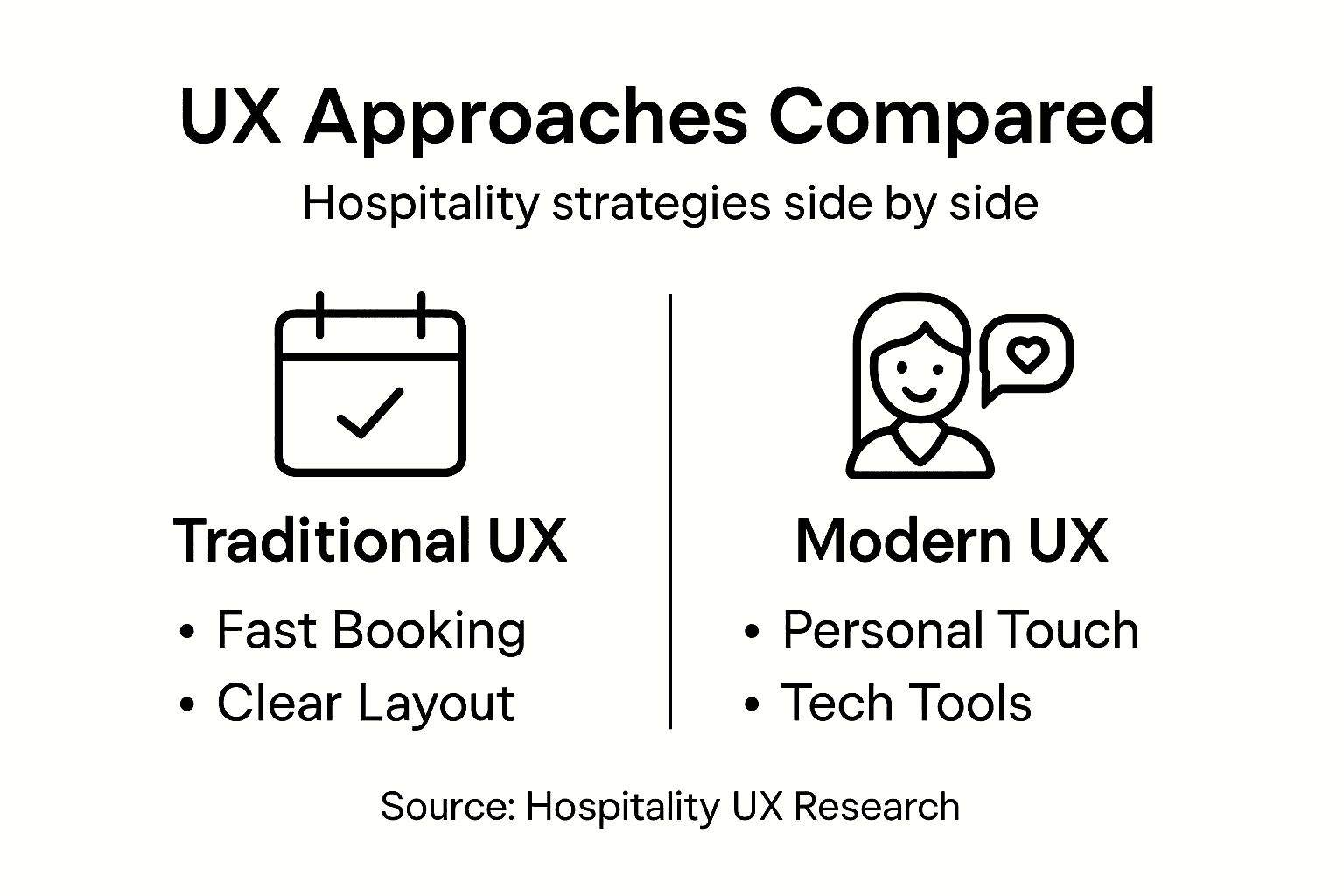
Traditional hospitality UX strategies prioritize functional efficiency, focusing on streamlined booking processes and clear information presentation. In contrast, customer experience in luxury hotels demonstrates a more nuanced approach that integrates emotional intelligence, personalization, and anticipatory design to create memorable digital interactions that extend beyond mere transactional requirements.
Modern UX approaches in hospitality can be categorized into three primary models: standardized design, personalized experience, and adaptive intelligence. Standardized designs offer consistent, reliable interfaces that prioritize universal usability. Personalized experiences leverage user data to create tailored interactions, while adaptive intelligence systems dynamically adjust interfaces based on real-time user behavior, preferences, and contextual insights.
Below is a summary of standard, personalized, and adaptive UX approaches in hospitality:
| Approach | Defining Feature | Suitable Use Case |
|---|---|---|
| Standardized Design | Consistent, uniform interface | Budget or chain hotels |
| Personalized Experience | Tailored user interaction | Boutique or niche properties |
| Adaptive Intelligence | Dynamic, real-time adjustments | Luxury or tech-driven brands |
The most sophisticated UX strategies merge technological capabilities with deep psychological understanding, creating digital environments that not only facilitate booking but also generate emotional resonance. Successful hospitality brands recognize that exceptional UX transcends functional requirements, transforming digital touchpoints into storytelling platforms that inspire, engage, and build lasting connections with potential guests.
Pro tip: Develop a comprehensive UX framework that balances technological efficiency with emotional intelligence, allowing your digital platforms to create genuine connections beyond transactional interactions.
Transform Your Hospitality Conversions with Expert UX and Strategic Design
Struggling with complex booking journeys or low conversion rates on your hospitality website? This article highlights how poor user experience creates barriers that frustrate guests and reduce bookings. To overcome these challenges, you need a website that simplifies reservations, builds emotional connections, and anticipates user needs through thoughtful UX. Lind Creative specializes in blending creativity and technology to deliver high-performing digital experiences tailored for hospitality brands. Explore our Web Design – Lind Creative solutions to create intuitive booking interfaces and personalized journeys that captivate your visitors.
Ready to elevate your guest experience and drive more bookings today? Visit Lind Creative to discover how our strategy-driven design and marketing services can help you build a powerful online presence that converts traffic into loyal customers. Learn more about how smart Web Development – Lind Creative enhances functionality and seamless user interactions. Take the first step now to transform your hospitality brand with a digital platform that performs and grows.
Frequently Asked Questions
What is UX design in the hospitality industry?
UX design in hospitality refers to the strategic approach of creating user-friendly and enjoyable experiences for guests, focusing on all touchpoints from booking to check-in, ensuring that interactions are smooth and personalized.
How can UX design increase conversions for hospitality websites?
By streamlining the booking process, reducing cognitive load, and creating emotional connections, effective UX design can remove barriers that prevent users from completing reservations, thus increasing conversion rates.
What are common pitfalls of poor UX design in hospitality?
Common pitfalls include complex navigation, unclear pricing, slow-loading pages, and impersonal interactions, which can lead to frustration and potential guests abandoning the booking process.
Why is personalizing the user experience important in hospitality?
Personalizing the user experience helps guests feel valued and understood, which can lead to higher satisfaction, repeat bookings, and positive word-of-mouth recommendations.
Recommended
- What Is User Experience and Its Impact on Luxury Hospitality – Lind Creative
- What Is a Landing Page and Its Impact on Hospitality Leads – Lind Creative
- Why Customer Experience Matters for Luxury Hotels – Lind Creative
- Customer Journey Mapping: Driving Loyalty in Hospitality – Lind Creative
- Why Choose Luxury Event Transfers for VIP Travel