
Over half of American guests are willing to return to a luxury hotel if they feel truly understood and valued. For mid-sized hospitality owners, customer experience is the deciding factor that inspires repeat bookings and long-term loyalty. Improving the guest journey—from first digital touchpoint to final farewell—can turn a one-time visitor into a passionate brand ambassador who shares genuine recommendations and drives new business.
Table of Contents
- Defining Customer Experience In Hospitality
- Key Types Of Customer Experience Touchpoints
- How Customer Experience Drives Guest Loyalty
- Financial Impact Of Superior Customer Experience
- Avoiding Common Customer Experience Mistakes
Key Takeaways
| Point | Details |
|---|---|
| Holistic Customer Experience | Customer experience in luxury hospitality encompasses every guest interaction, focusing on personalized connections beyond mere transactions. |
| Touchpoints Matter | Critical touchpoints include digital, physical, and human interactions, each influencing guest perceptions and satisfaction. |
| Emotional Engagement Drives Loyalty | Creating memorable emotional connections fosters guest loyalty, transforming visitors into brand advocates. |
| Monitor Financial Impact | Exceptional customer experiences lead to increased booking rates, higher guest retention, and the ability to command premium pricing. |
Defining Customer Experience in Hospitality
Customer experience (CX) in luxury hospitality transcends traditional service delivery, representing a holistic journey that encompasses every interaction a guest has with a hotel brand. Customer experience research reveals a complex framework involving cognitive, emotional, sensory, and behavioral responses throughout the entire guest interaction cycle.
At its core, CX represents the intricate landscape of guest perceptions, emotions, and expectations from the moment they first encounter a hotel’s brand through their post-stay memories. This multidimensional concept goes beyond simple transactional exchanges, focusing instead on creating meaningful, personalized connections that transform routine stays into memorable experiences. The interactions span multiple touchpoints – from initial website browsing and reservation processes to room arrival, in-stay services, and post-departure engagement.
Luxury hospitality professionals understand that customer experience is not a singular event but a comprehensive narrative composed of numerous subtle interactions. Each interaction – whether digital, physical, or emotional – contributes to the overall perception of the hotel’s brand. Academic research in hospitality and tourism emphasizes that successful CX strategies require a deep understanding of guest psychology, anticipating needs before they are explicitly expressed, and creating seamless, personalized journeys.
Pro tip: Develop a comprehensive customer journey map that tracks every potential guest interaction, identifying opportunities to surprise, delight, and exceed expectations at each stage of their experience.
Key Types of Customer Experience Touchpoints
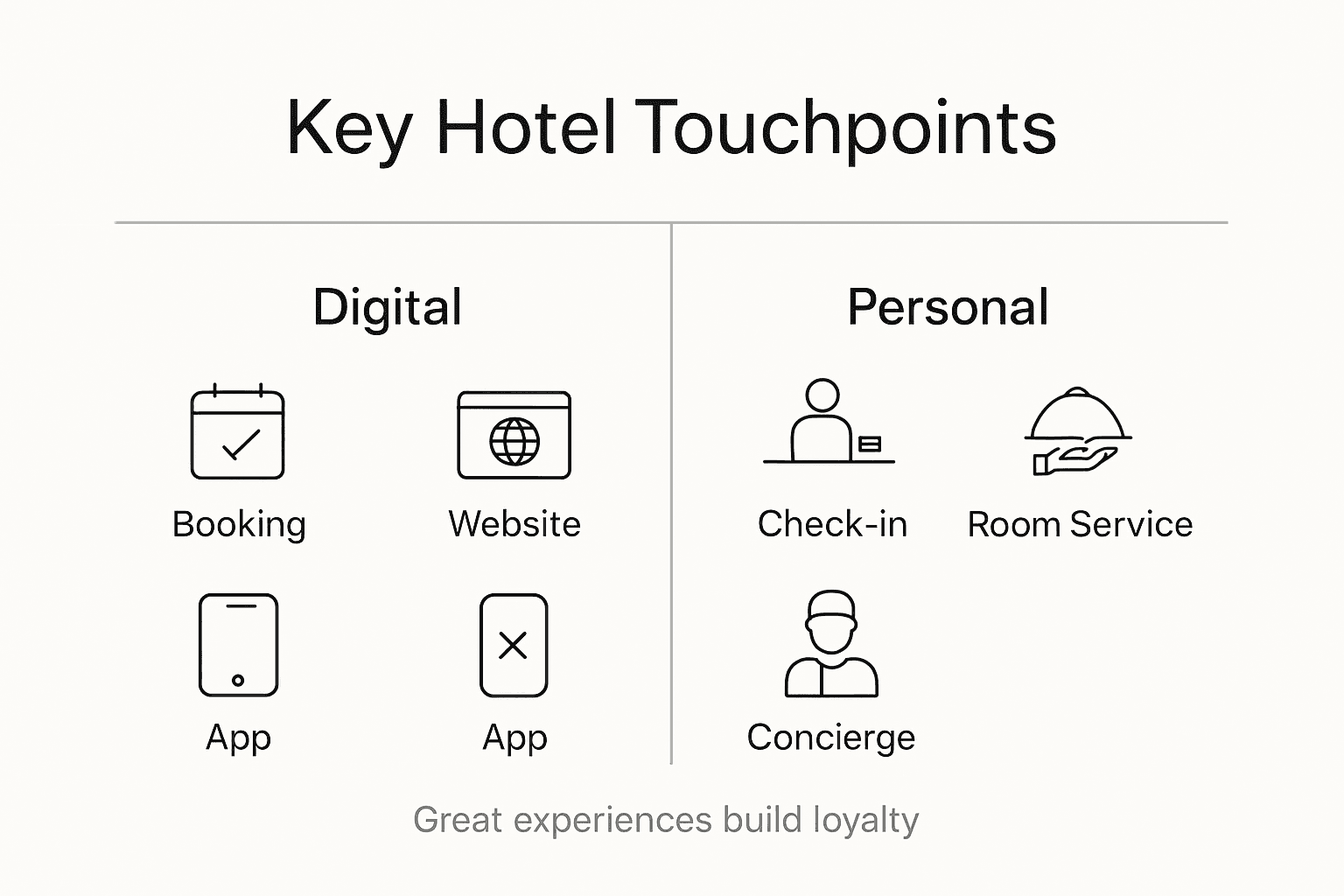
Customer experience touchpoints in luxury hospitality represent the critical moments of interaction between guests and the hotel brand. These touchpoints are complex, multifaceted encounters that can be categorized into three primary types: digital, physical, and human interactions. Each type plays a crucial role in shaping the overall guest perception and satisfaction.
Digital touchpoints encompass the online experiences that begin long before a guest sets foot in the hotel. These include the hotel’s website, mobile application, online booking platforms, email communications, social media channels, and digital marketing campaigns. The design, functionality, and user experience of these digital platforms can significantly influence a guest’s initial impressions and expectations. A seamless, intuitive digital experience can build anticipation and trust, setting the stage for a memorable stay.
Marketing research in hospitality highlights that physical and human touchpoints are equally critical in luxury hotel experiences. Physical touchpoints include the hotel’s architectural design, room aesthetics, lobby environment, restaurant spaces, amenities, and overall architectural ambiance. Human touchpoints involve direct interactions with staff members – from reservation agents and concierge services to housekeeping, restaurant staff, and management. These personal interactions can transform a standard stay into an extraordinary experience, with staff members acting as brand ambassadors who can create emotional connections with guests.
Pro tip: Conduct regular training programs that empower staff to recognize and respond to subtle guest needs, turning each interaction into an opportunity for personalized service and emotional engagement.
Here’s a structured comparison of the three main customer experience touchpoint types in luxury hospitality:
| Touchpoint Type | Main Characteristics | Typical Business Impact |
|---|---|---|
| Digital | Online interfaces and booking apps | Shapes initial impressions, drives conversion |
| Physical | Architecture, room design, amenities | Enhances comfort, creates lasting memories |
| Human | Staff interactions and personalized service | Builds emotional connections, fosters loyalty |
How Customer Experience Drives Guest Loyalty
Luxury hotels recognize that guest loyalty is no longer about simply providing a comfortable room, but about creating memorable, emotionally resonant experiences. Research in service quality demonstrates that positive emotional connections and relational trust are fundamental drivers of long-term guest loyalty, transcending traditional transactional relationships.
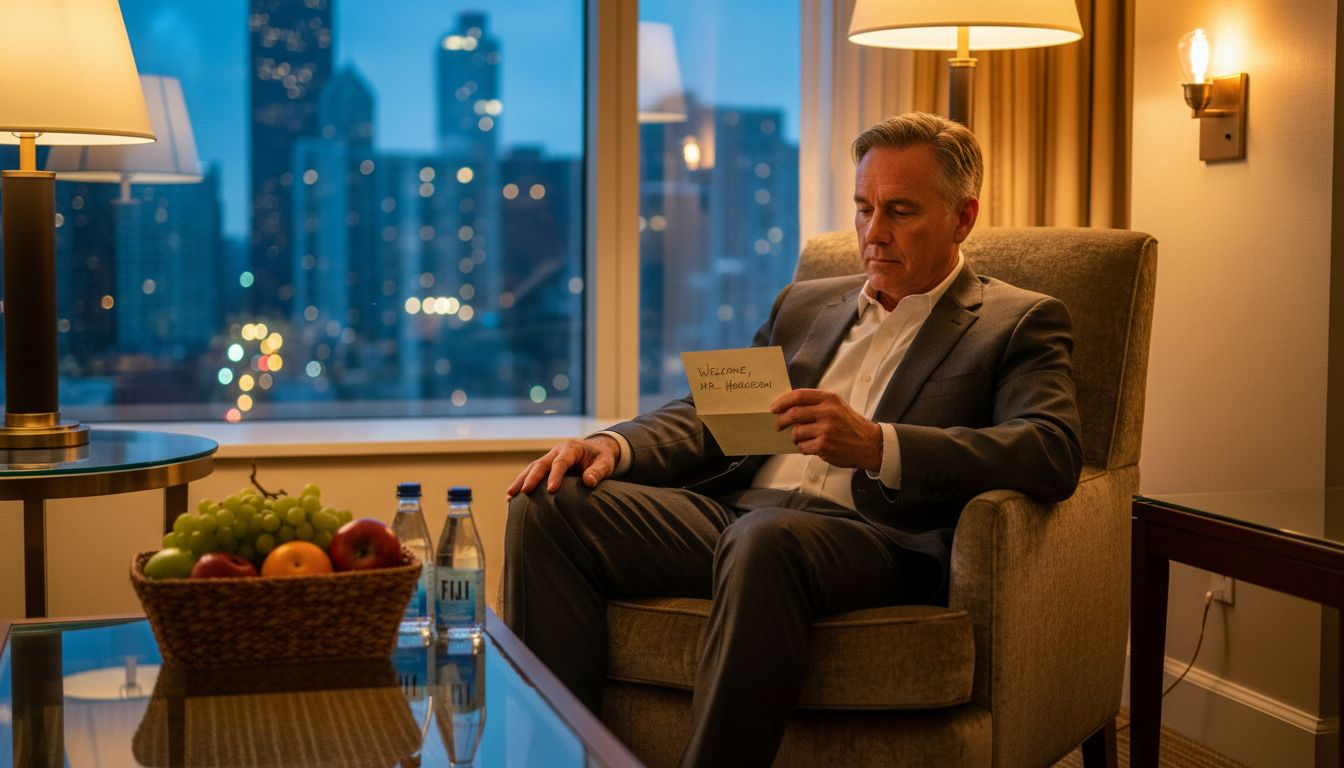
The loyalty mechanism in luxury hospitality is deeply psychological, rooted in the guest’s perception of being uniquely valued and understood. When hotels consistently anticipate and exceed guest expectations across multiple touchpoints, they transform casual visitors into passionate brand advocates. This goes beyond standard service delivery – it involves crafting personalized interactions that make guests feel genuinely special, remembered, and emotionally connected to the brand.
Modern luxury hotels are increasingly leveraging data-driven personalization and emotional intelligence to build sustainable loyalty strategies. By analyzing guest preferences, historical interactions, and subtle behavioral cues, hotels can create tailored experiences that feel intuitive and authentic. The most successful loyalty programs are those that recognize guests as individuals, not just room numbers, offering customized amenities, remembering personal preferences, and creating moments of unexpected delight that inspire repeat visits and enthusiastic recommendations.
Pro tip: Implement a comprehensive guest preference tracking system that captures detailed personal preferences, enabling staff to provide hyper-personalized experiences that make each guest feel uniquely appreciated.
Financial Impact of Superior Customer Experience
Online review and customer experience research reveals a direct correlation between exceptional service quality and financial performance in luxury hospitality. Superior customer experiences are not merely aesthetic preferences but strategic financial investments that generate measurable economic returns through increased booking rates, higher guest retention, and premium pricing capabilities.
The financial mechanics of customer experience extend beyond traditional revenue metrics. Luxury hotels that consistently deliver personalized, emotionally resonant experiences create a competitive differentiation that justifies premium pricing strategies. Guests become willing to pay substantially more for experiences that make them feel uniquely valued, transforming customer satisfaction from a service metric into a direct revenue generation mechanism. This psychological willingness to spend more represents a significant financial advantage for hotels that master emotional engagement.
Strategic hospitality research demonstrates that customer loyalty driven by superior experiences generates substantial long-term financial benefits. Repeat guests cost significantly less to acquire, typically spend more during subsequent visits, and become powerful brand ambassadors who attract new high-value customers through authentic recommendations. The cumulative financial impact of these loyalty-driven dynamics can represent a 25-40% increase in lifetime customer value compared to transactional service models.
Pro tip: Develop a robust customer experience tracking system that quantifies emotional engagement metrics alongside traditional financial indicators, enabling data-driven investments in service quality.
Below is a summary of how superior customer experience affects financial outcomes in luxury hotels:
| CX Strategy Feature | Direct Financial Impact | Long-Term Benefit |
|---|---|---|
| Hyper-personalization | Enables premium pricing | Increases repeat guest value |
| Emotional engagement | Drives guest retention | Amplifies word-of-mouth referrals |
| Integrated experience | Boosts booking rates | Reduces acquisition costs |
Avoiding Common Customer Experience Mistakes
Emotional research in hospitality reveals that luxury hotels frequently miscalculate the nuanced emotional landscape of guest experiences. The most critical errors occur when hotels treat customer experience as a transactional process rather than an intricate emotional journey, failing to recognize the subtle psychological drivers that transform a standard stay into a memorable encounter.
One fundamental mistake is the organizational approach to customer experience. Customer experience management strategies highlight that many luxury hotels suffer from siloed departments, where customer interactions are fragmented instead of being integrated across all touchpoints. This disconnected approach prevents staff from understanding the holistic guest experience, leading to inconsistent service delivery and missed opportunities for creating emotional connections.
Luxury hotels often fall into the trap of standardization, mistaking uniform processes for quality service. The emotional intelligence required to deliver exceptional experiences cannot be scripted or automated. Successful hotels recognize that true personalization means understanding individual guest preferences, anticipating unspoken needs, and creating moments of unexpected delight that transcend typical service interactions. This requires continuous staff training, empowerment to make real-time decisions, and a cultural commitment to genuine hospitality that goes beyond mechanical service protocols.
Pro tip: Implement a comprehensive staff training program that emphasizes emotional awareness, empowering employees to recognize and respond to subtle guest cues with genuine, personalized care.
Elevate Your Luxury Hotel’s Customer Experience and Loyalty
Understanding that customer experience is an emotional journey rather than just a service transaction is key for luxury hotels aiming to build lasting guest loyalty. This article highlights the challenge of delivering seamless, personalized interactions that resonate deeply with guests across digital, physical, and human touchpoints. Creating a powerful brand narrative and consistent customer journeys demands expert design and strategic marketing solutions that reflect the unique value your hotel offers.
At Lind Creative, we specialize in crafting compelling Branding & Identity – Lind Creative that capture the emotional essence of your luxury hospitality brand. Our strategy-driven, creative approach ensures every guest touchpoint is thoughtfully designed for maximum impact.
Ready to transform customer experience into your strongest competitive advantage? Visit Lind Creative to explore how our full-service digital agency blends creativity, technology, and growth-focused marketing systems. Whether you need a high-converting website, intuitive digital platforms, or an integrated marketing engine that automates lead capture and personalizes guest engagement, we deliver solutions that drive measurable results and increase guest loyalty. Start your journey to unforgettable luxury guest experiences today with Lind Creative.
Learn more about our creative process in Graphic Design – Lind Creative or explore helpful insights on enhancing guest experiences in our Resources – Lind Creative section.
Frequently Asked Questions
What is customer experience in luxury hotels?
Customer experience (CX) in luxury hotels refers to the holistic journey that guests undergo during their interactions with a hotel brand, including their cognitive, emotional, and sensory responses throughout the entire guest interaction cycle.
How does customer experience impact guest loyalty in luxury hospitality?
Customer experience significantly impacts guest loyalty by fostering emotional connections and trust. When hotels anticipate and exceed guest expectations, they can transform visitors into loyal brand advocates, leading to repeat bookings and positive recommendations.
What are the main types of customer experience touchpoints in luxury hotels?
The primary types of customer experience touchpoints in luxury hotels include digital touchpoints (online interactions), physical touchpoints (the hotel’s design and ambiance), and human touchpoints (interactions with hotel staff), all of which shape guest perceptions and satisfaction.
Why is emotional intelligence important for customer experience in luxury hotels?
Emotional intelligence is crucial as it allows hotel staff to understand and respond to guest needs and preferences on a personal level, enhancing personalized service, creating memorable experiences, and ultimately fostering guest loyalty.
Recommended
- Why Rebrand: Elevating Luxury Hospitality Success – Lind Creative
- Why Personalize User Experience for Luxury Hospitality – Lind Creative
- Digital Branding: Driving Luxury Hospitality Growth – Lind Creative
- Unified Brand Presence: Driving Engagement for Luxury Hospitality – Lind Creative