
More than 60 percent of hospitality bookings now happen on smartphones, shaping how American luxury brands attract new guests online. For marketing managers aiming to stand out in a crowded market, landing pages offer a focused solution for driving conversions and capturing qualified leads. By understanding what sets high-performing landing pages apart, you can refine your digital strategy to connect with discerning travelers and create a seamless path from curiosity to committed reservation.
Table of Contents
- Defining Landing Pages For Hospitality Brands
- Types Of Landing Pages And Their Uses
- Key Elements That Drive Conversions
- Design Principles For Luxury Hospitality Pages
- Common Pitfalls And How To Avoid Them
Key Takeaways
| Point | Details |
|---|---|
| Purpose of Landing Pages | Hospitality landing pages are designed to convert visitors into potential guests by presenting a focused and engaging experience. |
| Critical Elements for Conversion | Successful pages utilize compelling visuals, concise value propositions, and streamlined contact forms to enhance user engagement. |
| Importance of Mobile Responsiveness | With over 60% of bookings originating from smartphones, landing pages must be optimized for mobile users to maximize conversions. |
| Avoiding Common Pitfalls | To enhance effectiveness, maintain message consistency and ensure technical performance to prevent user frustration and abandonment. |
Defining Landing Pages for Hospitality Brands
A landing page represents a strategic digital gateway designed specifically to convert website visitors into potential guests or leads for hospitality brands. Unlike standard webpages cluttered with multiple navigation options, these focused entry points are engineered with a singular purpose: driving immediate customer action. Strategic landing pages serve as precision instruments for capturing visitor interest and transforming casual browsers into committed prospects.
Hospitality landing pages typically concentrate on generating specific conversions such as room bookings, event inquiries, or promotional package registrations. By eliminating distracting elements and presenting a clear, compelling value proposition, these pages streamline the user experience and increase the likelihood of visitor engagement. Effective landing pages leverage compelling visuals, concise messaging, and strategically positioned call-to-action buttons that guide potential guests toward making a reservation or submitting contact information.
The core architecture of a successful hospitality landing page involves several critical components. These include a powerful headline that communicates unique brand value, high-quality imagery showcasing property amenities, transparent pricing information, guest testimonials, and a frictionless booking or inquiry form. The design must balance aesthetic appeal with functional simplicity, ensuring that potential guests can quickly understand the offering and take immediate action without feeling overwhelmed by excessive information.
Pro tip: Focus on creating landing pages with mobile-responsive design, as over 60% of hospitality bookings now originate from smartphone devices.
Types of Landing Pages and Their Uses
Hospitality brands typically leverage several distinct landing page types tailored to specific marketing objectives. Lead generation pages focus on capturing potential guest contact information through compelling offers like exclusive discounts, free travel guides, or promotional packages. These pages strategically minimize form fields and maximize value propositions to encourage visitor engagement. By implementing high-converting website elements, hospitality marketers can significantly improve their lead acquisition rates.
Another critical landing page variant is the destination-specific landing page, which targets travelers interested in particular locations or experiences. These pages highlight unique property features, local attractions, and specialized amenities that differentiate a hospitality brand from competitors. By creating hyper-targeted content that speaks directly to specific traveler segments—such as business professionals, family vacationers, or luxury seekers—brands can dramatically increase conversion potential and reduce bounce rates.
Special event and seasonal promotion landing pages represent another sophisticated approach for hospitality marketing. These targeted pages are designed around time-sensitive offers like holiday packages, summer vacation deals, or conference accommodation specials. The design emphasizes urgency, showcases limited-time benefits, and provides clear, streamlined booking mechanisms that reduce friction in the customer journey. Effective seasonal landing pages combine persuasive copywriting, engaging visuals, and simplified conversion pathways to maximize booking opportunities.
Pro tip: Create multiple landing page variations and conduct A/B testing to determine which design elements and messaging most effectively convert your target audience.
Here’s how different hospitality landing page types address business objectives:
| Landing Page Type | Primary Objective | Unique Features | Ideal Use Case |
|---|---|---|---|
| Lead Generation | Capture guest contact info | Few form fields, value offer | Growing email database |
| Destination-Specific | Promote property/location | Local attractions, amenities | Targeting traveler segments |
| Event/Seasonal Promotion | Drive time-sensitive bookings | Urgency, clear booking path | Holiday packages, conferences |
| Luxury Experience | Attract high-value guests | Sophisticated visuals, exclusivity | Showcase premium accommodation |
Key Elements That Drive Conversions
Successful hospitality landing pages are built on five critical conversion-driving elements that work synergistically to transform casual browsers into committed guests. High-converting landing pages demand a strategic approach that blends psychological triggers with intuitive design principles. The first fundamental element is a compelling value proposition that immediately communicates unique benefits, distinguishing a hospitality brand from competitors and providing clear reasons why potential guests should choose their specific offering.

Visual storytelling plays a pivotal role in conversion optimization. High-resolution imagery, immersive videos, and carefully curated visual content create emotional connections that transcend traditional marketing messaging. These visual elements should showcase property amenities, highlight guest experiences, and provide transparent representations of accommodations. Complementing these visuals, social proof becomes crucial—incorporating guest testimonials, star ratings, and authentic reviews builds credibility and addresses potential travelers’ inherent booking uncertainties.
The technical infrastructure of a landing page significantly impacts conversion rates. Call-to-action buttons must be strategically positioned, using contrasting colors and compelling microcopy that creates a sense of urgency. Form designs should minimize friction by requesting only essential information, implementing autofill capabilities, and providing multiple booking options. The page’s loading speed, mobile responsiveness, and intuitive navigation are equally critical, ensuring that potential guests can seamlessly complete their booking journey without encountering technical obstacles.
Pro tip: Implement dynamic content personalization techniques that adjust landing page elements based on visitor demographics, search history, and previous interactions to increase conversion probability.
This chart summarizes conversion-driving elements for hospitality landing pages:
| Element | Purpose | Expected Impact |
|---|---|---|
| Value Proposition | Communicate brand benefits | Increase guest preference |
| Visual Storytelling | Build emotional connection | Higher engagement, more bookings |
| Social Proof | Foster trust and credibility | Reduce booking hesitation |
| Streamlined Forms | Lower entry barriers | Boost completion rates |
| Fast Mobile Experience | Enable easy navigation | Capture smartphone users |
Design Principles for Luxury Hospitality Pages
Luxury hospitality landing pages demand a sophisticated design approach that transcends traditional digital marketing strategies. Elegant design principles require meticulous attention to visual hierarchy, brand consistency, and immersive storytelling. The fundamental goal is to create a digital environment that reflects the same level of refinement guests would experience during an actual property visit. This means curating a visual experience that communicates exclusivity, comfort, and unparalleled service through every design element.
Visual composition plays a critical role in luxury hospitality landing pages. High-resolution imagery should showcase property details with cinematic quality, capturing sweeping landscape views, meticulously designed interior spaces, and subtle architectural nuances that distinguish the brand. Strategic use of white space allows these visuals to breathe, preventing visual clutter while maintaining an atmosphere of sophistication. Color palettes must be carefully selected to evoke emotional responses—soft, neutral tones can communicate understated elegance, while carefully placed accent colors can draw attention to key conversion elements like booking buttons or special offers.
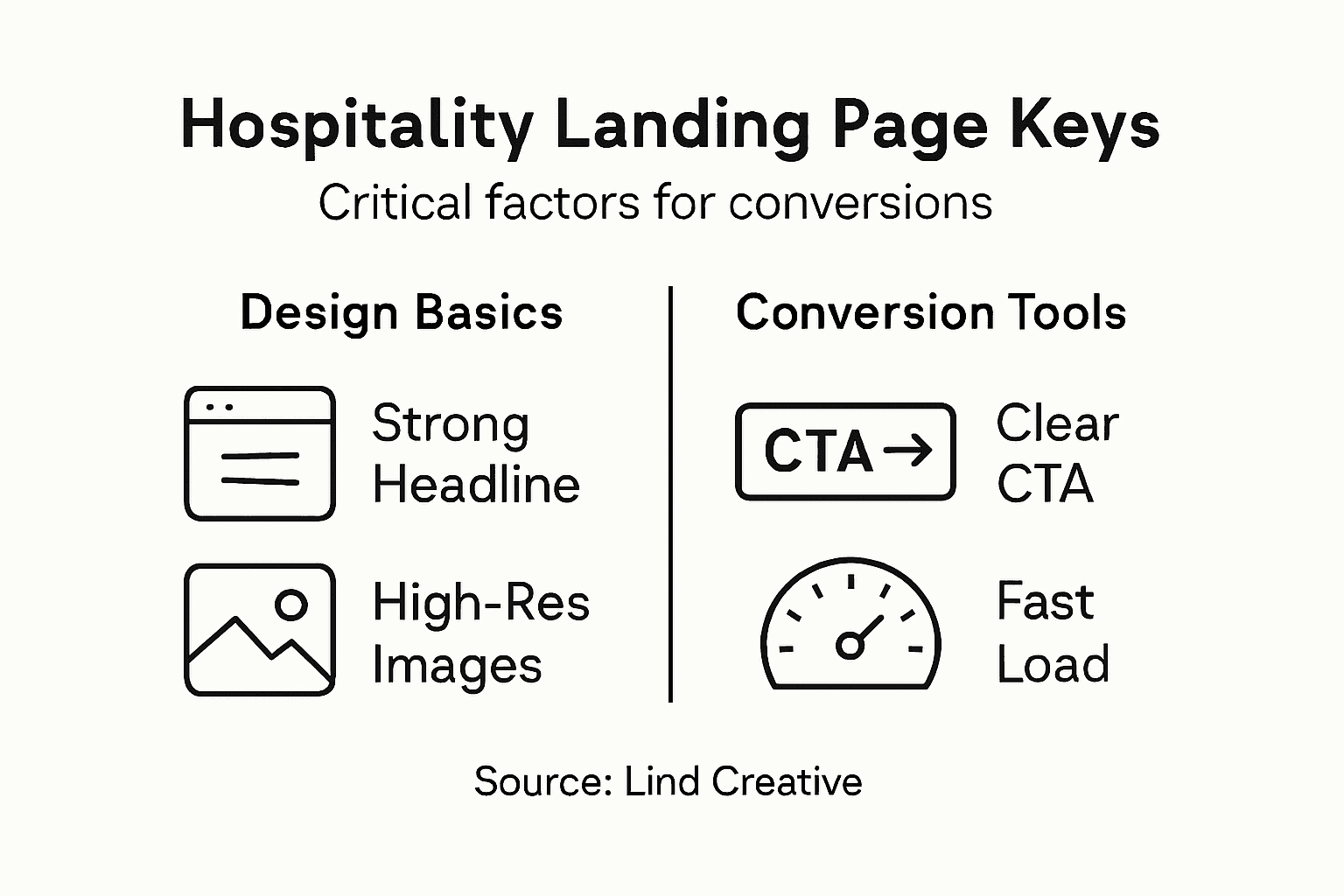
Technical design considerations are equally important for luxury hospitality pages. Mobile responsiveness is no longer optional but essential, as discerning travelers frequently research and book experiences using smartphones and tablets. Page loading speed must be exceptional, with optimized images and streamlined code ensuring that potential guests can quickly access information without experiencing frustrating delays. Typography should reflect the brand’s personality—clean, modern fonts for contemporary luxury properties, or more classical typefaces for heritage establishments—maintaining readability while conveying brand identity.
Pro tip: Implement professional video backgrounds or subtle motion graphics that provide immersive glimpses of your property, creating an emotional connection before guests even complete their booking.
Common Pitfalls and How to Avoid Them
Hospitality landing pages frequently encounter design and strategic challenges that can dramatically reduce conversion rates. Landing page mistakes often stem from fundamental misunderstandings about user experience and conversion psychology. One of the most critical errors is overwhelming potential guests with excessive information or multiple competing calls to action, which can paralyze decision-making and cause visitors to abandon the page entirely.
Message consistency represents another significant challenge for hospitality landing pages. Potential guests expect a seamless narrative that connects their initial point of engagement—whether through an advertisement, social media post, or email campaign—directly to the landing page experience. Disconnects between marketing messaging and landing page content can create immediate distrust, causing visitors to question the brand’s authenticity. This means carefully aligning visual elements, copywriting tone, and promotional offers to create a cohesive storytelling experience that builds confidence and encourages booking.
Technical performance issues can silently sabotage even the most beautifully designed landing pages. Slow loading times, poor mobile responsiveness, and complex navigation structures create friction that drives potential guests away. Luxury hospitality brands must invest in robust technical infrastructure, ensuring that landing pages load quickly across all devices, feature intuitive user interfaces, and provide clear, streamlined paths to conversion. This requires ongoing optimization, regular performance testing, and a commitment to understanding evolving user experience expectations.
Pro tip: Conduct monthly landing page audits using heat mapping and user behavior tracking tools to identify and eliminate potential conversion barriers in real-time.
Transform Hospitality Leads with Strategic Landing Pages and Expert Digital Marketing
Struggling to convert casual website visitors into valuable hospitality leads is a common challenge detailed in this article. The need for focused, compelling landing pages that communicate your unique value proposition and streamline the booking process is clear. Whether it’s capturing guest contact info or promoting time-sensitive offers, your digital strategy must engage visitors immediately while minimizing distractions.
At Lind Creative, we understand these critical pain points and specialize in crafting high-converting landing pages tailored to the hospitality industry. Our team combines creative design with data-driven marketing to deliver experiences that not only look stunning but drive measurable results. Explore how our Digital Marketing – Lind Creative solutions help brands capture leads, automate funnels, and optimize conversion pathways using the very principles highlighted in this article.
Ready to elevate your hospitality brand with landing pages engineered for conversion and growth? Visit Lind Creative to start your transformation today. Dive deeper into actionable strategies with our expert insights available in the Resources – Lind Creative section and stay ahead by exploring the latest in Industry Trends – Lind Creative. Take control of your lead generation and watch your bookings soar.
Frequently Asked Questions
What is a landing page in the context of hospitality brands?
A landing page is a focused web page designed to convert visitors into potential guests or leads, specifically for hospitality brands. It aims to drive customer action, such as room bookings or inquiries, by presenting clear messages and minimizing distractions.
How do hospitality landing pages increase conversion rates?
Hospitality landing pages increase conversion rates by eliminating clutter, showcasing a compelling value proposition, and using strategic call-to-action buttons. They leverage high-quality visuals and social proof, like guest testimonials, to build trust and guide potential guests toward making a reservation.
What are the key components of a successful hospitality landing page?
A successful hospitality landing page typically includes a powerful headline, high-quality imagery, clear pricing information, guest testimonials, and a streamlined booking or inquiry form. These elements work together to create an engaging and effective user experience.
Why is mobile responsiveness important for hospitality landing pages?
Mobile responsiveness is crucial because over 60% of hospitality bookings now come from smartphones. A mobile-responsive design ensures that potential guests have a seamless experience when accessing the landing page on various devices, which can significantly impact conversion rates.
Recommended
- What Is User Experience and Its Impact on Luxury Hospitality – Lind Creative
- Why Personalize User Experience for Luxury Hospitality – Lind Creative
- How to Optimize Hotel Website for Higher Bookings – Lind Creative
- Why Customer Experience Matters for Luxury Hotels – Lind Creative
- Marketing funnel: Ce este si cum sa realizezi unul?
- Landing Page for Referral Program – Lucas Air Conditioning and Heating