
Luxury marketing directors face a unique challenge when standard advertising no longer captures the attention of well-traveled American guests. Building trust and long-term engagement goes far beyond promotions. Instead, strategic content marketing allows brands to connect with discerning travelers through storytelling that solves problems and inspires loyalty. This article explores how hospitality brands can move past simple messaging to craft tailored digital experiences that resonate and drive real results.
Table of Contents
- Defining Content Marketing in Hospitality
- Types of Content That Drive Engagement
- How Content Builds Trust and Loyalty
- Measuring Content Marketing ROI and Success
- Pitfalls to Avoid in Content Campaigns
Key Takeaways
| Point | Details |
|---|---|
| Content Marketing Shift | Transition from traditional advertising to value-driven storytelling is essential for luxury hospitality brands. |
| Engagement Focus | Prioritize creating interactive and tailored content to build meaningful connections with potential guests. |
| Trust and Loyalty | Foster lasting relationships by delivering authentic narratives and consistent brand messaging. |
| Performance Measurement | Employ comprehensive metrics to evaluate content effectiveness beyond superficial engagement statistics. |
Defining Content Marketing in Hospitality
Content marketing in the luxury hospitality sector represents a strategic approach to creating and distributing valuable, targeted content that attracts and engages potential guests. Unlike traditional advertising methods, content marketing focuses on solving customer problems through informative, compelling storytelling that builds trust and connection.
At its core, content marketing in hospitality is about crafting narratives that transcend simple promotional messaging. These narratives must resonate with the sophisticated expectations of luxury travelers by providing insights, experiences, and value that go beyond basic product descriptions. The goal is to transform your brand from a service provider into a trusted advisor and storyteller.
Here is a quick comparison of traditional advertising and content marketing approaches in luxury hospitality:
| Aspect | Traditional Advertising | Content Marketing |
|---|---|---|
| Primary Objective | Promote offers and services | Build trust and engagement |
| Content Style | Direct and promotional | Story-driven and value-based |
| Audience Engagement | One-way communication | Interactive, two-way |
| Long-term Brand Impact | Short-term awareness boost | Sustained loyalty and equity |
Key elements of effective hospitality content marketing include:
- Creating immersive digital experiences that showcase destination uniqueness
- Developing high-quality visual and written content that reflects brand sophistication
- Targeting specific guest personas with tailored, relevant information
- Utilizing multiple channels including social media, blogs, and video platforms
- Measuring engagement and continuously refining content strategies
The most successful hospitality brands understand that content marketing requires strategic alignment with audience needs. This means diving deep into understanding guest motivations, preferences, and pain points to create content that genuinely adds value to their travel planning and experience.
Pro tip: Develop a content persona that reflects your luxury brand’s unique voice and consistently apply it across all marketing channels to create a cohesive storytelling experience.
Types of Content That Drive Engagement
Luxury hospitality marketing demands sophisticated content strategies that go beyond traditional promotional materials. Visual storytelling on digital platforms has emerged as a critical method for capturing the attention of discerning travelers, transforming brand communication into immersive experiences.
The most effective content types in luxury hospitality combine multiple strategic approaches to engage potential guests:
- Experiential Visual Narratives: High-resolution photography and cinematic video content showcasing unique destination experiences
- Personalized Travel Storytelling: Curated content that highlights individual guest journeys and transformative travel moments
- Behind-the-Scenes Insights: Exclusive glimpses into the craft, design, and human stories that define luxury hospitality
- Interactive Digital Experiences: Virtual tours, immersive 360-degree content, and interactive destination guides
- Wellness and Sustainability Narratives: Content that connects travel experiences with personal growth and environmental consciousness
Hospitality trends increasingly emphasize the intersection of technology and human connection, requiring brands to create content that feels both innovative and authentically personal. This means moving beyond simple product descriptions to develop narratives that resonate with guests’ deeper aspirations and lifestyle preferences.
Successful luxury hospitality brands understand that engagement is not about volume, but about creating meaningful, emotionally resonant content that speaks directly to the sophisticated traveler’s desire for unique, transformative experiences.
Pro tip: Develop a content calendar that balances aspirational storytelling with genuine, behind-the-scenes authenticity to create a truly compelling brand narrative.
How Content Builds Trust and Loyalty
Luxury hospitality brands build trust through strategic digital storytelling that transforms transactional interactions into meaningful emotional connections. By crafting content that speaks directly to guest aspirations, luxury hospitality brands can create deep, lasting relationships that transcend traditional marketing approaches.
Key strategies for building trust through content include:
- Authenticity in Storytelling: Creating genuine narratives that reveal brand values and human experiences
- Consistent Brand Voice: Maintaining a uniform tone and message across all digital platforms
- Personalized Communication: Developing content that feels tailored to individual guest preferences
- Transparency and Behind-the-Scenes Insights: Sharing authentic glimpses into brand operations and philosophy
- Responsive and Engaging Content: Developing interactive experiences that invite guest participation
Digital marketing strategies increasingly shape brand loyalty by providing personalized, immersive experiences that go beyond traditional promotional materials. Successful luxury hospitality brands understand that trust is built through consistent value delivery, emotional resonance, and a deep understanding of guest expectations.

Trust is not a single moment but a continuous journey of engagement, where each piece of content serves as a building block in creating a lasting relationship with discerning travelers who seek more than just a service – they seek a meaningful connection.
Pro tip: Create a content feedback loop that allows guests to contribute to and shape your brand’s storytelling, transforming passive consumers into active brand advocates.
Measuring Content Marketing ROI and Success
Content marketing effectiveness requires systematic performance measurement that goes beyond traditional metrics. Luxury hospitality brands must develop sophisticated tracking mechanisms that capture the nuanced impact of digital storytelling and engagement strategies.
Key performance indicators for measuring content marketing success include:
- Engagement Metrics: Tracking likes, shares, comments, and time spent on content
- Conversion Rates: Measuring how content translates into direct bookings and inquiries
- Brand Trust Indicators: Assessing shifts in perception and emotional connection
- Lead Quality: Evaluating the sophistication and purchasing potential of attracted prospects
- Cost Per Acquisition: Comparing content marketing expenses against traditional advertising
Content marketing ROI extends beyond immediate financial returns by building long-term brand equity and customer relationships. Successful luxury hospitality brands understand that each piece of content is an investment in future guest experiences, not just a short-term marketing tactic.
Measuring content marketing success requires a holistic approach that balances quantitative data with qualitative insights. Brands must continuously refine their strategies, using performance metrics to create more targeted, resonant content that speaks directly to their most valued guests.
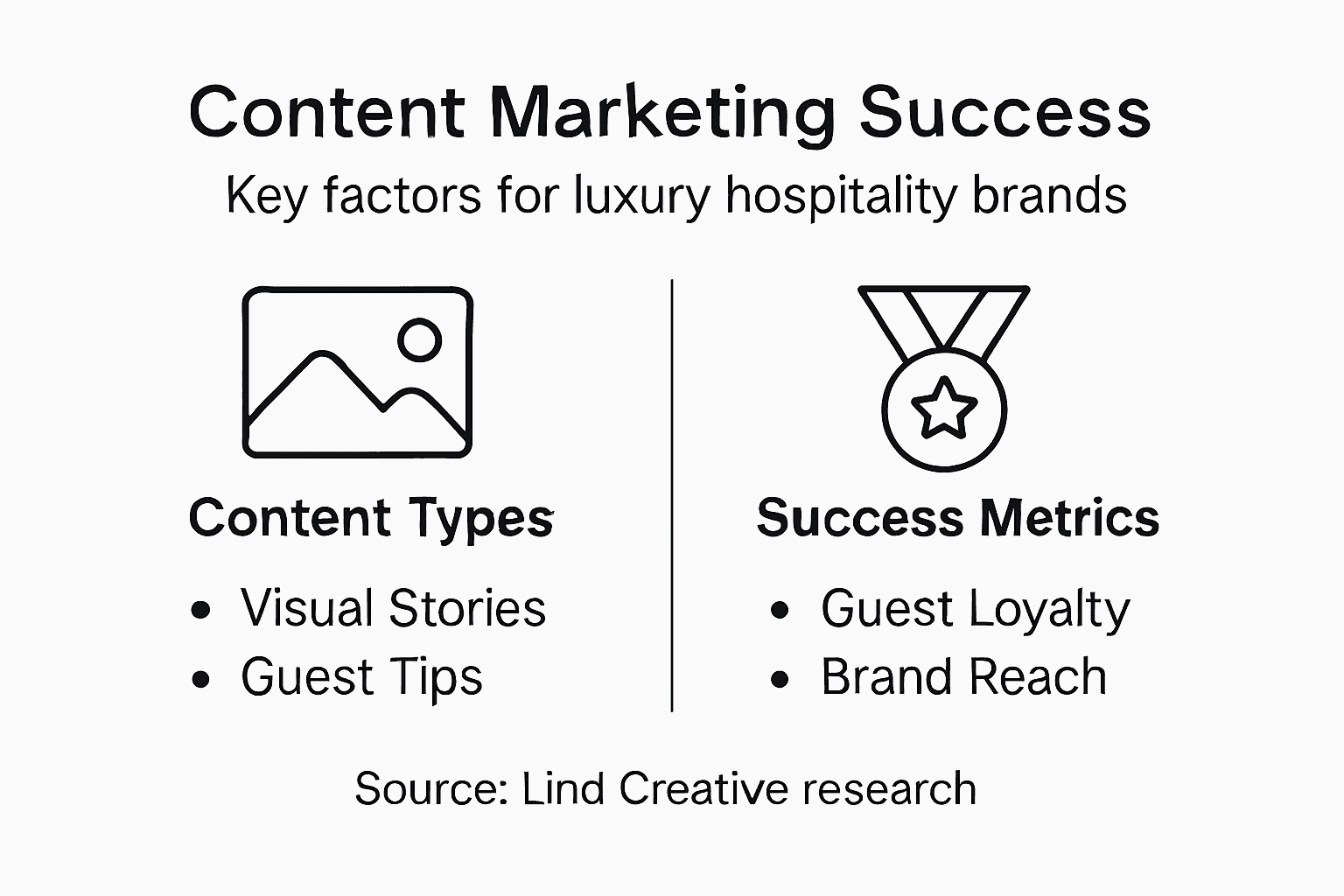
Below is a summary of key metrics for evaluating content marketing ROI in hospitality:
| Metric Area | What It Measures | Business Value |
|---|---|---|
| Engagement | Interactions and time spent | Indicates content resonance |
| Conversion | Bookings from content | Connects marketing to revenue |
| Brand Trust | Guest perception shifts | Drives long-term loyalty |
| Lead Quality | Guest persona fit and potential | Identifies prime customers |
Pro tip: Develop a comprehensive content scorecard that tracks both numerical metrics and emotional engagement indicators to gain a complete picture of your content marketing performance.
Pitfalls to Avoid in Content Campaigns
Luxury hospitality content campaigns often fall into strategic traps that undermine their long-term effectiveness. Brands must recognize and proactively address these common missteps to maintain meaningful audience connections and sustainable marketing performance.
Key pitfalls to be aware of include:
- Superficial Performance Metrics: Over-relying on vanity metrics like likes and shares instead of meaningful engagement
- Short-Term Optimization: Focusing on immediate conversions rather than building lasting brand relationships
- Lack of Emotional Depth: Creating content that fails to forge genuine emotional connections with potential guests
- Inconsistent Brand Voice: Presenting disjointed narratives across different marketing channels
- Neglecting Audience Ownership: Depending too heavily on intermediary platforms instead of developing direct audience relationships
Social media marketing strategies can inadvertently reduce consumer engagement when they lack authentic, meaningful storytelling. Successful luxury hospitality brands understand that content must transcend mere promotion, creating narratives that resonate deeply with their target audience’s aspirations and values.
Navigating these pitfalls requires a strategic, holistic approach that prioritizes genuine connection over transactional interactions. Brands must continuously evolve their content strategies, listening closely to their audience and adapting their storytelling to maintain relevance and emotional resonance.
Pro tip: Conduct quarterly content audits that assess not just numerical performance, but the emotional impact and authenticity of your brand’s storytelling.
Unlock the Power of Strategic Content Marketing for Luxury Hospitality
Struggling to create authentic, emotionally resonant stories that build trust and loyalty with sophisticated travelers The challenge lies in crafting storytelling that goes beyond simple promotion and deeply connects with your audience’s aspirations. This is where a cohesive brand identity and strategy-driven design make all the difference. Lind Creative specializes in transforming luxury hospitality brands through immersive digital experiences and compelling narratives that captivate and convert.
Explore our Branding & Identity – Lind Creative solutions and discover how our creative approach can elevate your content marketing efforts to build lasting guest loyalty. Ready to refresh your online presence or launch a new luxury brand experience Visit Lind Creative now to start crafting a storytelling strategy that delivers measurable impact and real ROI. For deeper insights and actionable tips, browse our comprehensive Resources – Lind Creative and see how strategy and design come together to grow your business.
Frequently Asked Questions
What is content marketing in luxury hospitality?
Content marketing in luxury hospitality is a strategic approach that involves creating and distributing valuable content to attract and engage potential guests, focusing on storytelling that builds trust and connection rather than traditional advertising.
How does content marketing differ from traditional advertising in the hospitality sector?
Unlike traditional advertising, which promotes offers and services, content marketing aims to build trust and engagement through story-driven, value-based content that creates a meaningful connection with guests.
What types of content are most effective in engaging luxury travelers?
Effective content types in luxury hospitality include experiential visual narratives, personalized travel storytelling, behind-the-scenes insights, interactive digital experiences, and wellness and sustainability narratives that resonate with travelers’ aspirations.
How can hospitality brands measure the success of their content marketing efforts?
Brands can measure content marketing success using key performance indicators such as engagement metrics, conversion rates, brand trust indicators, lead quality, and cost per acquisition, balancing quantitative data with qualitative insights.
Recommended
- Role of Content Marketing in Luxury Hospitality – Lind Creative
- Content Creation Process for Luxury Brand Engagement – Lind Creative
- Why Market Research Matters for Luxury Hospitality – Lind Creative
- Multi Channel Strategy: Boosting Luxury Hotel Bookings – Lind Creative
- Luxury Homes Austin | Austin Realtor