
Every successful luxury hospitality brand starts with a strong sense of purpose and a deep understanding of its most valuable guests. Without clear brand goals and a well-defined audience, even the finest properties struggle to build lasting engagement in a competitive American market. By combining audience segmentation techniques with a multi-dimensional approach to brand identity, you lay the groundwork for meaningful content and stronger emotional connections that turn first-time visitors into loyal advocates.
Table of Contents
- Step 1: Define Brand Goals And Audience
- Step 2: Develop An Actionable Content Strategy
- Step 3: Create Compelling, Brand-Aligned Content
- Step 4: Optimize Content For Each Platform
- Step 5: Measure Results And Refine Tactics
Quick Summary
| Key Insight | Explanation |
|---|---|
| 1. Define brand goals clearly | Articulate specific brand aspirations to guide content that resonates with the target audience. |
| 2. Identify audience segments | Precisely segment your market to tailor content that meets distinct needs and preferences. |
| 3. Establish content strategy | Create a detailed plan for content creation, including formats, publishing schedules, and metrics. |
| 4. Optimize for each platform | Adjust content style and messaging to suit the culture and expectations of each digital platform. |
| 5. Measure and refine tactics | Regularly track performance metrics to identify successes and adjust strategies for better ROI. |
Step 1: Define brand goals and audience
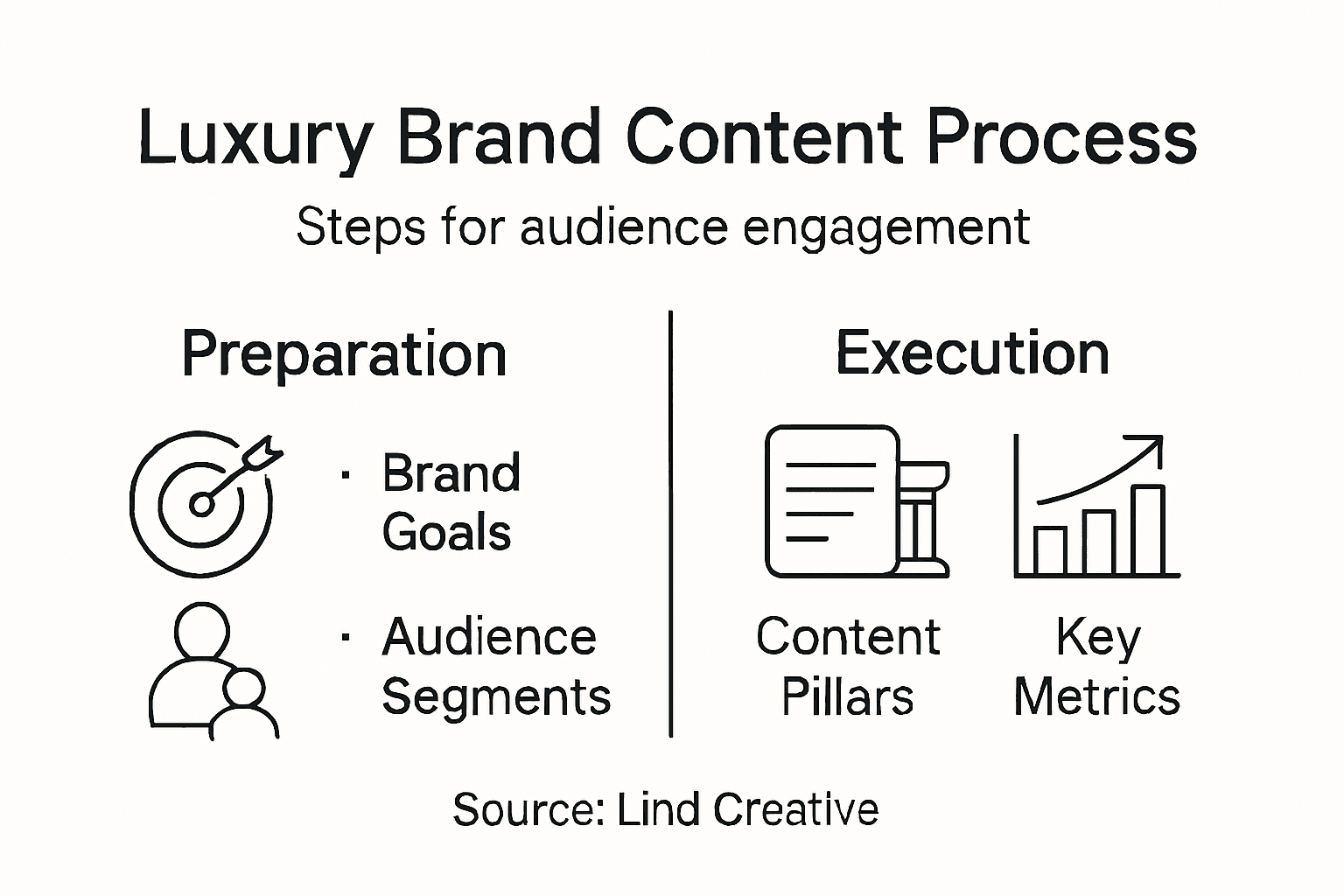
Your luxury brand’s success depends on clarity about what you want to achieve and who you’re trying to reach. Before creating any content, you need a solid foundation that guides every decision moving forward. This step ensures your engagement strategy resonates with the right people and moves them toward meaningful action.
Start by articulating your brand goals with specificity. What do you want your luxury hospitality brand to be known for? Are you positioning as the pinnacle of personalized service, the guardian of heritage and tradition, or the innovator pushing boundaries in guest experience? Your goals should extend beyond basic customer satisfaction. Research shows that defining luxury brand goals involves understanding your aspirations and how you want to shape customer-brand relationships over time. Write these down clearly. “We want to become the most sought-after destination for discerning travelers seeking authentic cultural immersion” is far more actionable than “be the best.”
Next, identify your target audience with precision. Luxury hospitality attracts different segments with distinct motivations. One guest values wellness and rejuvenation, while another seeks exclusive networking opportunities or adventure experiences. Audience segmentation divides your market into groups based on demographics, interests, and behaviors, allowing you to deliver tailored messaging. Who are your ideal guests? What’s their age range, income level, lifestyle, and values? What problems do they face that your brand solves? What experiences do they crave?
Map the intersection between your brand goals and your audience’s needs. Your goal of “authentic cultural immersion” might target affluent professionals aged 35-55 who value meaningful travel experiences over material excess. This clarity prevents wasted effort on generic content that appeals to everyone but engages no one.
Below is a summary of typical luxury hospitality audience segments and their top motivations:
| Segment Name | Key Motivation | Preferred Experience |
|---|---|---|
| Wellness Seekers | Health & rejuvenation | Spa, mindfulness retreats |
| Culture Enthusiasts | Authentic experiences | Local tours, arts events |
| Business Networkers | Exclusive connections | Private lounges, VIP events |
| Adventure Travelers | Thrill and novelty | Guided expeditions, outdoor fun |
This overview helps clarify which motivations align with your brand goals.
Document your findings. Create a simple one-page summary of your primary brand goals and 2-3 core audience segments with brief descriptions of who they are and what matters to them. This becomes your north star for every content decision ahead.
Pro tip: Interview 5-10 of your best guests and ask what made them choose your brand over competitors, then look for patterns in their responses to refine both your goals and audience definition.
Step 2: Develop an actionable content strategy
With your brand goals and audience clearly defined, you now need a concrete plan for what content to create, when to publish it, and where it lives. A vague content strategy leads to scattered efforts and wasted resources. What constitutes content strategy provides a clear roadmap that transforms your creative work into measurable business results.
Start by mapping content formats to your audience’s preferences and consumption habits. Do your luxury hospitality guests prefer short form video on social media, long-form written guides about destinations, or immersive virtual tours? Different platforms attract different behaviors. A high-net-worth traveler browsing Instagram during airport lounge time has different expectations than someone researching your property on your website at home. Crafting emotionally resonant luxury brand content means blending poetic language with your brand voice to create experiences that feel aspirational yet authentic. Your content should help guests dream about possibilities while grounding those dreams in real experiences your brand delivers.
Next, define your content pillars. These are three to five main themes your brand consistently communicates. For luxury hospitality, examples might include “Curated Experiences,” “Destination Expertise,” “Wellness Journeys,” or “Authentic Cultural Connections.” Every piece of content you create should ladder up to one of these pillars. This prevents your brand voice from feeling scattered and ensures consistency across all touchpoints.
Then, establish your publishing rhythm and distribution channels. How frequently will you publish? Weekly? Twice monthly? On which platforms does your audience actually spend time? Your strategy should specify which content goes where and when. Email newsletters might feature deeper stories, while Instagram showcases visual moments, and your blog positions your brand as a thought leader.
Finally, identify three to five key performance metrics aligned with your business goals. Are you measuring website visits, email engagement, booking conversions, or brand awareness lift? Your strategy succeeds when you can track progress and adjust course based on real data.
Pro tip: Create a simple content calendar spreadsheet for the next three months, assigning each piece to a pillar, platform, and publication date, then review what performed best before planning the following quarter.
Step 3: Create compelling, brand-aligned content
Now comes the creative work. Your strategy is set, your audience is defined, and your pillars are clear. The challenge is producing content that feels authentic to your brand while captivating your luxury audience. Content that resonates with luxury consumers emphasizes authenticity, status, and exclusivity while supporting your brand values and identity.
Start by establishing clear brand voice guidelines. How does your luxury hospitality brand speak? Is your tone refined and understated, or bold and visionary? Does your brand use formal language or conversational warmth? Document specific phrases your brand uses and avoids, tone examples for different situations, and the emotional mood you want to evoke. When your entire team understands these guidelines, every blog post, Instagram caption, and email feels like it came from the same thoughtful source.

Next, create content with emotional depth. Surface-level descriptions of amenities do not engage luxury travelers. They want to feel something. What transformative experience awaits them? How will your property change their perspective? A piece about your wellness program becomes compelling when you describe how guests reconnect with themselves and emerge with clarity. Storytelling in branding creates those emotional connections that turn prospects into loyal guests.
Then address the authenticity factor. Luxury audiences detect inauthenticity immediately. Your content should showcase real stories from real guests, genuine staff passion, and honest perspectives on your destination. Behind-the-scenes content revealing how your team prepares for guests or how your chef sources ingredients builds trust. Manufactured perfection feels hollow. Real moments feel luxurious.
Consider leveraging comprehensive brand alignment approaches when using tools to scale production. Whether you employ generative AI, freelance writers, or in-house creators, ensure every piece reflects your brand voice and values. Review content before publishing, maintain human oversight, and refine anything that feels off-brand.
Pro tip: Create a content audit template capturing tone, emotional themes, and brand pillars for your best-performing pieces, then use this as a reference guide for your content team to maintain consistency across all channels.
Step 4: Optimize content for each platform
Your content exists across multiple channels, but each platform has its own culture, norms, and audience expectations. A LinkedIn article will not work as an Instagram caption, and a TikTok video does not belong on your website homepage. Tailoring content style, message, and format to fit each platform maximizes engagement while maintaining your brand identity.
Start with Instagram. This platform thrives on visual storytelling and aspirational moments. Your luxury property’s Instagram should showcase stunning photography, behind-the-scenes glimpses, and guest experiences that feel exclusive yet accessible. Captions should be poetic but concise. Use Instagram Stories for real-time updates, Reels for short videos, and your feed for your most polished content. The frequency should be consistent without overwhelming followers.
Next, approach LinkedIn differently. Your executive team members can share thought leadership pieces about hospitality trends, sustainable luxury, or destination expertise. LinkedIn content is longer-form and conversational. A post about how your property adapts to changing traveler preferences positions your brand as innovative and responsive. LinkedIn audiences expect substance and insight, not promotion.
For your website and blog, optimization strategies matter significantly. Your written content should be comprehensive, searchable, and valuable. Blog posts about destination guides, travel tips, and luxury experiences establish authority while improving search visibility. Website pages need clear messaging and intuitive navigation for guests researching and booking.
Email requires a more intimate approach. Subscribers have opted into direct communication, so your messaging can be more personal and promotional. Share exclusive offers, member previews, and personalized recommendations based on their interests. Omnichannel content strategies integrate these channels so your message feels cohesive across digital touchpoints while maintaining the exclusivity that defines luxury engagement.
Here is a comparison of content approaches for major digital platforms in luxury hospitality:
| Platform | Main Content Style | Optimal Tone | Ideal Posting Frequency |
|---|---|---|---|
| High-quality imagery | Poetic, aspirational | 3-5 times weekly | |
| Thought leadership | Professional, insightful | 1-2 times weekly | |
| Blog | In-depth guides | Informative, engaging | 2-4 times monthly |
| Exclusive updates | Personal, direct | 2-3 times monthly |
Pro tip: Create a simple platform comparison chart listing format, tone, posting frequency, and content pillars for each channel, then share it with your team so everyone understands how to adapt the same story across different spaces.
Step 5: Measure results and refine tactics
Creating content is only half the battle. The real power comes from measuring what works and adjusting your approach based on evidence. Content marketing effectiveness depends on systematic performance measurement and using data-driven insights to improve your offerings and achieve better ROI.
Start by defining your key performance indicators before you launch. What does success look like for your luxury brand? Are you tracking website traffic, email open rates, social media engagement, booking conversions, or brand awareness lift? Different content serves different purposes. A destination guide might drive website visits and search visibility, while an Instagram Reel targets engagement and reach. Your metrics should align with your content goals.
Monitor your performance weekly. Most platforms provide built-in analytics dashboards. Instagram shows you which posts resonated most, LinkedIn reveals which topics sparked conversation, and your website analytics tell you which blog posts converted visitors into prospects. Look for patterns. Which content pillars perform strongest? Which platforms drive the most qualified traffic? Do certain storytelling approaches generate more saves and shares than others?
Beyond numbers, gather qualitative feedback. Measuring brand and content outcomes involves both quantitative data and stakeholder insights. Interview your sales team about which content helps close bookings. Ask your guest services team what questions guests ask before arrival. Read the comments and messages your content receives. Real feedback reveals whether your brand message truly lands with your audience.
Then refine your tactics quarterly. If a particular content format consistently underperforms, shift your resources elsewhere. If certain themes drive disproportionate engagement, create more content in that direction. If your Instagram audience engages at 5 PM daily, adjust your posting schedule. Small refinements compound over time into significantly better results.
Pro tip: Create a monthly one-page scorecard tracking your top three metrics, noting what worked that month and what to test next, then share it with your team to maintain alignment and momentum.
Elevate Your Luxury Brand Engagement with Strategy-Driven Creativity
Luxury brands face the challenge of crafting authentic, emotionally resonant content that captivates discerning audiences while maintaining consistent brand alignment. This article highlights key obstacles such as defining clear brand goals, creating compelling storytelling, and optimizing content across multiple platforms. If you find yourself striving to streamline your content creation process and translate your brand vision into measurable growth this is the perfect moment to act.
Unlock the power of purposeful design and marketing by exploring our Branding & Identity – Lind Creative and Resources – Lind Creative categories.
Take the leap now with Lind Creative a full-service digital agency that blends creativity technology and strategy to build, brand, and grow your luxury hospitality experience. Visit us at https://lindcreative.com to discover how our signature Growth Engine automates marketing funnels, lead capture, email, and ads, helping your brand attract, convert, and expand with tangible results. Start transforming your content into a powerful engagement tool today.
Frequently Asked Questions
What are the first steps in the content creation process for luxury brand engagement?
Start by defining your brand goals and identifying your target audience. Clearly articulate what your luxury brand wants to be known for, and outline the specific segments of your audience you aim to engage.
How do I develop an actionable content strategy for my luxury brand?
To create an effective content strategy, map out content formats preferred by your audience and define key content pillars. Establish a publishing rhythm and determine the platforms where your audience is most active.
What types of content should I create to engage luxury consumers?
Focus on creating content that emphasizes authenticity, exclusivity, and emotional depth. Producing storytelling pieces that highlight real guest experiences will resonate with luxury consumers and strengthen brand loyalty.
How can I optimize content for different platforms?
Tailor your content style, messaging, and format for each platform to maximize engagement. For example, use visually stunning imagery for Instagram, while sharing thought leadership articles on LinkedIn and comprehensive guides on your blog.
What metrics should I track to measure content effectiveness?
Identify key performance indicators such as website traffic, social media engagement, and booking conversions to evaluate your content’s success. Track these metrics regularly to inform your future content decisions and strategies.
How often should I refine my content tactics?
Refine your content tactics quarterly based on performance data and audience feedback. Adjust your strategy to focus on high-performing content types and themes, ensuring they align with your luxury brand goals.
Recommended
- Role of Content Marketing in Luxury Hospitality – Lind Creative
- 7 User Experience Improvement Ideas for Luxury Brands – Lind Creative
- How to Build a Brand for Luxury Hospitality Success – Lind Creative
- Role of CRM in Marketing: Driving Luxury Engagement – Lind Creative
- 🧡 Od nuly k lovebrandu: 7 krokov, ako vytvoriť značku, ktorú si zákazníci zamilujú, budú sledovať a kupovať