
Managing guest engagement for a luxury hotel in the United States can feel complex when every channel promises unique advantages. Marketing leaders must navigate an evolving mix of digital platforms, direct booking engines, and traditional outlets to ensure consistent brand messaging and profitable bookings. This article highlights how a multi-channel strategy blends personalized outreach and coordinated communication, empowering your brand to connect with diverse guests while increasing control and profitability across all touchpoints.
Table of Contents
- Defining Multi Channel Strategy in Hospitality
- Key Channels for Guest Engagement and Bookings
- How a Multi Channel Approach Works
- Benefits for Luxury Hospitality Brands
- Common Pitfalls and Optimization Insights
Key Takeaways
| Point | Details |
|---|---|
| Multi-Channel Strategy | Engaging guests through various platforms enhances personalization and customer experience. Coordination ensures consistent messaging across all channels. |
| Guest Engagement Channels | Luxury hotels should utilize direct booking sites, social media, and email marketing to optimize guest interactions and increase profitability. |
| Data-Driven Insights | Leveraging analytics and CRM systems helps hotels tailor communications and anticipate guest needs, leading to improved satisfaction. |
| Common Pitfalls | Overreliance on OTAs and fragmented messaging can harm brand loyalty, requiring strategic adjustments to enhance direct bookings and overall brand coherence. |
Defining Multi Channel Strategy in Hospitality
A multi-channel strategy in hospitality represents a sophisticated approach to engaging potential guests across multiple platforms and touchpoints. By strategically coordinating marketing efforts through digital and traditional channels, luxury hotels can create seamless, personalized experiences that meet guests where they are most comfortable. Multichannel marketing in hospitality enables consumers to interact with a brand through their preferred communication methods, whether that’s a mobile app, website, social media platform, or traditional booking channel.
At its core, a multi-channel strategy involves integrating various distribution and promotional networks to provide consistent messaging and exceptional customer experiences. This approach goes beyond simply existing on multiple platforms – it requires thoughtful coordination and synchronized brand representation. Luxury hotels must ensure that their messaging, visual identity, pricing, and service standards remain uniform across all channels, from high-end travel websites to direct email marketing campaigns.
The strategic implementation of a multi-channel approach allows hospitality brands to serve diverse market segments more effectively. Strategic management techniques help hotels adapt their marketing frameworks to incorporate digital platforms while maintaining the personalized touch that luxury guests expect. This might involve using data analytics to understand guest preferences, creating targeted content for specific audience segments, and developing responsive communication strategies that feel individualized and high-touch.
Pro tip: Conduct regular channel performance audits to identify which platforms generate the most engagement and bookings, allowing you to optimize your marketing resources and guest communication strategies.
Key Channels for Guest Engagement and Bookings
Luxury hotels must leverage a diverse array of engagement channels to effectively attract and convert potential guests. Direct booking platforms represent the most strategic channel, allowing hotels to maintain complete control over guest relationships and maximize profitability by reducing third-party commission costs. These platforms should be mobile-optimized, intuitive, and designed to provide a seamless booking experience that reflects the hotel’s premium brand positioning.
The digital landscape for luxury hospitality encompasses multiple critical channels beyond direct websites. Online travel agencies (OTAs), meta-search platforms, social media networks, and personalized email marketing campaigns all play pivotal roles in reaching potential guests. Each channel requires a tailored approach that maintains consistent messaging while adapting to the specific communication preferences of different market segments. Sophisticated hotels now integrate artificial intelligence and data analytics to create highly targeted communication strategies that feel personalized and exclusive.
Ancillary booking channels offer significant opportunities for enhanced guest engagement and revenue generation. Emerging booking trends indicate that hotels can increase profitability by curating unique service offerings like spa packages, dining experiences, local tours, and customized amenities. By transforming booking platforms into comprehensive experience marketplaces, luxury hotels can differentiate themselves and provide value beyond traditional room reservations.
Pro tip: Implement a robust cross-channel tracking system to understand guest interaction patterns and optimize your marketing resources across different engagement platforms.
Here’s a summary of major guest engagement channels and their unique roles in luxury hospitality:
| Channel Type | Main Benefit | Typical Guest Segment | Business Impact |
|---|---|---|---|
| Direct Booking Site | Full brand control | Repeat & loyal guests | Higher profit, better loyalty |
| Online Travel Agency | Wide audience exposure | First-time global guests | Increased market reach |
| Social Media | Real-time interaction | Younger, digital natives | Brand awareness boost |
| Email Marketing | Personalized offers | Returning and high-value | Repeat bookings, upsell sales |
| Ancillary Platforms | Experiential packages | Experience-focused guests | Increased non-room revenue |
How a Multi Channel Approach Works
A multi-channel approach transforms how luxury hotels strategically engage with potential guests by creating interconnected communication pathways. Hospitality marketing integration involves synchronizing diverse channels to ensure consistent brand messaging while adapting communication styles to each platform’s unique characteristics. This sophisticated strategy allows hotels to reach different customer segments through targeted, personalized interactions that feel both cohesive and individually tailored.
The technical implementation of a multi-channel approach requires advanced technological infrastructure and data management capabilities. Digital and traditional platforms must work in concert, leveraging technologies like customer relationship management (CRM) systems, artificial intelligence, and real-time analytics to track guest interactions across different touchpoints. This enables hotels to create a comprehensive understanding of guest preferences, behaviors, and potential booking triggers, allowing for highly nuanced and responsive marketing strategies.

Successful multi-channel strategies transcend simple marketing distribution by creating a holistic guest experience ecosystem. Each channel – whether social media, email, direct booking platforms, or offline promotional events – serves as a potential conversion point and relationship-building opportunity. By maintaining consistent brand voice, visual identity, and service promise across these channels, luxury hotels can build trust, demonstrate professionalism, and differentiate themselves in a competitive marketplace. The goal is not just to communicate but to create a seamless, integrated experience that feels personalized and high-touch.
Pro tip: Develop a centralized data dashboard that aggregates insights from all marketing channels, enabling real-time performance tracking and rapid strategic adjustments.
Benefits for Luxury Hospitality Brands
A multi-channel strategy provides luxury hospitality brands with transformative opportunities to elevate their market positioning and guest engagement. Omnichannel customer experiences deliver exceptional value by creating consistent, high-touch interactions across multiple platforms while maintaining the brand’s core promise of exclusivity and personalized service. This approach allows luxury hotels to simultaneously reach diverse customer segments, from digital natives to traditional travelers, without compromising their sophisticated brand identity.
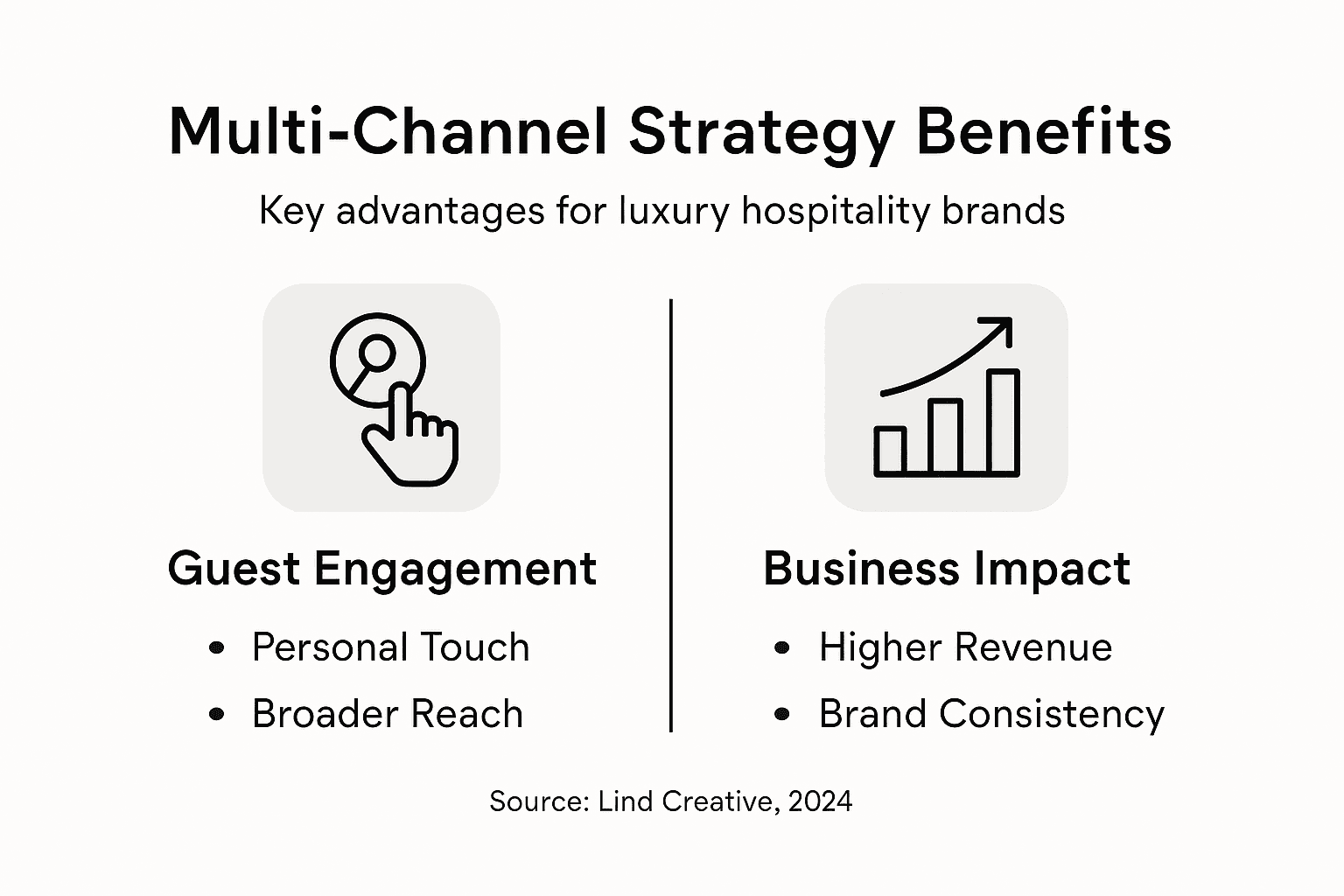
Technological integration enables luxury hospitality brands to achieve unprecedented levels of operational efficiency and guest insights. By leveraging advanced data analytics and customer relationship management systems, hotels can create deeply personalized marketing approaches that anticipate guest needs before they are explicitly expressed. Technology-driven personalization allows brands to craft unique experiences that feel simultaneously intimate and technologically sophisticated, bridging the gap between high-tech convenience and high-touch hospitality.
The strategic benefits extend beyond immediate marketing gains, fundamentally transforming how luxury hospitality brands connect with their audience. Multi-channel strategies support broader business objectives by creating multiple touchpoints that build brand loyalty, generate valuable customer data, and provide flexibility in reaching different market segments. These approaches enable hotels to demonstrate agility, technological sophistication, and a nuanced understanding of evolving guest expectations, positioning them as innovative leaders in a competitive marketplace.
Pro tip: Implement a unified customer data platform that integrates insights from all channels, allowing for real-time personalization and strategic marketing adjustments.
Common Pitfalls and Optimization Insights
Luxury hospitality brands frequently encounter significant challenges when implementing multi-channel strategies, with critical operational barriers emerging from technological limitations and organizational resistance. Legacy technology systems often create fragmented guest experiences, preventing seamless communication across booking platforms, social media channels, and direct marketing efforts. These technological gaps can undermine the sophisticated brand positioning that luxury hotels work hard to maintain.
Multichannel marketing challenges typically stem from three primary areas: overreliance on online travel agencies (OTAs), inconsistent brand messaging, and ineffective data utilization. OTAs, while providing broad market reach, can significantly erode profit margins through hefty commission structures. Successful luxury hotels mitigate this by developing robust direct booking strategies that incentivize guests to book through proprietary platforms, offering exclusive perks, personalized experiences, and transparent pricing that differentiates their brand from generic booking channels.
Optimization requires a holistic approach that integrates technology, staff training, and customer-centric design. Hotels must invest in advanced customer relationship management systems that aggregate data across all interaction points, enabling truly personalized marketing and service delivery. This means breaking down internal silos, training staff to understand and leverage digital tools, and creating a flexible technological infrastructure that can adapt to rapidly changing guest expectations and emerging booking technologies.
Below is a comparison of common pitfalls in multi-channel hospitality strategies and effective solutions:
| Pitfall | Negative Impact | Optimization Solution |
|---|---|---|
| Overreliance on OTAs | Lower profits, weak loyalty | Incentivize direct bookings |
| Fragmented brand messaging | Guest confusion, distrust | Unified cross-channel standards |
| Ineffective data usage | Missed personalization | Centralized analytics platform |
| Legacy tech systems | Poor guest experience | Modernize with CRM integration |
Pro tip: Conduct quarterly technology and communication audits to identify and resolve channel consistency gaps, ensuring your multi-channel strategy remains agile and guest-focused.
Elevate Your Luxury Hotel’s Multi Channel Strategy with Lind Creative
The challenge of delivering a seamless and personalized multi channel experience while managing diverse platforms can feel overwhelming. If you are struggling with fragmented brand messaging, overreliance on OTAs, or ineffective data usage — Lind Creative understands these critical pain points. We specialize in crafting strategy-driven design and integrated marketing systems that unify your brand presence across all guest engagement channels. By leveraging cutting-edge technology and a cohesive Growth Engine, we help luxury hotels turn complex multi channel strategies into powerful, revenue-driving growth.
Take control of your digital landscape today by partnering with experts who blend creativity, technology, and data-driven strategy. Visit Lind Creative to explore how we build high-converting websites and deploy automated marketing funnels that amplify your direct bookings. Don’t let legacy systems hold back your brand. Connect with us now and start transforming your marketing into a seamless, personalized guest journey that boosts loyalty and maximizes profitability.
Frequently Asked Questions
What is a multi-channel strategy in luxury hospitality?
A multi-channel strategy in luxury hospitality involves engaging potential guests through various platforms, such as websites, social media, and traditional booking channels, to create personalized and seamless experiences.
How can luxury hotels optimize their direct booking platforms?
Luxury hotels can optimize direct booking platforms by ensuring they are mobile-optimized, user-friendly, and reflect the hotel’s premium branding, thus maximizing efficiency and profitability.
What are the key benefits of using a multi-channel approach for hotel marketing?
The key benefits include enhanced guest engagement, consistent brand messaging, and the ability to reach diverse market segments, ultimately driving higher loyalty and revenue for luxury hotels.
What common pitfalls should luxury hotels avoid in their multi-channel strategies?
Luxury hotels should avoid overreliance on online travel agencies (OTAs), inconsistent brand messaging, ineffective data management, and outdated technology systems to ensure a cohesive customer experience.
Recommended
- 7 Key Benefits of Branding for Luxury Hospitality Success – Lind Creative
- Why Customer Experience Matters for Luxury Hotels – Lind Creative
- Digital Branding: Driving Luxury Hospitality Growth – Lind Creative
- Role of Content Marketing in Luxury Hospitality – Lind Creative