
Standing out in the competitive world of luxury hospitality means rethinking how you connect with discerning guests. Content marketing moves beyond simple promotion by focusing on authentic, narrative-driven engagement that speaks to the emotional needs of travelers. When storytelling captures unique experiences and brand heritage, it transforms guest perception and deepens loyalty. This article shares key strategies for defining and delivering compelling content that resonates with your audience at every step of their journey.
Table of Contents
- Defining Content Marketing For Hospitality Brands
- Key Content Types And Their Unique Impact
- Engaging Luxury Guests Through Compelling Storytelling
- Measuring Success: Roi And Metrics That Matter
- Common Content Marketing Pitfalls To Avoid
Key Takeaways
| Point | Details |
|---|---|
| Content Marketing Focus | Luxury hospitality brands should create compelling narratives that connect emotionally with discerning travelers. |
| Diverse Content Types | Utilize various formats like immersive videos and user-generated content to enhance brand authenticity and engagement. |
| Emotional Engagement Metrics | Track sophisticated metrics beyond traditional views, including emotional engagement and brand sentiment, to understand content effectiveness. |
| Avoid Common Pitfalls | Ensure content maintains a cohesive narrative and balances exclusivity with accessibility to resonate with potential guests. |
Defining Content Marketing for Hospitality Brands
Content marketing for luxury hospitality brands represents a sophisticated strategic approach to connecting with potential guests through targeted, valuable storytelling. Unlike traditional advertising, this method focuses on creating engaging narratives that resonate with discerning travelers seeking authentic, meaningful experiences. Strategic content development transforms how hospitality brands communicate their unique value proposition.
At its core, content marketing involves crafting compelling narratives that go beyond simple promotional messaging. These narratives must capture the essence of a luxury hospitality brand – highlighting experiential elements, cultural nuances, and distinctive service offerings that differentiate the brand in a competitive marketplace. By strategically targeting consumer behavior, brands can create content that speaks directly to the emotional and aspirational desires of their target audience.
Successful content marketing in luxury hospitality requires a multifaceted approach. This includes developing rich multimedia content such as immersive photography, video experiences, travel guides, destination insights, and personalized storytelling that provides genuine value to potential guests. The goal is not just to advertise a location, but to craft an emotional connection that transforms passive viewers into engaged, enthusiastic travelers who feel a deep resonance with the brand’s unique narrative.
Pro Tip: Focus on creating content that tells a story beyond mere amenities, showcasing the unique cultural, emotional, and experiential dimensions that make your luxury hospitality brand truly exceptional.
Key Content Types and Their Unique Impact
Luxury hospitality brands have multiple content types at their disposal, each serving a unique strategic purpose in engaging potential guests. Inbound marketing tools demonstrate that different content formats can dramatically influence customer perception and brand connection. Visual storytelling emerges as a particularly powerful approach, allowing brands to communicate sophisticated experiences beyond traditional marketing methods.

Videos and immersive multimedia content represent the most emotionally compelling content type for luxury hospitality brands. These formats enable potential guests to virtually experience destination ambiance, room aesthetics, and unique service offerings. High-quality video content can transport viewers, creating sensory and emotional connections that static images or text cannot achieve. Professional photoshoots, cinematic destination guides, and behind-the-scenes glimpses of exceptional service can transform passive viewers into enthusiastic travelers.
Social media content trends reveal that interactive and user-generated content significantly enhance brand authenticity. Blog posts, travel narratives, guest testimonials, and curated social media experiences allow luxury hospitality brands to showcase their unique value proposition. By integrating guest stories, professional travel insights, and exclusive destination information, brands can create a comprehensive narrative ecosystem that speaks directly to discerning travelers’ aspirations.
Here’s a summary of key luxury hospitality content types and their strategic impacts:
| Content Type | Emotional Impact | Brand Benefit |
|---|---|---|
| Immersive Video | Creates deep connections | Elevates brand storytelling |
| Professional Photography | Inspires desire | Boosts visual brand appeal |
| Guest Testimonials | Builds credibility | Increases trustworthiness |
| Curated Travel Guides | Educates and excites | Positions brand as authority |
Pro Tip: Develop a diverse content strategy that balances professional brand storytelling with authentic, user-generated experiences to create a multidimensional brand narrative.
Engaging Luxury Guests Through Compelling Storytelling
Luxury hospitality storytelling represents a sophisticated approach to marketing that transcends traditional promotional tactics. By crafting narratives that go beyond mere service descriptions, luxury brands create emotional landscapes that invite potential guests into an immersive experience. These stories are not simply about showcasing amenities, but about painting a vivid picture of lifestyle, aspiration, and personal transformation that resonates deeply with discerning travelers.
The most effective storytelling strategies in luxury hospitality tap into the psychological desires of high-end guests. Each narrative must communicate exclusivity, heritage, and a sense of extraordinary personal journey. This involves carefully curating content that highlights unique cultural contexts, architectural significance, personalized service experiences, and the distinctive character of each destination. Professional storytellers understand that luxury travelers seek more than a temporary residence – they are searching for a meaningful, transformative experience that reflects their own sophisticated worldview.
Digital storytelling technologies have revolutionized how luxury hospitality brands communicate their narratives. Interactive digital platforms, virtual tours, immersive video experiences, and curated social media content enable brands to create multisensory storytelling environments. These advanced techniques allow potential guests to emotionally connect with a destination before ever setting foot on the property, building anticipation and creating a sense of personal connection that traditional marketing could never achieve.
Pro Tip: Develop storytelling content that focuses on the emotional journey and transformative potential of your luxury experience, not just the physical amenities.
Measuring Success: ROI and Metrics That Matter
AI-driven marketing analytics have transformed how luxury hospitality brands measure content marketing effectiveness. Traditional metrics like website views and social media followers are no longer sufficient for understanding true marketing performance. Modern luxury brands require sophisticated, nuanced approaches that capture the depth of customer engagement, emotional resonance, and potential long-term value of their content strategies.
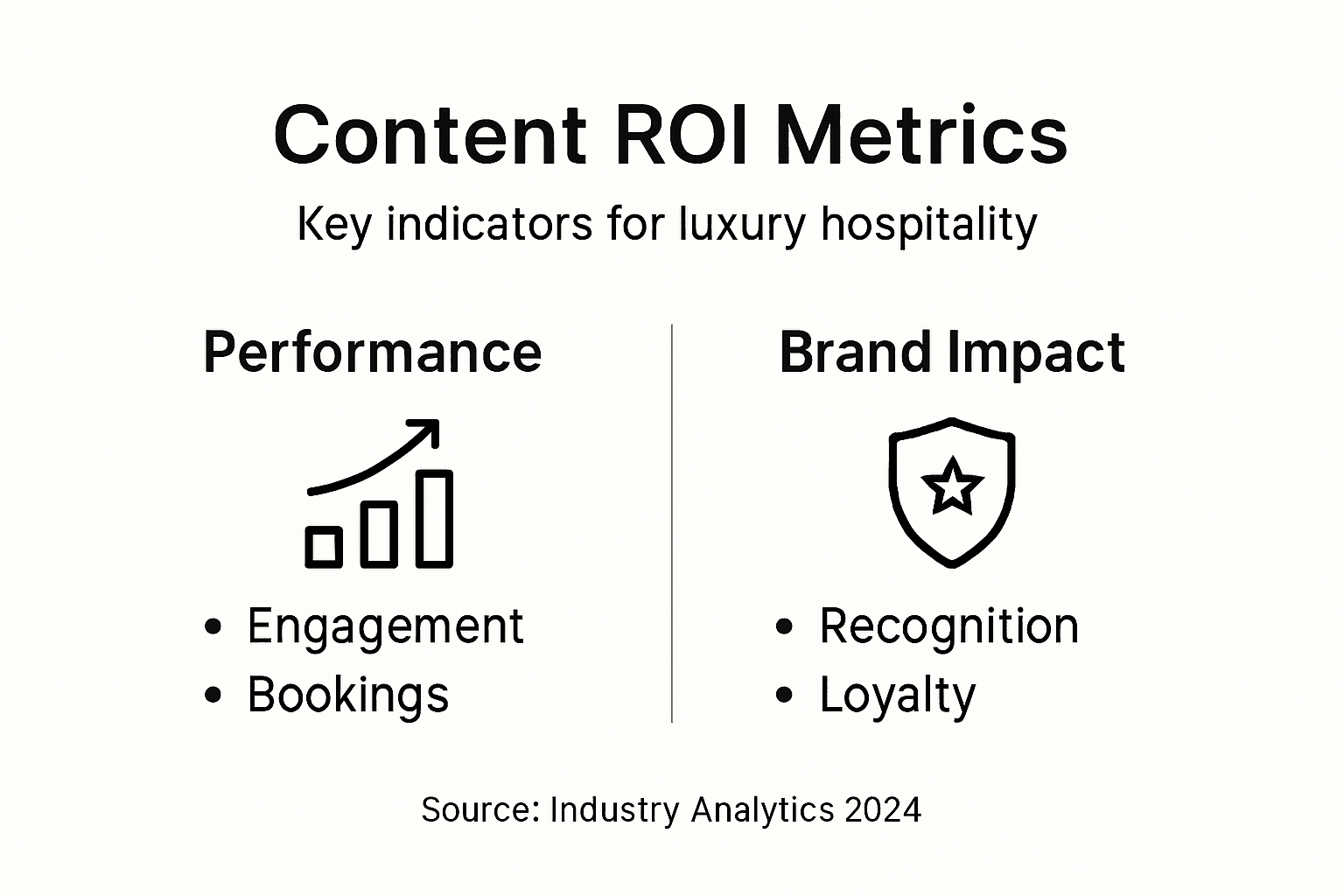
Key performance indicators for luxury hospitality content marketing extend far beyond basic digital metrics. Sophisticated brands now track complex indicators such as brand sentiment, emotional engagement levels, personalization effectiveness, and customer lifetime value. These metrics provide deeper insights into how content influences potential guests’ perceptions, travel decisions, and brand loyalty. Conversion rates, direct booking percentages, and the qualitative impact of storytelling become critical measurements that reveal the true return on content marketing investments.
The most advanced luxury hospitality brands are integrating advanced analytical technologies to create comprehensive measurement frameworks. By combining quantitative data like engagement rates and booking conversions with qualitative insights about brand perception and emotional connection, marketers can develop a holistic understanding of content marketing performance. This approach allows for continuous refinement of storytelling strategies, ensuring that each piece of content not only attracts attention but creates meaningful connections with discerning luxury travelers.
Compare essential content marketing metrics for luxury hospitality brands:
| Metric | What It Measures | Strategic Importance |
|---|---|---|
| Emotional Engagement | Guest connection level | Drives loyalty and resonance |
| Conversion Rate | Bookings from content | Indicates direct ROI |
| Brand Sentiment | Consumer perception | Tracks reputation and appeal |
| Lifetime Value | Guest revenue over time | Guides investment strategy |
Pro Tip: Develop a multi-dimensional analytics dashboard that captures both hard numerical data and nuanced engagement metrics to truly understand your content marketing’s impact.
Common Content Marketing Pitfalls to Avoid
Inbound marketing strategies reveal numerous critical pitfalls that luxury hospitality brands must carefully navigate. The most fundamental error is treating content marketing as a simple promotional tool rather than a sophisticated communication strategy. Brands often fall into the trap of creating generic, uninspired content that fails to differentiate their unique value proposition or connect emotionally with potential guests.
One of the most significant challenges in luxury hospitality content marketing is maintaining a delicate balance between exclusivity and accessibility. Social media marketing trends highlight the importance of authentic storytelling while avoiding over-exposure. Luxury brands frequently make the mistake of either being too guarded, which creates distance, or too transparent, which diminishes their sense of mystique. The key is crafting content that feels both intimate and aspirational, providing just enough insight to intrigue potential guests without compromising the brand’s exclusive image.
Another critical pitfall is inconsistent content quality and lack of strategic alignment. Many luxury hospitality brands produce content without a cohesive narrative or clear understanding of their target audience’s desires. This results in fragmented messaging that fails to create a compelling brand story. Successful content marketing requires a holistic approach that integrates every piece of content into a broader, emotionally resonant narrative that speaks directly to the sophisticated expectations of luxury travelers.
Pro Tip: Develop a rigorous content review process that ensures every piece of marketing material maintains your brand’s unique voice, emotional depth, and commitment to exceptional guest experiences.
Elevate Your Luxury Hospitality Brand with Strategy-Driven Content
Navigating the complex world of luxury hospitality content marketing demands a sophisticated approach that blends emotional storytelling with strategic brand communication. This article highlights key challenges such as creating authentic narratives that resonate deeply and measuring nuanced engagement beyond traditional metrics. If you are striving to transform your luxury hospitality brand’s content into an immersive, emotionally charged experience that truly connects with discerning travelers, Lind Creative is your ideal partner.
Discover how our expertise in Branding & Identity – Lind Creative can help you craft a unique and compelling brand story that stands out. Leverage insights from the latest Industry Trends – Lind Creative to stay ahead in this competitive market. Whether you are launching a new presence or scaling your current efforts, visit Lind Creative today to start building a content marketing system that delivers lasting emotional connections and measurable growth.
Frequently Asked Questions
What is the primary purpose of content marketing in luxury hospitality?
Content marketing in luxury hospitality aims to create engaging narratives that resonate with potential guests, focusing on storytelling that highlights unique experiences, cultural nuances, and distinguished service offerings to forge emotional connections.
How can luxury hospitality brands effectively use storytelling in their content marketing?
Luxury hospitality brands should craft narratives that go beyond describing services, tapping into emotional journeys and personal transformations while showcasing exclusivity, heritage, and the distinctive character of their destinations.
What types of content are most effective for engaging potential luxury guests?
Effective content types include immersive videos, professional photography, guest testimonials, and curated travel guides, all of which emotionally resonate and build brand authenticity by showcasing unique value propositions.
How can luxury hospitality brands measure the success of their content marketing strategies?
Brands can measure success through sophisticated metrics beyond basic digital engagement, including emotional engagement levels, brand sentiment, conversion rates, and customer lifetime value, allowing for nuanced insights into their marketing performance.
Recommended
- 7 Key Benefits of Branding for Luxury Hospitality Success – Lind Creative
- Visual Storytelling: Transforming Hospitality Brands – Lind Creative
- What Is Luxury Branding and Why It Matters – Lind Creative
- Digital Branding: Driving Luxury Hospitality Growth – Lind Creative
- What is Branded Content? Understanding Its Impact – playablemaker.com What is Branded Content? Understanding Its Impact