
Most business owners think search engine optimization is about sprinkling keywords across web pages and watching traffic roll in. The reality is far more complex and exciting. Modern SEO involves aligning your digital presence with sophisticated algorithms that evaluate hundreds of factors to determine which content deserves visibility. In 2026, understanding how search engines truly work and what drives rankings can transform your business growth trajectory. This guide breaks down what SEO actually is, how search technology has evolved, and practical strategies you can implement to capture more qualified leads and customers through organic search.
Table of Contents
- Understanding Search Engine Optimization: Beyond The Basics
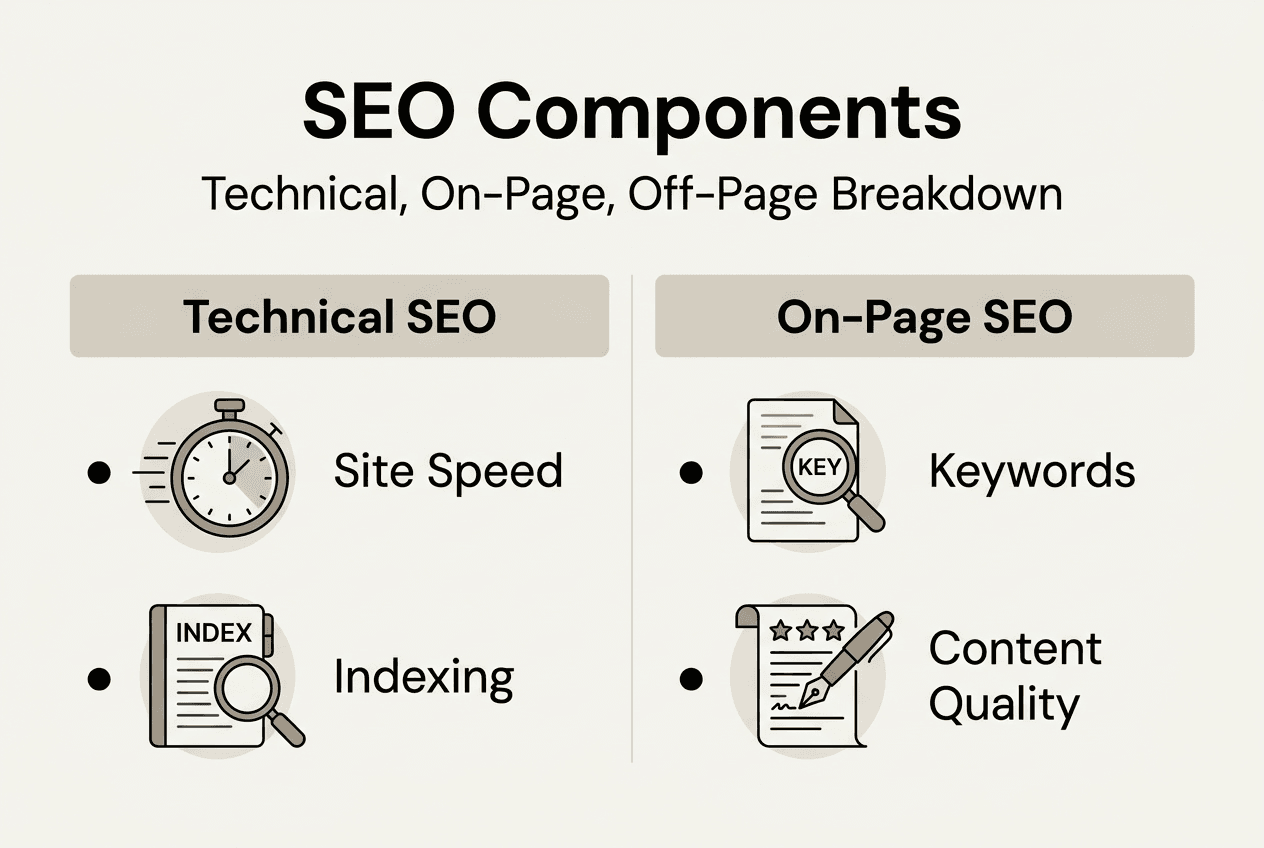
- Core Components Of SEO: Technical, On-Page, And Off-Page Explained
- SEO Impact On Business Success: ROI, Leads, And Conversion Advantages
- Optimizing For 2026: Practical SEO Strategies For Sustained Visibility
- Boost Your Business Growth With Expert Website Design And SEO Services
Key takeaways
| Point | Details |
|---|---|
| SEO is algorithmic alignment | Modern SEO means optimizing for complex, constantly evolving machine learning systems that evaluate hundreds of ranking signals. |
| Technology drives results | Search engines use artificial intelligence and knowledge graphs to understand context and user intent beyond simple keyword matching. |
| Strong ROI potential | Effective SEO strategies deliver median returns exceeding 27x investment with top performers reaching over 60x ROI. |
| Organic converts better | Customers acquired through organic search channels convert to revenue at higher rates than paid advertising channels. |
| Strategic optimization wins | Using proven frameworks for title optimization and on-page improvements yields measurably better results than random changes. |
Understanding search engine optimization: Beyond the basics
Search engine optimization is the practice of improving your website’s visibility in organic search results by aligning with how search engines discover, evaluate, and rank content. It’s not about gaming the system or stuffing pages with keywords. SEO means understanding what search engines value and structuring your digital presence to meet those standards while genuinely serving user needs.
Search engines have evolved dramatically beyond simple keyword matching. Modern search relies heavily on machine learning models analyzing billions of signals to predict which content will best satisfy user intent. Google’s Knowledge Graph maps relationships between entities, people, places, and concepts to understand context at a semantic level. When someone searches for “best marketing strategies,” the engine doesn’t just match those words. It interprets the searcher’s likely intent, evaluates competing pages based on topical authority and user experience signals, and ranks results accordingly.
This complexity means Google algorithm updates are periodic adjustments made to improve search relevance and quality, ranging from daily micro-adjustments to core updates that can shift entire industries overnight. Understanding this technological foundation is essential before diving into tactics.
The goal of effective SEO is meeting user intent with the highest quality, most relevant content while ensuring search engines can efficiently discover and understand your pages. This dual focus on user experience and technical accessibility forms the core of modern optimization strategy. Before implementing any SEO tactics, you need to grasp how search engines actually work and what they’re trying to accomplish. Only then can you make strategic decisions that align with both algorithmic preferences and genuine user needs, as outlined in our comprehensive website optimization guide.
Key principles that define modern SEO include:
- Search algorithms prioritize user satisfaction signals like engagement, time on page, and return visits over simple keyword density
- Content quality and topical authority matter more than sheer volume of pages or backlinks
- Technical infrastructure must support fast loading, mobile responsiveness, and clear site architecture
- Search engines reward websites that demonstrate expertise, authoritativeness, and trustworthiness in their subject areas
Core components of SEO: Technical, on-page, and off-page explained
Effective SEO strategies address three interconnected components that work together to improve search visibility. Each plays a distinct role in how search engines discover, evaluate, and rank your content.
Technical SEO focuses on your website’s infrastructure and ensures search engines can efficiently crawl, index, and understand your pages. Technical SEO optimizes a site’s infrastructure for search engine discovery and ranking, distinct from on-page SEO which focuses on content quality. This includes site speed optimization, mobile responsiveness, XML sitemaps, structured data markup, and proper URL architecture. Without solid technical foundations, even exceptional content may struggle to rank because search engines can’t properly access or interpret it.

On-page SEO involves optimizing individual pages to improve relevance and user experience. This encompasses content quality, keyword targeting, meta titles and descriptions, header tag structure, internal linking, and multimedia optimization. The goal is making each page as valuable as possible for both users and search algorithms. Improving existing pages with structured on-page SEO frameworks yields better, measurable results than random fixes or constantly creating new content without optimizing what you already have.
Off-page SEO builds your site’s authority and reputation through external signals. Backlinks from reputable websites act as votes of confidence, telling search engines your content is trustworthy and valuable. Brand mentions, social signals, and online reviews also contribute to your overall authority profile. While you can’t directly control off-page factors the way you control on-page elements, you can influence them through quality content creation, relationship building, and strategic outreach.
Applying these components requires a framework approach rather than random improvements. Successful SEO strategies typically follow this structure:
- Conduct comprehensive technical audits to identify and fix crawlability issues, speed problems, and structural weaknesses
- Develop content strategies based on keyword research and user intent analysis rather than guesswork
- Implement systematic on-page optimization using proven templates for titles, headers, and content structure
- Build authority gradually through consistent content quality and strategic relationship development
The most effective approach often involves improving existing pages before creating new ones. Many websites have dozens or hundreds of pages with optimization potential that could deliver quick wins. Our ecommerce SEO checklist demonstrates how systematic improvements across these three components drive measurable growth. Understanding how technical, on-page, and off-page elements interconnect helps you allocate resources strategically and build SEO programs that deliver consistent, compounding results over time.
SEO impact on business success: ROI, leads, and conversion advantages
The business case for SEO extends far beyond increasing website traffic. When executed strategically, search engine optimization delivers measurable returns that often surpass other marketing channels in both efficiency and effectiveness.
Recent performance data reveals the substantial financial impact of well-executed SEO programs. HVAC and home services SEO programs showed median ROI of 27.46x in Q4 2025, with even bottom quartile performers exceeding 12x ROI and top quartile surpassing 60x. These returns significantly outperform typical paid advertising channels where ROI often struggles to reach 5x. The compounding nature of SEO investments means early gains continue delivering value long after initial optimization work is complete.
Beyond raw ROI numbers, SEO drives high-quality lead generation that converts efficiently to revenue. Organic search accounted for 42% of unique leads and 44% of paying customers in Q4 2025, with organic customers converting at a higher revenue rate than paid channels. This data demonstrates that people finding your business through search are often further along in their buying journey and more likely to become valuable customers.
The lead quality advantage stems from intent alignment. Someone actively searching for solutions to their problems is fundamentally different from someone who sees a display ad while browsing unrelated content. Search traffic arrives with existing interest and often specific questions, making them easier to convert when your content addresses their needs effectively.
| Metric | Organic Search Performance | Business Impact |
|---|---|---|
| Median ROI | 27.46x investment return | Significantly outperforms paid channels |
| Lead generation | 42% of unique leads | Substantial portion of pipeline |
| Customer acquisition | 44% of paying customers | Higher conversion rates |
| Revenue per customer | Above paid channel average | Better long-term value |
SEO’s impact compounds over time as your content library grows and authority builds. Unlike paid advertising that stops generating results the moment you stop spending, optimized content continues attracting visitors and converting leads months or years after publication. This creates a flywheel effect where each piece of quality content contributes to overall domain authority, making subsequent content easier to rank.
The strategic implications are clear. Businesses that prioritize SEO as a core marketing investment rather than an afterthought position themselves for sustainable growth. Our analysis of SEO trends in hospitality shows similar patterns across industries, with organic search consistently delivering superior customer lifetime value compared to paid acquisition channels.
Pro Tip: Allocate at least 20% of your marketing budget to SEO initiatives and track not just traffic metrics but downstream revenue attribution to understand true ROI and justify continued investment in optimization efforts.
The combination of strong ROI, quality lead generation, and superior conversion rates makes SEO an essential component of any growth-focused marketing strategy. When you consider the long-term compounding effects and the fact that service landing pages optimized for search can continue generating leads for years, the case for prioritizing SEO becomes even more compelling.
Optimizing for 2026: Practical SEO strategies for sustained visibility
Implementing effective SEO in 2026 requires moving beyond outdated tactics and embracing strategies proven to work with current search algorithms. The focus has shifted from manipulation to genuine value creation, with specific techniques delivering measurable improvements.
Title optimization remains one of the highest-impact changes you can make. Optimizing titles by shortening length, adding modifiers like the year, and front-loading keywords can increase CTR by 30% and improve rankings by four positions. This single change often delivers faster results than comprehensive content rewrites. Effective titles balance keyword inclusion with compelling copy that encourages clicks while accurately representing page content.
Building algorithmic resilience matters more than chasing every ranking fluctuation. Daily fluctuations matter less than building a website robust enough to withstand broader core updates and algorithm shifts. This means focusing on fundamental quality signals like comprehensive content, strong user experience, and genuine expertise rather than trying to reverse-engineer every ranking factor.
| Traditional Approach | Modern Best Practice | Expected Outcome |
|---|---|---|
| Keyword stuffing | Natural keyword integration based on user intent | Better engagement and rankings |
| Random content updates | Framework-based optimization of existing pages | Measurable CTR and position improvements |
| Chasing algorithm changes | Building fundamental quality and resilience | Stable rankings through updates |
| Generic content creation | Topic cluster strategy demonstrating expertise | Increased topical authority |
A systematic approach to on-page SEO delivers better results than sporadic improvements. Follow this framework for consistent optimization:
- Audit existing pages to identify quick wins where small changes could yield significant improvements in rankings or click-through rates.
- Optimize metadata including titles and descriptions using proven formulas that balance keywords with compelling copy.
- Improve content quality by expanding thin pages, adding specific examples and data, and ensuring comprehensive coverage of topics.
- Enhance user experience through better formatting, multimedia integration, and clear calls to action that guide visitors toward conversion.
- Monitor performance using search console data and analytics to identify which changes drive results and inform future optimization priorities.
- Iterate based on data rather than assumptions, doubling down on what works and adjusting what doesn’t.
The most successful SEO strategies in 2026 prioritize user intent above all else. Understanding what searchers actually want when they use specific queries allows you to create content that satisfies their needs while naturally incorporating relevant keywords and topics. This alignment between user needs and content delivery is what modern algorithms reward most consistently.
Pro Tip: Focus your initial optimization efforts on pages already ranking between positions 5 and 15, where small improvements can push you onto the first page and dramatically increase traffic with minimal effort compared to trying to rank new content from scratch.
Implementing these strategies requires ongoing commitment rather than one-time effort. SEO is not a project you complete but a continuous process of improvement, monitoring, and adaptation. Our guide on optimizing landing pages for conversions demonstrates how SEO principles integrate with conversion optimization to maximize business results. For comprehensive implementation guidance, explore our complete website optimization strategies that cover technical, on-page, and off-page elements in detail.
The businesses that succeed with SEO in 2026 are those that view it as a strategic investment in long-term visibility rather than a quick traffic hack. By focusing on fundamental quality, user experience, and systematic improvement, you build digital assets that continue delivering value for years while remaining resilient against algorithm changes.
Boost your business growth with expert website design and SEO services
Implementing the SEO strategies outlined in this guide requires expertise, time, and ongoing optimization that many business owners struggle to manage alongside running their companies. That’s where professional support makes the difference between incremental improvements and transformational growth.

Lind Creative specializes in creating high-converting websites and deploying comprehensive digital marketing strategies that integrate SEO best practices from the ground up. Our approach combines strategic website design with proven optimization techniques to help businesses attract qualified leads and convert them into customers. We understand that investing in professional website design means building a foundation that supports both immediate conversions and long-term search visibility. Our team creates service landing pages optimized for both user experience and search engine performance, ensuring every page works hard to grow your business. Explore our top digital marketing strategies for 2026 to see how SEO fits into a comprehensive growth plan that delivers measurable ROI.
Frequently asked questions
What exactly is search engine optimization?
Search engine optimization is the practice of improving your website’s visibility in organic search results by aligning with how search engines discover, evaluate, and rank content based on relevance and quality signals. It encompasses technical infrastructure, content optimization, and authority building.
How long does SEO take to show results?
Most SEO initiatives begin showing measurable improvements within 3 to 6 months, with compounding gains continuing over 12 to 24 months as content libraries grow and domain authority builds. Quick wins from optimizing existing high-performing pages can deliver results faster.
What’s the difference between SEO and paid search advertising?
SEO focuses on earning organic visibility through content quality and optimization, delivering long-term compounding returns without ongoing ad spend. Paid search buys immediate visibility but stops generating results when you stop paying, typically delivering lower ROI than well-executed SEO programs.
Do I need to hire an SEO expert or can I do it myself?
Basic SEO improvements like title optimization and content updates are manageable in-house with proper guidance from resources like our website optimization guide. However, comprehensive technical SEO, strategic planning, and ongoing optimization typically benefit from professional expertise to maximize ROI.
How often do search algorithms change?
Search engines make thousands of minor algorithm adjustments annually, with major core updates occurring several times per year that can significantly impact rankings. Building fundamental quality and user experience resilience matters more than trying to adapt to every change.
Recommended
- Complete Guide to Website Optimization Strategies – Lind Creative
- 7 Essential Ecommerce SEO Checklist Items for Strong Growth – Lind Creative
- SEO Trends in 2025: Maximizing Bookings for Hospitality – Lind Creative
- Build a Results-Driven Digital Marketing Strategy 2025 – Lind Creative
- How to Boost Retail Sales: Elevate Your Store’s Profitability – Spaceman