
Every established luxury hospitality brand faces the challenge of making each web visitor feel personally invited to take the next step. Without a clear page goal and precise audience understanding, even a beautifully designed landing page will fall flat and miss potential high-value leads. By focusing first on defining the purpose of your page and understanding the target audience, you set the foundation for content that resonates and converts, helping your brand capture qualified prospects efficiently.
Table of Contents
- Step 1: Define The Page Goals And Target Audience
- Step 2: Design The Layout With Conversion In Mind
- Step 3: Craft Persuasive Copy And Visuals
- Step 4: Integrate Lead Capture And Tracking Tools
- Step 5: Test Performance And Optimize For Results
Quick Summary
| Key Point | Explanation |
|---|---|
| 1. Define Specific Goals | Clearly outline what you want the page to achieve, aligning it to specific actions like generating inquiries or bookings. |
| 2. Understand Your Target Audience | Identify detailed profiles of your primary and secondary audiences to tailor messaging that resonates with their specific needs and concerns. |
| 3. Optimize Page Layout for Conversion | Design a focused layout with minimal distractions, guiding visitors toward a single, clear call-to-action that aligns with their expectations. |
| 4. Use Persuasive Copy and Visuals | Write compelling copy that highlights benefits over features and choose visuals that evoke the desired emotions relevant to the audience. |
| 5. Implement Tracking and Lead Capture | Integrate concise forms and tracking tools to measure performance, helping refine your approach based on real visitor behavior and conversion data. |
Step 1: Define the Page Goals and Target Audience
Before you build anything, you need to know exactly what you want this page to accomplish and who you want it to reach. This step forms the foundation of everything that follows. Without clarity here, you’ll end up with a generic landing page that appeals to nobody and converts almost nobody. The good news? Getting this right doesn’t require guesswork. It requires asking the right questions and gathering specific data about your audience.
Start by identifying what success looks like for this particular page. Are you trying to generate inquiries for your premium suite packages? Capture email addresses from potential event planners? Drive bookings for a specific season or experience? Each goal shapes every element on the page, from the headline to the call-to-action button. At a luxury hospitality brand, your goals differ dramatically depending on the audience. A page targeting corporate meeting planners needs different messaging than one targeting destination wedding clients, even though both are high-value prospects. Write down 2-3 specific, measurable goals. Then, understanding your target audience becomes your next priority, because the page won’t work without this clarity.
Now dig into who your ideal visitor is. For luxury hospitality, this isn’t a generic “travelers” category. You need precision. Are you targeting affluent couples planning honeymoons? Corporate executives booking executive retreats? Wedding planners with budgets over $250,000? Each audience has different pain points, decision-making timelines, and concerns. Gather your customer data across demographics (age, income, location), behavior (how they book, what they research online), and motivations (what drives their purchasing decisions). If you run a five-star resort in Scottsdale, your wealth management clients from New York have completely different considerations than your destination wedding couples from California. Pull data from your booking history, CRM, past guest surveys, or website analytics. Look at which audience segments generate the highest revenue and book earliest.
Once you’ve identified your primary target audience, consider your secondary audiences. A luxury hotel page might serve both individual luxury travelers and meeting planners. A resort might target both honeymooners and multi-generational family groups. A clearly defined target audience helps you prioritize your messaging, but understanding the secondary audiences ensures your page doesn’t alienate qualified prospects. Create a simple audience profile for each group, including what they care about, what objections they have, and what outcome they’re seeking. Your luxury wellness retreat needs to speak differently to burned-out executives than to retirees looking for rejuvenation, even though both groups spend generously.
Here’s a comparison of common primary and secondary audience segments for luxury hospitality landing pages:
| Audience Segment | Key Motivations | Main Objections |
|---|---|---|
| Corporate Meeting Planners | Efficiency, ROI, logistics support | Budget flexibility, time limits |
| Destination Wedding Planners | Inspiration, seamless planning | Guest accommodation, dates |
| Individual Luxury Travelers | Exclusivity, personalized service | Value for price, privacy |
| Multi-generational Family Groups | Variety of amenities, convenience | Activity suitability, comfort |
| Retirees Seeking Wellness | Stress relief, rejuvenation | Activity intensity, atmosphere |
After mapping these details, align your page goals directly with what your audience actually needs and wants. This creates the connection that turns visitors into leads. Your corporate audience wants efficiency and ROI justification. Your wedding audience wants inspiration and seamless coordination. Your individual luxury traveler wants exclusivity and personalized experience. The page that tries to serve all three equally will fail at all three. Prioritize ruthlessly. Design this page for your primary audience first, making sure every element speaks to them. This focused approach generates better quality leads than a page trying to appeal to everyone.
Pro tip: Create separate landing pages for distinct audience segments rather than cramming multiple audiences onto one page. A page optimized for C-suite executives booking strategic retreats will almost certainly underperform with leisure travelers, and vice versa. The minimal extra effort to build a second page specifically for your high-value wedding planner audience pays dividends through higher conversion rates and better lead quality.
Step 2: Design the Layout with Conversion in Mind
Now that you understand your audience and goals, it’s time to design the actual page structure. Your layout is not about looking pretty. Your layout is about moving visitors toward a single, clear action. Everything on this page serves one master goal, and your design must reflect that relentlessly.
Start by stripping away unnecessary elements. Many luxury hospitality websites feature beautiful hero images, multiple navigation menus, and links to ten different sections of the property. Your conversion page doesn’t work that way. Instead, landing page design minimizes distractions by limiting navigation and emphasizing a single conversion objective. Think of it like this. Your potential client lands on your page after searching for “luxury destination wedding venues in Colorado.” They don’t need links to your restaurant menu, spa schedule, or golf course details. They need to see exactly why your property is perfect for their wedding and how to get more information. That’s it. Remove the header navigation to secondary pages. Hide the footer full of links. Delete the sidebar promotions. Every pixel on this page should push toward one outcome, whether that’s booking a consultation call, requesting pricing information, or scheduling a property tour.
Next, build your layout vertically around a clear conversion journey. Picture a guest experience at check-in at your resort. They walk up to the concierge desk and get a warm greeting, asked what brings them to your property, shown exactly what they came for, and given a clear next step. Your page should follow that exact pattern. Start with a compelling hero section that speaks directly to your primary audience’s needs. For wedding planners, show an aspirational wedding venue photo paired with a headline about your experience coordinating luxury events. For corporate retreat planners, feature your conference space with a message about ROI and team building outcomes. Below that, use 3 to 5 short sections that address the biggest questions your audience has. What makes your property different from competitors? What kind of experiences can guests enjoy? What does the booking process look like? Each section should be scannable, using short paragraphs and visual breaks. Then, place your primary call-to-action button prominently, repeated at logical stopping points rather than hidden at the bottom. Your luxury wedding planner might need to scroll past venue photos, testimonials, and pricing details before they’re ready to click “Schedule a Tour.” That button should appear after the testimonials, not just at the very end.

Consider the visual hierarchy and white space intentionally. Effective landing pages use clear calls to action and mobile responsiveness to reduce bounce rates and keep visitors engaged. Your headline should be the largest text on the page. Your primary call-to-action button should use a contrasting color that stands out against the background. White space around key elements helps them breathe and draws attention exactly where you want it. A luxury resort page packed with dense text, tiny fonts, and competing imagery overwhelms visitors and sends them bouncing to a competitor’s site. Conversely, a clean layout with breathing room, large readable fonts, and a single prominent button makes the decision easy.
Mobile design is not an afterthought. More than half of your luxury hospitality inquiries come from mobile devices. Your layout must stack vertically on small screens, with touch-friendly buttons that are at least 48 pixels tall. Your testimonials, images, and forms should reflow naturally. Your primary call-to-action button should be easy to tap with a thumb. Test your layout on an iPhone and a tablet. If you feel frustrated while scrolling or clicking, your guests will feel the same frustration and leave.
Finally, ensure your form doesn’t ask for too much information too early. Many luxury hospitality brands request extensive details before a visitor gets anything of value. Instead, capture just what you need on the main form. For a wedding consultation, ask for name, email, and wedding date. For a corporate retreat inquiry, ask for company name, number of attendees, and preferred dates. Once they’ve submitted that, you can follow up with a confirmation page offering a downloadable guide, and then send a personalized email requesting deeper information. This staged approach improves conversion rates significantly because you’re not overwhelming visitors upfront.
Pro tip: Test your page layout at different screen sizes and on actual devices, not just in browser previews. Have someone from your team use a real smartphone to navigate through your form and click your call-to-action button. Real-world interactions often reveal usability issues that desktop previews miss, and fixing these before launch prevents lost leads.
Step 3: Craft Persuasive Copy and Visuals
Your layout is solid. Now comes the part that actually converts visitors into leads. The words you choose and the images you display need to work together to convince someone they should take action. This is where many luxury hospitality brands stumble. They write generic descriptions about thread count and amenities instead of addressing what their audience truly cares about. Your copy and visuals must speak directly to your visitor’s desire, pain point, or aspiration.
Start with your headline and primary message. This is the first thing visitors see after the hero image, and it needs to answer one question immediately: “Is this for me?” For a wedding planner considering your venue, the headline shouldn’t be “Luxury Resort with Five-Star Accommodations.” It should be something like “Host 150 Guests in a Hilltop Ballroom with Unobstructed Desert Views” or “Plan Your Destination Wedding Without the Logistics Nightmare.” Notice the difference. The first headline describes the property. The second one describes what the bride and groom actually get. The third one solves a specific problem. Your corporate retreat audience cares about different outcomes. Rather than highlighting your conference center square footage, lead with “Build Team Alignment While Your Team Enjoys Four-Star Meals and Outdoor Adventures” or “Strategic Planning Retreat with Zero Distractions and Full AV Support.” Compelling landing pages leverage carefully crafted copy that conveys value propositions and motivates immediate action. Your job is to make your visitor feel like this page was written specifically for them.
Next, focus on benefits rather than features in every section. Features describe what your property has. Benefits describe what your guest experiences or achieves. Your ballroom is 5,000 square feet with soaring ceilings and crystal chandeliers. That’s a feature. Your couples can host an elegant reception where every guest has a clear sightline to the ceremony space and feels enveloped in luxury. That’s a benefit. Your conference center has gigabit internet and integrated audiovisual systems. That’s a feature. Your executive teams can present seamlessly from any device and stay connected to their offices without feeling like they left work. That’s a benefit. Write every paragraph by asking yourself: “So what? Why does my guest care?” Then answer that question in your copy.
Your visuals need to do more than look beautiful. They need to tell a story and evoke the right emotion. Visuals complement copy by highlighting offers and reinforcing key messages, which means your photos and videos should match the emotional tone of your copy. If you’re targeting wealthy empty nesters seeking rejuvenation, use images of serene spa settings, couples enjoying quiet moments, and sunrise views. The feeling should be peaceful and indulgent. If you’re targeting corporate meeting planners who need to show ROI to their leadership, use images of engaged employees collaborating in modern spaces, team activities that look genuinely fun rather than forced, and professional setup that makes the venue look business ready. For destination weddings, show not just the ceremony space but candid moments of couples laughing, guests dancing, and details that feel personal and romantic. Poor photography choices undermine everything. A mediocre photo of your spa looks cheap even if it’s a luxury facility. A high-quality photo of your basic outdoor terrace looks aspirational. If your current photos don’t evoke the right feeling, invest in professional photography before launch.
Keep your copy concise and scannable. Most visitors don’t read every word on a landing page. They skim. Use short paragraphs (2 to 3 sentences maximum). Use subheadings that actually tell a story. Consider numbering benefits or using short bullet observations if they genuinely add clarity, but avoid long lists. One wedding planner described her experience reading a competitor’s landing page: “I got halfway through a dense paragraph about Italian marble and gave up.” Don’t be that page. Break up text with white space and imagery. Let your strongest benefits breathe.
Include social proof and testimonials strategically. Instead of listing generic praise, showcase specific details that matter to your audience. A wedding planner quote should mention coordination stress relief or flexibility during planning. A corporate retreat testimonial should mention team engagement improvements or how easily attendees could participate from remote locations. Video testimonials from actual clients, especially those who felt similar hesitation before choosing your venue, convert better than written reviews.
Pro tip: Before publishing, read your copy aloud to someone unfamiliar with your property and watch their reactions. If they seem bored, confused, or start asking questions your copy didn’t answer, you’ve found gaps. Their instinctive questions are exactly what your target audience will wonder about too, so revise accordingly.
Step 4: Integrate Lead Capture and Tracking Tools
Your page looks great and reads persuasively. But none of that matters if you can’t capture visitor information or measure what’s actually working. This step is where strategy meets execution. You need to integrate tools that capture leads when visitors are ready to convert, and track their behavior so you understand what’s driving results.
Start by choosing your lead capture mechanism. The most common approach is a contact form, but what you ask for matters enormously. Early in this guide, you learned about keeping forms simple. That principle is critical here. Your primary form should ask for only the information you absolutely need to follow up. For a luxury wedding venue, that might be name, email, wedding date, and number of guests. For a corporate retreat, name, company, number of attendees, and preferred timeframe. Landing pages often include lead capture forms to collect visitor information such as email addresses, enabling follow-up marketing through email campaigns. Resist the urge to ask for phone number, budget, dietary restrictions, or ceremony preferences on the initial form. Each additional field decreases submission rates. You can request deeper information in your follow-up email or during a discovery call. Some visitors might also prefer to call rather than fill a form. Include a prominent phone number on your page, prominently displayed so interested prospects can reach you immediately. Others might want to schedule a call directly. Tools like Calendly or your CRM’s booking feature can be embedded on your page, allowing visitors to select an available time without back-and-forth emails. Offering multiple conversion paths increases your total lead volume.
Where you place your form matters as much as what it contains. Most luxury hospitality pages place a form in the sidebar or at the bottom of the page. Better approach? Repeat your primary call-to-action button and form at strategic points throughout the page. Place it after your value proposition section, after your strongest testimonials, and at the bottom. A wedding planner might not be ready to submit after reading your headline, but after seeing three testimonials from other successful weddings you’ve hosted, they’re ready. Why make them scroll back to the top to find the form? Remove friction by placing the conversion opportunity exactly where their interest peaks.
Now comes the tracking piece. Lead generation strategies use integrated tools like sales and marketing automation and tracking systems to attract, capture, and measure campaign performance. You need to know which visitors are submitting forms, where they came from, what pages they viewed, and how long they spent on your page. Google Analytics and your form platform (HubSpot, Typeform, Gravity Forms, or similar) provide this data. Set up conversion tracking so that form submissions are marked as distinct events. This allows you to calculate your conversion rate. If 500 visitors land on your page and 25 submit the form, your conversion rate is 5 percent. That number becomes your baseline for optimization.
Integrate your landing page with your email marketing platform and CRM. When someone submits your form, their information should automatically populate your CRM so your sales team can follow up quickly. Ideally, they should also receive an automated confirmation email thanking them for their interest, providing next steps, and offering additional value (like a downloadable guide or link to a portfolio). This happens instantly, before they leave your page or before they forget they submitted it. Your CRM should track all interactions with this lead, including email opens, website visits, and past inquiries, so your team understands where they are in their decision journey.
To clarify key lead capture and tracking options, see this summary:
| Tool or Tactic | Primary Purpose | Impact on Results |
|---|---|---|
| Contact Form | Collect prospect details | Enables direct follow-up |
| Embedded Scheduler | Book meetings easily | Reduces friction, faster demos |
| CRM Integration | Store and track leads | Improves follow-up consistency |
| UTM Tracking | Attribute traffic source | Reveals best-performing channels |
| Automated Email | Nurture lead post-form | Warms leads for sales team |
Set up UTM parameters or other tracking mechanisms to identify which traffic sources and marketing channels drive the highest-quality leads. If you’re promoting this page through paid ads, email, social media, and organic search, you need to know which channel generated the leads that actually convert into bookings. A channel that drives 100 form submissions but zero actual bookings is wasting your budget. A channel that drives 20 form submissions but 5 actual bookings is gold. This data takes time to accumulate, but track it from day one.
Test and optimize your form and page based on the data you collect. If your conversion rate is 2 percent, that’s below average. Reduce your form fields from 5 to 3, redesign your headline, or improve your page speed. If your conversion rate is 8 percent, that’s strong. Now optimize for lead quality. Are the leads you’re capturing actually qualified? Do they have the budget and timeline you need? Adjust your messaging or form questions to pre-qualify better.
Pro tip: Create a follow-up email sequence that begins automatically when someone submits your form, delivering value and answering anticipated objections before your sales team calls. Many luxury hospitality inquiries come from out-of-state prospects or international visitors who might be hesitant to call. An automated email with photos, testimonial videos, and FAQs can answer initial concerns and warm them up considerably before direct contact.
Step 5: Test Performance and Optimize for Results
Your landing page is live. Leads are coming in. But your work is far from finished. The most successful landing pages are never truly done. They’re continuously tested, measured, and refined based on real visitor behavior. This step transforms your page from a static asset into a living, evolving system that gets better every single month.
Start by establishing your baseline metrics. Before you change anything, you need to know exactly how your page is currently performing. Track your conversion rate (what percentage of visitors submit a form), bounce rate (what percentage leave without taking action), average time on page, and traffic sources. If you’re running paid ads to this page, track cost per lead and cost per actual booking. These numbers become your baseline. Any changes you make should improve at least one of these metrics. If your conversion rate is 3 percent, your goal might be to reach 5 percent. If your average time on page is 45 seconds, you want to extend engagement. These baselines prevent you from making changes that feel good but don’t actually improve results.
Testing landing page performance through A/B testing and analytics identifies the most effective design elements and content. The key principle is testing one element at a time. Never change your headline, copy, and call-to-action button simultaneously. You won’t know which change drove improvement. Instead, run an A/B test where half your traffic sees Version A and half sees Version B. Change only the headline. Run this test for at least one week or until you have at least 100 conversions in each variation. Whichever version converts better becomes your new baseline. Then test the next element. Your wedding venue page might test different headlines first. “Plan Your Dream Wedding Without the Stress” converts at 4.2 percent. “Host the Perfect Wedding Your Way” converts at 5.1 percent. You keep the second version and move on. Next, you might test your call-to-action button text. “Schedule a Tour” versus “Book a Consultation.” Test your form fields. Should you ask for phone number or not? Test your hero image. Does a couple embracing convert better than a wide ceremony space shot? Does a drone photo of the entire property convert better than an intimate detail shot? Each small improvement compounds. If you move from 3 percent to 3.5 percent, then 4 percent, then 4.5 percent, your lead volume increases dramatically without spending more on ads.
Pay close attention to which traffic sources and visitor segments convert best. Maybe your organic search traffic converts at 2 percent while your email traffic converts at 7 percent. Your email audience already knows your brand and is more qualified. Your organic traffic includes curious browsers who aren’t serious prospects. This insight tells you where to focus your paid advertising spend. Conversely, it tells you that your page might not be clear enough for cold traffic. Maybe you need a different landing page specifically for people discovering you through paid ads, one that explains your unique value more explicitly. Or maybe your current page needs clearer introductory context for cold audiences.
Optimizing landing pages involves analyzing performance metrics and testing different layouts, copy, visuals, and calls to action to reveal high-performing variants. Beyond A/B testing, analyze your Google Analytics heatmaps to see where visitors click, how far they scroll, and where they exit. If 80 percent of visitors never scroll past your first section, your below-the-fold content doesn’t matter. Move your strongest benefit or testimonial higher on the page. If visitors are clicking on images but those images aren’t clickable, make them clickable or reconsider the layout. If visitors are spending 30 seconds reading your benefits section but 5 seconds reading your testimonials, your testimonials might be weak. Refresh them with more detailed, specific quotes.
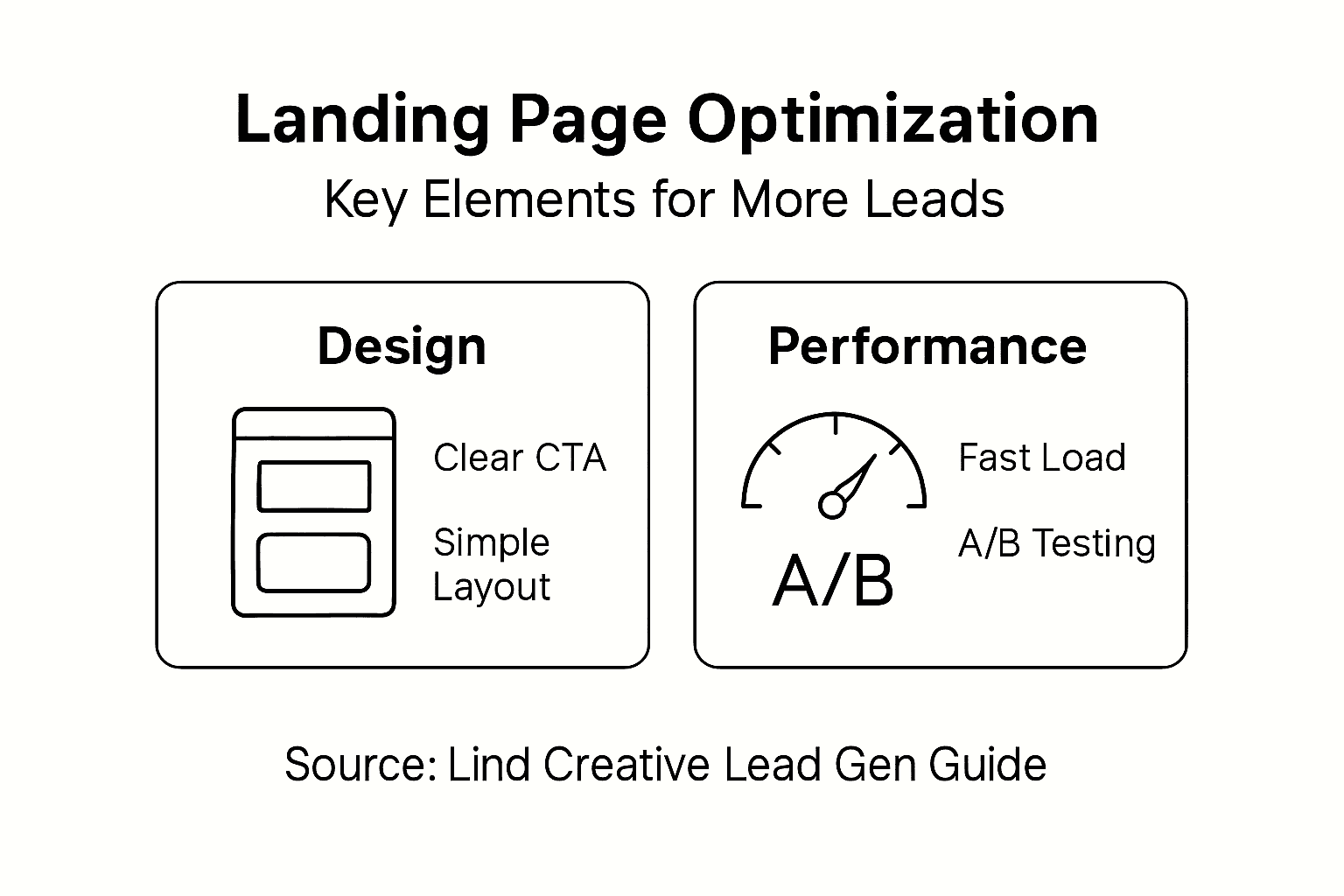
Test your page load speed and mobile experience. If your page takes more than 3 seconds to load, visitors bounce before content even appears. Compress images, minimize code, and use a content delivery network if your page is slow. Test your form on actual mobile devices. Are the fields easy to tap? Does the keyboard cover critical information? Is your call-to-action button large enough for a thumb? Small friction points on mobile kill conversions for mobile users.
Set a testing calendar. Plan to run a new test every two to three weeks. After three months, you should have tested headlines, call-to-action text, form fields, primary image, testimonial format, and page structure. After six months, you’ve made significant improvements. Track all your tests in a simple spreadsheet so you remember what you changed and what the results were. Build institutional knowledge about what resonates with your specific audience.
Pro tip: Don’t test too many things at once or change your page constantly based on small fluctuations. Wait until you have statistical significance before declaring a winner, and give successful changes at least two weeks to stabilize before testing something new. Also, always keep your best performing version running while testing a new variant. Never run a test with two new versions against each other, or you might abandon your current best performer.
Elevate Your Lead Generation with Strategy-Driven Landing Pages
Crafting a high-converting service landing page involves more than just appealing visuals. As the article highlights, the challenge lies in defining precise goals, understanding your target audience, and designing with conversion in mind. You need to eliminate distractions, deliver clear value propositions, and integrate seamless lead capture tools that make it effortless for prospects to engage. Without these focused strategies, your landing page risks becoming another generic page that visitors quickly leave.
At Lind Creative, we specialize in turning these complex challenges into opportunities for growth. Through our expertise in Graphic Design – Lind Creative and deep understanding of Industry Trends – Lind Creative, we create service landing pages that not only look stunning but convert leads effectively. Ready to stop wasting traffic and start capturing qualified leads with a landing page designed for your unique audience and business goals? Visit Lind Creative today and discover how our strategy-driven approach can transform your lead generation efforts.
Frequently Asked Questions
What are the key components of a successful service landing page for lead generation?
To create a successful service landing page, include an attention-grabbing headline, a clear value proposition, persuasive copy, and a lead capture form. Start by outlining these elements, ensuring they resonate with your target audience’s needs.
How can I define my target audience for a service landing page?
Defining your target audience involves identifying their demographics, behaviors, and motivations related to your service. Conduct surveys or analyze customer data to create detailed audience profiles that outline what they care about and what obstacles they face.
What types of copy should I use to engage visitors on my landing page?
Use persuasive copy that highlights the benefits of your service rather than just its features. Focus on addressing specific pain points and aspirations of your audience, and use clear, action-oriented language to motivate them to engage.
How should I structure the layout of my service landing page?
Structure your landing page to guide visitors toward a single clear action, minimizing distractions. Use a vertical format with a compelling hero section, followed by sections that answer common questions or address concerns, ending with a prominent call-to-action button.
How can I track the effectiveness of my service landing page?
Track effectiveness by measuring key metrics such as conversion rate, bounce rate, and average time spent on the page. Set up analytics tools to monitor these metrics and identify areas for improvement over time.
What are some best practices for optimizing the lead capture form on my landing page?
Keep your lead capture form simple by only asking for essential information to minimize friction. Aim to ask for the name and email address first, and consider following up for more detailed information after initial contact.
Recommended
- What Is a Landing Page and Its Impact on Hospitality Leads – Lind Creative
- 7 Essential Types of Business Websites and How to Use Them – Lind Creative
- Defining High-Converting Websites for Results-Driven Growth – Lind Creative
- 8 Essential Website Elements for High Conversions – Lind Creative