
Over 85 percent of American guests expect personalized attention every time they check in at a luxury hotel. For marketing directors at mid-sized hospitality brands, meeting these high expectations is more than just thoughtful service. Personalized experiences are now the difference between fleeting visits and lasting brand loyalty. This article shows how smart data strategies and technology give hospitality leaders the power to create truly memorable stays that resonate with each guest.
Table of Contents
- Defining Personalization In Luxury Hospitality
- Key Types Of Personalization Solutions
- How Personalization Drives Guest Engagement
- Technology’s Role In Personalized Experiences
- Balancing Privacy With Personalized Services
- Pitfalls To Avoid In Personalization Strategies
Key Takeaways
| Point | Details |
|---|---|
| Importance of Personalization | Personalization transforms luxury hospitality by creating tailored guest experiences through strategic data utilization. |
| Role of Technology | Advanced technologies, like predictive analytics and AI, play a crucial role in anticipating guest needs and enhancing interactions. |
| Balancing Privacy and Personalization | Effective personalization strategies must prioritize guest privacy by implementing transparent policies and consent mechanisms. |
| Avoiding Common Pitfalls | Luxury brands should avoid data oversaturation and ensure consistent personalization to maintain guest trust and satisfaction. |
Defining Personalization in Luxury Hospitality
Personalization in luxury hospitality transcends traditional customer service by transforming guest interactions into uniquely tailored experiences. Unlike standard hospitality approaches, luxury brands now leverage sophisticated data analytics to create memorable, individualized journeys that anticipate and exceed guest expectations.
The core of modern personalization involves strategic data collection and intelligent application. Advanced technological solutions enable hotels to gather comprehensive insights through multiple touchpoints: reservation histories, loyalty program interactions, website behavior, guest surveys, and social media engagement. These data points allow hospitality professionals to craft experiences that feel intimately customized, bridging high-tech convenience with authentic human connection.
Effective personalization strategies in luxury hospitality involve multiple sophisticated approaches:
- Preemptive room preparation based on previous guest preferences
- Customized welcome amenities matching individual guest profiles
- Targeted promotional offers reflecting past travel behaviors
- Tailored dining recommendations aligned with culinary interests
- Proactive service anticipation using predictive analytics
Pro tip: Develop a comprehensive guest profile database that integrates both technological insights and personal interaction notes to create truly nuanced personalization strategies.
Key Types of Personalization Solutions
Personalization solutions in luxury hospitality represent sophisticated technological strategies designed to transform guest experiences through intelligent data utilization. These advanced systems go beyond traditional customer service by creating deeply tailored interactions that anticipate and fulfill individual guest preferences.
Comprehensive data analytics platforms enable hotels to integrate information from multiple sources, including reservation histories, loyalty program interactions, website behaviors, and guest feedback. By synthesizing these diverse data points, luxury hospitality brands can craft nuanced, predictive service approaches that feel intimately personalized.
Key personalization solutions in luxury hospitality include:
- Guest Profile Management: Creating detailed, comprehensive guest profiles tracking preferences, past stays, and interaction histories
- Predictive Service Recommendations: Using machine learning algorithms to anticipate guest needs before they are explicitly expressed
- Dynamic Communication Channels: Personalizing communication methods and content across mobile apps, email, and in-room interfaces
- Contextual Experience Customization: Adjusting services based on real-time guest data, travel purpose, and individual preferences
- Adaptive Pricing and Promotional Strategies: Developing targeted offers that reflect individual guest value and potential
Pro tip: Implement a centralized data management system that allows seamless integration of guest information across all hotel touchpoints to create truly personalized experiences.
How Personalization Drives Guest Engagement
Guest engagement in luxury hospitality is no longer about generic service, but creating profound connections that make travelers feel uniquely understood and valued. Modern luxury hotels recognize that personalization transforms transactional interactions into meaningful experiences that resonate emotionally with guests.
Sophisticated data-driven engagement strategies enable hotels to build deeper relationships by anticipating guest needs before they are explicitly expressed. By analyzing previous interactions, travel patterns, and individual preferences, luxury hospitality brands can craft tailored experiences that make guests feel extraordinarily special and deeply understood.
Key mechanisms for driving guest engagement through personalization include:
- Predictive Service Anticipation: Proactively addressing guest preferences before arrival
- Emotional Connection Building: Creating memorable moments that feel individually crafted
- Contextual Communication: Adapting interaction styles and recommendations to individual guest profiles
- Seamless Technology Integration: Using smart technologies to deliver frictionless, personalized experiences
- Loyalty Program Customization: Developing reward structures that reflect individual guest values and preferences
Pro tip: Train staff to view personalization data as a collaborative tool for creating exceptional guest experiences, not just a technological process.
Technology’s Role in Personalized Experiences
Technological innovation has become the cornerstone of creating exceptional personalized experiences in luxury hospitality, transforming traditional service models into dynamic, responsive interactions that anticipate and exceed guest expectations. Modern luxury hotels are no longer just physical spaces, but intelligent ecosystems that adapt and respond to individual guest preferences in real time.
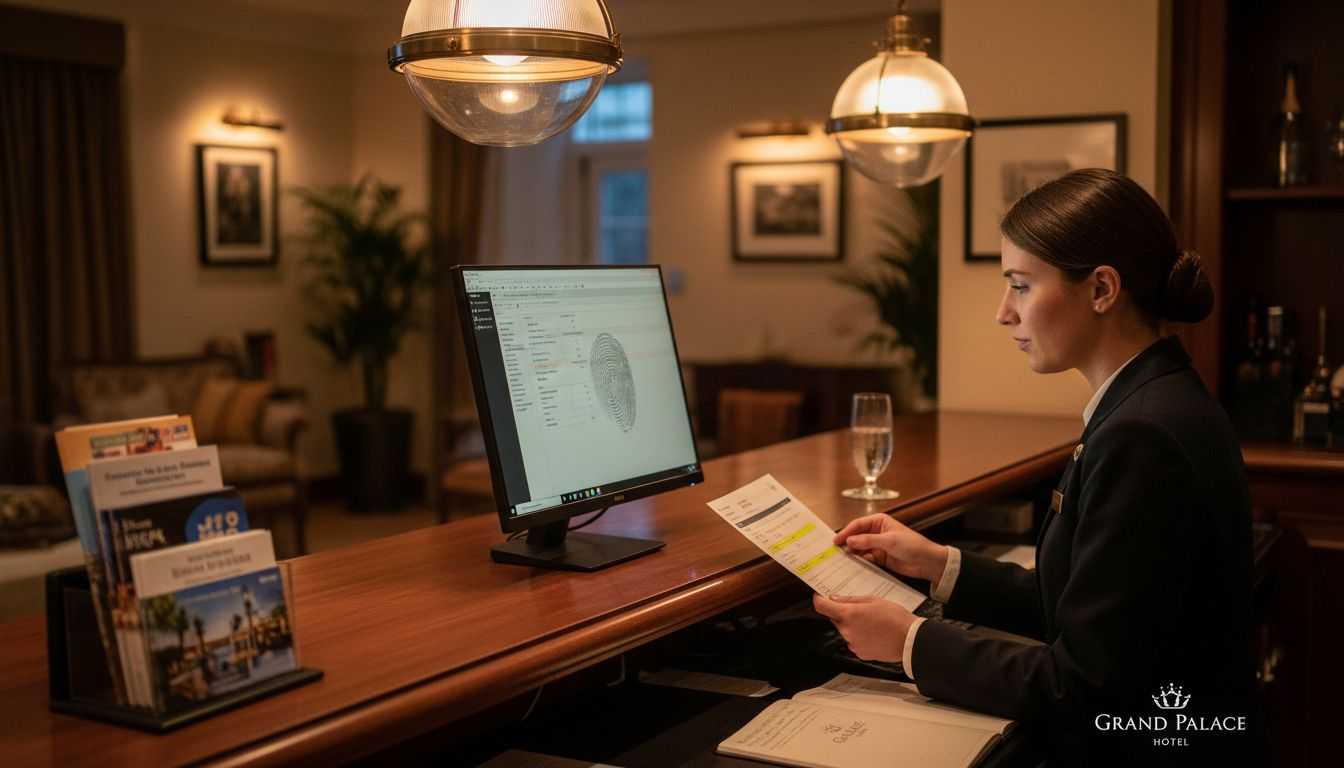
Advanced AI-driven personalization technologies enable hotels to blend digital sophistication with human warmth, creating seamless experiences that feel both high-tech and intimately personal. By leveraging machine learning algorithms, hotels can analyze vast amounts of guest data to predict preferences, customize services, and deliver experiences that feel remarkably individualized.
Key technological approaches driving personalized experiences include:
Here’s how technology enhances the luxury hospitality experience:
| Technology Approach | Main Function | Impact on Guest Experience |
|---|---|---|
| Predictive Analytics | Anticipates needs before expression | Increases surprise and satisfaction |
| Mobile Integration | Enables on-demand, personalized apps | Adds convenience and control |
| Smart Room Technologies | Automates environment adjustments | Creates comfort and exclusivity |
| AI Chatbots | Provides instant, custom support | Reduces wait times, personal touch |
| Biometric Recognition | Speeds up check-in and access | Enhances security and seamless entry |
- Predictive Analytics: Using machine learning to anticipate guest needs and preferences
- Mobile Integration: Developing smartphone apps that offer personalized, on-demand services
- Smart Room Technologies: Implementing IoT devices that adjust room environments automatically
- Artificial Intelligence Chatbots: Providing 24/7 personalized customer support and recommendations
- Biometric Recognition: Creating frictionless check-in and customized welcome experiences
Pro tip: Invest in technologies that collect and integrate guest data across multiple touchpoints to create a holistic, comprehensive understanding of individual preferences.
Balancing Privacy With Personalized Services
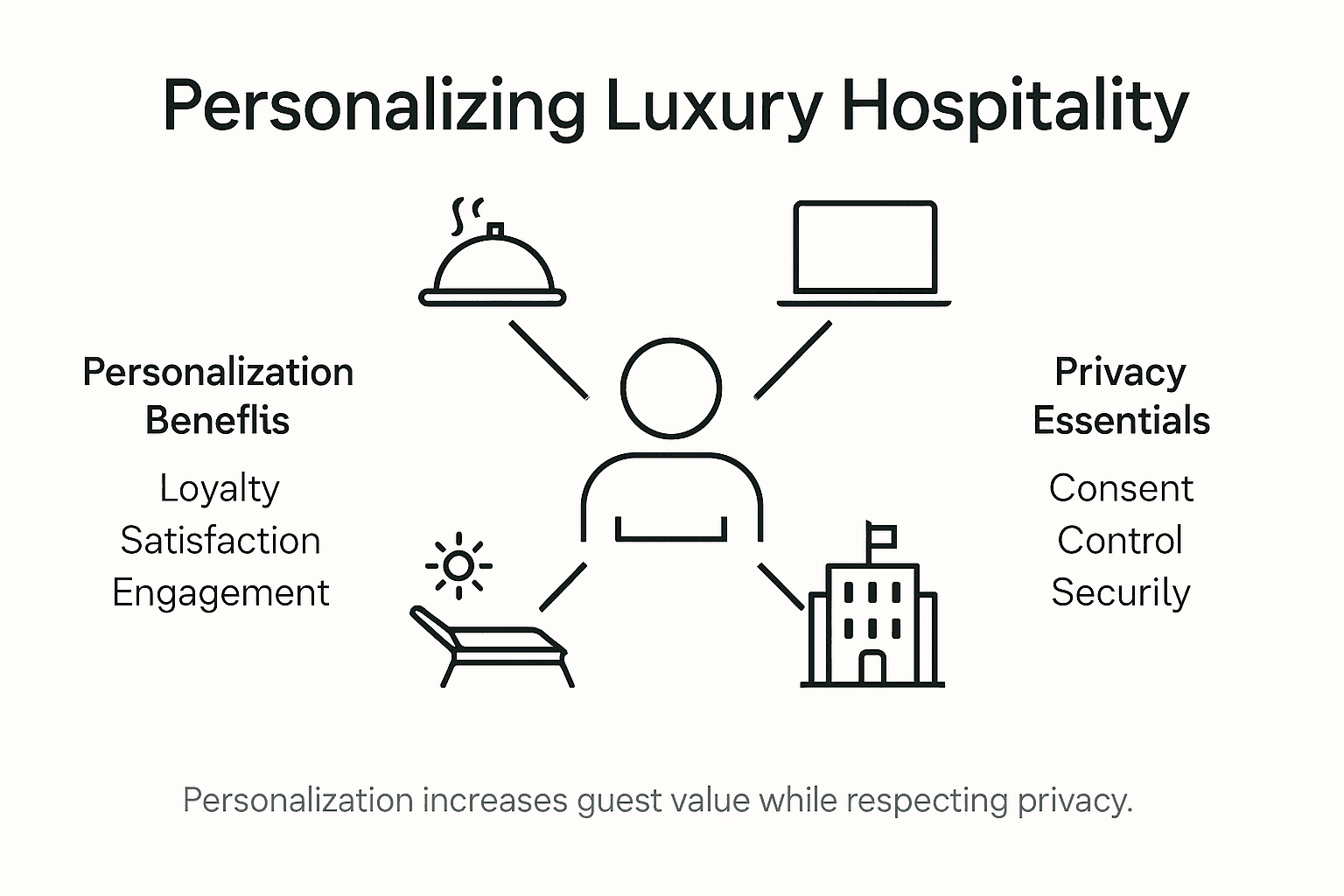
Privacy management represents a critical challenge in luxury hospitality, where the desire for personalized experiences must be carefully balanced against guests’ fundamental right to data protection. Modern travelers expect sophisticated, tailored services while simultaneously demanding rigorous safeguards for their personal information.
Strategic privacy frameworks enable hotels to navigate this complex landscape by implementing transparent data collection practices that prioritize guest consent and control. By developing nuanced approaches that respect individual boundaries, luxury hospitality brands can create personalized experiences that feel both intimate and secure, without compromising guest trust.
Key strategies for maintaining privacy while delivering personalization include:
- Transparent Data Policies: Clearly communicating how guest information will be collected and used
- Granular Consent Mechanisms: Allowing guests to select specific areas of personalization
- Data Minimization: Collecting only essential information required for service enhancement
- Robust Cybersecurity Protocols: Implementing advanced encryption and protection systems
- Optional Personalization Features: Providing guests with choices to opt in or out of personalized services
Pro tip: Develop a comprehensive privacy dashboard that gives guests complete visibility and control over their personal data and personalization preferences.
Pitfalls to Avoid in Personalization Strategies
Personalization strategies in luxury hospitality require sophisticated navigation, as even well-intentioned efforts can quickly derail guest experiences if implemented without careful consideration. The line between helpful customization and invasive overreach is razor thin, demanding meticulous attention to detail and strategic implementation.
Complex personalization frameworks reveal that many organizations stumble by treating data as an end rather than a means to enhance guest experiences. Common missteps can transform potentially delightful interactions into uncomfortable, alienating encounters that damage brand reputation and erode guest trust.
Key pitfalls luxury hospitality brands must consciously avoid include:
Compare privacy strategies and potential personalization pitfalls:
| Privacy Strategy | Purpose | Personalization Pitfall | Consequence for Brands |
|---|---|---|---|
| Transparent Policies | Build guest trust and set expectations | Data Oversaturation | Erodes trust, guest discomfort |
| Granular Consent | Allow guest control over personalization | Algorithmic Rigidity | Irrelevant recommendations |
| Data Minimization | Limit unnecessary information gathering | Contextual Misinterpretation | Services feel impersonal or awkward |
| Optional Features | Let guests opt in or out conveniently | Platform Inconsistency | Fragmented brand experience |
- Data Oversaturation: Collecting excessive information without clear purpose
- Algorithmic Rigidity: Relying too heavily on automated recommendations
- Contextual Misinterpretation: Applying data without understanding nuanced guest preferences
- Privacy Boundary Violations: Crossing perceived personal space through overly intrusive personalization
- Inconsistent Cross-Platform Experiences: Failing to maintain personalization continuity across different service touchpoints
Pro tip: Regularly audit your personalization strategies through independent guest feedback panels to identify potential blind spots and unintended negative experiences.
Elevate Luxury Hospitality with Personalized Digital Experiences
The article highlights the critical challenge luxury hospitality brands face: creating deeply personalized guest journeys while balancing technology and privacy. Your goal is clear—develop tailored interactions that anticipate individual preferences and build emotional connections that transform every guest interaction into a memorable experience. Key concepts like predictive analytics, personalized communication channels, and privacy-conscious strategies show how important it is to integrate technology with human touch in your digital presence.
At Lind Creative, we understand these pain points and deliver solutions that align perfectly with your vision. Our Web Design – Lind Creative services focus on crafting customized digital experiences that resonate with your clientele. Paired with our Web Development – Lind Creative expertise, we build intuitive platforms that incorporate smart technology for seamless personalization and data integration. You can rely on our collaborative process to create a website that not only tells your unique brand story but also anticipates and adapts to user preferences, driving true engagement.
Ready to transform visitor interactions into powerful personalized experiences that stand out in luxury hospitality? Explore our full suite of offerings designed to grow your business at Lind Creative. Start now to build a digital platform that captivates, converts, and keeps guests coming back.
Frequently Asked Questions
What is the importance of personalization in luxury hospitality?
Personalization in luxury hospitality enhances guest experiences by creating tailored interactions that anticipate their needs and preferences, leading to greater satisfaction and loyalty.
How can data analytics improve personalization in hotels?
Data analytics allows hotels to gather comprehensive insights from various touchpoints, such as reservation history and guest feedback, enabling them to craft unique experiences based on individual guest profiles.
What are some examples of effective personalization strategies in luxury hotels?
Examples include customized welcome amenities, personalized dining recommendations, predictive service anticipation, and targeted promotional offers that align with guests’ previous behaviors.
How do hotels maintain privacy while implementing personalized services?
Hotels maintain privacy by implementing transparent data policies, allowing granular consent for data use, and ensuring robust cybersecurity measures to protect guest information.
Recommended
- How to Optimize Hotel Website for Higher Bookings – Lind Creative
- Branding Process for Lifestyle Brands: Step-by-Step Success – Lind Creative
- The Impact of Responsive Design on User Experience: Optimizing for a Multi-Device World – Lind Creative
- Branding Process for Lifestyle Brands: Step-by-Step Success – Lind Creative