
Most American hotel websites lose out on direct bookings simply because their online performance is never fully audited. With so many choices available to travelers, even small issues in loading speed or user experience can push guests to competitors in seconds. By understanding how your site measures up through a data-driven audit, you can spot overlooked weaknesses and discover quick wins. This guide dives into proven steps to make your American hotel website faster, more attractive, and easier to book.
Table of Contents
- Step 1: Audit Existing Website Performance
- Step 2: Revamp Visual Design and Branding
- Step 3: Streamline Booking and Inquiry Flows
- Step 4: Optimize Content for SEO and Conversions
- Step 5: Test User Experience and Monitor Results
Quick Summary
| Key Takeaway | Explanation |
|---|---|
| 1. Audit Website Performance | Evaluate speed, user experience, and conversion rates to identify gaps. |
| 2. Enhance Visual Design | Create a cohesive visual identity with high-quality photography and design. |
| 3. Streamline Booking Process | Simplify forms and include clear steps to encourage reservations. |
| 4. Optimize Content for SEO | Use a targeted keyword strategy and create valuable content to improve visibility. |
| 5. Regularly Test User Experience | Continuously analyze user interactions and adjust based on feedback. |
Step 1: Audit Existing Website Performance
Auditing your hotel website’s performance is the critical first step in understanding where you stand and identifying opportunities for improvement. Marketing research highlights the importance of systematic performance evaluation to enhance website effectiveness and drive more direct bookings.
Start by conducting a comprehensive assessment across several key performance metrics. Analyze your website’s speed, mobile responsiveness, user experience, booking funnel conversion rates, and search engine visibility. Use tools like Google Analytics to track visitor behavior, bounce rates, average time on site, and page load speeds. Pay special attention to how users navigate through your booking pages, identifying potential friction points that might discourage potential guests from completing their reservations.
A thorough website performance audit will reveal technical and design gaps preventing optimal conversion. Check your site’s loading time across different devices, ensure all booking forms work seamlessly, verify image quality and relevance, and validate that contact information and call to action buttons are prominent and intuitive. Research in tourism website evaluation underscores the critical role of user interface design in driving online bookings.
Pro tip: Document all findings in a structured spreadsheet, prioritizing issues by their potential impact on booking conversion rates and estimated difficulty of resolution. This systematic approach transforms your audit from a diagnostic exercise into an actionable roadmap for website optimization.
Here’s a summary of essential website performance metrics to monitor during a hotel website audit:
| Metric | What It Measures | Business Impact |
|---|---|---|
| Page Load Speed | Time required for website to load | Faster speeds increase bookings |
| Bounce Rate | Percentage of visitors leaving quickly | High rates indicate poor engagement |
| Booking Funnel Conversion | Rate of visitors who book | Higher rates boost direct revenue |
| Mobile Responsiveness | Usability on smartphones/tablets | Better experience for mobile users |
| User Time on Site | Average duration spent by visitors | Longer visits suggest strong content |
Step 2: Revamp Visual Design and Branding
Revamping your hotel website’s visual design and branding is about creating a compelling digital experience that immediately captures potential guests’ attention and communicates your unique hospitality identity. Recent research underscores the critical importance of visual appeal and interactivity in driving user engagement for hotel websites.
Begin by developing a cohesive visual strategy that reflects your hotel’s personality and target market. Select a color palette that evokes the right emotional response for your brand whether it’s luxury, boutique, family friendly, or adventure focused. Integrate high quality professional photography that showcases your property’s most attractive features. Ensure images are crisp, well lit, and represent authentic experiences guests can expect. Comprehensive studies on user experience highlight how strategic visual design elements significantly influence booking decisions.
Focus on creating a clean and intuitive design that guides visitors seamlessly through their booking journey. Use consistent typography, balanced white space, and clear navigation menus. Incorporate visual storytelling techniques that help potential guests imagine themselves experiencing your hotel. This means selecting images that capture not just rooms and amenities but the overall atmosphere and emotional experience of staying at your property.

Pro tip: Invest in professional graphic design services to create custom visual assets that truly differentiate your brand. A unique visual identity can transform your website from generic to memorable and increase your conversion potential.
Step 3: Streamline Booking and Inquiry Flows
Designing an efficient booking process is crucial for converting website visitors into confirmed guests. Advanced recommendation systems powered by machine learning are transforming how hotels approach personalized booking experiences, enabling more intuitive and user friendly reservation journeys.
Create a streamlined booking flow that minimizes friction and complexity. Start by simplifying your reservation form, reducing the number of required fields to only essential information. Implement a clear step by step process that shows users exactly where they are in the booking sequence. Include progress indicators and provide real time availability updates to give potential guests immediate transparency. Innovative Natural Language Processing techniques are emerging to enhance customer interaction during the booking process, suggesting ways to make your reservation system more responsive and intelligent.
Ensure your booking interface is responsive across all devices with large touch friendly buttons, clear pricing information, and instant confirmation messaging. Integrate multiple payment options and display security badges to build user trust. Consider adding features like instant chat support or a comprehensive FAQ section to address potential questions that might interrupt the booking flow.
Pro tip: Conduct regular user testing to identify and eliminate any points of friction in your booking process. Small improvements in form design and user experience can significantly increase your conversion rates.
Step 4: Optimize Content for SEO and Conversions
Emerging research demonstrates the critical impact of strategic online content on hotel revenue generation, making content optimization a key driver for increasing bookings and website performance. Your goal is to create compelling website content that not only ranks well in search engines but also converts visitors into guests.
Develop a comprehensive keyword strategy focused on hospitality and travel terms potential guests might use when searching for accommodations. Research long tail keywords that reflect specific guest needs such as business travel amenities, romantic getaways, or family friendly rooms. Integrate these keywords naturally throughout your website content including page titles, meta descriptions, room descriptions, and blog posts. Ensure each page targets a unique set of keywords to maximize search visibility and provide specific value to different visitor segments.
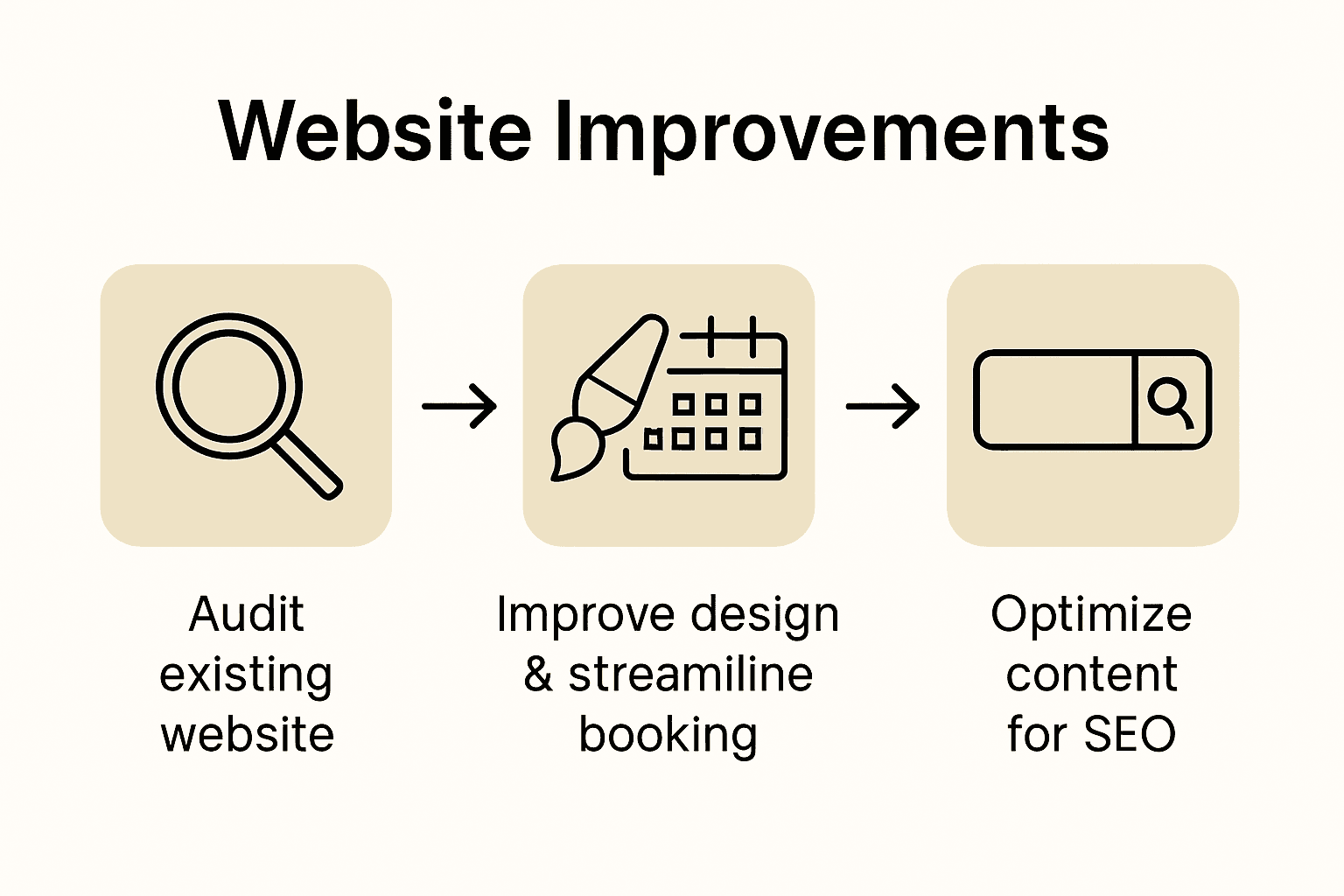
Strategic website traffic generation techniques can dramatically improve your online booking potential, so focus on creating high quality original content that answers potential guests questions. Write detailed descriptions of rooms, amenities, local attractions, and unique property features. Include rich multimedia content like professional photos, virtual tours, and guest testimonials that build trust and provide transparent insights into the guest experience. Optimize all images with descriptive alt text and compress file sizes to maintain fast page loading speeds.
Pro tip: Create a content calendar that consistently produces valuable travel related content addressing guest interests and search intent. Regular updates signal to search engines that your website is active and relevant.
Compare key approaches for optimizing your hotel website’s content:
| Optimization Activity | Main Focus | Benefit for Hotels |
|---|---|---|
| Keyword Strategy | Target hospitality-related searches | Attracts more relevant visitors |
| Content Personalization | Address unique guest needs | Increases booking conversion rates |
| Multimedia Integration | Add photos, virtual tours, testimonials | Builds trust and showcases property |
| Content Calendar | Plan regular, relevant updates | Maintains high SEO ranking |
Step 5: Test User Experience and Monitor Results
Evaluating and continuously improving your hotel website requires systematic testing and analysis of user interactions. Advanced machine learning techniques offer sophisticated approaches to understanding customer service quality through detailed review analysis, providing insights into how guests perceive their digital experience.
Reservation technologies play a critical role in shaping guest experiences and building long term loyalty, making comprehensive user experience testing essential. Implement multiple testing strategies including A/B testing for different page layouts, conversion funnel analysis, and user behavior tracking. Use tools like Google Analytics, Hotjar, and session recording software to understand how visitors navigate your website. Pay close attention to metrics such as bounce rates, time on page, click through rates, and conversion percentages. Identify potential friction points in the booking process where users might abandon their reservation attempt.
Conduct regular user testing sessions with real potential guests to gather qualitative feedback. This can involve remote usability testing, screen sharing interviews, or in person usability labs where you observe how different user segments interact with your website. Look for patterns in user behavior such as where they hesitate, which sections they skip, and what information they find most compelling. Compare quantitative data from analytics with qualitative insights to develop a holistic understanding of your website performance.
Pro tip: Create a continuous improvement cycle where you test, analyze, implement changes, and then retest. Treat your website as an evolving platform that requires ongoing refinement based on user feedback and performance data.
Unlock Your Hotel Website’s Full Potential with Lind Creative
Struggling to convert website visitors into confirmed guests? This article revealed how auditing site performance, revamping visual design, streamlining booking flows, and optimizing content are critical to boosting direct bookings. If you’re ready to eliminate booking friction and create an immersive, conversion-driven online presence Lind Creative can help you turn these goals into reality. Our expert team blends strategic Digital Marketing with innovative Web Design to craft websites that not only attract attention but also inspire action.
Don’t let your hotel website fall behind in today’s competitive market. Visit Lind Creative now to discover how our full-service approach—combining data-driven strategy, captivating design, and cutting-edge technology—delivers measurable growth. Take the next step toward more bookings and stronger guest loyalty today.
Frequently Asked Questions
How can I audit my hotel website’s performance effectively?
To audit your hotel website’s performance, start by analyzing key metrics like page load speed, bounce rate, and conversion rates. Use website analytics tools to track user behavior and identify friction points in the booking process, aiming for a comprehensive assessment within 30 days.
What should I focus on when revamping my hotel website’s design?
When revamping your hotel website’s design, focus on creating a cohesive visual strategy that reflects your brand. Use high-quality images, consistent typography, and intuitive navigation to enhance user experience and guide visitors smoothly through the booking journey.
How can I streamline my hotel booking process for better conversions?
To streamline your hotel booking process, simplify the reservation form and clearly indicate each step of the process. Reduce the number of required fields and implement real-time availability updates, aiming to eliminate friction points that could lead to booking abandonment.
What content optimization strategies should I use to improve bookings?
Implement a comprehensive keyword strategy focused on relevant hospitality terms and create engaging content that answers guest questions. Regularly update your website with valuable travel-related content to maintain high search visibility and improve conversion rates over time.
How do I test user experience on my hotel website?
To test user experience on your hotel website, use A/B testing to evaluate different layouts and analyze user behavior through tracking tools. Conduct user testing sessions with potential guests to gather feedback, aiming to implement changes based on insights every quarter.
Recommended
- Complete Guide to Website Optimization Strategies – Lind Creative
- 7 Essential Types of Business Websites and How to Use Them – Lind Creative
- 7 Essential Website Design Tips for Business Growth Success – Lind Creative
- Defining High-Converting Websites for Results-Driven Growth – Lind Creative