
Most American luxury hospitality brands face a major challenge—more than 60 percent report struggling to maintain unified brand presence across digital and physical platforms. For marketing directors, seamless integration matters because fragmented branding can weaken guest loyalty and dampen online engagement. This article unpacks how cohesive identity creates unforgettable guest experiences, turning every touchpoint into a moment that sets your brand apart in the United States market.
Table of Contents
- Unified Brand Presence Defined for Hospitality
- Core Benefits of Cohesive Branding
- Common Challenges in Brand Consistency
- Impact on Guest Experience and Digital Engagement
- Strategies for Building a Unified Identity
Key Takeaways
| Point | Details |
|---|---|
| Unified Brand Presence | A cohesive approach enhances guest recognition and loyalty by ensuring a consistent brand narrative across all touchpoints. |
| Core Benefits of Cohesive Branding | Consistent branding transforms guest interactions into emotional connections, fostering loyalty and differentiation in a competitive market. |
| Challenges in Brand Consistency | Managing the complexity of multiple channels and personalized service requires robust strategies and technology integration. |
| Strategies for Unified Identity | Developing clear brand standards and training employees are essential for maintaining a consistent brand experience across interactions. |
Unified Brand Presence Defined for Hospitality
In the competitive landscape of luxury hospitality, a unified brand presence represents a strategic approach to creating a seamless, consistent experience that resonates across all customer touchpoints. Brand management research from Coursera defines this concept as the coordinated coordination of all brand elements to establish a cohesive narrative that strengthens guest recognition and loyalty.
At its core, a unified brand presence transcends mere visual consistency. It encompasses the holistic integration of visual identity, communication style, service philosophy, and emotional connection. This means every interaction a guest experiences – from digital marketing materials to physical property environments to staff interactions – should reflect a singular, authentic brand essence. Brand identity becomes more than a logo or color palette; it transforms into a comprehensive storytelling mechanism that communicates the unique value proposition of a luxury hospitality brand.
Successful unified brand presence requires meticulous attention to detail and strategic alignment across multiple dimensions. This includes developing consistent messaging frameworks, training staff to embody brand values, maintaining visual standards, and ensuring digital and physical experiences feel interconnected. By implementing strategic brand positioning, luxury hospitality brands can create memorable, differentiated experiences that transcend traditional service expectations.
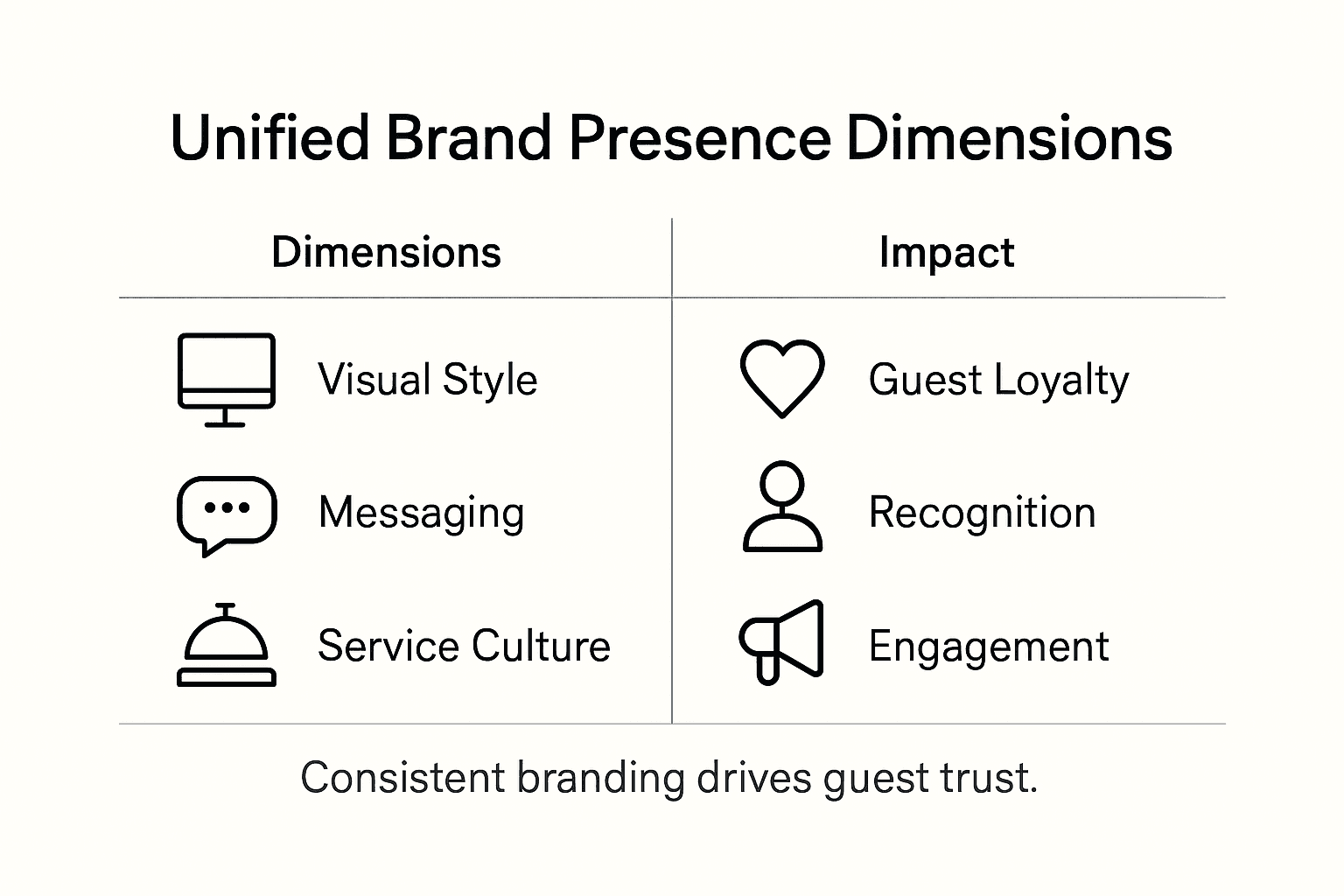
Here’s a summary of how unified brand presence impacts luxury hospitality:
| Dimension | Brand Presence Contribution | Business Impact |
|---|---|---|
| Visual Identity | Unifies logos, colors, and motifs | Improves brand recognition |
| Communication Style | Sets consistent tone and messaging | Builds trust and reliability |
| Service Philosophy | Aligns staff behavior and standards | Enhances guest satisfaction |
| Emotional Connection | Crafts memorable experiences | Strengthens loyalty and advocacy |
Pro tip: Conduct a comprehensive brand audit every six months to ensure all brand touchpoints maintain consistent messaging, visual standards, and experiential quality.
Core Benefits of Cohesive Branding
In luxury hospitality, cohesive branding represents a strategic approach that transforms guest experiences from transactional interactions to deeply emotional connections. Research from Coursera highlights how consistent branding enhances guest loyalty by creating predictable, high-quality experiences that resonate across multiple touchpoints.

The core benefits of cohesive branding extend far beyond visual aesthetics. By maintaining a unified brand narrative, luxury hospitality brands can create powerful differentiation in a competitive market. This approach enables organizations to build trust through predictable service standards, communicate their unique value proposition more effectively, and create memorable experiences that guests will share and remember. Adapting brand strategies allows hospitality brands to remain agile while maintaining a consistent core identity.
Moreover, cohesive branding drives significant strategic advantages. It streamlines internal communications, reduces marketing complexity, and creates a clear framework for employee training and guest interactions. By ensuring every brand touchpoint – from website design to staff uniforms, from digital marketing to physical environments – communicates a singular narrative, luxury hospitality brands can create immersive experiences that feel both sophisticated and deeply personal.
Pro tip: Create a comprehensive brand guideline document that details not just visual standards, but also emotional tone, communication style, and service philosophy to ensure consistent brand representation.
Common Challenges in Brand Consistency
Brand consistency in luxury hospitality presents complex challenges that require strategic navigation. Research from Coursera reveals that maintaining a unified brand presence involves balancing sophisticated human service with increasingly complex technological platforms, which creates significant operational hurdles for luxury brands.
One primary challenge emerges in managing multiple distribution channels while preserving brand exclusivity. Luxury hospitality organizations must develop nuanced strategies that maintain high-touch experiences across digital and physical platforms. This requires sophisticated technology integration, careful staff training, and implementing comprehensive brand guidelines that provide clear direction while allowing for personalized guest interactions. The complexity intensifies when brands must simultaneously appear both consistently premium and adaptable to individual guest preferences.
Technological diversity further complicates brand consistency. Modern luxury hospitality brands must synchronize experiences across websites, mobile applications, social media platforms, third-party booking systems, and physical locations. Each touchpoint represents an opportunity to reinforce or potentially dilute brand messaging. Successful brands develop robust governance frameworks that enable seamless communication, standardized visual language, and consistent service quality across increasingly fragmented customer interaction points.
This table compares challenges and solutions for maintaining brand consistency:
| Challenge | Key Difficulty | Strategic Solution |
|---|---|---|
| Multi-channel Distribution | Maintaining exclusivity on all platforms | Integrated brand guidelines |
| Technology Fragmentation | Ensuring consistency in digital domains | Centralized asset management system |
| Personalized Service | Balancing standards with customization | Staff training & feedback systems |
Pro tip: Develop a centralized digital asset management system that provides real-time brand guideline updates and ensures all team members have immediate access to current brand standards.
Impact on Guest Experience and Digital Engagement
A unified brand presence transforms digital interactions from transactional exchanges to deeply personalized experiences in luxury hospitality. Research highlighting brand identity dynamics demonstrates how consistent digital engagement fosters emotional connections that transcend traditional customer relationships, driving long-term loyalty through strategic brand storytelling.
Digital platforms have become critical touchpoints for luxury hospitality brands to create immersive, memorable guest experiences. Understanding digital brand identity enables organizations to craft seamless interactions that feel simultaneously personalized and consistently premium. This requires sophisticated technological integration that allows guests to experience the brand’s essence across websites, mobile applications, social media channels, and booking platforms – each interaction reinforcing the brand’s unique narrative and emotional promise.
The most successful luxury hospitality brands recognize that digital engagement is not about technological complexity, but emotional resonance. By developing technology that feels intuitive and responsive, brands can create digital experiences that mirror the sophistication of their physical service. This approach transforms digital interactions from mere transactional moments into opportunities for storytelling, personalization, and building lasting emotional connections with guests who seek more than just a service – they seek an experience that reflects their own values and aspirations.
Pro tip: Conduct quarterly digital experience audits to ensure your online platforms consistently reflect your brand’s emotional tone and service standards.
Strategies for Building a Unified Identity
Building a unified brand identity in luxury hospitality demands a holistic, multifaceted approach that integrates strategic vision with operational excellence. Research from Coursera on hospitality brand management emphasizes that successful unified identity development requires comprehensive strategies that align technological innovation, leadership commitment, and consistent quality standards across all organizational touchpoints.
The foundation of a unified identity lies in developing robust brand standards that transcend traditional marketing boundaries. Creating a memorable brand identity involves establishing clear guidelines that define not just visual elements, but the emotional essence and service philosophy of the brand. This means crafting detailed protocols for communication, service delivery, digital interactions, and employee engagement that collectively reinforce the brand’s unique narrative and promise.
Technology and human capital represent critical pillars in building a cohesive brand identity. Luxury hospitality brands must invest in sophisticated digital platforms that enable seamless, personalized experiences while simultaneously training employees to embody the brand’s core values. This requires continuous learning programs, rigorous recruitment processes that prioritize cultural alignment, and creating feedback mechanisms that allow the brand to evolve dynamically while maintaining its fundamental identity and commitment to exceptional guest experiences.
Pro tip: Develop a comprehensive onboarding program that immerses new employees in your brand’s unique story, values, and service philosophy to ensure consistent representation across all interactions.
Elevate Your Luxury Hospitality Brand with a Unified Presence
Struggling to maintain brand consistency across multiple channels while delivering personalized guest experiences? The challenge of uniting visual identity, communication style, service philosophy, and emotional connection is critical in hospitality. At Lind Creative, we understand how a seamless, cohesive brand presence drives engagement, trust, and loyalty among discerning clientele. Our expertise in Branding & Identity ensures every touchpoint reflects your brand’s unique story with precision and emotional depth.
Take the next step toward transforming your hospitality business today. With our strategy-driven design and marketing solutions, Lind Creative helps you build a powerful, consistent brand that captivates and converts. Visit us at https://lindcreative.com to discover how our approach—integrating creative vision, technology, and strategy—can turn your brand challenges into memorable guest experiences. Explore additional resources on Graphic Design and Resources to support your brand’s growth and digital presence.
Frequently Asked Questions
What is a unified brand presence in luxury hospitality?
A unified brand presence refers to a strategic approach that creates a seamless and consistent experience across all customer touchpoints in luxury hospitality. This includes integrating visual identity, communication style, service philosophy, and emotional connection to strengthen guest recognition and loyalty.
How does cohesive branding impact guest loyalty?
Cohesive branding enhances guest loyalty by creating predictable, high-quality experiences. When luxury hospitality brands maintain a unified narrative, they build trust and ensure guests have memorable interactions that resonate across multiple touchpoints.
What are some common challenges in maintaining brand consistency?
Common challenges include managing multiple distribution channels while maintaining brand exclusivity, ensuring consistency across various technological platforms, and balancing standardized service delivery with personalization to meet individual guest preferences.
What strategies can be used to develop a unified brand identity?
Effective strategies for developing a unified brand identity include establishing clear brand standards, ensuring technology and human capital alignment, training employees to embody brand values, and creating comprehensive onboarding programs that communicate the brand’s unique story and service philosophy.
Recommended
- Role of Branding in Loyalty – Driving Long-Term Growth – Lind Creative
- Branding Process for Lifestyle Brands: Step-by-Step Success – Lind Creative
- Digital Branding: Building Impactful Online Identities – Lind Creative
- Branding Process for Lifestyle Brands: Step-by-Step Success – Lind Creative