
Most American businesses underestimate the impact of inconsistent branding, yet research shows up to 45 percent of consumers distrust brands that lack a unified identity. Every message, logo, and color choice tells a story about your company, shaping how you are seen in a crowded marketplace. Clear brand guidelines are the blueprint that keep your public image strong and recognizable no matter where your business appears.
Table of Contents
- Defining Brand Guidelines And Their Purpose
- Core Elements In Effective Brand Guidelines
- Types Of Brand Guidelines For Businesses
- Implementing Brand Guidelines Across Channels
- Risks And Consequences Of Ignoring Guidelines
Key Takeaways
| Point | Details |
|---|---|
| Brand Guidelines Are Essential | They provide a comprehensive framework that ensures consistent messaging and design across all communication channels. |
| Implementation Is Key | Effective brand implementation requires a strategic, multi-channel approach to maintain visual and messaging consistency. |
| Ignoring Guidelines Risks Brand Integrity | Neglecting brand guidelines can lead to diminished recognition, reduced consumer trust, and increased operational costs. |
| Regular Compliance Audits Benefit Businesses | Conducting audits can help maintain adherence to guidelines and protect brand reputation over time. |
Defining Brand Guidelines and Their Purpose
Brand guidelines represent a comprehensive strategic blueprint that communicates an organization’s visual, verbal, and emotional identity across all communication channels. Brand strategy standards provide a systematic framework for maintaining consistent messaging, design elements, and core brand principles that differentiate a business in competitive markets.
At their core, brand guidelines are more than just a collection of design rules. They serve as a critical roadmap that articulates how an organization wants to be perceived by its target audience. The James Madison University Libraries define brand identity as an intangible, emotional relationship between an individual and an organization, encompassing the collective experiences that shape perceptions. This means brand guidelines function as a strategic tool for ensuring every interaction reflects the brand’s unique personality and values.
Effective brand guidelines typically include several key components that work together to create a cohesive brand experience:
- Visual Identity Elements: Logo usage, color palette, typography standards, imagery guidelines
- Tone and Voice Specifications: Communication style, language preferences, messaging framework
- Design Principles: Layout rules, graphic design standards, spacing and composition guidelines
- Brand Positioning: Core values, mission statement, target audience description
Pro Design Tip: Develop a living brand guidelines document that can evolve with your business, allowing flexibility while maintaining core brand consistency.
By establishing clear, comprehensive brand guidelines, businesses create a powerful tool for maintaining recognition, building trust, and communicating their unique value proposition across all marketing and communication platforms.
Core Elements in Effective Brand Guidelines
Brand guidelines form a comprehensive strategic framework that goes far beyond simple design rules. Powerful brand identity elements create a holistic approach to communicating an organization’s unique essence across every interaction. These guidelines serve as a critical roadmap for maintaining consistency, building trust, and establishing a recognizable brand presence in competitive markets.
The core elements of effective brand guidelines encompass several interconnected components that work together to create a unified brand experience. User experience and digital brand touchpoints play a crucial role in ensuring that every interaction carries consistent brand signals through carefully crafted visuals, tone, and communication flow. These elements typically include:
- Brand Values: The foundational principles that guide business decisions and communications
- Core Messaging: Unique differentiators that set the brand apart from competitors
- Visual Identity:
- Logo usage guidelines
- Color palette specifications
- Typography standards
- Imagery and design element requirements
- Brand Voice: Communication style tailored to the target audience
- Digital Ecosystem: Consistent representation across all digital platforms
Brand architecture provides an additional critical layer of complexity, clarifying relationships between master brands, sub-brands, products, and service lines. This structured approach prevents internal confusion and ensures a coherent brand narrative across different business segments.

Pro Strategic Tip: Develop a dynamic brand guidelines document that allows for strategic evolution while maintaining core brand integrity, enabling your brand to adapt to changing market conditions without losing its essential character.
By meticulously crafting and implementing comprehensive brand guidelines, businesses create a powerful tool for building recognition, establishing trust, and delivering a consistent brand experience that resonates with their target audience.
Here’s a summary of the business impact for each core element in effective brand guidelines:
| Brand Element | Primary Function | Business Impact |
|---|---|---|
| Brand Values | Define guiding principles | Enhance trust and alignment |
| Core Messaging | Convey unique market position | Improve differentiation and recall |
| Visual Identity | Standardize design attributes | Strengthen recognition and memorability |
| Brand Voice | Unify communication style | Boost audience engagement |
| Digital Ecosystem | Ensure seamless online experience | Drive cross-platform consistency |
| Brand Architecture | Organize brand hierarchy | Reduce confusion for customers and staff |
Types of Brand Guidelines for Businesses
Businesses require different types of brand guidelines to effectively communicate their unique identity and maintain consistency across various communication channels. Corporate identity guidelines provide a comprehensive framework that encompasses the overall image of an organization, integrating visual elements, product design, advertising, and public relations strategies into a cohesive representation.
The primary types of brand guidelines can be categorized into several critical areas that work together to create a unified brand experience:
-
Visual Identity Guidelines:
- Logo usage and placement rules
- Color palette specifications
- Typography and font selections
- Imagery and graphic design standards
-
Verbal Identity Guidelines:
- Communication tone and style
- Messaging framework
- Language preferences
- Copywriting standards
-
Digital Presence Guidelines:
- Website design consistency
- Social media visual standards
- Digital marketing asset requirements
- User interface design principles
Visual brand language guidelines play a crucial role in creating a memorable consumer experience by intentionally designing visual elements that communicate a company’s core values and personality. These guidelines ensure that every visual touchpoint reinforces the brand’s unique identity, from product packaging to digital interfaces.
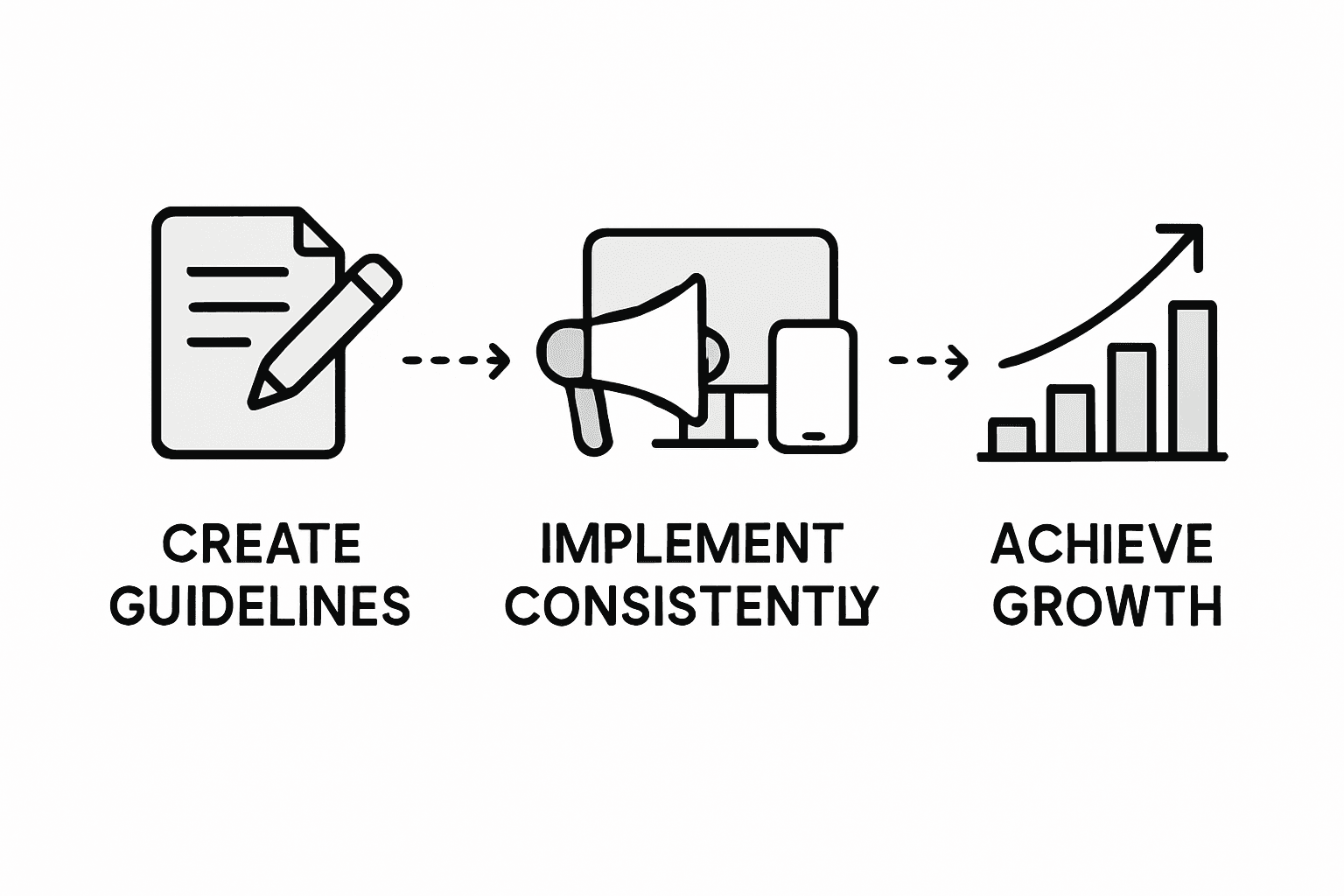
Brand architecture provides an additional layer of complexity, helping organizations manage multiple sub-brands, product lines, and service offerings while maintaining a clear and consistent brand hierarchy.
Pro Strategic Tip: Create a flexible brand guidelines document that allows for creative interpretation while maintaining core brand integrity, enabling your organization to adapt to evolving market conditions without losing its essential character.
By developing comprehensive and thoughtful brand guidelines, businesses can create a powerful tool for building recognition, establishing trust, and delivering a consistent brand experience that resonates with their target audience.
Implementing Brand Guidelines Across Channels
Successful brand implementation requires a strategic approach that ensures consistent representation across diverse communication platforms. Maintaining consistency in photography and design elements transforms brand guidelines from theoretical documents into powerful, actionable strategies that resonate with audiences and build long-term recognition.
Implementing brand guidelines effectively involves a comprehensive, multi-channel approach that addresses several critical dimensions:
-
Visual Consistency:
- Uniform color usage across all platforms
- Consistent logo placement and sizing
- Standardized typography and graphic elements
- Aligned visual storytelling techniques
-
Communication Strategy:
- Consistent tone and messaging
- Unified brand voice across written materials
- Aligned communication principles
- Synchronized narrative approach
-
Digital Platform Integration:
- Website design alignment
- Social media visual standards
- Email marketing template consistency
- Digital advertising visual coherence
Digital branding strategies play a crucial role in translating brand guidelines into actionable implementation. This process requires careful coordination between marketing teams, designers, and content creators to ensure every touchpoint reflects the brand’s core identity.
Technological tools and digital asset management systems can significantly streamline brand guideline implementation, providing centralized resources that enable teams to access approved materials quickly and maintain consistency.
Pro Strategic Tip: Create a comprehensive brand asset library with clear usage instructions, making it easy for team members across different departments to access and implement brand guidelines accurately.
By developing a robust, flexible implementation strategy, businesses can transform brand guidelines from static documents into dynamic tools that drive recognition, build trust, and create meaningful connections with their target audience.
Risks and Consequences of Ignoring Guidelines
Corporate identity inconsistencies can create profound challenges for businesses, dramatically undermining their market positioning and brand credibility. Ignoring established brand guidelines transforms carefully crafted brand strategies into fragmented, ineffective communication efforts that confuse customers and erode organizational trust.
The primary risks of neglecting brand guidelines manifest across multiple critical dimensions:
-
Brand Perception Risks:
- Diminished brand recognition
- Reduced consumer trust
- Inconsistent visual messaging
- Weakened market differentiation
-
Communication Breakdown Risks:
- Inconsistent messaging across platforms
- Mixed signals about brand identity
- Potential misinterpretation of brand values
- Reduced audience engagement
-
Financial and Operational Risks:
- Increased marketing and rebranding costs
- Lower customer retention rates
- Potential loss of competitive market positioning
- Reduced brand equity value
Brand management strategies reveal that systematic brand guideline violations can lead to significant financial consequences. These inconsistencies progressively erode customer loyalty, transforming what might seem like minor deviations into substantial long-term business challenges.
Organizational silos, decentralized marketing efforts, and lack of clear communication protocols often contribute to brand guideline fragmentation. Without centralized oversight, different departments may inadvertently create conflicting brand representations that undermine overall brand integrity.
Pro Strategic Tip: Implement regular brand compliance audits and create a centralized brand asset management system that provides real-time access to approved materials and guidelines.
By understanding and mitigating these risks, businesses can protect their brand’s reputation, maintain customer trust, and ensure consistent, powerful communication across all platforms.
This table compares the consequences of following versus ignoring brand guidelines:
| Outcome | With Guidelines | Without Guidelines |
|---|---|---|
| Brand Recognition | High and consistent | Fragmented and weak |
| Consumer Trust | Strong and reinforced | Undermined and unstable |
| Visual and Messaging Consistency | Maintained across all platforms | Inconsistent, leads to confusion |
| Operational Efficiency | Streamlined processes | Higher costs and repetitive work |
| Market Positioning | Clear differentiation | Diluted competitive advantage |
Unlock Consistency and Growth with Expert Brand Guidelines Support
Every business faces the challenge of maintaining consistent brand identity while striving for growth. This article highlights how clear brand guidelines safeguard your visual and verbal messaging, build trust, and create a powerful customer connection. If you struggle with fragmented communication or confusing brand signals, mastering your brand guidelines is the key to overcoming these obstacles.
Lind Creative offers specialized solutions that align perfectly with these goals. From crafting a cohesive Branding & Identity – Lind Creative strategy to implementing memorable designs through our Graphic Design – Lind Creative expertise, we help you establish and maintain brand consistency that drives real results. Our signature Growth Engine ties these elements together, ensuring your brand works hard to attract, convert, and expand.
Take control of your brand’s future today by partnering with Lind Creative. Visit our homepage at https://lindcreative.com to explore how we can help you build a recognizable, trusted, and scalable brand that stands the test of time. The time to act is now because consistency in your brand is what builds lasting growth.
Frequently Asked Questions
What are brand guidelines?
Brand guidelines are a comprehensive framework that communicates an organization’s visual, verbal, and emotional identity across all communication channels, ensuring consistent messaging and design.
Why are brand guidelines important for businesses?
Brand guidelines help maintain consistency in how a brand is perceived, build trust with consumers, and differentiate a business in competitive markets, leading to better brand recognition and customer loyalty.
What key components should be included in brand guidelines?
Effective brand guidelines typically include visual identity elements (like logo and color palette), tone and voice specifications, design principles, and brand positioning, encompassing the brand’s core values and mission.
How can businesses implement brand guidelines effectively?
Businesses can implement brand guidelines by ensuring visual consistency across all platforms, maintaining a unified communication strategy, integrating digital presence, and creating a centralized brand asset library for easy access.
Recommended
- Role of Branding in Scaling Business Growth – Lind Creative
- Visual Branding Workflow for Powerful Brand Impact – Lind Creative
- Why Branding Matters: Complete Guide for Businesses – Lind Creative
- How to Create Branded Visuals for Maximum Impact – Lind Creative