
Most American businesses underestimate just how much branding shapes their success. Over 70 percent of American consumers say brand trust heavily influences their buying decisions. In a crowded market, standing out requires more than a logo or catchy slogan. Effective branding taps into emotion, builds loyalty, and establishes a unique identity that can set a company apart for years to come.
Table of Contents
- Defining Branding And Its Core Principles
- Types Of Business Branding And Their Purposes
- Building A Strong Brand Identity System
- Impact Of Branding On Customer Loyalty And Roi
- Common Branding Mistakes To Avoid
Key Takeaways
| Point | Details |
|---|---|
| Importance of Branding | Branding is a strategic process that establishes a unique identity and emotional connections with customers, influencing purchasing decisions. |
| Types of Branding | Businesses utilize various branding strategies, including corporate, product, and personal branding, to connect meaningfully with their target audiences. |
| Building Brand Identity | A strong brand identity system requires alignment of visual elements, messaging, and customer experiences, demanding continuous adaptation and monitoring. |
| Impact on Loyalty and ROI | Effective branding drives customer loyalty and can lead to higher market share and revenue, making it a strategic asset rather than just a marketing expense. |
Defining Branding and Its Core Principles
Branding represents the comprehensive strategic process of creating a unique identity and perception for a business in the marketplace. More than just a logo or visual design, branding encompasses the emotional and psychological connections a company establishes with its target audience. Brand strategy principles demonstrate that successful branding integrates core organizational values with strategic communication approaches.
At its fundamental core, branding involves defining a distinctive personality that differentiates a business from competitors. This identity includes visual elements like color schemes and logos, but extends far deeper into messaging, customer experience, and the overall promise a brand makes to its audience. Effective branding communicates a company’s mission, values, and unique value proposition through consistent and strategic interactions across multiple touchpoints.
The key principles of modern branding center around authenticity, consistency, and emotional resonance. Businesses must develop a clear understanding of their target market, craft a compelling narrative, and deliver experiences that align with their brand promise. This means every interaction – from marketing materials to customer service – should reflect the same core identity and values. By creating a cohesive and genuine brand presence, organizations can build trust, loyalty, and meaningful connections with their customers that transcend transactional relationships.
Types of Business Branding and Their Purposes
Businesses employ diverse branding strategies to establish unique identities and connect meaningfully with their target audiences. Types of branding strategies reveal a complex landscape of approaches that go far beyond traditional visual design, encompassing comprehensive methods of communicating a company’s core values and market positioning.
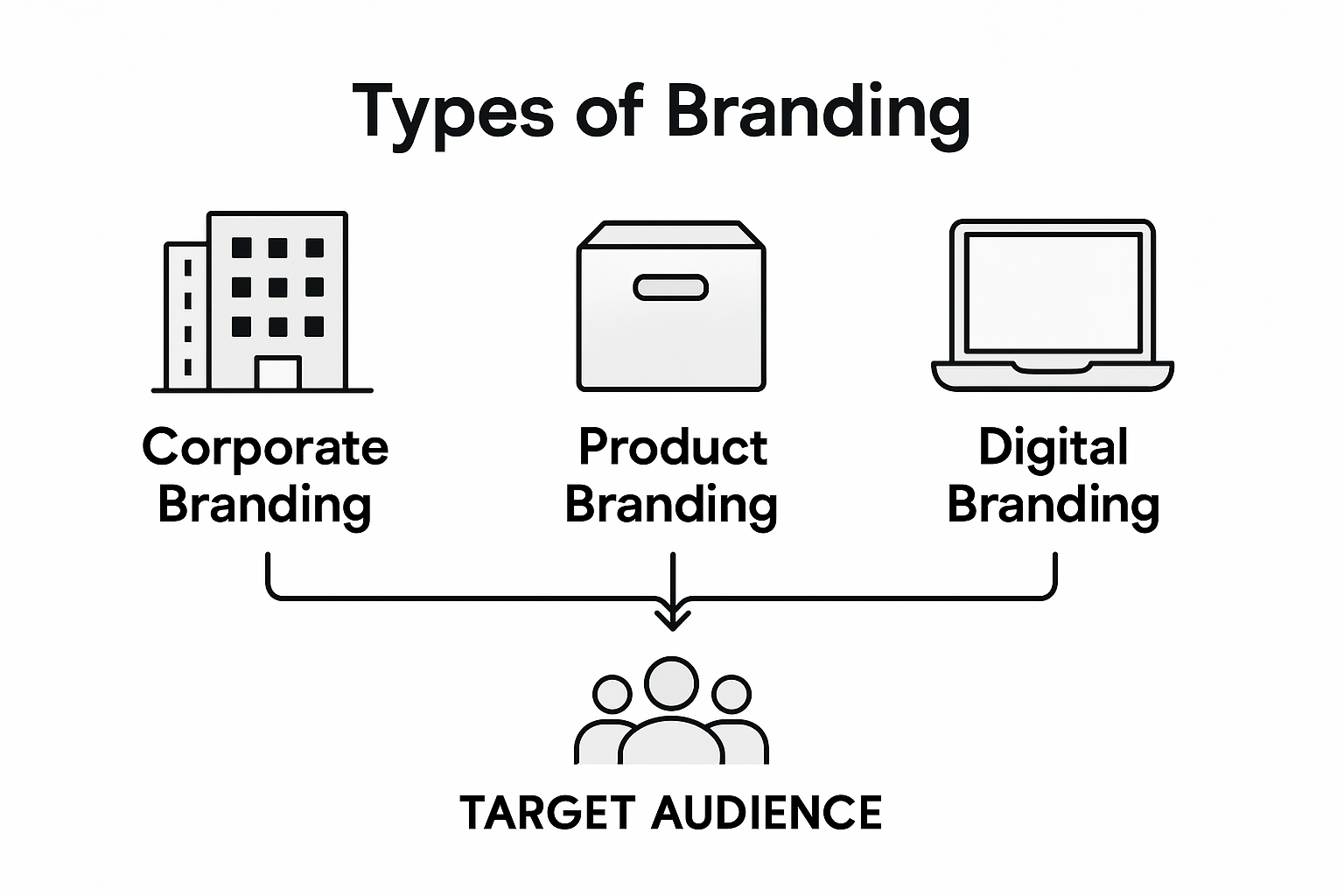
The primary types of business branding include corporate branding, which focuses on establishing an organization’s overall reputation and identity, and product branding, which highlights specific goods or service offerings. Personal branding has gained significant traction, particularly for entrepreneurs and professionals who want to position themselves as thought leaders in their industries. Additional specialized approaches include service branding, which emphasizes the quality and experience of customer interactions, and geographic or cultural branding that leverages regional identities and characteristics.
Digital and online branding has become increasingly critical in the modern marketplace, allowing businesses to create immersive experiences across multiple platforms. Retail branding, for instance, focuses on creating memorable in-store and digital shopping experiences that reflect a brand’s personality and values. Companies must strategically select and integrate multiple branding types to create a cohesive narrative that resonates with their specific target market, differentiates them from competitors, and builds long-term customer loyalty and trust.
Building a Strong Brand Identity System
Creating a robust brand identity system requires a strategic approach that goes beyond superficial design elements. Comprehensive brand identity development involves a deep exploration of an organization’s core values, mission, and unique market positioning. This process demands careful consideration of both visual and emotional components that collectively communicate a brand’s essence.
The foundational elements of a brand identity system include visual branding, verbal messaging, and experiential touchpoints. Visual branding encompasses logo design, color palettes, typography, and consistent design language across all communication channels. Verbal messaging involves crafting a distinctive voice, tone, and communication style that reflects the brand’s personality. These elements must work synergistically to create a cohesive and memorable brand experience that resonates with target audiences.
Successful brand identity systems also require ongoing alignment and adaptation. Businesses must continually audit their brand elements to ensure they remain relevant, authentic, and aligned with evolving market dynamics and customer expectations. This means regularly reviewing visual guidelines, messaging frameworks, and brand performance metrics to maintain a strong, differentiated presence in an increasingly competitive marketplace. By treating brand identity as a living, dynamic system rather than a static set of guidelines, organizations can create powerful connections that drive long-term customer loyalty and business growth.
Impact of Branding on Customer Loyalty and ROI
Effective branding plays a critical role in driving customer loyalty and generating substantial return on investment for businesses. Comprehensive branding analysis reveals that strong brand identities directly influence consumer purchasing decisions by establishing emotional connections and building trust beyond transactional relationships. When customers recognize and resonate with a brand’s core values and messaging, they are more likely to become repeat purchasers and vocal advocates.
The economic impact of strategic branding extends far beyond immediate sales metrics. Brands that successfully differentiate themselves can command premium pricing, reduce customer acquisition costs, and create sustainable competitive advantages. This translates into measurable financial outcomes, including increased customer lifetime value, higher market share, and more predictable revenue streams. Companies that invest in developing authentic, consistent brand experiences effectively transform customer perceptions from simple transactions to meaningful relationships.

Modern businesses must recognize branding as a strategic financial asset rather than a mere marketing expense. By carefully measuring brand performance through advanced metrics and customer sentiment analysis, organizations can quantify the tangible returns generated through strategic brand development. This approach requires continuous refinement, leveraging data-driven insights to adapt brand strategies, maintain relevance, and consistently deliver value that resonates with evolving customer expectations and market dynamics.
Common Branding Mistakes to Avoid
Businesses often undermine their branding efforts by falling into predictable strategic traps that erode brand credibility and market perception. Strategic brand alignment research reveals that the most critical errors stem from misalignment between a company’s stated values and actual operational practices, leading to significant trust and reputation challenges.
The most fundamental branding mistakes include inconsistent messaging across different communication channels, failing to develop a coherent brand narrative, and neglecting to adapt brand strategies to evolving market dynamics. Many organizations make the error of treating branding as a static visual exercise rather than a dynamic, ongoing process of communication and relationship building. This approach results in disconnected brand experiences that confuse customers and dilute the organization’s core value proposition.
Successful brands recognize that avoiding common pitfalls requires continuous monitoring, strategic flexibility, and a deep commitment to authenticity. This means regularly auditing brand communications, ensuring alignment between internal culture and external messaging, and maintaining a genuine connection with target audience expectations. Companies must invest in understanding their unique market positioning, developing a consistent brand voice, and creating meaningful engagement strategies that transcend superficial marketing tactics. Proactive brand management involves anticipating market shifts, listening to customer feedback, and being willing to evolve while maintaining core brand integrity.
Unlock the Power of Strategic Branding to Fuel Your Business Growth
The article highlights how vital authenticity, consistency, and emotional connection** are for building a strong brand identity that drives customer loyalty and return on investment. If you struggle with creating a cohesive brand presence or want to avoid common branding mistakes like inconsistent messaging and misaligned values, Lind Creative is here to help. Our expertise in Branding & Identity – Lind Creative ensures your brand tells a clear story that resonates deeply with your audience and stands out in the marketplace.

Experience the impact of a strategic brand developed by a full-service digital agency focused on both creativity and measurable results. Whether you are launching a new brand or refreshing your current one, visit Lind Creative to start building a powerful brand identity today. See how our unique blend of design and strategy drives real ROI and customer loyalty that lasts.
Frequently Asked Questions
What is the importance of branding in business success?
Branding is crucial for business success as it creates a unique identity, establishes emotional connections with customers, and builds trust and loyalty, ultimately influencing purchasing decisions.
How does effective branding impact customer loyalty?
Effective branding fosters customer loyalty by creating meaningful relationships that go beyond transactions, encouraging customers to become repeat buyers and advocates for the brand.
What are the core principles of branding?
The core principles of branding include authenticity, consistency, and emotional resonance, which help in creating a cohesive brand identity that aligns with customer expectations.
What common branding mistakes should businesses avoid?
Businesses should avoid inconsistent messaging, a lack of coherent brand narrative, and treating branding as a static exercise rather than an ongoing dynamic process of engagement.
Recommended
- Why Branding Matters: Complete Guide for Businesses – Lind Creative
- The Essential Guide to Investing in Branding – Lind Creative
- 7 Essential Types of Branding Strategies for Business Growth – Lind Creative
- Brand Positioning Explained: Strategies, Types, and Impact – Lind Creative
- How to Start Private Label: Build Your Own Brand Today – Spaceman