
Over 90 percent of American businesses believe a strong digital presence is vital for long-term growth. Digital branding shapes not just how a brand looks online but how it is recognized and trusted across every channel. With more companies fighting for attention than ever, understanding the core principles of digital branding helps you stand out authentically and connect in ways that drive loyalty and meaningful engagement.
Table of Contents
- Defining Digital Branding and Core Principles
- Key Elements of Effective Online Brands
- Types of Digital Branding Channels and Tools
- Brand Consistency Across Digital Platforms
- Common Digital Branding Pitfalls to Avoid
Key Takeaways
| Point | Details |
|---|---|
| Digital Branding is Multi-Faceted | It goes beyond visuals to build a comprehensive online identity through narrative and engagement. |
| Core Principles Matter | Authenticity, consistency, and strategic communication are crucial for connecting with audiences. |
| Adaptive Strategies are Essential | Brands need to be responsive and continuously engage with their audience to cultivate trust. |
| Avoid Common Pitfalls | Inconsistencies and generic approaches can hinder brand perception; a tailored strategy is essential. |
Defining Digital Branding and Core Principles
Digital branding represents a strategic approach to establishing a compelling online identity that transcends traditional logo design and visual aesthetics. At its core, digital branding is about crafting a comprehensive narrative that connects businesses with their target audience across multiple digital platforms. The evolution of branding in the digital era demonstrates that a brand is far more than just a name or visual symbol.
Successful digital branding hinges on several critical principles that transform a basic online presence into a powerful engagement mechanism. These core principles include authenticity, consistency, and strategic communication. Authenticity means presenting a genuine representation of your brand’s values and mission, while consistency ensures that your messaging remains coherent across different digital channels. Strategic communication involves carefully crafted content that resonates with your specific audience, creating meaningful connections that go beyond transactional interactions.
The digital landscape requires brands to be adaptive and responsive, understanding that online identity is dynamically constructed through continuous interaction. Brands must establish a robust online presence that effectively communicates core values and connects meaningfully with target audiences. This involves not just broadcasting messages, but actively engaging in two-way conversations, leveraging social media, content marketing, and interactive digital platforms to build trust and credibility.
Key elements of a powerful digital brand strategy include:
- Developing a clear and distinctive brand voice
- Creating visually cohesive digital assets
- Maintaining consistent messaging across all digital touchpoints
- Utilizing data-driven insights to refine brand positioning
- Embracing transparency and authentic storytelling
By understanding and implementing these principles, businesses can transform their digital branding from a mere aesthetic exercise into a strategic tool for building meaningful connections and driving long-term engagement.
Key Elements of Effective Online Brands
Building a powerful online brand requires a strategic approach that goes beyond superficial design elements. Critical brand management elements play a pivotal role in fostering customer loyalty and establishing meaningful digital connections. These elements include brand innovativeness, customer orientation, and a commitment to social responsibility that resonates with modern consumers seeking authentic and purposeful brand interactions.

The foundation of an effective online brand rests on several key components that work together to create a compelling digital identity. A strong brand identity hinges on carefully crafted visual and messaging elements, including a compelling logo, consistent color palette, and clear communication strategy. Visual consistency becomes paramount in creating a recognizable and memorable online presence that stands out in an increasingly crowded digital marketplace.
Successful online brands understand that their digital identity is a dynamic ecosystem requiring continuous refinement and strategic engagement. This means developing a multifaceted approach that encompasses:
- Authentic storytelling that reflects brand values
- Responsive and engaging digital platforms
- Personalized customer experiences
- Data-driven insights for continuous improvement
- Transparent and meaningful communication
Beyond visual elements, effective online brands cultivate a distinctive voice that differentiates them from competitors. This involves creating a unique personality that connects emotionally with target audiences, leveraging digital channels to build trust, demonstrate expertise, and create lasting relationships that extend far beyond traditional marketing approaches.
Types of Digital Branding Channels and Tools
Digital marketing strategies demand a sophisticated multi-channel approach that strategically connects brands with their target audiences. Modern brands must navigate a complex digital ecosystem that includes social media platforms, content marketing channels, email communications, and interactive digital touchpoints to create meaningful engagement and build lasting connections with consumers.
Social media platforms represent a critical cornerstone of digital branding, offering unprecedented opportunities for direct audience interaction. Advanced analytical methods now enable brands to identify influential nodes within online social networks, dramatically enhancing message dissemination and brand reach. These platforms provide nuanced tools for targeted communication, allowing brands to craft personalized experiences that resonate with specific audience segments.
The most effective digital branding channels typically encompass:
- Social media platforms (Instagram, LinkedIn, Twitter, Facebook)
- Content marketing websites and blogs
- Email marketing systems
- Podcast and video content platforms
- Interactive web experiences
- Digital advertising networks
- Professional networking platforms
Beyond traditional channels, modern digital branding tools leverage sophisticated technologies like artificial intelligence, machine learning, and advanced analytics to create more intelligent, responsive brand communication strategies. These tools enable real-time audience insights, predictive engagement modeling, and hyper-personalized content delivery that transforms how brands connect with their digital audiences.
Brand Consistency Across Digital Platforms
An integrated approach to brand management requires meticulous modeling and strategic analysis of digital content to ensure consistent messaging across multiple platforms. Brand consistency is no longer a simple aesthetic exercise but a complex strategic imperative that demands sophisticated understanding of how brand personality translates across diverse digital environments.
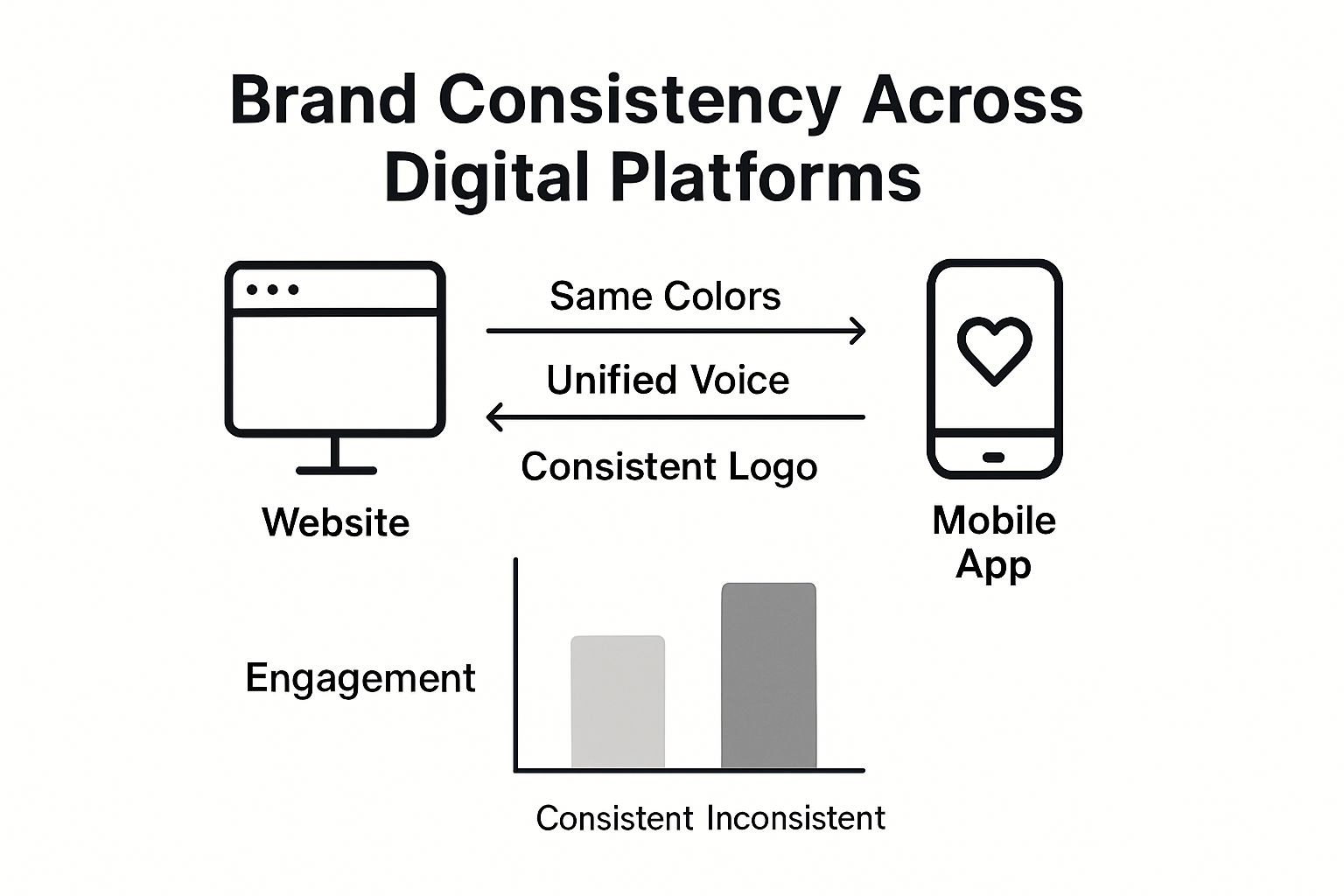
Establishing a cohesive digital brand identity involves carefully orchestrating visual, verbal, and experiential elements to create a unified narrative. Maintaining a consistent brand image online is crucial for building trust and recognition among target audiences. This means ensuring that every digital touchpoint – from social media profiles to email communications – reflects the same core values, visual language, and brand personality.
Key strategies for achieving digital brand consistency include:
- Developing comprehensive brand guidelines
- Creating a unified visual style guide
- Standardizing tone and communication approach
- Implementing cross-platform design templates
- Training team members on brand representation
- Utilizing digital asset management tools
- Regularly auditing digital brand presence
Beyond visual alignment, true brand consistency requires a holistic approach that integrates storytelling, emotional resonance, and strategic messaging. Successful brands understand that consistency is about creating a seamless, recognizable experience that feels authentic and intentional across every digital interaction, ultimately building deep and lasting connections with their audience.
Common Digital Branding Pitfalls to Avoid
Traditional approaches to evaluating brand performance often overlook critical social dynamics that can significantly impact digital brand perception. Many businesses fall into predictable traps that undermine their digital branding efforts, failing to recognize the nuanced interactions that shape modern consumer experiences and brand loyalty.
Digital branding success demands deep understanding of cultural context and audience-specific behavioral patterns. Brands frequently stumble by applying generic strategies without considering the unique expectations and communication preferences of their target demographic. This approach leads to disconnected, inauthentic digital experiences that fail to resonate with potential customers.
Common digital branding pitfalls include:
- Inconsistent messaging across platforms
- Neglecting audience-specific communication styles
- Overlooking mobile user experience
- Failing to adapt to platform-specific nuances
- Ignoring customer feedback and engagement metrics
- Using generic, impersonal content
- Lack of authentic storytelling
- Inconsistent visual branding
- Over-promoting without providing value
Successful digital branding requires a strategic, empathetic approach that prioritizes genuine connection over superficial engagement. Brands must continuously evolve, listening to their audience, adapting their strategies, and maintaining a flexible yet consistent digital identity that builds trust and meaningful relationships with their target consumers.
Build a Strong Digital Brand That Stands Out and Connects
Struggling to create a consistent and authentic online identity that truly engages your audience? This article highlights the critical challenges businesses face in crafting digital branding that goes beyond mere visuals to deliver meaningful storytelling, consistent messaging, and strategic communication. If your goal is to transform your digital presence into a powerful asset that builds trust and lasting relationships you are in the right place. Lind Creative specializes in developing comprehensive brand strategies that embrace authenticity, consistency, and data-driven insights to help your business thrive.

Explore how our Branding & Identity – Lind Creative services deliver distinctive brand voices and cohesive digital assets that work seamlessly across platforms. Pair that with our expertise in Graphic Design – Lind Creative to ensure your brand visuals are not only striking but consistent everywhere your audience interacts with you. Ready to move from struggling with online branding pitfalls to commanding your digital space Visit Lind Creative today and let us help you create a digital brand that does more than look good. Act now to start building your impactful online identity with strategy-driven design that converts.
Frequently Asked Questions
What is digital branding?
Digital branding is a strategic approach to establishing a compelling online identity. It goes beyond visual elements like logos and aims to connect businesses with their target audiences through storytelling and consistent messaging across various digital platforms.
What are the core principles of effective digital branding?
The core principles of effective digital branding include authenticity, consistency, and strategic communication. Authenticity involves presenting your brand’s genuine values, while consistency ensures coherent messaging across channels, and strategic communication focuses on engaging content tailored for your audience.
How can brands maintain consistency across digital platforms?
Brands can maintain consistency by developing comprehensive brand guidelines, creating a unified visual style guide, standardizing their communication tone, and utilizing digital asset management tools to ensure all digital touchpoints reflect the same core values and visual identity.
What common pitfalls should brands avoid in digital branding?
Common pitfalls include inconsistent messaging across platforms, neglecting audience-specific communication styles, using generic content, failing to adapt to platform nuances, and not engaging with customer feedback. Avoiding these issues helps build trust and authenticity in digital branding.
Recommended
- Brand Identity Explained: Building Trust and Value – Lind Creative
- How to Create a Memorable Brand Identity: Forging Lasting Connections with Your Audience – Lind Creative
- 7 Essential Types of Branding Strategies for Business Growth – Lind Creative
- How to Build a Brand Identity for Growth-Focused Businesses – Lind Creative
- The Social Media Buzz Behind Alexandria Dupes