
Most american businesses never realize that nearly 80 percent of purchase decisions are shaped by powerful brand positioning. Standing out in a noisy market is more important than ever, yet many struggle to define what truly makes them unique. Understanding the principles behind effective brand positioning not only builds trust but also sets a clear path for lasting business growth. Discover how mastering this strategy can transform your market presence.
Table of Contents
- Defining Brand Positioning And Core Principles
- Major Types Of Brand Positioning Strategies
- How Brand Positioning Influences Market Success
- Common Brand Positioning Mistakes To Avoid
- Best Practices For Developing Effective Positioning
Key Takeaways
| Point | Details |
|---|---|
| Brand Positioning | It is essential for differentiating your business by clearly communicating unique value and establishing a memorable market presence. |
| Core Principles | Differentiation, relevance, and credibility are integral to successful brand positioning, influencing customer trust and loyalty. |
| Common Mistakes | Avoid vague messaging, unclear target audience definition, and inconsistent brand experiences to enhance market effectiveness. |
| Best Practices | Conduct thorough audience research and ensure emotional and consistent brand communication across all touchpoints for impactful positioning. |
Defining Brand Positioning and Core Principles
Brand positioning represents the strategic process of defining how your business uniquely differentiates itself in the marketplace, creating a distinctive space in consumers’ minds that sets you apart from competitors. At its core, brand positioning is about crafting a compelling narrative that communicates your brand’s unique value proposition, core strengths, and fundamental promise to your target audience.
The foundational principles of brand positioning revolve around three critical dimensions: differentiation, relevance, and credibility. Differentiation means clearly articulating what makes your brand unique and why customers should choose you over alternatives. Relevance ensures your positioning resonates with your target market’s specific needs, desires, and pain points. Credibility confirms that your brand can authentically deliver on its promised positioning, building trust and long-term customer loyalty.
Successful brand positioning requires deep strategic thinking and comprehensive market understanding. It involves detailed research into your target audience’s preferences, competitive landscape analysis, and a nuanced understanding of your brand’s core strengths. By developing a strategic positioning framework, businesses can create a powerful emotional and rational connection with their customers.
To gain deeper insights into developing a comprehensive brand strategy, check out our guide on brand strategy that explores how strategic positioning fits into broader brand development efforts. This approach transforms brand positioning from a theoretical concept into a practical, actionable framework that drives meaningful business growth and customer engagement.
Major Types of Brand Positioning Strategies
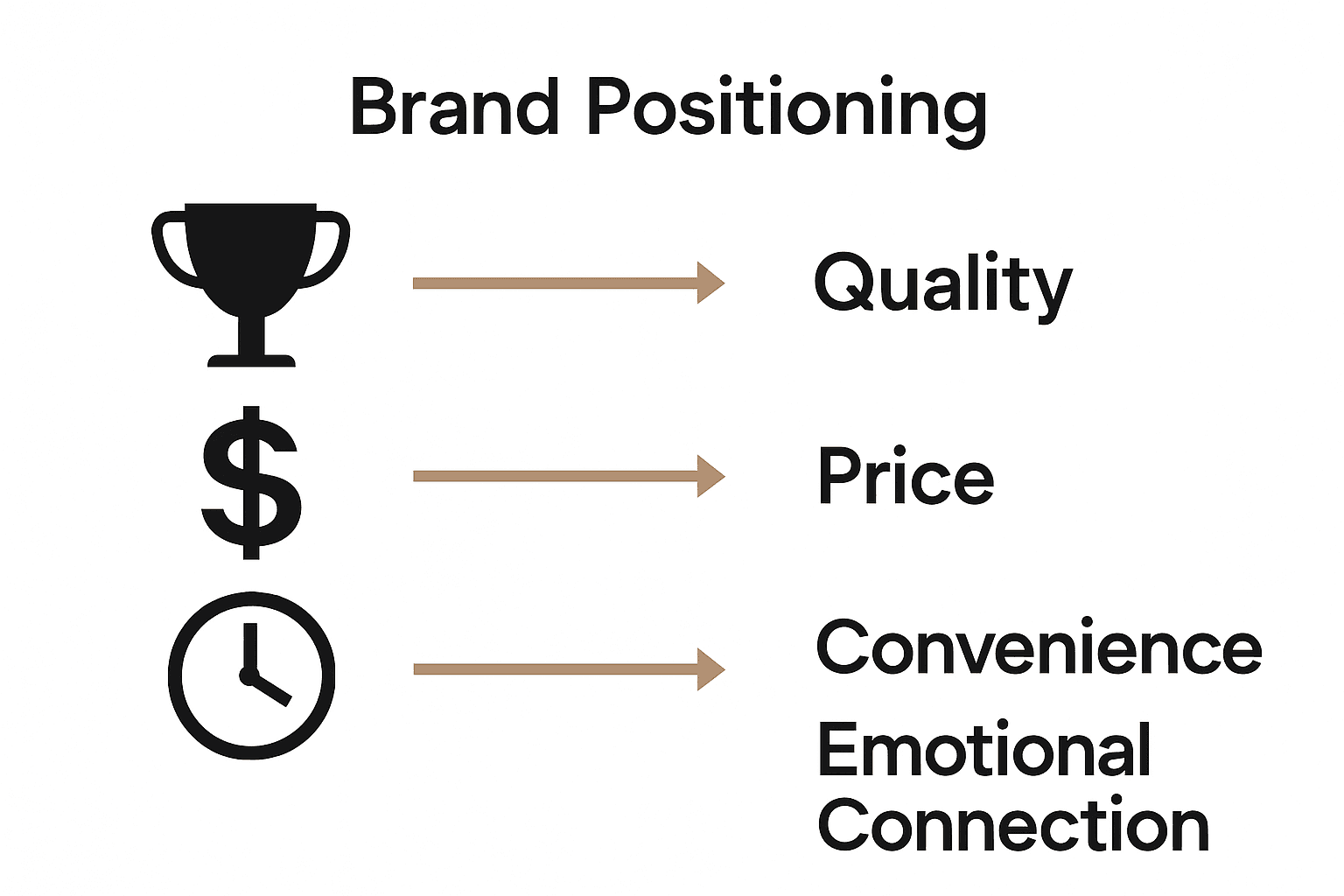
Brand positioning strategies are diverse approaches that businesses use to establish a unique and compelling market presence. According to GeeksForGeeks, effective positioning encompasses identifying target audiences, highlighting unique selling propositions, and emphasizing critical factors like quality, price, convenience, and emotional appeal.
The primary types of brand positioning strategies include:
-
Quality Positioning: Emphasizing superior product or service quality as the primary differentiator. As Online UWA notes, companies like Chipotle excel by positioning themselves around premium quality ingredients, even at a higher price point.
-
Price Positioning: Strategically positioning a brand based on affordability or value proposition. This approach can target budget-conscious consumers or present a premium pricing strategy.
-
Convenience Positioning: Focusing on making the customer experience seamless, accessible, and user-friendly. This strategy is particularly powerful in digital and service-based industries.
-
Emotional Positioning: Creating brand connections through storytelling, shared values, and emotional resonance with target audiences.
Differentiation remains the core objective of these strategies. By carefully selecting and implementing a positioning approach that aligns with your brand’s strengths and target market’s needs, businesses can create a distinctive market identity. To explore how strategic brand positioning fits into broader marketing efforts, explore our guide on investing in branding, which provides deeper insights into developing a comprehensive brand strategy.

How Brand Positioning Influences Market Success
According to BBA Note, effective brand positioning creates critical mental real estate in consumers’ minds, driving significant marketplace advantages that extend far beyond simple marketing tactics. This strategic approach fundamentally transforms how businesses communicate their unique value, reducing price-based competition and establishing a distinctive market presence.
The profound impact of strategic brand positioning manifests through several key dimensions:
- Differentiation: Carving out a unique space in consumers’ perceptions that separates your brand from competitors
- Targeting Efficiency: Focusing marketing efforts on the most receptive audience segments
- Value Communication: Clearly articulating your brand’s distinctive benefits and core strengths
- Competitive Advantage: Minimizing direct price comparisons by emphasizing unique attributes
Inte Marketing research highlights that a well-chosen positioning strategy communicates a product’s added value directly to the target audience, leading to increased market success. This approach transforms positioning from a theoretical concept into a powerful competitive tool that drives customer perception, loyalty, and business growth.
For businesses seeking to develop a comprehensive understanding of how strategic positioning impacts overall brand development, our guide on why branding matters provides deeper insights into creating meaningful market connections that drive sustainable business success.
Common Brand Positioning Mistakes to Avoid
According to GeeksForGeeks, businesses frequently encounter critical brand positioning pitfalls that can significantly undermine their market effectiveness. Understanding and proactively addressing these common mistakes becomes crucial for developing a robust and compelling brand strategy.
The most prevalent brand positioning errors include:
- Unclear Target Audience Definition: Failing to precisely identify and understand the specific customer segment most likely to engage with your brand
- Vague Unique Selling Proposition: Not clearly articulating what distinguishes your brand from competitors
- Misaligned Messaging: Creating communications that do not authentically reflect your brand’s core values and customer expectations
- Inconsistent Brand Experience: Presenting conflicting brand messages across different marketing channels
Inte Marketing research emphasizes the critical importance of avoiding ambiguous messaging and ensuring complete alignment between brand positioning and core organizational values. Successful brands recognize that positioning is not a one-time exercise but an ongoing process of understanding, refining, and communicating their unique market value.
For businesses looking to develop a more comprehensive approach to brand strategy, our guide on branding for lifestyle brands offers deeper insights into creating a cohesive and impactful brand positioning strategy that resonates with your target audience.
Best Practices for Developing Effective Positioning
According to GeeksForGeeks, developing an effective brand positioning strategy requires a comprehensive and strategic approach that goes beyond surface-level marketing tactics. The foundation of successful positioning lies in deeply understanding your target audience, their needs, motivations, and the unique value your brand can deliver.
Key best practices for developing a powerful brand positioning strategy include:
- Precise Audience Mapping: Conduct thorough research to create detailed customer personas that capture demographic, psychographic, and behavioral characteristics
- Competitive Differentiation: Conduct a comprehensive analysis of competitors to identify and articulate your brand’s unique selling propositions
- Emotional Connection: Develop messaging that resonates on both rational and emotional levels with your target audience
- Consistent Brand Experience: Ensure your positioning is reflected consistently across all customer touchpoints and communication channels
Inte Marketing research emphasizes that effective positioning is not just about creating a memorable message, but about ensuring that the brand’s core values and unique value proposition are authentically communicated and consistently delivered. Successful brands transform positioning from a theoretical concept into a living, breathing strategy that guides every aspect of business communication and customer interaction.
For professionals seeking a deeper understanding of strategic brand development, our guide on branding strategies for business growth offers comprehensive insights into creating a robust and impactful brand positioning framework.
Unlock Your Brand’s True Potential with Strategic Positioning
Understanding the power of brand positioning is just the first step. You need a partner who can translate those strategies into a compelling brand identity that truly connects with your audience. If your challenge is differentiating your brand while creating relevance and credibility in a competitive market, Lind Creative is here to help. Our expertise in Branding & Identity ensures your unique value stands out with consistent messaging that builds lasting trust.

Take control of your brand’s future today by partnering with a team that blends creativity, technology, and strategy to deliver real results. Visit Lind Creative now to start crafting a high-impact brand positioning framework and explore our Resources for valuable insights that accelerate business growth.
Frequently Asked Questions
What is brand positioning?
Brand positioning is the strategic process of defining how a brand differentiates itself in the marketplace, creating a unique space in consumers’ minds that sets it apart from competitors.
Why is brand positioning important for businesses?
Effective brand positioning helps businesses communicate their unique value proposition, establish trust and loyalty with customers, and minimize price-based competition by emphasizing distinct attributes.
What are the main types of brand positioning strategies?
The primary types of brand positioning strategies include quality positioning, price positioning, convenience positioning, and emotional positioning, each focusing on different aspects to differentiate the brand in the marketplace.
What common mistakes should businesses avoid in brand positioning?
Common mistakes include unclear target audience definitions, vague unique selling propositions, misaligned messaging with brand values, and inconsistent brand experiences across different channels.
Recommended
- Brand Strategy Explained: Key Elements and Impact – Lind Creative
- The Essential Guide to Investing in Branding – Lind Creative
- Why Branding Matters: Complete Guide for Businesses – Lind Creative
- 7 Essential Types of Branding Strategies for Business Growth – Lind Creative