
Did you know that consistent brand presentation across platforms can boost revenue by up to 23 percent? The way a company defines and expresses its personality shapes every impression it makes. People notice more than colors or logos; they respond to a story that feels real and memorable. Discover how building a clear brand identity can set you apart, create trust, and help potential customers remember your business when it matters most.
Table of Contents
- Defining Brand Identity And Its Purpose
- Core Elements That Shape Brand Identity
- Impact Of Brand Identity On Business Growth
- Common Pitfalls In Managing Brand Identity
- Comparing Brand Identity And Brand Image
Key Takeaways
| Point | Details |
|---|---|
| Importance of Brand Identity | A strong brand identity defines a company’s unique value and emotional connection with customers, serving as a strategic asset for growth. |
| Key Components | Essential elements of brand identity include logos, color palettes, messaging style, and overall personality that together tell a cohesive story. |
| Brand Identity vs. Brand Image | Brand identity is internally crafted and strategic, while brand image is externally perceived and shaped by customer experience. |
| Dynamic Management | Effective brand identity requires ongoing adaptation to market changes and customer feedback to maintain relevance and differentiation in the marketplace. |
Defining Brand Identity and Its Purpose
A brand identity is the strategic foundation that defines how a business communicates its core essence and unique value to the world. According to Harvard Business School Online, brand identity “expresses what a brand stands for through distinct, recognizable elements that set it apart from competitors,” creating powerful emotional connections that directly influence customer buying decisions.
At its core, brand identity is a comprehensive system of visual, verbal, and experiential elements that work together to tell a cohesive story. Dr. Press Research explains that this system encompasses critical components like:
- Logo design and visual aesthetics
- Color palette and typography
- Messaging and communication style
- Verbal and written language tone
- Overall brand personality and positioning
Think of brand identity as your business’s personality – a unique fingerprint that distinguishes you in a crowded marketplace. It’s not just about looking good; it’s about creating a memorable, authentic representation of your company’s values, mission, and promise to customers. By carefully crafting each element of your brand identity, you transform abstract concepts into tangible experiences that resonate emotionally and build lasting connections with your target audience.
When done effectively, a strong brand identity becomes a powerful strategic asset.
 Our comprehensive guide on creating a memorable brand identity can help you develop a distinctive brand presence that attracts, engages, and retains your ideal customers.
Core Elements That Shape Brand Identity
Brand identity is a complex ecosystem of interconnected elements that collectively communicate a company’s unique personality and value proposition. International Journal of Business Management Insights highlights that brand identity comprises two critical dimensions: core identity and extended identity. The core identity represents the timeless essence of the brand, while the extended identity includes dynamic components like brand personality, relationships, and symbolic associations.
Traditional brand identity fundamentally relies on several key visual and communicative components. According to Archives of Design Research, these foundational elements include:
- Brand name and legal trademark
- Distinctive logo design
- Consistent color palette
- Unique brand mark
- Memorable advertising slogan
Modern branding experts recognize that these elements must evolve beyond static representations. Successful brand identities now require a dynamic approach that considers ongoing market interactions and shifting consumer perceptions. This means continually refining visual and verbal communication to remain relevant and resonant with target audiences.
For businesses looking to develop a robust brand identity strategy, our guide on building a brand identity for growth-focused businesses provides comprehensive insights into transforming these core elements into a powerful, cohesive brand narrative that connects authentically with your ideal customers.
Impact of Brand Identity on Business Growth
Brand identity is far more than a visual aesthetic—it’s a strategic driver of business growth and market positioning. South African Journal of Business Management research reveals that a robust brand identity directly enhances consumer trust and familiarity, creating a powerful pathway to increased market penetration and brand awareness.
The tangible benefits of a well-crafted brand identity extend across multiple business dimensions. According to Harvard Business School Online, a clear brand identity delivers critical advantages:
- Amplifies brand awareness
- Improves marketing effectiveness
- Attracts and retains ideal target audiences
- Establishes long-term brand value
- Differentiates the business from competitors
Consistent visual elements like logos, color schemes, and typography play a crucial role in fortifying brand recognition. These seemingly simple components work together to create a memorable brand experience that resonates with customers and builds emotional connections. When strategically implemented, they transform from mere design elements into powerful communication tools that communicate a brand’s core values and unique market positioning.
For businesses seeking to leverage their brand identity as a growth catalyst, our branding and identity resources offer comprehensive strategies to transform visual and narrative elements into a compelling competitive advantage.
Common Pitfalls in Managing Brand Identity
Managing brand identity is a nuanced process fraught with potential missteps that can undermine a company’s market positioning. Journal of Emerging Technologies and Innovative Research emphasizes that brand identity is not a static concept, but a dynamic framework that requires continuous refinement and strategic adaptation.
Some of the most critical pitfalls in brand identity management include:
- Treating brand identity as a fixed, unchangeable asset
- Neglecting market feedback and evolving consumer perceptions
- Inconsistent visual and messaging communication
- Failing to differentiate from competitors
- Overlooking the emotional connection with target audiences
Traditionally, businesses have viewed brand identity through a rigid lens of predefined visual elements. However, Archives of Design Research highlights the critical need for a more flexible approach that embraces market dynamics and ongoing interactions. This means being willing to evolve your brand identity while maintaining its core essence and fundamental values.
For businesses looking to navigate these complex brand identity challenges, our visual branding workflow guide provides strategic insights into creating a resilient and adaptable brand presence that can effectively respond to changing market conditions.
Comparing Brand Identity and Brand Image
Brand identity and brand image are closely related yet fundamentally distinct concepts that play crucial roles in a company’s market positioning. Cambridge University Press defines brand identity as a distinctive amalgamation of visual, verbal, and symbolic elements that collectively embody a brand’s personality, values, and market positioning.
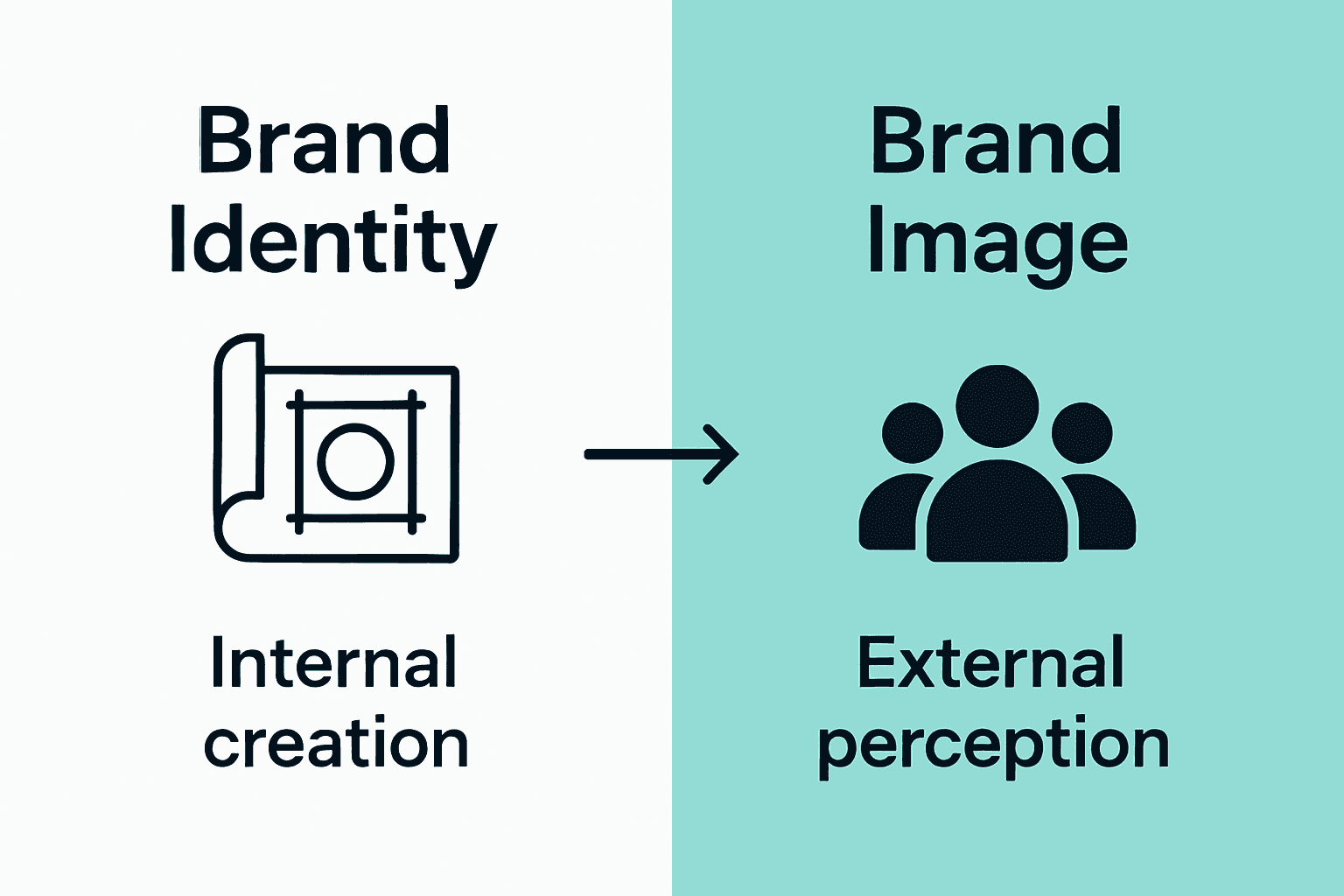
Key differences between brand identity and brand image include:
Here’s a comparison of brand identity and brand image:
| Aspect | Brand Identity | Brand Image |
|---|---|---|
| Definition | Internal blueprint | External perception |
| Created by | Company | Customers & stakeholders |
| Control | Proactive & strategic | Reactive & influenced |
| Focus | What brand communicates | How brand is received |
| Components | Visuals, messaging, values | Opinions, feelings, reputation |
| Goal | Shape distinct presence | Achieve positive recognition |
- Brand Identity: Internally created and strategically designed
- Brand Image: Externally perceived by customers and stakeholders
- Identity: What the company wants to communicate
- Image: How the brand is actually perceived in the marketplace
- Identity: Proactive and controlled
- Image: Reactive and influenced by customer experiences
International Journal of Business Management Insights emphasizes that brand identity must be grounded in a thorough understanding of customers, competitors, and the business environment. It should strategically reflect the company’s core strategy while resonating with target audiences and differentiating from competitors.
To develop a powerful and cohesive brand presence, businesses must actively manage the relationship between their intended identity and perceived image.
Our essential guide to visuals in branding offers strategic insights into creating a compelling brand narrative that bridges the gap between perception and intention.
Build a Brand Identity That Truly Connects and Drives Growth
Many businesses struggle to create a brand identity that authentically reflects their core values while standing out from the competition. When your visual elements, messaging, and overall personality are inconsistent or fail to evolve with your market, you risk losing the trust and emotional connection that drives customer loyalty. This article highlights how a dynamic and well-crafted brand identity is essential for building lasting value and increasing market impact.
At Lind Creative, we understand the challenges of translating your brand’s essence into a cohesive identity that resonates emotionally and sets you apart. Explore our Branding & Identity – Lind Creative resources to discover how strategic design and storytelling come together to forge powerful brand experiences.

Take control of your brand’s future now with expert help from Lind Creative. Whether you need to launch a new identity or refresh an existing one, our full-service digital agency blends creativity and strategy to deliver real return on investment. Get started at our website and learn how our tailored approach can help you attract, engage, and grow your ideal customers. For deeper insights, visit our Resources – Lind Creative to empower your brand journey today.
Frequently Asked Questions
What is brand identity?
Brand identity is the strategic foundation that defines how a business communicates its core essence and unique value to the world through visual, verbal, and experiential elements.
Why is brand identity important for a business?
Brand identity is crucial because it builds emotional connections with customers, enhances brand awareness, improves marketing effectiveness, and differentiates the business from competitors.
How can a company create a strong brand identity?
To create a strong brand identity, a company should focus on distinct visual elements like logos and color palettes, consistent messaging, and a clear representation of its core values and personality.
What are common mistakes in managing brand identity?
Common mistakes include treating brand identity as fixed, neglecting market feedback, inconsistent communication, failing to differentiate from competitors, and overlooking emotional connections with the target audience.
Recommended
- How to Create a Memorable Brand Identity: Forging Lasting Connections with Your Audience – Lind Creative
- How to Build a Brand Identity for Growth-Focused Businesses – Lind Creative
- The Essential Guide to Visuals in Branding – Lind Creative