
Every American luxury hospitality brand faces the challenge of turning guest curiosity into loyalty. Understanding the true meaning of a user journey is more than plotting steps on a map. It demands recognizing that each experience is dynamic and emotionally charged, as proven by research highlighting multi-phase guest interactions and adaptive expectations. This article uncovers common myths and offers actionable insights for marketing managers seeking to build personalized, memorable user journeys that drive customer acquisition.
Table of Contents
- User Journey Meaning And Common Myths
- Key Stages Of The Hospitality User Journey
- Types Of User Journeys In Luxury Hospitality
- How User Journeys Drive Guest Acquisition
- Avoiding Common User Journey Pitfalls
Key Takeaways
| Point | Details |
|---|---|
| User Journey Complexity | User journeys are dynamic and multifaceted, influenced by emotional and contextual factors, requiring a comprehensive understanding beyond simple transactional maps. |
| Stages of Hospitality Journey | The hospitality user journey includes interconnected stages that affect guest satisfaction, from pre-arrival research to post-stay reflection. |
| Personalization Importance | Developing detailed guest personas is essential for anticipating guest needs and personalizing interactions across different touchpoints. |
| Avoiding Pitfalls | Addressing channel fragmentation and emotional engagement is crucial to delivering consistent, memorable guest experiences. |
User Journey Meaning and Common Myths
A user journey represents the complete experience a customer has while interacting with a product, service, or brand across multiple touchpoints. Understanding this journey goes far beyond simple interactions – it’s about mapping the entire emotional and functional pathway a user experiences from initial awareness through final engagement.
Many organizations misunderstand user journeys by reducing them to simplistic transactional maps. In reality, user modeling techniques reveal complex psychological and behavioral patterns that shape user experiences. These journeys are dynamic, adaptive processes influenced by individual preferences, context, and evolving expectations. For luxury hospitality brands, this means recognizing that each guest’s journey is unique, with multiple potential paths and emotional touchpoints.
Common myths about user journeys often stem from oversimplification. Some professionals mistakenly believe user journeys are linear or uniform, when research demonstrates they are multifaceted and non-sequential. User experience research shows that perceptions are subjective, involving emotional responses that extend beyond mere utility or functionality. A successful user journey requires understanding subtle nuances – how users feel, what they expect, and how different interactions interconnect.
Pro tip: Conduct regular user journey mapping workshops with cross-functional teams to capture diverse perspectives and uncover hidden insights about your customer experience.
Key Stages of the Hospitality User Journey
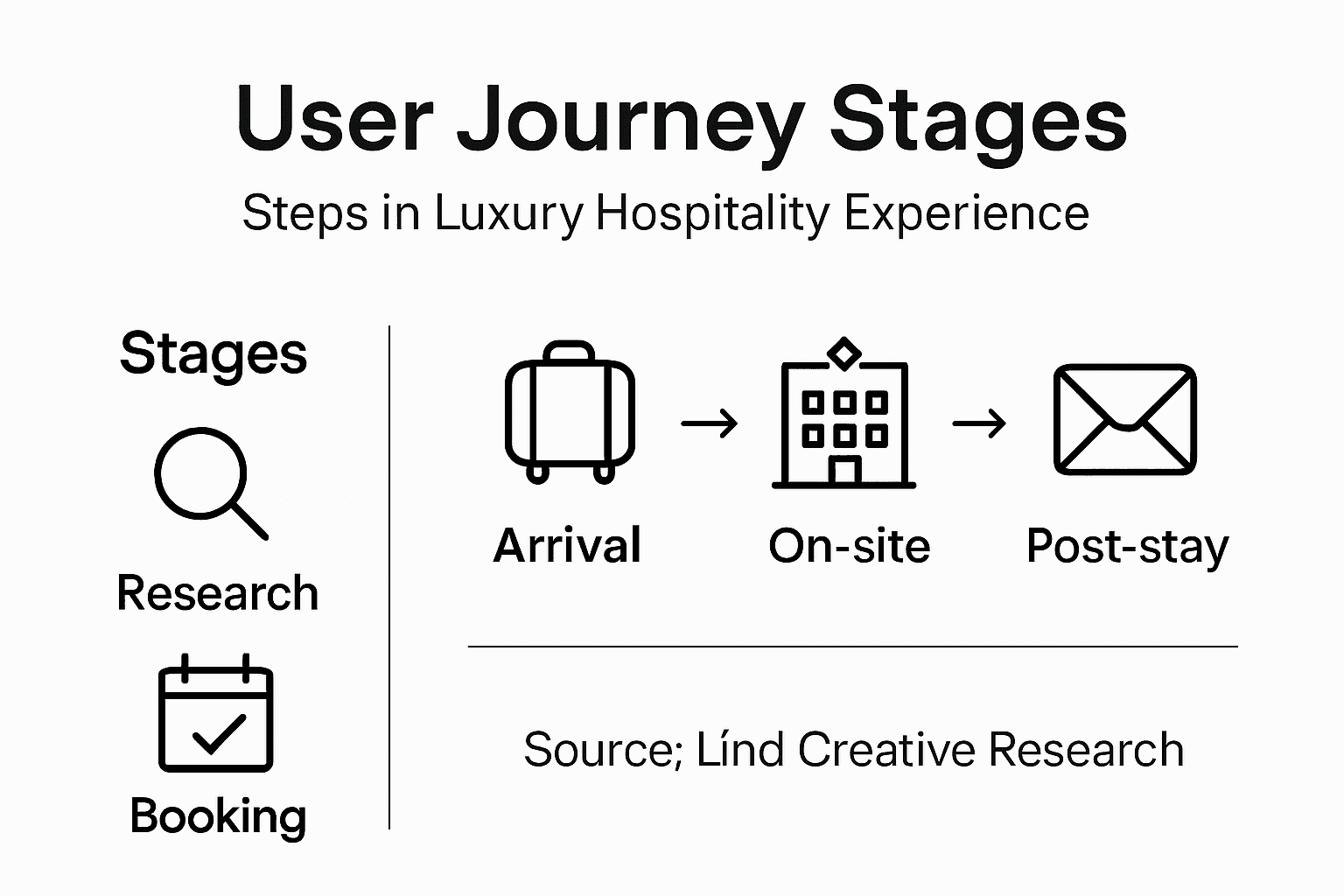
A comprehensive hospitality user journey consists of several interconnected stages that transform a potential guest’s initial curiosity into a memorable experience. Research on guest experiences reveals these stages are not linear but dynamic, adaptive interactions that shape the overall perception of a luxury hospitality brand.
The typical hospitality user journey typically encompasses five critical stages. First, the pre-arrival research phase involves potential guests exploring destination options, reading reviews, and comparing amenities. During this stage, digital platforms and marketing materials play a crucial role in creating initial impressions. The second stage, booking, represents a pivotal moment where guests transition from interested observers to active participants, making decisions based on perceived value, convenience, and emotional resonance.
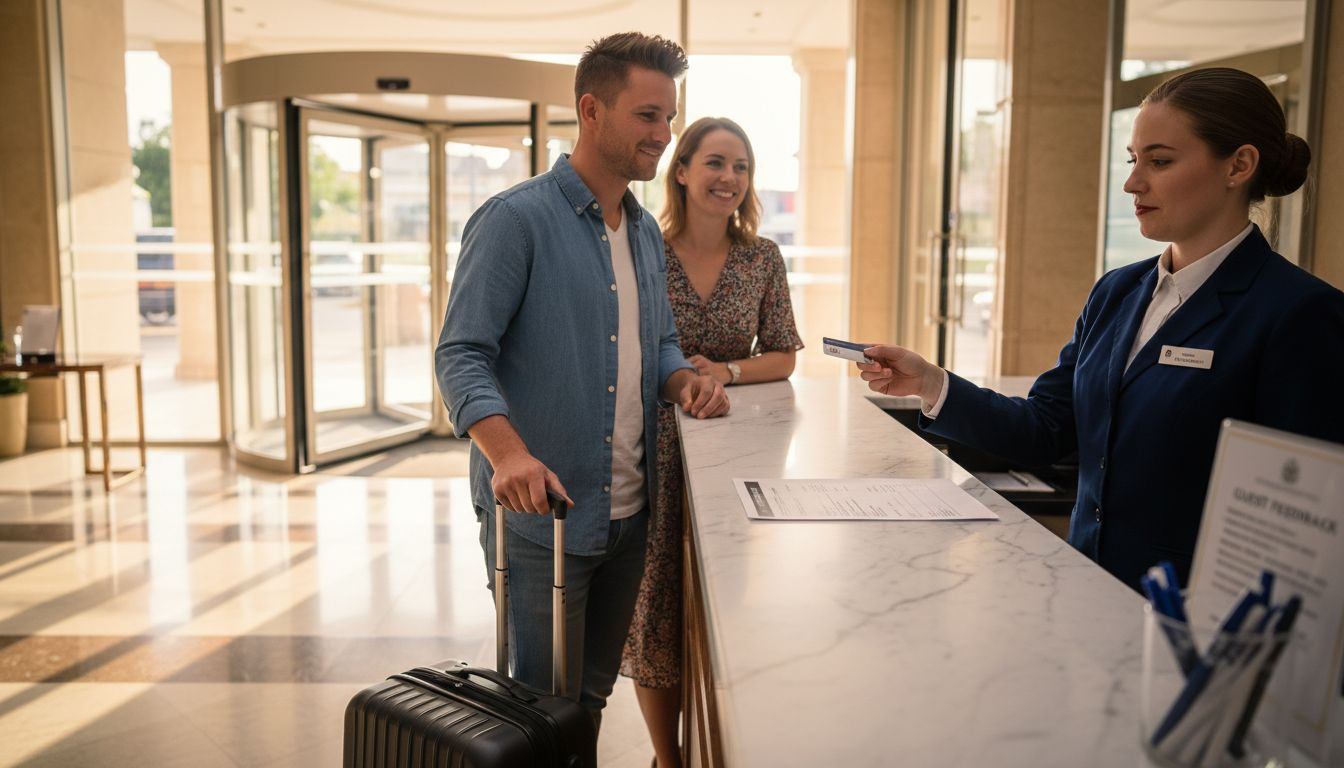
Once a reservation is confirmed, guests enter the arrival and check-in stage, where first physical impressions are formed. Guest experience research indicates this stage significantly impacts overall satisfaction. The on-site experience – the fourth stage – involves service interactions, emotional engagement, and the actual delivery of promised hospitality. Finally, the post-stay reflection stage is critical, where guests evaluate their entire experience, potentially sharing feedback and determining future loyalty.
Pro tip: Create detailed personas for each stage of the user journey to anticipate guest needs and personalize interactions across different touchpoints.
Here’s a summary of key stages in the hospitality user journey and how each impacts guest experience:
| Stage | Main Objective | Emotional Impact | Business Value |
|---|---|---|---|
| Pre-arrival Research | Inspire interest, provide info | Set expectations | Generates leads |
| Booking | Facilitate decision-making | Build excitement | Drives conversions |
| Arrival & Check-in | Welcome and orient guest | Establish trust | Affects satisfaction |
| On-site Experience | Deliver core hospitality | Foster engagement | Enhances loyalty |
| Post-stay Reflection | Encourage feedback, retention | Create lasting memories | Promotes repeat business |
Types of User Journeys in Luxury Hospitality
Luxury hospitality encompasses diverse user journey types that go far beyond traditional service interactions. Moments of luxury research reveals four distinctive journey archetypes that capture the nuanced expectations of high-end travelers: aesthetic appreciation, authentic historical engagement, exclusivity-driven experiences, and skill-based mastery journeys.
The aesthetic appreciation journey focuses on visual and sensory experiences where guests seek immersive environments that stimulate their senses and emotional perceptions. In contrast, the authentic historical engagement journey targets travelers seeking deep cultural connections, prioritizing properties with rich narratives and meaningful historical context. These journeys are not merely about accommodation but about creating profound, memorable encounters that transcend typical hospitality expectations.
Luxury hospitality research further distinguishes between experiential-focused and functional journeys. Experiential journeys emphasize hedonic escapism, creating transformative moments that allow guests to temporarily disconnect from everyday life. Functional journeys, meanwhile, prioritize precision, personalized attention, and seamless service efficiency. Each journey type requires a unique approach to understanding guest motivations, expectations, and emotional triggers, demanding sophisticated personalization strategies from luxury hospitality brands.
Pro tip: Develop detailed guest personas representing different journey types to create targeted, emotionally resonant experiences that exceed traditional service expectations.
This table compares distinctive luxury hospitality user journey types and their core guest motivations:
| Journey Type | Guest Motivation | Experience Focus | Personalization Strategy |
|---|---|---|---|
| Aesthetic Appreciation | Sensory immersion, visual appeal | Ambience and design | Tailored settings and decor |
| Historical Engagement | Authentic cultural connection | Storytelling and heritage | Curated local experiences |
| Exclusivity-driven | Elite status, privacy | VIP amenities | Exclusive access and services |
| Skill-based Mastery | Personal growth, learning | Activities and workshops | Customized event planning |
How User Journeys Drive Guest Acquisition
User journeys are strategic pathways that transform potential travelers from curious observers to committed guests. Guest experience research reveals that comprehensive journey mapping directly impacts booking conversion rates by addressing critical emotional and functional touchpoints that influence travel decisions.
The acquisition process begins with understanding dimensional guest experience factors: utilitarian (practical needs), hedonic (emotional desires), and relational (connection and trust) elements. These dimensions work together to create compelling narratives that attract and retain high-value guests. Strategic touchpoints like personalized digital interactions, seamless booking processes, and targeted communication channels play crucial roles in converting initial interest into confirmed reservations.
Hospitality research insights demonstrate that successful guest acquisition requires mapping critical conversion moments across multiple channels. This means understanding how potential guests move from awareness to consideration, and ultimately to booking. Luxury hospitality brands must design intentional experiences that anticipate guest needs, showcase unique value propositions, and create emotional resonance that differentiates them from competitors.
Pro tip: Develop a comprehensive guest persona framework that captures the nuanced motivations and emotional triggers driving each stage of the user journey.
Avoiding Common User Journey Pitfalls
Understanding and mitigating potential challenges in user journey design is crucial for luxury hospitality brands seeking to create exceptional guest experiences. Journey mapping best practices highlight several critical pitfalls that can derail even the most well-intentioned customer experience strategies.
The first significant pitfall is channel fragmentation, where organizations fail to create a cohesive experience across different touchpoints. Many luxury hospitality brands mistakenly treat digital and physical interactions as separate experiences, leading to disjointed and inconsistent guest journeys. This fragmentation creates friction points that can quickly erode guest trust and diminish the perceived value of the brand. Successful user journey design requires a holistic approach that seamlessly integrates all interaction channels, ensuring a smooth and consistent experience from initial research to post-stay communication.
Another common mistake involves neglecting the emotional dimension of the user journey. Technical efficiency alone cannot create memorable experiences. Luxury hospitality demands a deep understanding of guest emotions, anticipating unspoken needs, and creating moments of unexpected delight. Organizations often focus exclusively on functional requirements, overlooking the subtle emotional nuances that transform a standard service interaction into an extraordinary encounter. This means going beyond transactional metrics and developing an empathetic approach that recognizes the unique motivations and desires of each guest.
Pro tip: Conduct regular cross-functional workshops that map emotional touchpoints and identify potential friction areas in your guest journey, involving team members from multiple departments to gain comprehensive insights.
Transform Your User Journey Into Lasting Guest Loyalty
Understanding and optimizing the user journey is essential for luxury hospitality brands aiming to engage guests at every touchpoint and create emotional connections that inspire loyalty. If your challenge is navigating the complex, non-linear pathways potential guests take—from pre-arrival research through post-stay reflection—then a strategy-driven digital approach can help you align your brand with customer expectations, streamline booking processes, and deliver exceptional on-site experiences.
Lind Creative specializes in blending creativity with technology to build websites and marketing systems that capture attention and convert interest into action. Our Growth Engine automates lead capture, funnels, email, and ads, ensuring your guest acquisition and retention efforts are efficient and emotionally resonant. Explore how we help brands like yours by visiting our main site and discover the power of a seamless digital presence tailored to your unique user journey.
Ready to elevate your guest experience and drive measurable results? Discover how Lind Creative can help you craft high-converting digital solutions that mirror the sophistication and personalization luxury travelers seek. Visit Lind Creative now and take the first step toward transforming your user journey into a growth engine.
Frequently Asked Questions
What is a user journey?
A user journey is the complete experience a customer has while interacting with a product, service, or brand, encompassing all emotional and functional pathways from initial awareness to final engagement.
Why is understanding the user journey important for businesses?
Understanding the user journey is crucial because it reveals the complexities of customer experiences, allowing businesses to create personalized interactions, increase satisfaction, and drive loyalty through tailored services.
What are the key stages of the hospitality user journey?
The key stages of the hospitality user journey include pre-arrival research, booking, arrival and check-in, on-site experience, and post-stay reflection, each impacting guest expectations and satisfaction.
How can luxury hospitality brands enhance user journeys?
Luxury hospitality brands can enhance user journeys by developing detailed personas, mapping emotional touchpoints, and ensuring a cohesive experience across all channels to meet the unique expectations and desires of high-end travelers.
Recommended
- Customer Journey Mapping: Driving Loyalty in Hospitality – Lind Creative
- What Is User Experience and Its Impact on Luxury Hospitality – Lind Creative
- 7 User Experience Improvement Ideas for Luxury Brands – Lind Creative
- Why Customer Experience Matters for Luxury Hotels – Lind Creative
- SEO, GEO & KI-Suche: Die neue Content-Strategie | HYPED