
Every luxury hospitality marketing director knows that guest expectations keep rising, while competition grows sharper each season. The challenge lies in creating personalized connections with potential guests and driving genuine engagement online without overwhelming your team with manual tasks. By embracing martech—the sophisticated ecosystem of marketing technology platforms—you gain tools that automate lead generation, unify data, and enable smarter, more meaningful guest interactions at every digital touchpoint.
Table of Contents
- Defining Martech And Its Core Functions
- Types Of Martech Tools And Platforms
- How Martech Automates Lead Generation
- Personalization And Guest Engagement Strategies
- Integration, Data Privacy, And Common Pitfalls
Key Takeaways
| Point | Details |
|---|---|
| Martech is Essential for Modern Marketing | Martech enables hospitality brands to create data-driven strategies that enhance customer engagement and optimize marketing efforts. |
| Diverse Tools Enhance Operations | A variety of martech tools, from CRM systems to analytics platforms, streamline marketing processes and improve guest interactions. |
| Personalization is Key | Advanced personalization technologies allow brands to provide tailored experiences that resonate with individual guest preferences. |
| Integration and Compliance are Critical | Successful martech integration requires careful planning and adherence to data privacy regulations to protect guest information. |
Defining Martech And Its Core Functions
Marketing technology, or martech, represents the sophisticated software ecosystem that empowers marketing professionals to design, execute, and measure digital marketing strategies. Marketing technology platforms enable businesses to streamline complex campaigns across multiple digital channels, transforming how hospitality brands engage with potential customers.
At its core, martech encompasses several critical functional domains:
- Campaign Management: Tools for designing, scheduling, and tracking marketing campaigns
- Customer Data Platforms: Systems for aggregating and analyzing customer interaction data
- Analytics and Reporting: Solutions that provide deep insights into marketing performance
- Automation Technologies: Platforms that reduce manual marketing tasks and personalize customer experiences
The modern martech stack goes far beyond simple advertising tools. Strategic martech deployment requires a holistic approach that integrates technology, data, and creative strategies to create meaningful customer interactions.
For hospitality marketing directors, martech represents more than just software—it’s a comprehensive approach to understanding and engaging potential guests through intelligent, data-driven strategies. By leveraging these technologies, luxury hospitality brands can create personalized experiences that transform casual website visitors into loyal customers.
Pro tip: Evaluate your current martech stack annually to ensure your tools remain aligned with your evolving marketing objectives and customer engagement strategies.
Types Of Martech Tools And Platforms
Hospitality marketing professionals rely on a diverse array of martech tools designed to streamline operations and enhance customer engagement. Marketing technology solutions can be categorized into several critical functional domains that address different aspects of digital marketing strategy.
Key types of martech tools for hospitality marketing include:
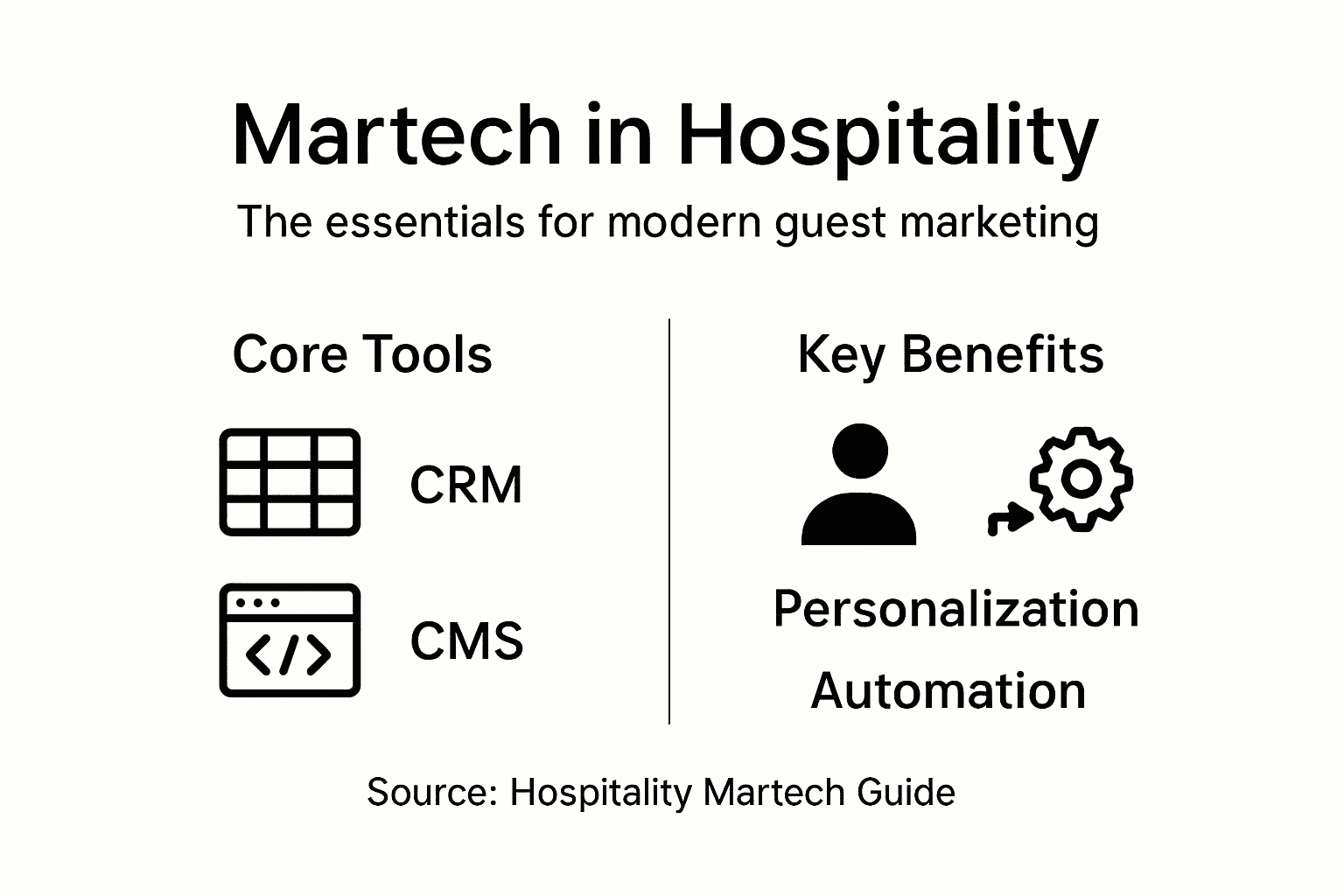
- Customer Relationship Management (CRM) Platforms: Centralize guest data and interaction history
- Content Management Systems (CMS): Enable website and digital content creation and management
- Email Marketing Automation Tools: Personalize and schedule targeted communication campaigns
- Social Media Management Platforms: Track engagement and schedule cross-channel content
- Analytics and Reporting Tools: Provide deep insights into marketing performance and customer behavior
- Booking and Reservation Systems: Streamline reservation processes and track occupancy
Emerging marketing technologies are increasingly focused on creating seamless, personalized experiences that connect multiple touchpoints in the customer journey. These sophisticated platforms help hospitality brands transform raw data into actionable insights, enabling more targeted and effective marketing strategies.
The most advanced martech stacks integrate multiple tools to create a comprehensive ecosystem that supports every stage of customer interaction—from initial discovery to post-stay engagement. By carefully selecting and integrating these technologies, luxury hospitality brands can create more intelligent, responsive marketing approaches that anticipate and meet guest expectations.

Pro tip: Conduct a quarterly audit of your martech stack to identify potential integration opportunities and eliminate redundant or underutilized tools.
Here’s a comparison of martech tool types and their impact on hospitality marketing:
| Tool Type | Main Benefit | Example Business Impact |
|---|---|---|
| CRM Platforms | Centralizes guest information | Increases guest retention rates |
| Content Management | Streamlines digital asset updates | Reduces website update time |
| Analytics Tools | Measures campaign effectiveness | Refines targeting and boosts ROI |
| Social Media Management | Coordinates cross-channel presence | Enhances brand consistency |
How Martech Automates Lead Generation
Modern martech solutions revolutionize lead generation by transforming complex marketing processes into streamlined, intelligent systems. Marketing automation platforms enable hospitality brands to capture, nurture, and convert potential guests with unprecedented precision and efficiency.
Key automated lead generation capabilities include:
- Intelligent Audience Segmentation: Categorize potential guests based on demographics, behaviors, and preferences
- Dynamic Content Personalization: Customize marketing messages for specific audience segments
- Behavioral Trigger Campaigns: Automatically launch targeted communications based on user interactions
- Real-Time Lead Scoring: Prioritize and rank potential guests by likelihood of conversion
- Multi-Channel Engagement Tracking: Monitor and optimize interactions across digital platforms
Martech automation workflows dramatically reduce manual marketing tasks while increasing lead quality and conversion potential. These sophisticated systems leverage artificial intelligence and machine learning to identify and engage potential guests more effectively than traditional marketing approaches.
The most advanced martech platforms create a seamless ecosystem that connects website interactions, email communications, social media engagement, and reservation systems. By implementing these intelligent technologies, luxury hospitality brands can transform their lead generation from a manual, time-consuming process into a sophisticated, data-driven strategy that anticipates and meets potential guests’ needs.
Pro tip: Implement a comprehensive lead tracking system that integrates data from multiple touchpoints to create a holistic view of potential guest interactions.
Personalization And Guest Engagement Strategies
Luxury hospitality brands are revolutionizing customer interactions through sophisticated personalization technologies. Modern martech enables marketing teams to create deeply tailored experiences that anticipate and exceed guest expectations, transforming generic interactions into memorable, individualized journeys.
Effective personalization strategies for hospitality marketing include:
- Predictive Preference Mapping: Analyze past guest behaviors to anticipate future desires
- Contextual Communication: Deliver targeted messages based on real-time guest interactions
- Dynamic Offer Generation: Create customized promotions matching individual guest profiles
- Omnichannel Experience Synchronization: Maintain consistent personalization across digital and physical touchpoints
- Emotional Engagement Triggers: Design communication sequences that build meaningful connections
Martech-driven personalization strategies leverage artificial intelligence and comprehensive data analysis to transform guest engagement from transactional interactions to emotionally resonant experiences. By understanding individual preferences, luxury hospitality brands can create highly targeted communications that feel genuinely personal and thoughtfully curated.
The most advanced personalization approaches integrate data from multiple sources—website interactions, previous bookings, social media engagement, and customer service encounters—to build comprehensive guest profiles. This holistic view allows marketing teams to craft nuanced, intelligent strategies that make guests feel truly understood and valued.
Pro tip: Implement a centralized customer data platform that consolidates interactions from all channels to create a unified, 360-degree view of guest preferences.
Integration, Data Privacy, And Common Pitfalls
Navigating the complex landscape of martech integration requires strategic planning and a comprehensive understanding of potential challenges. Martech integration challenges can significantly impact a hospitality brand’s marketing effectiveness, making it crucial to develop a holistic approach to technology implementation.
Key considerations for successful martech integration include:
- Technical Compatibility: Ensuring seamless communication between different marketing platforms
- Data Governance: Establishing clear protocols for data collection, storage, and usage
- Compliance Management: Adhering to data privacy regulations like GDPR and CCPA
- User Training: Developing comprehensive onboarding programs for marketing teams
- Continuous Evaluation: Regularly assessing and optimizing the martech ecosystem
Common martech implementation pitfalls often stem from insufficient planning and inadequate attention to data privacy concerns. Hospitality brands must prioritize creating an integrated system that balances technological capabilities with robust privacy protections, ensuring that guest data remains secure while enabling personalized marketing strategies.
Successful martech integration goes beyond technical implementation. It requires a holistic approach that aligns technology with business objectives, maintains data integrity, and creates a seamless experience for both marketing teams and guests. By anticipating potential challenges and developing comprehensive integration strategies, luxury hospitality brands can unlock the full potential of their marketing technology investments.
Pro tip: Conduct a quarterly audit of your martech stack to identify potential integration gaps, compliance risks, and opportunities for optimization.
Key martech integration pitfalls and solutions for hospitality brands:
| Common Pitfall | Consequence | Recommended Solution |
|---|---|---|
| Data Silos | Incomplete guest profiles | Integrate all customer data sources |
| Poor User Training | Low adoption, workflow errors | Provide ongoing training sessions |
| Overlapping Tools | Increased costs, confusion | Conduct regular tool audits |
| Weak Compliance | Legal risks, damaged reputation | Update processes to meet regulations |
Harness Martech To Elevate Your Hospitality Marketing Today
Understanding the challenges of martech integration and automation as highlighted in “What Is Martech? Transforming Hospitality Marketing” is crucial for hospitality brands seeking to boost guest engagement and streamline lead generation. The article identifies key pain points such as managing complex marketing platforms, ensuring data privacy, and building personalized experiences. Lind Creative specializes in solving these exact challenges by blending creative design with smart marketing technologies to help luxury hospitality brands create seamless, data-driven customer journeys.
Unlock the power of a comprehensive marketing system tailored to your needs. Explore how our signature Growth Engine automates lead capture, funnels, emails, and ads while delivering measurable results. Visit Lind Creative to start building a high-converting website and a brand identity that stands out. Take control of your martech stack now and transform your hospitality marketing strategy into a growth engine your business deserves.
Frequently Asked Questions
What is martech and how does it impact hospitality marketing?
Martech, or marketing technology, refers to software solutions that help marketing professionals execute and measure digital marketing strategies. In hospitality marketing, it transforms how brands engage with potential customers by streamlining campaigns and providing personalized experiences.
What are the key types of martech tools used in hospitality?
Key martech tools include Customer Relationship Management (CRM) platforms, Content Management Systems (CMS), email marketing automation tools, social media management platforms, analytics tools, and booking systems. Each tool addresses different aspects of digital marketing to enhance customer engagement.
How does martech automate lead generation for hospitality brands?
Martech automates lead generation through intelligent audience segmentation, dynamic content personalization, behavioral trigger campaigns, real-time lead scoring, and tracking multi-channel engagements. These systems make it easier for hospitality brands to capture and nurture potential guests efficiently.
What challenges should hospitality brands consider when integrating martech?
Key challenges include ensuring technical compatibility between platforms, establishing data governance protocols, managing compliance with data privacy regulations, providing user training, and continuously evaluating the martech ecosystem. A comprehensive approach can help overcome these integration pitfalls.
Recommended
- Key Digital Marketing Terms Driving Hotel Growth – Lind Creative
- What Is Retargeting: Boosting Conversions for Hospitality – Lind Creative
- 7 Steps for an Effective Marketing Strategy Checklist – Lind Creative
- What Is SaaS Marketing: Unlocking Growth in Hospitality – Lind Creative
- AI Search & SEO: Adapt Your Strategy Now – Ads Daddy.