
Luxury hospitality marketing now depends on more than beautiful imagery and refined service. Rapid shifts in digital strategy mean an American hotel’s brand visibility and lead generation efforts are built on a foundation of specialized terms and tools. Clarity around the digital marketing mix, from search engine optimization to social media marketing, is vital for marketing managers who want to engage travelers and automate outreach successfully.
Table of Contents
- Defining Digital Marketing Terms for Hospitality
- Types of Digital Marketing Strategies and Channels
- Lead Generation, Funnels, and Conversion Metrics
- Automation, Retargeting, and Personalization Techniques
- Avoiding Common Pitfalls in Digital Marketing Jargon
Key Takeaways
| Point | Details |
|---|---|
| Importance of Digital Marketing | Digital marketing has transformed hospitality, emphasizing data-driven strategies that enhance guest engagement and personalization. |
| Diverse Strategies | Hotels should leverage a mix of SEO, content marketing, and social media to capture traveler attention and drive bookings. |
| Lead Generation Focus | Understanding the digital marketing funnel is crucial for effective lead generation and converting potential guests into bookings. |
| Clear Communication | Avoid complex jargon and focus on guest-centric language to enhance marketing effectiveness and connect with potential guests. |
Defining Digital Marketing Terms for Hospitality
Digital marketing has transformed hospitality, shifting from traditional advertising to sophisticated, data-driven strategies that connect brands directly with travelers. Hotels and resorts now leverage advanced digital tools to enhance visibility, engage potential guests, and create personalized experiences.
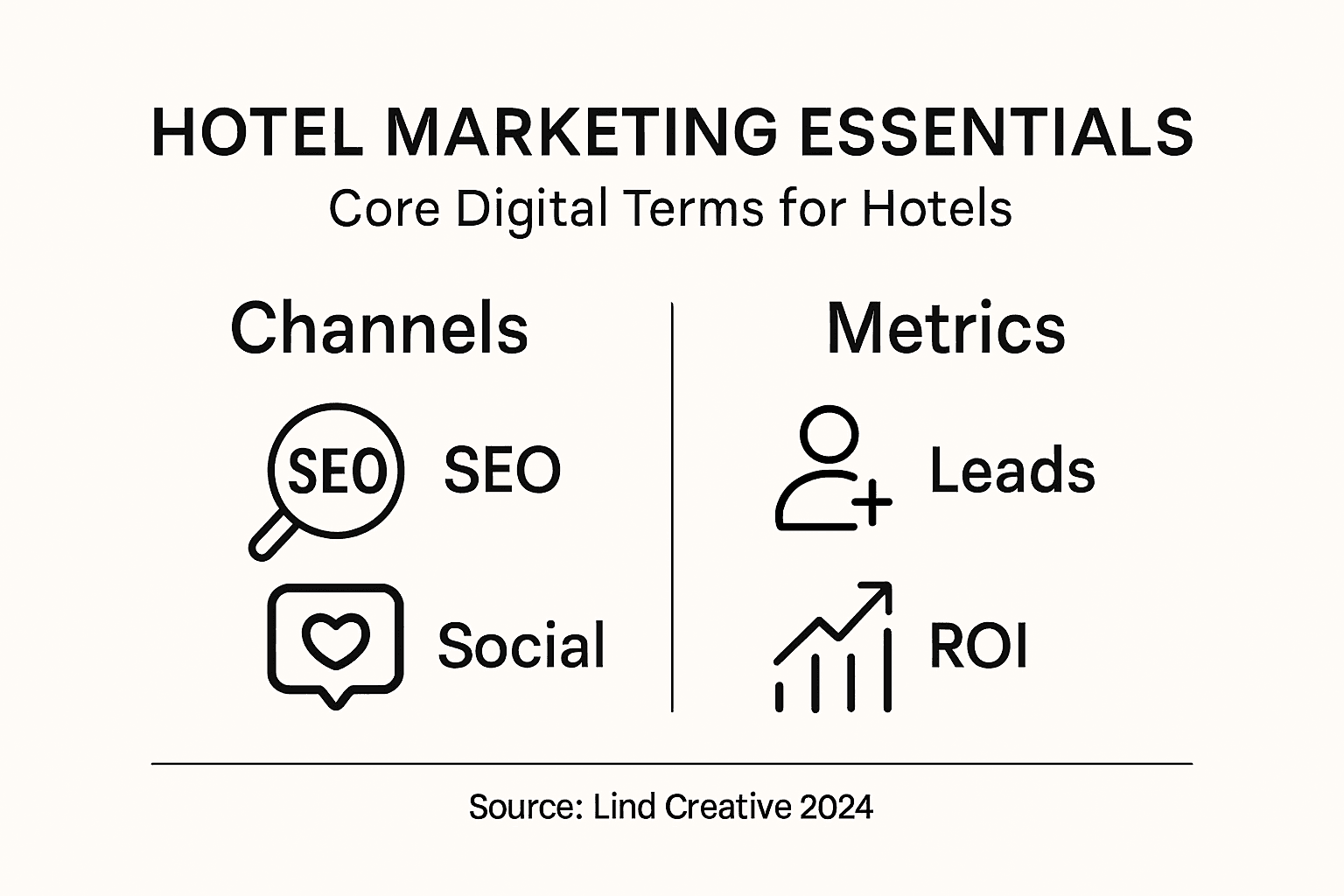
The digital marketing landscape for hospitality encompasses several key strategies and terms that drive growth and customer interaction:
- Search Engine Optimization (SEO): Improving website visibility in search results to attract organic traffic
- Content Marketing: Creating valuable, relevant content that attracts and retains potential guests
- Social Media Marketing: Leveraging platforms to build brand awareness and engage with travelers
- Influencer Partnerships: Collaborating with travel content creators to expand reach
- Retargeting Campaigns: Reconnecting with website visitors through personalized digital advertisements
Understanding the digital marketing mix for hospitality reveals how modern hotels transform consumer interactions. Digital strategies now empower travelers as co-creators of brand narratives, moving beyond traditional one-way communication models.
Professional digital marketing requires a strategic approach that combines technical expertise with creative storytelling. Hotels must now view digital platforms not just as advertising channels, but as comprehensive engagement ecosystems that support the entire customer journey.
Pro tip: Invest in analytics tools that track user behavior across digital platforms to continuously refine and personalize your marketing approach.
Types of Digital Marketing Strategies and Channels
Hotels and resorts are increasingly leveraging diverse digital marketing strategies to capture traveler attention and drive bookings. Digital marketing technologies offer sophisticated approaches to reach and engage potential guests across multiple platforms and channels.
Key digital marketing strategies for hospitality include:
- Search Engine Optimization (SEO): Optimizing website content to rank higher in search results
- Content Marketing: Creating compelling travel stories, destination guides, and hotel experience narratives
- Social Media Marketing: Building brand awareness through platforms like Instagram, Facebook, and TikTok
- Email Marketing: Sending personalized promotions, newsletters, and targeted campaign communications
- Pay-Per-Click Advertising: Running targeted digital ads to attract specific traveler demographics
- Affiliate Marketing: Partnering with travel bloggers and online travel agencies to expand reach
Effective digital marketing requires understanding the nuanced differences between paid, owned, and earned media channels. Paid media includes sponsored advertisements, owned media encompasses a hotel’s website and social profiles, while earned media represents organic mentions, reviews, and user-generated content.
Here is a comparison of paid, owned, and earned media channels for hotel digital marketing:
| Channel Type | Main Benefit | Typical Examples | Control Level |
|---|---|---|---|
| Paid Media | Immediate visibility boost | Sponsored ads, PPC | High |
| Owned Media | Strong brand control | Hotel website, social pages | Full |
| Earned Media | High trust from guests | Reviews, user photos | Low |
Modern hospitality marketing demands a holistic approach that integrates multiple digital channels strategically. Hotels must create seamless, personalized experiences that connect with travelers across their entire digital journey, from initial inspiration to final booking.
Pro tip: Develop a comprehensive digital marketing dashboard that tracks performance metrics across all channels to optimize your marketing investment and guest engagement strategies.
Lead Generation, Funnels, and Conversion Metrics
Digital marketing for hotels revolves around effectively capturing and converting potential guests through strategic lead generation processes. Marketing performance indicators play a critical role in tracking and optimizing these complex customer acquisition strategies.
The digital marketing funnel for hospitality typically encompasses three key stages:
- Awareness Stage: Attracting potential travelers through targeted content and advertising
- Consideration Stage: Engaging interested guests with detailed hotel information and compelling visual experiences
- Decision Stage: Converting interested travelers into confirmed bookings through strategic messaging and clear call-to-actions
Key conversion metrics hotels should track include:
- Website traffic volume and sources
- Engagement rates on landing pages
- Email open and click-through rates
- Booking form completion rates
- Cost per lead acquisition
- Conversion rate from website visitor to booked guest
Successful lead generation requires continuous optimization of each funnel stage. Hotels must develop data-driven strategies that analyze user behavior, identify potential friction points, and create personalized experiences that guide travelers seamlessly from initial interest to final booking.

Pro tip: Implement advanced analytics tools that provide real-time insights into your marketing funnel performance, allowing for immediate adjustments and continuous improvement of conversion strategies.
Automation, Retargeting, and Personalization Techniques
Digital marketing in hospitality has evolved dramatically with advanced AI-powered marketing strategies that enable hotels to create highly targeted, personalized guest experiences.
Key automation and personalization techniques for hotels include:
- Behavioral Retargeting: Tracking user interactions and serving personalized ads based on previous website visits
- Email Marketing Automation: Sending triggered, segmented emails based on guest preferences and booking history
- Dynamic Content Personalization: Customizing website content in real-time based on user demographics and browsing behavior
- Predictive Analytics: Using machine learning to forecast guest preferences and anticipate booking patterns
- Chatbot Integration: Providing instant, personalized customer support and booking assistance
Successful personalization strategies require sophisticated data collection and intelligent segmentation. Hotels must balance technological capabilities with genuine, meaningful guest interactions that feel authentic rather than invasive.
Below is a summary of key automation techniques and how they impact guest experience:
| Technique | Guest Benefit | Operational Outcome |
|---|---|---|
| Behavioral Retargeting | More relevant offers | Higher ad conversion rates |
| Email Marketing Automation | Timely, personalized messages | Increased repeat bookings |
| Chatbot Integration | Instant support, fast answers | 24/7 guest engagement |
Modern marketing automation transforms how hotels engage with potential guests, creating seamless, intelligent communication pathways that adapt to individual traveler needs and preferences across multiple digital touchpoints.
Pro tip: Develop a comprehensive customer data platform that integrates all digital touchpoints, enabling unified guest profiles for more precise and effective personalization strategies.
Avoiding Common Pitfalls in Digital Marketing Jargon
Hotels often undermine their marketing effectiveness by drowning potential guests in complex, technical language. Digital content communication requires clarity, simplicity, and a focus on guest experience rather than industry terminology.
Common digital marketing jargon to avoid includes:
- Buzzwords: Terms like ‘synergy’, ‘disruptive’, and ‘game-changer’
- Technical Acronyms: Unexplained marketing abbreviations that confuse readers
- Overly Complex Descriptions: Lengthy, abstract explanations of services
- Industry-Specific Slang: Insider language that excludes potential guests
- Vague Superlatives: Generic claims like ‘best’ or ‘world-class’ without substantiation
Effective hotel marketing communication demands translating complex concepts into relatable, guest-centric language. Instead of using technical terms, focus on describing the actual experience, benefits, and unique value propositions that matter to travelers.
Successful digital marketing requires speaking directly to guests’ desires, emotions, and practical needs. Replace complicated industry language with clear, engaging narratives that help potential guests understand exactly what makes your hotel exceptional.
Pro tip: Create a communication guideline that prioritizes guest-friendly language, requiring every marketing message to pass a ‘clarity test’ where a non-industry person can easily understand the content.
Unlock Your Hotel’s Growth with Expert Digital Marketing Support
Navigating the complex world of digital marketing terms and strategies can be overwhelming for any hotel looking to grow. From mastering SEO and retargeting campaigns to leveraging personalized automation and clear communication, the challenges are real and the stakes high. You want to connect with travelers effectively but may struggle with creating seamless, data-driven campaigns that truly convert visitors into loyal guests.
At Lind Creative, we specialize in transforming these challenges into opportunities by combining creative storytelling with technology and strategic design. Our Digital Marketing – Lind Creative expertise helps hotels implement a full-funnel approach that optimizes your visibility, engagement, and conversions.
Don’t let jargon or fragmented efforts hold your hotel back. Visit Lind Creative to experience our signature Growth Engine — a powerful marketing system that automates lead capture, funnels, email, and ads so you can scale effectively and with confidence. Discover the latest insights in Industry Trends – Lind Creative and access valuable tools through our Resources – Lind Creative to ensure your digital marketing not only looks great but drives measurable results. Take the first step to elevate your hotel’s digital presence today.
Frequently Asked Questions
What is Search Engine Optimization (SEO) in hotel marketing?
SEO refers to the practice of enhancing a hotel’s website visibility in search engine results to attract more organic traffic and potential guests.
How can content marketing benefit hotels?
Content marketing involves creating valuable and relevant travel-related content that engages potential guests and encourages them to consider your hotel.
What role do social media marketing strategies play in hospitality?
Social media marketing helps hotels build brand awareness, engage with travelers, and share experiences through platforms like Instagram and Facebook, ultimately attracting more bookings.
How can hotels utilize retargeting campaigns effectively?
Retargeting campaigns allow hotels to reconnect with previous website visitors through personalized ads, increasing the likelihood of converting them into guests by reminding them of their interest.
Recommended
- SEO Trends in 2025: Maximizing Bookings for Hospitality – Lind Creative
- Digital Branding: Driving Luxury Hospitality Growth – Lind Creative
- Multi Channel Strategy: Boosting Luxury Hotel Bookings – Lind Creative
- Online Presence: Driving Engagement for Hospitality Brands – Lind Creative
- Travel Deal Terminology Explained: Maximizing Savings – PilotTravelDeals.com