
Over 90 percent of first impressions are influenced by color, making it one of the most powerful branding tools for any american business. Color does much more than decorate a logo or website. It shapes how customers feel about a brand and even influences their buying decisions, often before a single word is read. Understanding how color choices affect perception and emotion helps brands create connections that last and stand out in crowded markets.
Table of Contents
- Defining The Role Of Color In Branding
- Psychology Behind Color Choices In Branding
- How Color Shapes Brand Identity And Perception
- Key Color Strategies For Business Success
- Common Color Branding Mistakes To Avoid
Key Takeaways
| Point | Details |
|---|---|
| Importance of Color in Branding | Color serves as a psychological tool that influences consumer perception and emotional responses, making it essential for brand identity. |
| Strategic Color Selection | Businesses should align their color choices with brand personality and target audience preferences to create effective visual narratives. |
| Common Mistakes in Color Branding | Avoid ignoring cultural color symbolism and ensure consistent color application, as these missteps can undermine brand effectiveness. |
| Research and Adaptation | Conduct thorough audience research and analyze cultural associations to inform color strategies for better market performance. |
Defining the Role of Color in Branding
Color is far more than a visual design element – it’s a powerful psychological tool that communicates brand essence, triggers emotional responses, and shapes consumer perceptions. According to research from nijournals, color profoundly influences consumer behavior and brand interaction, serving as a silent communicator of a company’s values and personality.
In the competitive business landscape, color psychology emerges as a critical strategic asset. As studies from scirp reveal, colors do more than decorate – they actively impact customer perception and emotional engagement. Each color carries inherent psychological associations that can instantly communicate brand attributes, from reliability and professionalism to innovation and creativity.
Brands leverage color strategically across multiple touchpoints – logos, websites, packaging, marketing materials – to create consistent and memorable visual identities. The right color palette can differentiate a brand, evoke specific emotions, and create lasting impressions that resonate with target audiences. By understanding color’s psychological nuances, businesses can craft visual narratives that speak directly to their customers’ subconscious preferences and emotional triggers.
Key strategic considerations for color selection include:
- Alignment with brand personality
- Target audience psychological preferences
- Cultural color symbolism
- Competitive landscape differentiation
- Emotional response optimization
Psychology Behind Color Choices in Branding
Color selection in branding transcends aesthetic preference – it’s a complex psychological strategy that taps into deep emotional and cognitive responses. According to research from nijournals, color choices are intricate psychological tools that communicate brand personality, trigger specific emotional reactions, and influence consumer decision-making processes.
Studies from zenodo reveal that color psychology operates on multiple subconscious levels, creating immediate and powerful associations. Different colors evoke distinct emotional and behavioral responses: blues can communicate trustworthiness and stability, reds signal excitement and urgency, greens suggest growth and harmony, while yellows communicate optimism and energy. These psychological triggers are not random but deeply rooted in human evolutionary and cultural experiences.

Brands strategically leverage these psychological insights to create nuanced visual identities that resonate with target audiences. By understanding color’s emotional language, businesses can craft visual narratives that speak directly to consumers’ subconscious preferences. This approach goes beyond mere decoration, transforming color into a sophisticated communication tool that can differentiate brands, build emotional connections, and influence purchasing behaviors.
Key psychological dimensions of color selection include:
- Emotional resonance and mood generation
- Cultural and contextual symbolism
- Neurological and physiological responses
- Brand personality alignment
- Cognitive perception and memory retention
For deeper insights into visual branding strategies, explore our guide on color psychology in web design, which provides comprehensive analysis of how colors shape user experiences.
How Color Shapes Brand Identity and Perception
Color is a powerful strategic instrument that fundamentally transforms how consumers perceive and interact with brands. According to research from nijournals, strategic color application goes far beyond aesthetic choices, serving as a critical mechanism for enhancing brand recognition and fostering deep emotional connections with target audiences.
Research from scirp reveals that brand perception is dramatically influenced by color selection, with specific hues communicating distinct brand attributes and emotional narratives. For instance, corporate blues suggest reliability and professionalism, while vibrant oranges communicate energy and creativity. These color-driven perceptions operate at a subconscious level, instantaneously shaping consumer expectations and emotional responses before any direct interaction with a brand’s products or services.
Successful brands understand that color is a nuanced language of visual communication. By carefully selecting and consistently applying color palettes, businesses can craft compelling brand identities that resonate deeply with their target demographics. This strategic approach transforms color from a mere design element into a sophisticated psychological tool that differentiates brands, builds trust, and creates memorable visual experiences that linger in consumers’ minds.
Key strategies for leveraging color in brand identity include:
- Maintaining consistent color application across all brand touchpoints
- Aligning color choices with brand personality and core values
- Understanding cultural and demographic color associations
- Creating emotional resonance through strategic color selection
- Differentiating from competitive brands through unique color narratives
For a comprehensive exploration of visual branding techniques, explore our guide on brand identity, which provides deeper insights into crafting powerful visual narratives.
Key Color Strategies for Business Success
Color selection is a strategic business imperative that directly impacts market performance and brand perception. According to research from nijournals, effective color application can significantly enhance brand equity and create powerful marketing communication strategies that resonate with target audiences.
Research from scirp reveals that strategic color psychology is a critical competitive advantage for businesses seeking to influence consumer behavior. Successful companies understand that color is not just a visual element, but a sophisticated communication tool that can trigger specific emotional responses, increase brand recognition, and drive customer engagement. By intentionally selecting colors that align with brand personality and target audience preferences, businesses can create compelling visual narratives that differentiate them in crowded markets.
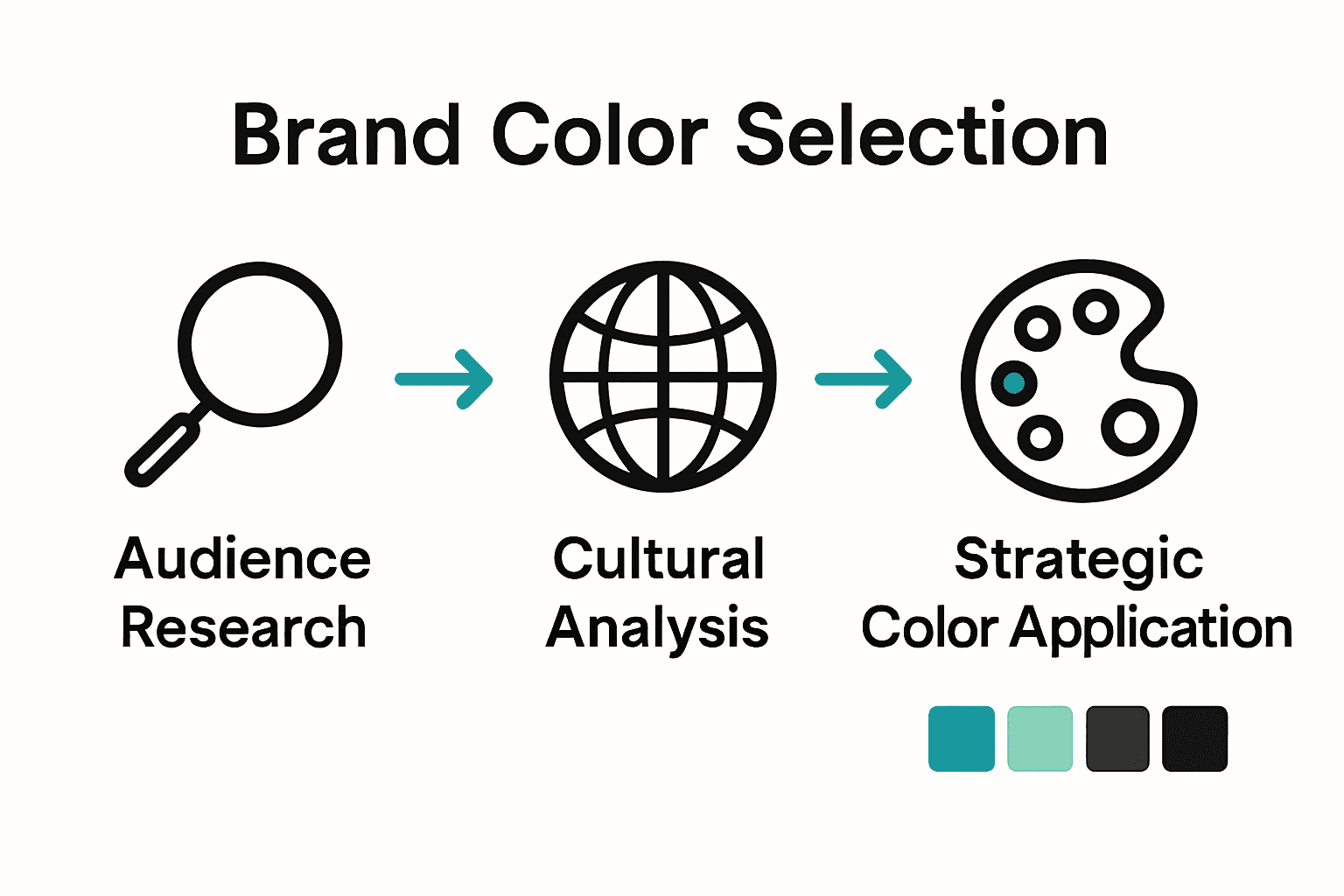
Implementing color strategies requires a nuanced, multidimensional approach that goes beyond surface-level aesthetics. Brands must consider psychological, cultural, and demographic factors when developing their color palette. This means conducting thorough research, understanding audience perceptions, and maintaining consistent color application across all brand touchpoints. The goal is to create a cohesive visual identity that communicates brand values, builds trust, and creates memorable sensory experiences that prompt emotional connection and loyalty.
Key color strategy principles include:
- Conducting comprehensive audience research
- Analyzing cultural color associations
- Maintaining color consistency across platforms
- Aligning colors with brand personality
- Testing and iterating color choices
For deeper insights into developing a robust brand strategy, explore our guide on brand strategy fundamentals, which provides comprehensive frameworks for building powerful brand identities.
Common Color Branding Mistakes to Avoid
Color branding is a delicate art that requires strategic precision and deep understanding of psychological nuances. According to research from nijournals, ineffective color strategies can significantly undermine a brand’s ability to connect with target audiences, highlighting the critical importance of cultural context and individual experience in color selection.
Research from scirp reveals that color misalignment can severely damage brand perception and customer experience. Many businesses make fundamental errors that compromise their visual communication, such as selecting colors without understanding their psychological implications or failing to consider how different demographics interpret color symbolism. These missteps can transform potentially powerful brand narratives into confusing or ineffective visual messages that fail to resonate with intended audiences.
Navigating the complex landscape of color psychology requires a nuanced, research-driven approach. Successful brands avoid common pitfalls by conducting thorough audience research, maintaining color consistency, and understanding the deep psychological and cultural meanings embedded in different color choices. This means going beyond aesthetic preferences and developing a strategic color framework that authentically represents brand personality while speaking directly to target audience sensibilities.
Common color branding mistakes include:
- Ignoring cultural color symbolism
- Inconsistent color application across platforms
- Selecting colors without audience research
- Prioritizing trends over brand authenticity
- Misaligning color with brand personality
To develop a more sophisticated visual branding approach, explore our guide to visuals in branding, which offers comprehensive insights into creating impactful brand visual strategies.
Unlock the Power of Color to Elevate Your Brand Identity
Struggling to find the perfect color strategy that truly resonates with your audience while embodying your brand personality Can inconsistent or poorly chosen colors be holding your brand back from connecting emotionally and standing out in the marketplace You are not alone Many businesses face these challenges but understanding the psychological impact of color and applying it strategically can transform your brand recognition and customer loyalty This article shows how crucial color selection is for aligning with cultural perceptions and optimizing emotional response but translating this knowledge into effective design takes expert skill
Explore how our Web Design – Lind Creative team harnesses color psychology to craft compelling, consistent brand identities that engage and convert Your website is the digital heart of your brand and our design solutions ensure every hue amplifies your message and builds trust

Ready to leverage strategic color and design to boost your brand impact Talk with Lind Creative today at https://lindcreative.com where creativity meets strategy to drive real growth Discover how our full-service digital agency blends color psychology, brand strategy, and cutting-edge technology to help your business attract and convert your ideal customers Start building a brand identity that truly inspires now and stand out with confidence
Frequently Asked Questions
What is the role of color in branding?
Color in branding serves as a powerful psychological tool that communicates a brand’s essence, triggers emotional responses, and shapes consumer perceptions. It can differentiate a brand and create lasting impressions that resonate with target audiences.
How can color psychology influence consumer behavior?
Color psychology influences consumer behavior by evoking specific emotional and behavioral responses. Different colors can convey trust, excitement, growth, or optimism, impacting consumer decision-making processes and brand interactions.
What are common mistakes to avoid in color branding?
Common color branding mistakes include ignoring cultural color symbolism, inconsistent color application, selecting colors without audience research, prioritizing trends over brand authenticity, and misaligning color choices with brand personality.
How can businesses effectively choose their brand colors?
Businesses can effectively choose their brand colors by aligning their color choices with their brand personality, understanding their target audience’s psychological preferences, conducting thorough audience research, and maintaining consistency across all brand touchpoints.
Recommended
- The Essential Guide to Visuals in Branding – Lind Creative
- The Role of Color Psychology in Web Design: Captivating Users through Emotional Connections – Lind Creative
- Role of a Logo: Everything You Need to Know – Lind Creative
- How to Create Branded Visuals for Maximum Impact – Lind Creative
- Impact Du Contenu Vidéo Sur Le Branding : Guide Complet