
Over 90 percent of consumers recognize a brand based on its logo before any other element. For american businesses competing in crowded markets, a logo carries extraordinary weight in shaping first impressions and building lasting trust. Understanding the power behind effective logo design helps brands connect with customers, stand out from rivals, and communicate their deepest values in just one glance.
Table of Contents
- Defining The Role Of A Logo In Branding
- Types Of Logos And Their Key Differences
- Core Elements Of Effective Logo Design
- Legal Protection And Trademark Aspects
- Common Logo Mistakes And How To Avoid Them
Key Takeaways
| Point | Details |
|---|---|
| Role of Logos | Logos serve as powerful communication tools that encapsulate a brand’s identity and values, influencing consumer perception. |
| Types of Logos | Understanding different logo types—like wordmarks, lettermarks, and pictorial marks—helps businesses select the right visual representation. |
| Effective Design Elements | Key design elements, such as color psychology and simplicity, play a crucial role in logo effectiveness and emotional resonance with customers. |
| Legal Protection | Trademark registration of logos is essential to safeguard brand integrity and prevent unauthorized use, reinforcing a brand’s market position. |
Defining the Role of a Logo in Branding
A logo serves far more than a simple visual identifier. According to research from MIT Sloan Review, logos are powerful integrators of marketing efforts that reflect a brand’s core identity and values. They function as strategic communication tools that instantly communicate a company’s essence to potential customers.
At its core, a logo represents the fundamental visual language of a brand. As demonstrated by academic research in service branding, logos communicate critical psychological signals that shape consumer perceptions and emotional connections. Journal Research highlights how logos transcend mere graphic design, becoming powerful instruments for building brand image and fostering customer loyalty.
Effective logos accomplish multiple strategic objectives simultaneously:
- Create immediate brand recognition
- Communicate brand personality and values
- Differentiate a business from competitors
- Establish visual consistency across marketing channels
- Generate memorable visual associations
The most impactful logos are not just aesthetically pleasing designs, but strategic brand assets that encode complex narratives about a company’s mission, culture, and promise. When thoughtfully crafted, a logo becomes a silent ambassador that speaks volumes about a brand’s character and commitment.
Types of Logos and Their Key Differences
Logos are not a one-size-fits-all design element. According to Wikipedia, there are several distinct logo types, each serving unique branding purposes and communicating different aspects of a company’s identity. Understanding these variations helps businesses select the most appropriate visual representation for their brand.
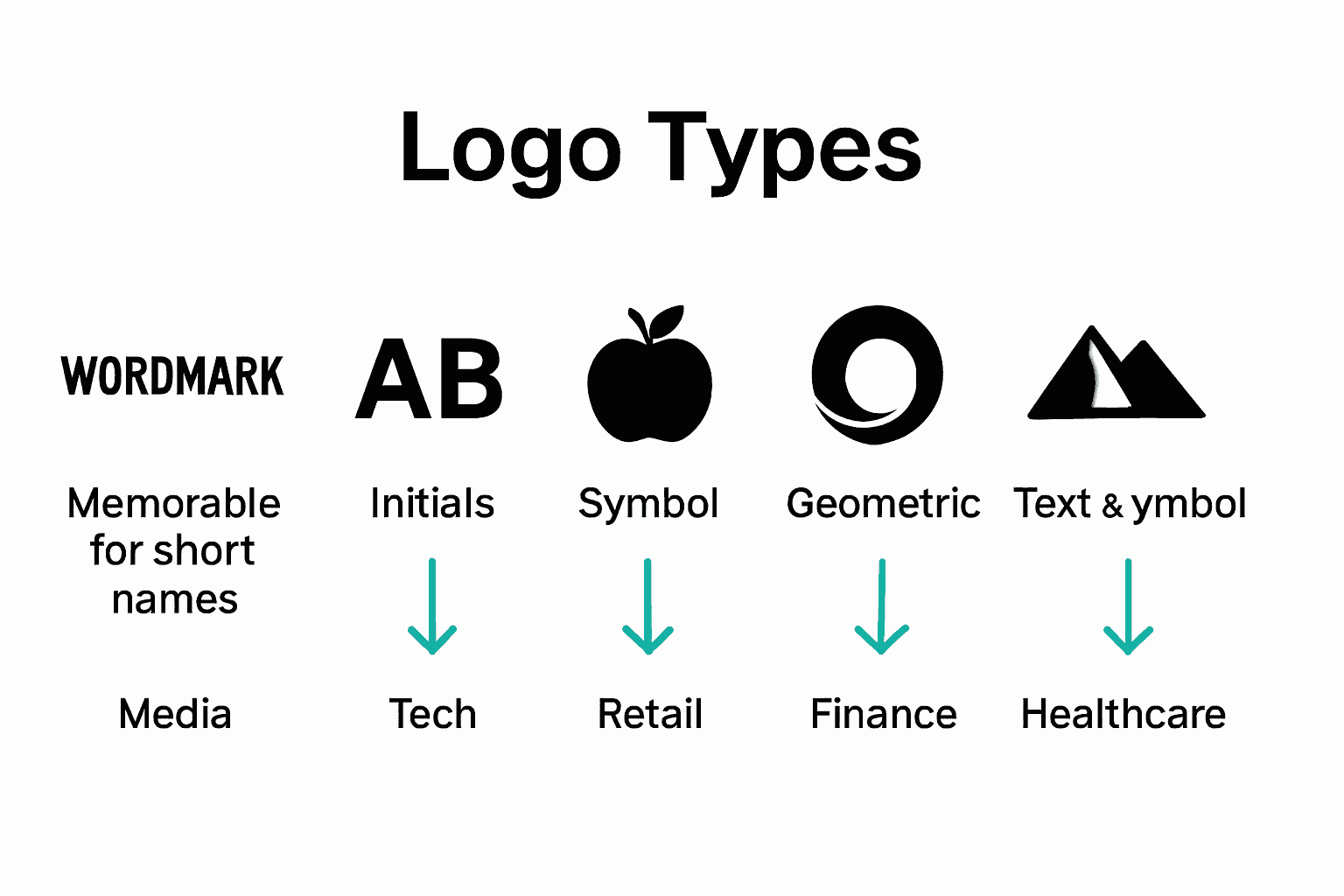
The primary logo categories include:
- Wordmarks: Text-based logos that spell out the brand name in a distinctive typography
- Lettermarks: Logos using initials or abbreviated company names
- Pictorial Marks: Image-based logos featuring recognizable graphic symbols
- Abstract Marks: Geometric or stylized designs representing brand concepts
- Combination Marks: Integrating text and visual elements for comprehensive brand representation
Research from Ryviu emphasizes that each logo type carries specific strategic advantages. Wordmarks work exceptionally well for companies with memorable names, while lettermarks provide sleek simplicity for brands with longer titles. Pictorial marks create instant visual recognition, and abstract marks offer creative flexibility in representing complex brand personalities.
Choosing the right logo type requires careful consideration of brand identity, industry context, and target audience expectations.
 A well-designed logo transcends mere visual aesthetics, functioning as a strategic communication tool that encapsulates a brand’s essence and creates meaningful connections with potential customers.
Core Elements of Effective Logo Design
Designing a compelling logo requires strategic precision and nuanced understanding of visual communication. According to research from IJBMV, corporate identity hinges on carefully selected design elements that shape consumer perceptions and build brand trust. The most impactful logos are not accidental creations but deliberate visual strategies that communicate a brand’s core essence.
Key design elements that determine logo effectiveness include:
- Color Psychology: Selecting colors that evoke specific emotional responses
- Typography: Choosing fonts that reflect brand personality
- Symbolic Representation: Creating meaningful visual metaphors
- Scalability: Ensuring logo legibility across different mediums
- Simplicity: Maintaining clean, memorable design principles
Research from UiTM emphasizes that logo recall is fundamentally tied to simplicity and relevance. Successful logos distill complex brand narratives into minimalist visual language that resonates instantly with target audiences. The most memorable designs communicate multiple layers of meaning through seemingly straightforward graphic elements.
Ultimately, an effective logo transcends aesthetic appeal. Learn more about creating a memorable brand identity by understanding how visual elements work together to forge meaningful connections with your audience. A truly exceptional logo serves as a silent ambassador, communicating your brand’s values, personality, and promise in a single, powerful visual moment.
Legal Protection and Trademark Aspects
A logo represents more than visual design. According to Wikipedia, logos are critical legal assets that require strategic protection to maintain brand integrity and prevent unauthorized use. Trademark registration transforms a logo from a mere graphic into a legally defensible intellectual property right.
Key considerations for logo legal protection include:
- Conducting comprehensive trademark searches
- Registering logos with national intellectual property offices
- Establishing clear usage guidelines
- Monitoring potential infringements
- Developing robust legal documentation
Research from Ryviu highlights that trademarking provides businesses with exclusive rights to their visual identity. This legal protection prevents competitors from creating confusingly similar designs and establishes a clear legal framework for brand representation. Learn more about protecting your brand identity to understand how strategic legal safeguards can preserve your brand’s unique market position.
Navigating trademark law requires proactive strategy. While registration doesn’t guarantee absolute protection, it significantly strengthens a brand’s legal standing, creating a powerful deterrent against potential intellectual property violations. Businesses must view their logo not just as a design element, but as a valuable strategic asset deserving comprehensive legal protection.
Common Logo Mistakes and How to Avoid Them
Logo design is a nuanced art that demands strategic thinking. According to research from Ryviu, businesses frequently fall into predictable design traps that can significantly undermine their brand’s visual identity. Overcomplication stands as the most prevalent mistake, transforming what should be a clean, memorable design into a confusing visual mess.
Key logo design pitfalls to avoid include:
- Creating overly complex designs
- Neglecting scalability across different mediums
- Using trendy design elements that quickly become dated
- Failing to align logo with brand personality
- Choosing colors without understanding psychological implications
Research from MIT Sloan Review emphasizes that ineffective logos can critically damage brand perception. A logo that doesn’t clearly communicate a company’s core values or differentiate from competitors becomes more than a design problem – it’s a strategic liability. Explore our guide on visual identity to understand how to craft logos that truly represent your brand’s essence.
Successful logo design requires ruthless simplification and strategic intent. Designers must transform complex brand narratives into minimalist visual language that resonates instantly. The most powerful logos communicate volumes through seemingly simple graphic elements, proving that in design, less is almost always more.
Elevate Your Brand with a Logo That Truly Connects
The article highlights how a logo is much more than just a visual symbol. It must communicate your brand’s core values and create an emotional connection with your audience. If you struggle with making your logo stand out or want to avoid common design pitfalls like overcomplication and poor scalability then professional guidance is essential. A thoughtfully crafted logo acts as your brand’s silent ambassador, setting you apart from competitors and instantly building trust.
Discover how our expert team at Lind Creative can transform your brand identity through strategic logo design that combines creativity with purpose. From selecting the perfect colors and typography to ensuring legal protection for your logo we cover every vital element that makes your logo memorable and effective.
Explore our Branding & Identity – Lind Creative services to get started.
Take control of your brand’s visual identity now. Visit Lind Creative to learn how we blend design, strategy, and technology to create logos and brand assets that not only look great but deliver measurable results. Your perfect logo awaits to lead your business growth journey.
Frequently Asked Questions
What is the role of a logo in branding?
A logo serves as a visual identifier that communicates a brand’s core identity, values, and personality. It functions as a strategic tool for brand recognition and fosters emotional connections with consumers.
What are the different types of logos?
There are several types of logos, including wordmarks (text-based), lettermarks (initials), pictorial marks (graphic symbols), abstract marks (geometric designs), and combination marks (integrating text and visuals). Each type serves a unique branding purpose.
What elements should be considered in effective logo design?
Key elements of effective logo design include color psychology, typography, symbolic representation, scalability, and simplicity. These elements help in creating a memorable and impactful logo that resonates with the target audience.
How can businesses protect their logos legally?
Businesses can protect their logos through trademark registration, conducting comprehensive trademark searches, establishing usage guidelines, and monitoring potential infringements. This legal protection helps maintain brand integrity and prevents unauthorized use.
Recommended
- The Essential Guide to Visuals in Branding – Lind Creative
- Why Branding Matters: Complete Guide for Businesses – Lind Creative
- Role of Visual Identity: Complete Guide – Lind Creative
- How to Create a Memorable Brand Identity: Forging Lasting Connections with Your Audience – Lind Creative
- Impact Du Contenu Vidéo Sur Le Branding : Guide Complet