
Luxury eCommerce faces a clear challenge: meeting the expectations of high-value customers who want flawless interactions no matter where or how they shop. For American brands aiming to deliver that level of service, omnichannel marketing stands out as the strategy that truly connects every touchpoint into a single, seamless journey. By going beyond basic multichannel tactics, brands can build deeper loyalty and unlock new opportunities for growth through consistent, unified customer experiences across digital and physical platforms.
Table of Contents
- Omnichannel Marketing Defined for eCommerce
- Key Channels and Integration Strategies
- Customer Journey Mapping and Personalization
- Common Pitfalls and Implementation Barriers
- Measuring Success and ROI for Brands
Key Takeaways
| Point | Details |
|---|---|
| Omnichannel Approach | Omnichannel marketing creates a seamless, integrated customer experience across all platforms, differing fundamentally from multichannel strategies. |
| Technology Integration | Successful omnichannel marketing relies on advanced technology to ensure real-time data synchronization and personalized interactions. |
| Customer Personalization | Understanding customer journeys and personalizing experiences through data-driven insights enhances engagement and loyalty. |
| Measuring Success | Key performance indicators such as customer lifetime value and cross-channel conversion rates are crucial for evaluating omnichannel effectiveness. |
Omnichannel Marketing Defined for eCommerce
Omnichannel marketing represents a sophisticated strategic approach that transforms how luxury eCommerce brands engage with customers across multiple platforms and touchpoints. At its core, omnichannel marketing goes beyond traditional multichannel strategies by creating a seamless, integrated customer experience that transcends individual sales channels.
The fundamental principle of omnichannel marketing is creating a unified customer journey that allows consumers to interact with a brand consistently, whether they’re browsing on a mobile app, shopping in a physical store, or exploring social media platforms. This approach differs critically from multichannel marketing by ensuring that each interaction feels connected and personalized.
Key characteristics of effective omnichannel marketing include:
- Consistent brand messaging across all platforms
- Real-time data synchronization between channels
- Personalized customer experiences
- Seamless transitions between digital and physical touchpoints
- Integrated customer service and support
For luxury eCommerce brands, omnichannel marketing isn’t just a strategy—it’s a comprehensive approach to building deeper, more meaningful customer relationships. By understanding and anticipating customer needs across different platforms, brands can create more engaging, responsive interactions that drive customer loyalty and increase overall revenue.
Here’s a quick comparison of omnichannel and multichannel marketing approaches:
| Aspect | Omnichannel Marketing | Multichannel Marketing |
|---|---|---|
| Customer Experience | Seamless, integrated journey | Separate channel interactions |
| Data Integration | Unified, real-time profiles | Siloed, channel-specific data |
| Messaging Consistency | Aligned across platforms | Often varies by channel |
| Personalization | Dynamic and adaptive | Basic or channel-specific |
| Operational Focus | Holistic brand strategy | Independent channel management |
Pro tip: Implement a centralized customer data platform that tracks interactions across all channels to create truly personalized omnichannel experiences.
Key Channels and Integration Strategies
Luxury eCommerce brands must develop a sophisticated approach to omnichannel integration strategies that seamlessly connect digital and physical touchpoints. Omnichannel marketing requires a holistic strategy that goes beyond simply maintaining multiple sales channels, instead creating a unified ecosystem where customer interactions flow smoothly across platforms.
The primary channels for luxury eCommerce integration typically include:
- Mobile applications
- Responsive websites
- Social media platforms
- Physical retail stores
- Digital marketplaces
- Customer service centers
- Email and messaging platforms
Successful integration demands advanced technological infrastructure that enables real-time data synchronization and personalized customer experiences. Advanced tools like artificial intelligence and predictive analytics play a crucial role in connecting these diverse channels, allowing brands to create a comprehensive view of customer preferences and behaviors.

By implementing a strategic approach to channel integration, luxury eCommerce brands can transform fragmented customer interactions into a cohesive, personalized journey. This approach not only enhances customer satisfaction but also drives higher conversion rates and long-term brand loyalty by providing a seamless and responsive experience across all touchpoints.
Pro tip: Invest in a centralized customer data platform that aggregates interactions from all channels to create a unified customer profile and enable truly personalized marketing strategies.
Customer Journey Mapping and Personalization
Luxury eCommerce brands must master personalization across customer touchpoints to create truly memorable shopping experiences. Customer journey mapping represents a critical strategic approach that allows brands to understand and anticipate customer needs across multiple interaction points, transforming fragmented experiences into seamless, cohesive interactions.
Successful customer journey personalization involves several key strategies:
- Identifying distinct customer segments
- Tracking cross-channel interactions
- Creating dynamic customer profiles
- Developing adaptive engagement strategies
- Utilizing predictive analytics
- Implementing real-time personalization technologies
Modern luxury eCommerce requires a nuanced understanding of customer behaviors and preferences. By leveraging advanced technologies like artificial intelligence and machine learning, brands can create highly personalized experiences that adapt dynamically to individual customer needs, preferences, and historical interactions across different platforms.
Customer segmentation goes beyond traditional demographic targeting, focusing instead on behavioral patterns and contextual interactions. This approach enables luxury brands to deliver hyper-personalized experiences that feel uniquely tailored to each customer’s specific journey, ultimately driving higher engagement, conversion rates, and long-term brand loyalty.
Pro tip: Develop a comprehensive customer data platform that integrates interactions from all channels to create a 360-degree view of customer behavior and preferences.
Common Pitfalls and Implementation Barriers
Luxury eCommerce brands frequently encounter significant challenges when implementing omnichannel marketing strategies, requiring strategic planning and nuanced technological infrastructure. Implementation barriers represent complex organizational and technological challenges that can derail even the most sophisticated omnichannel initiatives.
Key implementation pitfalls for luxury brands include:
- Fragmented data management systems
- Lack of cross-departmental collaboration
- Insufficient technological infrastructure
- Inadequate employee training
- Poor customer data integration
- Limited understanding of customer journey complexity
- Budget constraints for advanced technologies
Technological challenges remain the most significant obstacle in creating seamless omnichannel experiences. Many luxury eCommerce brands struggle with legacy systems that cannot support real-time data synchronization, preventing the creation of unified customer profiles and personalized interactions across multiple touchpoints.
Organizational culture also plays a critical role in successful omnichannel implementation. Resistance to change, siloed departmental structures, and misaligned strategic vision can create internal friction that undermines the potential for a truly integrated customer experience. Successful brands must cultivate a collaborative environment that prioritizes customer-centric approaches and continuous technological adaptation.
Below is a summary of common omnichannel barriers versus effective solutions:
| Barrier | Impact on Brand | Effective Solution |
|---|---|---|
| Fragmented Data | Disjointed customer view | Unified data platform |
| Legacy Technology | Limits integration speed | Modern, scalable systems |
| Siloed Teams | Poor cross-channel experience | Cross-functional training |
| Budget Constraints | Slows innovation | Prioritize strategic investment |
| Inadequate Training | Inconsistent execution | Ongoing staff education |
Pro tip: Conduct a comprehensive internal audit of existing technological systems and organizational processes to identify and address potential integration barriers before launching an omnichannel strategy.
Measuring Success and ROI for Brands
Measuring the effectiveness of omnichannel marketing requires a comprehensive approach that goes beyond traditional performance metrics. Return on investment (ROI) in luxury eCommerce demands a holistic evaluation of customer engagement, conversion rates, and long-term brand value.
Key performance indicators for omnichannel marketing success include:
- Customer lifetime value (CLV)
- Cross-channel conversion rates
- Average order value
- Customer acquisition cost
- Retention and repeat purchase rates
- Customer engagement metrics
- Revenue per customer segment
Luxury brands must develop sophisticated attribution models that capture the complex interactions across multiple touchpoints. Content strategy plays a critical role in understanding how different channels contribute to overall marketing performance and revenue generation. Advanced analytics tools enable brands to track customer journeys, identifying the most influential touchpoints and optimizing marketing investments accordingly.
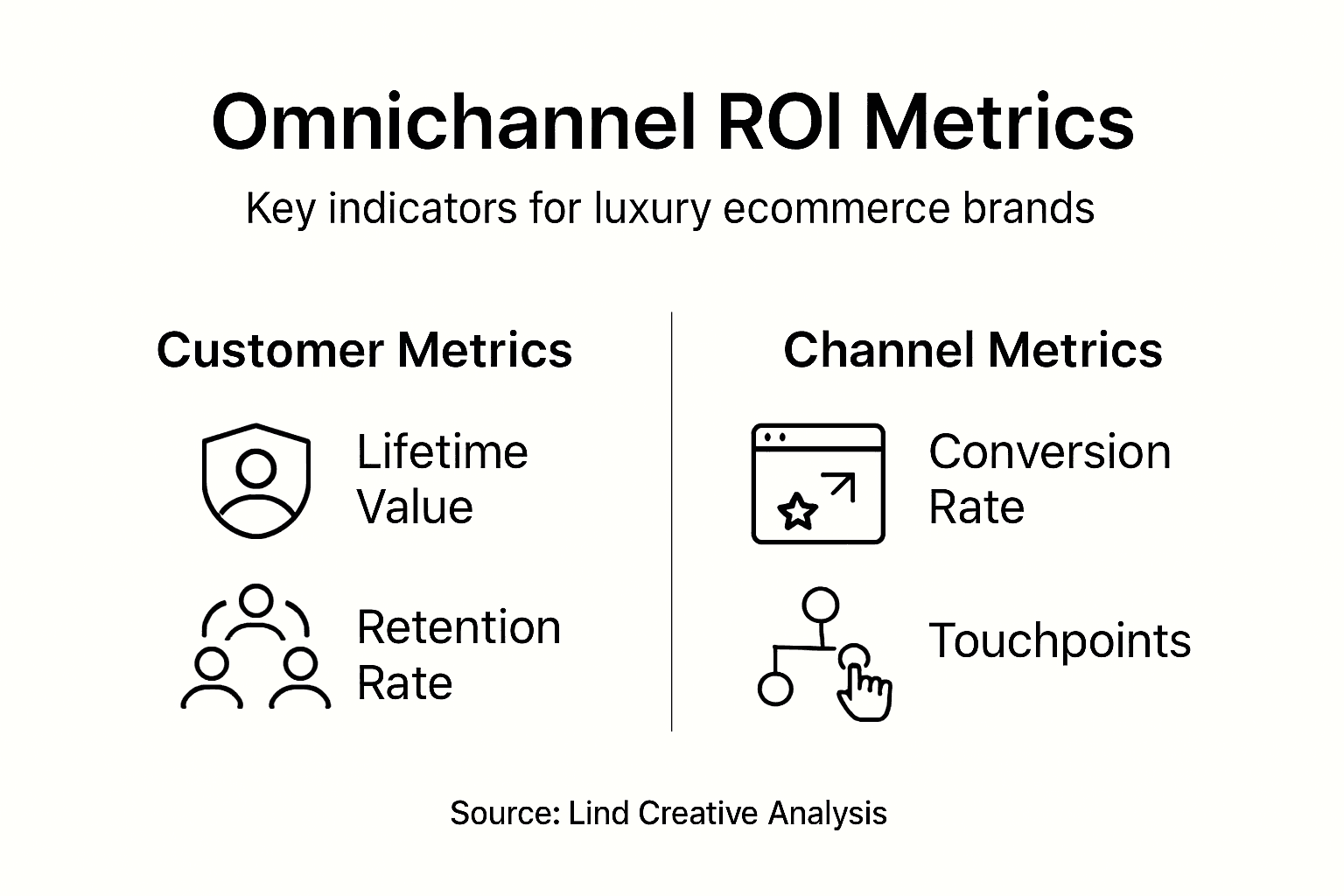
Successful ROI measurement requires breaking down traditional silos between marketing, sales, and customer service departments. By creating a unified approach to data collection and analysis, luxury eCommerce brands can gain deeper insights into customer behavior, preferences, and the true impact of their omnichannel strategies. This approach transforms raw data into actionable intelligence that drives strategic decision-making and continuous improvement.
Pro tip: Implement a comprehensive analytics dashboard that integrates data from all channels, providing a real-time, holistic view of marketing performance and customer interactions.
Elevate Your Luxury eCommerce with Seamless Omnichannel Marketing
Luxury eCommerce brands face the critical challenge of delivering a unified, personalized customer journey across multiple platforms while overcoming fragmented data and legacy technology barriers. You want consistent brand messaging, real-time data synchronization, and dynamic personalization that connects every touchpoint from mobile apps to physical stores. This requires not only advanced technological infrastructure but proven marketing strategies that drive measurable ROI.
At Lind Creative, we understand these pain points and goals intimately. Our Digital Marketing – Lind Creative solutions harness the power of data-driven strategies and integrated automation to unify your channels and boost customer lifetime value. From strategy-driven Web Development – Lind Creative that ensures seamless user experiences to compelling Web Design – Lind Creative that reflects your luxury brand consistently, we craft an all-in-one Growth Engine that captures leads, nurtures customers, and scales your revenue.
Transform fragmented interactions into a seamless omnichannel journey that drives real ROI today. Visit Lind Creative to discover how our collaborative approach blends creativity, technology, and strategy for your luxury brand’s next-level growth. Start building your integrated customer experience now.
Frequently Asked Questions
What is omnichannel marketing in luxury eCommerce?
Omnichannel marketing in luxury eCommerce is a strategic approach that creates a seamless and integrated customer experience across multiple platforms and touchpoints, allowing customers to interact with a brand consistently, whether online or offline.
How does omnichannel marketing differ from multichannel marketing?
Omnichannel marketing differs from multichannel marketing by providing a unified customer journey that connects all interactions, whereas multichannel marketing involves separate interactions across different channels without integration.
What are the key components of an effective omnichannel marketing strategy?
Key components of an effective omnichannel marketing strategy include consistent brand messaging, real-time data synchronization, personalized customer experiences, seamless transitions between digital and physical touchpoints, and integrated customer service and support.
How can luxury eCommerce brands measure the success of their omnichannel marketing efforts?
Luxury eCommerce brands can measure the success of their omnichannel marketing efforts by analyzing key performance indicators such as customer lifetime value, cross-channel conversion rates, average order value, retention rates, and customer engagement metrics.
Recommended
- Role of CRM in Marketing: Driving Luxury Engagement – Lind Creative
- Multi Channel Strategy: Boosting Luxury Hotel Bookings – Lind Creative
- 7 User Experience Improvement Ideas for Luxury Brands – Lind Creative
- Digital Branding: Driving Luxury Hospitality Growth – Lind Creative
- Premium Cab Guide: Your Roadmap to Luxury Travel 2026 – Capital Cars
- Why Choose Luxury Transport for Executives?