
Every American hospitality brand faces the challenge of turning creative assets into powerful business drivers. As digital expectations evolve, marketing directors must ensure content strategy is more than just a marketing buzzword. A systematic approach that blends audience insight, business goals, and purposeful storytelling will help refine messaging, strengthen authority, and deliver measurable returns. Discover key principles that can transform content from an expense into a source of sustained growth and guest engagement.
Table of Contents
- Content Strategy: Definition and Core Concepts
- Types of Content Strategy for Hospitality Brands
- Key Components of an Effective Content Strategy
- How Content Strategy Drives Engagement and Roi
- Common Pitfalls and How to Avoid Them
Key Takeaways
| Point | Details |
|---|---|
| Effective Content Strategy | A structured content strategy guides organizations to create targeted content that aligns with business goals and audience needs. |
| Types for Hospitality Brands | Nuanced content strategies tailored for hospitality improve guest experiences through storytelling and personalized communication. |
| Performance Measurement | Continuous tracking of content performance is essential for optimizing engagement and return on investment. |
| Common Pitfalls | Avoiding lack of clear objectives and ineffective audience understanding is crucial for successful content strategy execution. |
Content Strategy: Definition and Core Concepts
Content strategy represents a systematic approach to planning, developing, and managing content that drives meaningful business outcomes. At its core, it transforms content from a random creative exercise into a strategic business asset. Strategic content planning guides organizations in creating purposeful, targeted content that resonates with specific audience segments.
A comprehensive content strategy encompasses far more than simple writing or publishing. It involves intricate processes of understanding audience needs, mapping user journeys, developing consistent brand messaging, and aligning content with overarching business objectives. Strategic content professionals analyze user behaviors, design targeted personas, and create frameworks that ensure content delivers maximum value across multiple digital channels.
The fundamental components of an effective content strategy include clear goal definition, audience research, content auditing, editorial planning, distribution channels, and performance measurement. By implementing a robust content development roadmap, businesses can transform content from a cost center into a powerful revenue generation mechanism. This approach allows companies to produce more efficient, targeted content that educates customers, builds brand authority, and drives measurable engagement.
Pro tip: Conduct a quarterly content audit to identify high-performing assets and eliminate underperforming materials, ensuring your strategy remains dynamic and results-driven.
Types of Content Strategy for Hospitality Brands
Hospitality brands require nuanced content strategies that go beyond traditional marketing approaches. Strategic content management involves developing targeted approaches that address unique guest experiences and brand positioning. These strategies typically encompass multiple dimensions, including digital marketing, storytelling, customer engagement, and personalized communication.
The primary types of content strategy for luxury hospitality brands include digital experience design, brand narrative development, customer journey mapping, and targeted multichannel communication. Effective brand storytelling involves creating compelling narratives that resonate with specific audience segments, highlighting unique brand attributes, and delivering authentic experiences across various digital platforms. This approach requires deep understanding of guest preferences, emerging hospitality trends, and sophisticated content distribution techniques.
Successful hospitality content strategies often integrate multiple channels and content types, including visual storytelling, guest testimonials, behind-the-scenes experiences, local destination insights, and personalized service narratives. These strategies aim to create emotional connections, demonstrate brand value, and provide potential guests with immersive experiences that transcend traditional marketing communications. By leveraging data-driven insights and advanced content technologies, luxury hospitality brands can develop sophisticated strategies that differentiate their offerings and drive meaningful guest engagement.
Pro tip: Create a content matrix that maps different guest personas to specific content types and channels, ensuring highly targeted and personalized communication strategies.
The table below summarizes popular content strategy types for hospitality brands:
| Strategy Type | Approach Highlights | Unique Benefit to Hospitality Brands |
|---|---|---|
| Digital Experience | Enhances online user journeys | Improves guest satisfaction |
| Brand Narrative | Crafts compelling brand stories | Builds emotional guest connections |
| Multichannel Communication | Leverages multiple platforms | Expands reach, personalizes messaging |
| Customer Journey Mapping | Maps interactions and touchpoints | Addresses every stage of guest lifecycle |
Key Components of an Effective Content Strategy
Developing a robust content strategy requires a comprehensive approach that integrates multiple critical elements. Content marketing personas serve as the foundational framework, enabling businesses to craft targeted messaging that resonates deeply with specific audience segments. These personas go beyond basic demographic information, diving into behavioral insights, communication preferences, pain points, and motivational triggers that influence content consumption and engagement.

The core components of an effective content strategy encompass strategic goal setting, audience research, content auditing, editorial planning, and performance measurement. Organizations must establish clear, measurable objectives that align with broader business goals, ensuring that every piece of content serves a specific purpose. Organizational content processes play a crucial role in creating systematic approaches to content development, distribution, and optimization. This includes developing a consistent content calendar, establishing editorial guidelines, and creating workflows that support high-quality content production.
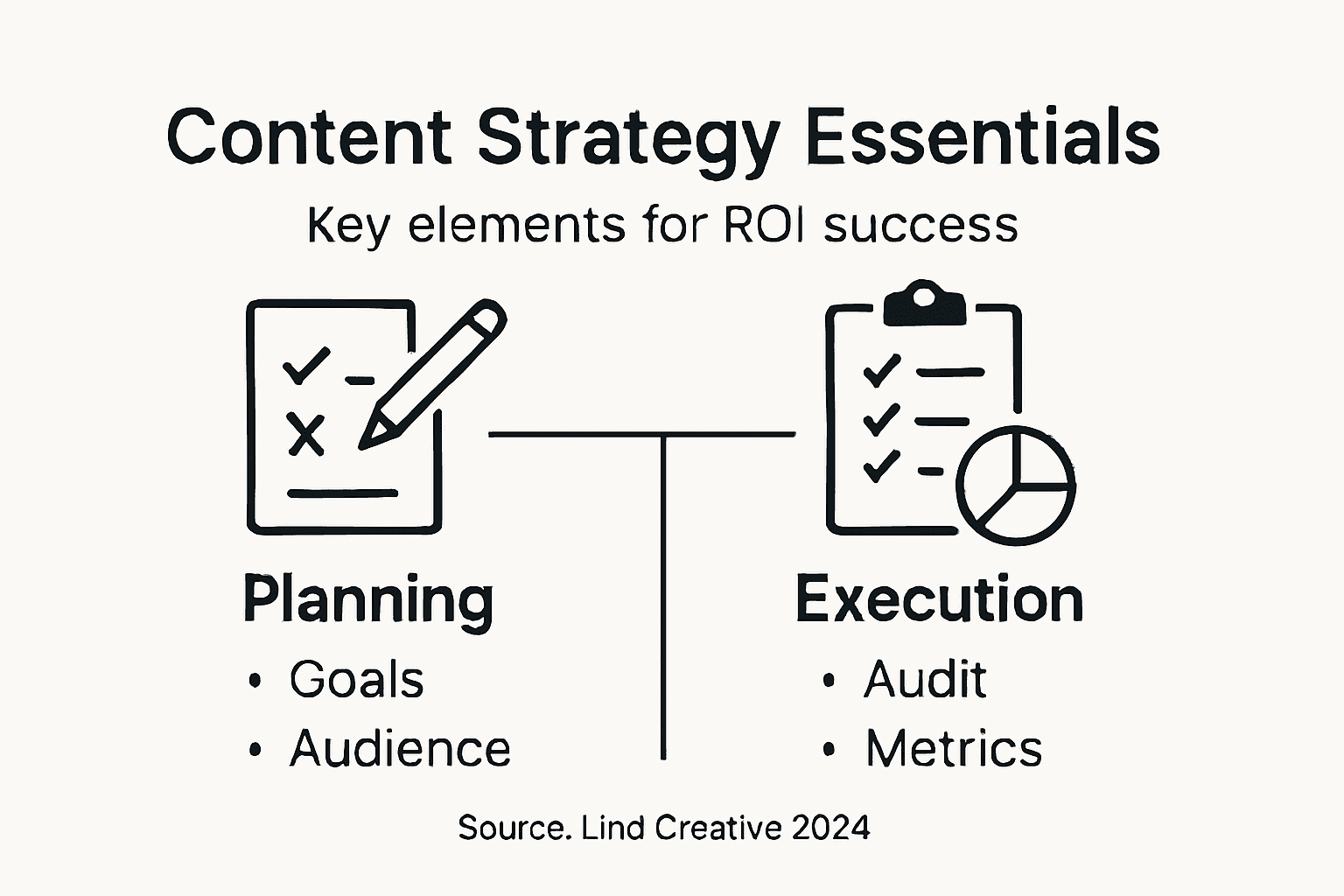
Successful content strategies also require sophisticated measurement and adaptation mechanisms. Businesses need to implement robust analytics frameworks that track key performance indicators, audience engagement metrics, and content effectiveness across various channels. By continuously monitoring and analyzing content performance, organizations can make data-driven decisions, refine their strategies, and ensure that their content remains relevant, compelling, and aligned with evolving audience expectations.
Pro tip: Develop a quarterly content performance review process that includes cross-functional team insights to identify optimization opportunities and emerging audience trends.
Here’s a comparison of content strategy components and their business impact:
| Component | Function | Business Impact |
|---|---|---|
| Goal Setting | Defines clear objectives | Improves alignment, guides priorities |
| Audience Research | Identifies target segments | Enhances engagement and conversions |
| Content Auditing | Reviews existing content | Optimizes resources, boosts performance |
| Editorial Planning | Structures creation workflows | Increases consistency and efficiency |
| Performance Measurement | Tracks analytics and metrics | Enables data-driven improvements |
How Content Strategy Drives Engagement and ROI
Content strategy is fundamentally a revenue generation mechanism that transforms marketing from a cost center to a strategic business asset. Content marketing effectiveness hinges on creating targeted content that directly addresses audience needs, preferences, and pain points. By understanding precise audience segments and crafting messaging that resonates authentically, businesses can significantly increase engagement rates and drive measurable business outcomes.
The connection between strategic content and return on investment becomes apparent through sophisticated performance tracking and continuous optimization. Successful brands leverage targeted content distribution channels that align with audience behaviors, experimenting with different content formats and measuring their impact. This data-driven approach allows organizations to allocate marketing resources more efficiently, focusing on high-performing content types that generate genuine audience interactions and conversions.
Engagement and ROI are ultimately driven by the ability to create content that provides genuine value, establishes thought leadership, and builds trust with target audiences. By developing a nuanced understanding of customer journeys, businesses can design content strategies that not only attract attention but also guide potential customers through complex decision-making processes. This strategic approach transforms content from a passive communication tool into an active revenue generation mechanism that supports long-term business growth and customer relationship development.
Pro tip: Implement a quarterly content performance audit that maps engagement metrics directly to revenue generation to continuously validate and refine your content strategy.
Common Pitfalls and How to Avoid Them
Content strategy failures often stem from fundamental misunderstandings about strategic planning and execution. Common content strategy errors frequently include lacking clear objectives, failing to develop comprehensive audience personas, and neglecting systematic performance measurement. Organizations that do not establish precise, measurable goals find themselves creating content without direction, resulting in wasted resources and minimal audience engagement.
One of the most critical challenges in content development involves creating meaningful connections with target audiences. Organizational content governance requires robust processes that ensure content remains consistently aligned with user needs and business objectives. This demands implementing comprehensive content audits, establishing clear ownership protocols, and developing structured workflows that prioritize accessibility, usability, and strategic relevance. Successful brands recognize that content is not just about production but about creating genuine value that resonates with specific audience segments.
Avoiding content strategy pitfalls requires a holistic, data-driven approach that emphasizes continuous learning and adaptation. Businesses must invest in sophisticated audience research, develop flexible content frameworks, and create mechanisms for ongoing performance evaluation. This means implementing advanced analytics, conducting regular content assessments, and maintaining the agility to pivot strategies based on emerging insights. By treating content strategy as a dynamic, evolving discipline, organizations can transform potential weaknesses into opportunities for meaningful audience engagement and business growth.
Pro tip: Develop a quarterly content performance dashboard that tracks key metrics across different content types, enabling rapid identification and correction of strategic inefficiencies.
Unlock the Full Potential of Your Content Strategy Today
Struggling to transform your content from a simple marketing tool into a powerful revenue driver is a common challenge. The article highlights key pain points such as lacking clear goals, ineffective audience targeting, and missing performance measurement—issues that can leave your business with wasted resources and low engagement. With concepts like strategic goal setting, audience research, and performance measurement at its core, a strong content strategy is essential to achieving measurable ROI and meaningful customer connections.

At Lind Creative, we specialize in turning those strategic content challenges into growth opportunities. Our full-service digital agency blends creativity, technology, and strategy to build high-converting websites and deploy our signature Growth Engine that automates lead capture, funnels, email, and ads. This approach ensures your content not only attracts but actively converts and nurtures your ideal audience. Don’t let unstructured content hold your brand back. Visit us now at Lind Creative and discover how to elevate your content strategy with expert design and marketing that delivers real results.
Frequently Asked Questions
What is content strategy?
Content strategy is a systematic approach to planning, developing, and managing content that aims to achieve meaningful business outcomes, transforming content into a strategic business asset.
Why is a content strategy important for ROI?
A well-defined content strategy helps businesses create targeted content that addresses audience needs, increases engagement rates, and drives measurable business outcomes, ultimately enhancing return on investment (ROI).
What are the key components of an effective content strategy?
Key components include goal setting, audience research, content auditing, editorial planning, distribution channels, and performance measurement, all of which contribute to developing a robust and aligned content approach.
How can businesses measure the effectiveness of their content strategy?
Businesses can measure effectiveness by implementing analytics frameworks that track key performance indicators and audience engagement metrics, allowing for data-driven decisions and ongoing optimization.
Recommended
- Brand Strategy Explained: Key Elements and Impact – Lind Creative
- Role of Content Marketing in Luxury Hospitality – Lind Creative
- The Essential Guide to Investing in Branding – Lind Creative
- Why Invest in Design – Unlocking Business Growth – Lind Creative
- Mastering Conversion Rate Optimization: Strategies for Online Success