
Every american business faces the challenge of creating a logo that truly connects with its audience. A strong visual identity is more than just a pretty design. In fact, consistent brand presentation can increase revenue by up to 23 percent. Building a logo that stands out means digging into what your brand stands for, understanding your target market, and using strategy instead of guesswork. This guide walks you through a clear process so your logo captures attention and leaves a lasting impression.
Table of Contents
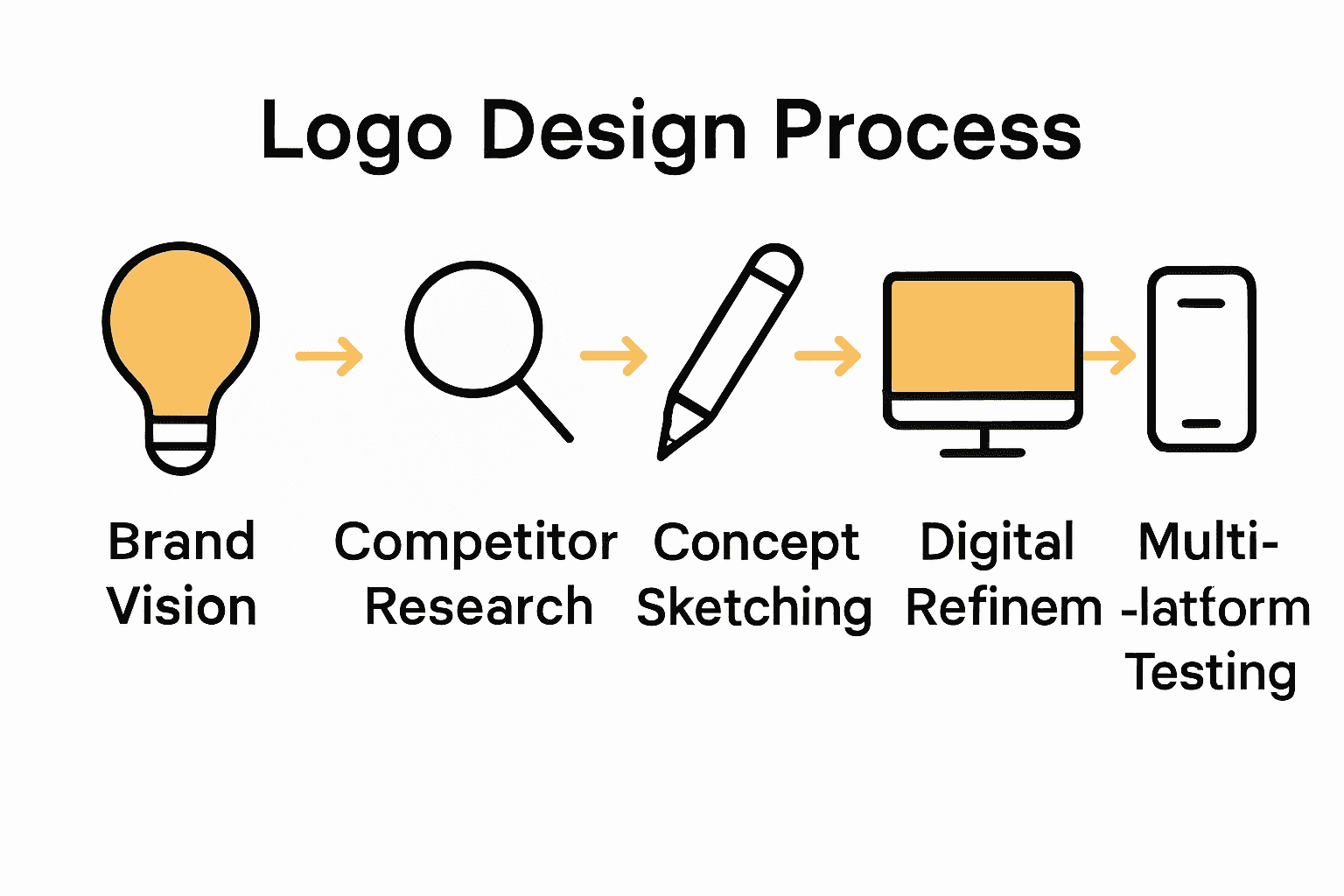
- Step 1: Define Your Brand Vision And Audience
- Step 2: Research Competitors And Industry Trends
- Step 3: Sketch And Conceptualize Creative Ideas
- Step 4: Refine And Digitize Your Logo Concepts
- Step 5: Test Your Logo Across Brand Touchpoints
Quick Summary
| Essential Insight | Description |
|---|---|
| 1. Define brand vision and audience | Understand your brand’s identity and target demographic before logo design to create impactful visuals. |
| 2. Conduct competitor and trend analysis | Analyze competitors’ logos and industry trends to find differentiation opportunities and inspire your design. |
| 3. Create and explore multiple concepts | Sketch a variety of logo ideas to enhance creativity and ensure a unique representation of your brand. |
| 4. Refine designs digitally | Select top sketches for digital refinement, focusing on clarity and versatility in various formats. |
| 5. Test logo across platforms | Ensure your logo performs well in different contexts; gather feedback to confirm consistent brand representation. |
Step 1: Define Your Brand Vision and Audience
Creating an impactful logo begins with a crystal clear understanding of your brand’s core identity and target audience. According to research from the Small Business Administration, gathering precise demographic information like age, interests, and economic trends is crucial for confirming and refining your business concept.
Start by conducting thorough market research to map out who your ideal customers are. Develop detailed audience personas that go beyond basic demographics. What are their pain points? What motivates them? What aesthetic and emotional connections will resonate with them? These insights form the foundation of a logo that truly speaks to your target market. As the Academic Journal of Management and Social Sciences highlights, your visual identity must encompass more than just graphic elements it needs to communicate your brand’s entire essence.
One strategic tip is to create a brand vision statement that distills your core purpose into a concise, powerful message. This statement will guide your logo design process and ensure every visual element aligns with your broader brand narrative. Your logo should instantly communicate what makes your brand unique and why your audience should care. By grounding your design in a deep understanding of your vision and audience, you transform a simple graphic into a meaningful brand symbol that connects and compels.
Step 2: Research Competitors and Industry Trends
Developing a standout logo requires a strategic approach to understanding your competitive landscape. According to the Small Business Administration, competitive analysis involves identifying competitors by product line and market segment, assessing their strengths, weaknesses, and potential market entry opportunities.
Begin by mapping your industry’s visual design ecosystem. Examine logos of direct and indirect competitors to understand existing aesthetic trends and identify white spaces for differentiation. Look beyond surface level graphics analyze how successful brands in your sector communicate their identity through visual elements. Pay attention to color psychology, typography, and symbolic representations that resonate within your specific market.
One powerful research strategy is leveraging comprehensive databases and financial research platforms. As recommended by the University of Southern California, tools like Capital IQ and Factiva can provide deep insights into market dynamics and competitive positioning. Your goal is not to copy but to understand how top performers communicate their brand essence visually. By conducting thorough competitive research, you’ll develop a logo that stands out while feeling authentically connected to your industry’s visual language.

Step 3: Sketch and Conceptualize Creative Ideas
Now it’s time to transform your brand research into visual concepts. According to the Academic Journal of Management and Social Sciences, an effective logo must be distinctive, simple, and versatile enough to reflect your brand’s personality across various mediums and sizes.
Start by generating multiple rough sketches that explore different visual approaches. Use pencil and paper to free your creativity without digital constraints. Experiment with abstract and literal representations of your brand essence. Consider symbolic elements that capture your core values or unique selling propositions. Some designers recommend creating 20 to 30 initial concepts to ensure you explore a wide range of possibilities before narrowing down to the most promising options.
As the Advanced Textiles Association suggests, drawing inspiration from competitors’ visual communications can spark innovative ideas. However, the key is adaptation not imitation. Look for visual patterns in your industry and then deliberately subvert or reinterpret them. Your goal is to create a logo that feels both familiar and refreshingly unique. Remember that great logo design is an iterative process every sketch brings you closer to capturing your brand’s true visual identity.
Step 4: Refine and Digitize Your Logo Concepts
Transitioning from hand sketches to digital formats requires precision and strategic thinking. According to the Academic Journal of Management and Social Sciences, an exceptional logo must be distinctive, simple, and versatile enough to maintain its impact across multiple mediums and sizes.
Begin by selecting your top three to five sketch concepts for digital transformation. Use professional design software like Adobe Illustrator or Sketch to create vector versions that can be scaled without losing quality. Pay close attention to line weight, proportions, and negative space. Test each concept at various sizes from tiny social media icons to large billboard formats to ensure visual clarity and legibility.
As recommended by the Advanced Textiles Association, use competitive insights to inform your refinement process. Analyze how successful brands in your industry create logos that are both unique and recognizable. Experiment with color variations, typography adjustments, and symbolic refinements. Your goal is a logo that feels both professional and authentically representative of your brand’s core identity. Remember that digitization is an iterative process refine and adjust until your logo feels absolutely right.
Step 5: Test Your Logo Across Brand Touchpoints
The final stage of logo design involves rigorous testing to ensure your visual identity works seamlessly across different platforms and contexts. According to the Academic Journal of Management and Social Sciences, creating a cohesive brand identity requires consistent communication through your logo, color scheme, typography, and messaging.
Create a comprehensive test strategy that evaluates your logo in multiple scenarios. Print your logo on business cards, letterheads, signage, digital platforms, and merchandise to assess its versatility. Check how it appears in black and white, color, small and large formats. Pay special attention to readability and visual impact at different scales. Consider how your logo looks on social media profiles, website headers, mobile apps, and physical branding materials.
As recommended by the Advanced Textiles Association, use competitive insights to refine your approach. Study how successful brands in your industry optimize their logos across various touchpoints. Seek feedback from potential customers, design professionals, and stakeholders to gather objective perspectives. Your goal is a logo that not only looks great but communicates your brand essence consistently and powerfully across every single interaction.
Elevate Your Brand Identity with Expert Design Support
Designing a logo that truly captures your brand identity requires clarity, creativity, and strategic insight. If you are struggling to translate your brand vision into a distinctive and versatile logo your challenges might involve understanding your audience, standing out from competitors, or ensuring seamless application across different platforms. The article highlights how critical it is to blend simplicity with meaningful symbolism that resonates emotionally with your customers.
At Lind Creative we specialize in turning these complex challenges into clear results through our comprehensive Branding & Identity – Lind Creative services.
Discover how our strategically crafted graphic designs can help your brand message shine and connect authentically. Whether you need a fresh logo creation or a full brand refresh our team combines creativity and technology to deliver a logo that works everywhere from social media to billboards. Get started today and experience real ROI with a partner who understands that your logo is more than just a symbol it is the heart of your brand. Visit Lind Creative to learn more about how we can help your business attract, convert, and grow.
Explore our creative process and resources by visiting Graphic Design – Lind Creative and Resources – Lind Creative for expert insights and support.
Frequently Asked Questions
How do I define my brand identity before designing a logo?
To define your brand identity, clearly outline your brand vision, values, and the message you want to convey. Conduct thorough market research, gather insights about your target audience’s demographics and preferences, and create audience personas to inform your design choices.
What steps should I take to research my competitors when designing a logo?
Begin by identifying direct and indirect competitors in your industry. Analyze their logos to understand current design trends, color schemes, and typographic choices. This will help you identify opportunities for differentiation and create a logo that stands out.
How can I generate logo ideas based on my brand research?
Transform your brand research into visual concepts by sketching multiple rough ideas based on your findings. Aim to create 20 to 30 initial sketches that explore different styles and representations, allowing you to experiment freely before selecting the most promising concepts.
What is the importance of testing my logo across different mediums?
Testing your logo across various platforms ensures it maintains visual clarity and impact in every context, from digital profiles to printed materials. Evaluate the logo in black and white, color, and various sizes, and gather feedback to refine your design until it consistently represents your brand essence.
How can I refine my logo after digitizing it?
After converting your sketched concepts into digital formats, select your top three to five designs for further refinement. Adjust elements like color, typography, and proportions while ensuring your logo remains simple and distinctive, reflecting your brand’s personality across diverse applications.
What should I include in a brand vision statement for my logo design?
A brand vision statement should encapsulate your brand’s core purpose and unique value in a concise message. This statement will guide your design process and keep your logo aligned with the overall narrative of your brand identity.
Recommended
- How to Create a Memorable Brand Identity: Forging Lasting Connections with Your Audience – Lind Creative
- Role of a Logo: Everything You Need to Know – Lind Creative
- Brand Identity Explained: Building Trust and Value – Lind Creative
- How to Build a Brand Identity for Growth-Focused Businesses – Lind Creative
- Rol del Diseño en Identidad: Guía Completa y Práctica – Mister Mikel
- Impact Du Contenu Vidéo Sur Le Branding : Guide Complet