
Did you know that brands with strong, clear identities outperform competitors by up to 20 percent in revenue growth? A recognizable brand starts with much more than just a logo. It shapes how customers feel, the trust they place in your business, and the loyalty they build over time. Discover practical steps and expert-backed methods for creating a cohesive brand identity that captures attention and builds lasting connection.
Table of Contents
- Step 1: Define Your Brand Vision And Audience
- Step 2: Develop Your Brand Voice And Messaging
- Step 3: Design A Cohesive Visual Identity System
- Step 4: Implement Your Brand Across Touchpoints
- Step 5: Verify Consistency And Measure Brand Impact
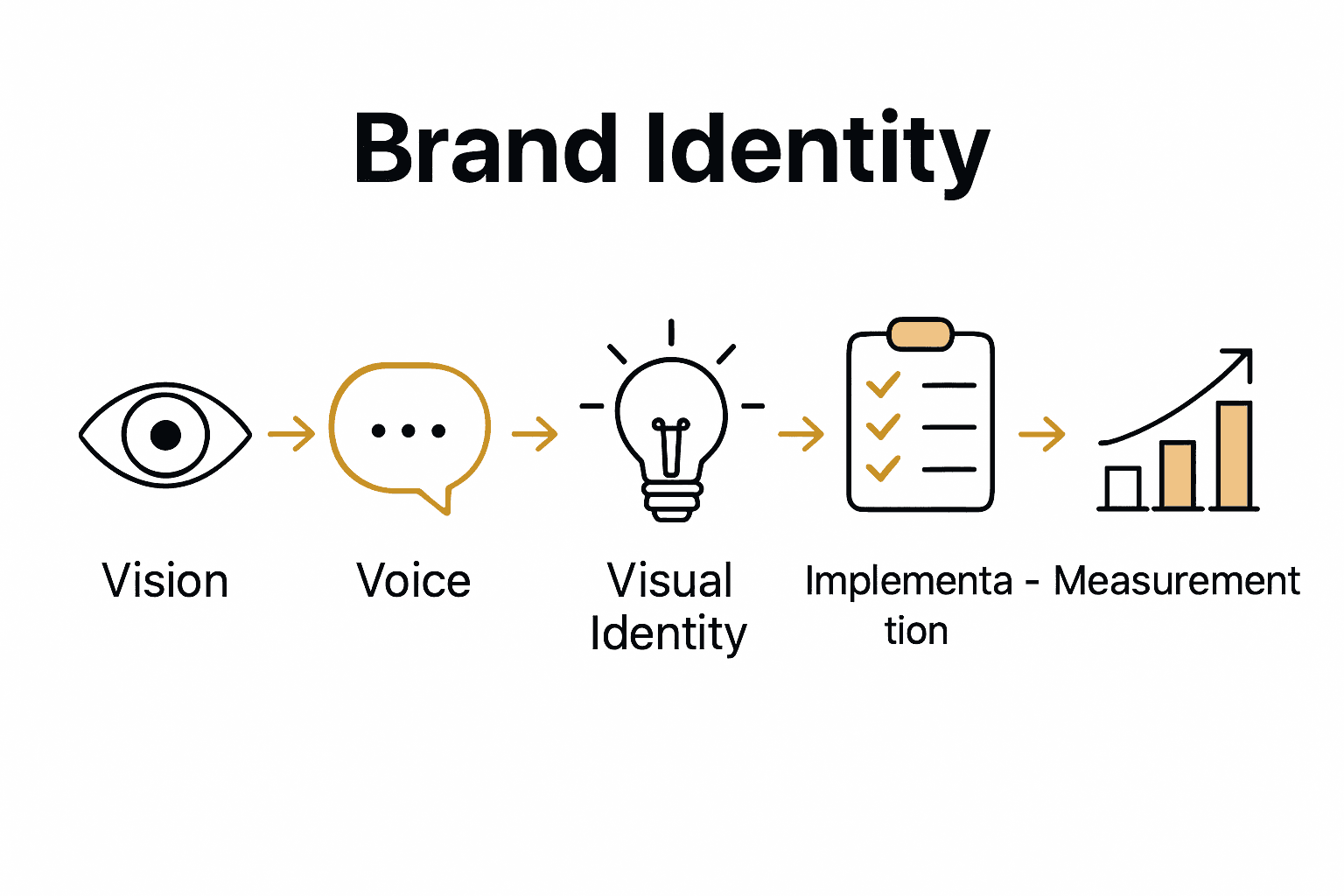
Quick Summary
| Key Point | Explanation |
|---|---|
| 1. Define your brand vision clearly | Craft a specific brand vision that reflects your unique values and connects with your target audience. |
| 2. Develop a unique brand voice | Create a memorable brand voice that resonates with your audience and is true to your organization’s personality. |
| 3. Build a cohesive visual identity | Establish consistent design elements across all platforms to create a strong visual presence that reflects your brand. |
| 4. Implement your brand consistently | Ensure your brand messaging and visuals are applied uniformly across all customer touchpoints for an authentic experience. |
| 5. Regularly measure brand consistency | Conduct audits and gather feedback to assess your brand’s performance and make necessary adjustments for relevance. |
Step 1: Define your brand vision and audience
Building a compelling brand identity starts with understanding exactly who you are and who you want to reach. This crucial first step involves creating a clear vision that connects your business goals with the specific audience most likely to resonate with your message.
According to South Carolina University, determining your audience should happen before deciding what communication strategy to implement. This means conducting deep research to understand demographic details, psychological preferences, and potential pain points of your ideal customer group. Segment your target market by considering factors like age, income level, professional background, lifestyle interests, and specific challenges your product or service solves.
To effectively define your brand vision, start by answering key questions: What core problem does your business solve? What makes your approach unique? What values drive your organization? What long term impact do you want to create? Your vision should be aspirational yet realistic, providing a north star that guides all future brand decisions and communications. By aligning your internal mission with external audience expectations, you create a powerful foundation for meaningful brand connections that can drive sustainable growth.
Warning: Avoid the common mistake of creating a brand vision that sounds generic or could apply to any business. Your vision needs to be specific, authentic, and genuinely reflective of your organization’s unique capabilities and passion.
Step 2: Develop your brand voice and messaging
Crafting a distinctive brand voice and messaging strategy is about creating a consistent communication approach that resonates with your target audience and reflects your unique organizational personality. This step transforms your brand from a generic business into a memorable and compelling narrative.
According to Chapman University, developing an effective brand voice requires creating messages that are powerful, personal, and human. This means using bold, direct statements that capture attention and engage readers authentically. As recommended by the university, your messaging should root headlines in concrete facts, provide compelling reasons for your audience to care, and back up statements with solid proof points. Michigan State University adds that while maintaining a consistent overall voice, you should also be prepared to adapt your tone based on specific audience needs.
To develop your brand voice, start by defining key personality traits that represent your business. Are you professional and authoritative? Friendly and approachable? Innovative and cutting edge? Document these characteristics and create communication guidelines that help your team maintain a consistent tone across all platforms. This might include language preferences, emotional tone, complexity level, and specific terminology unique to your brand. Remember that your brand voice should feel genuine and reflect your organization’s core values while speaking directly to your target audience’s expectations and interests.
Warning: Avoid the trap of trying to sound like everyone else. Your brand voice should be distinctive and memorable. Experiment with different approaches, get feedback from your target audience, and be willing to refine your messaging strategy as you learn what resonates most effectively.
Step 3: Design a cohesive visual identity system
Designing a cohesive visual identity system transforms your brand from a collection of random elements into a powerful visual language that communicates your unique personality and values. This critical step creates a memorable visual framework that helps your audience instantly recognize and connect with your brand.
According to Healthy Teen Network, creating a compelling visual identity begins with developing a comprehensive mood board. This visual tool helps articulate your brand’s voice, style, and core values through carefully curated examples of typography, color schemes, photography, and illustrations. The process involves exploring digital platforms like Pinterest or Miro to collect visual inspiration that authentically represents your brand attributes. Pro tip: Use specific search terms that reflect your brand personality. For instance, if your brand embodies ‘innovation,’ search for ‘innovative brand design’ or ‘modern visual branding’ to find relevant visual references.
To build a truly cohesive visual identity, focus on establishing consistent design elements across all brand touchpoints. This means developing a strategic color palette, selecting complementary typography, creating a distinctive logo system, and defining graphic design guidelines that can be applied uniformly across websites, marketing materials, social media, and physical collateral. Your visual identity should communicate your brand personality at a glance while remaining flexible enough to evolve with your business. Consider creating a brand style guide that documents these visual standards, ensuring every team member and external partner can maintain visual consistency.
Warning: Avoid the temptation to copy trending design styles. Your visual identity should be unique and authentic to your brand, not a carbon copy of what other businesses are doing. Originality and strategic design will set you apart in a crowded marketplace.

Step 4: Implement your brand across touchpoints
Implementing your brand consistently across multiple touchpoints is the critical moment where your carefully crafted brand identity transforms from concept to lived experience. This stage bridges your strategic planning with real world customer interactions, ensuring your brand feels unified and authentic everywhere audiences encounter you.
According to NC State University, brand implementation is about creating a strong and singular voice that shapes the total impression your organization makes. As they explain, written communication across web copy, social media, email, and other channels represents one of the primary methods for expressing your brand identity. Rice University further emphasizes that language goes beyond mere information transmission it conveys values, personality, and a sense of belonging. This means every interaction should reflect your core brand personality whether that means being confident yet humble, intellectual yet accessible, or professional yet approachable.
To successfully implement your brand across touchpoints, develop a comprehensive brand application guide that details exactly how your visual and verbal identity should be expressed. This document should include specific guidelines for different platforms like website design, social media graphics, email templates, presentation decks, customer service scripts, and physical marketing materials. Pay special attention to maintaining consistent color usage, typography, imagery style, tone of voice, and messaging across these varied channels. Create templates and standardized design assets that make it easy for team members to maintain brand consistency without requiring extensive design skills.
Warning: Inconsistent brand implementation can quickly erode trust and confuse your audience. Even small variations in color, tone, or messaging can make your brand feel fragmented and unprofessional.
Regularly audit your brand touchpoints to ensure alignment and cohesiveness.
Step 5: Verify consistency and measure brand impact
Verifying brand consistency and measuring its impact transforms your brand strategy from a theoretical concept into a tangible, actionable framework. This critical step ensures your brand is not just beautifully designed but actually performing effectively in the marketplace.
According to University of Arkansas, while subject matter should always take priority, the tone of voice can significantly influence messaging effectiveness. The goal is to create communications that are credible, clear, convincing, and accessible. Harvard SEAS reinforces this approach by recommending a comprehensive internal framework that establishes key ideas, values, and principles to produce consistent and compelling communications.
To verify brand consistency and measure impact, develop a comprehensive audit process that examines your brand across multiple dimensions. Create a detailed checklist that evaluates visual consistency, messaging alignment, audience perception, and key performance indicators. Implement quantitative measurements like brand recognition surveys, customer feedback analysis, engagement metrics, and comparative assessments against competitor brands. Track metrics such as social media sentiment, website traffic, conversion rates, and brand recall to understand how your brand resonates with your target audience. Regularly schedule brand performance reviews quarterly or semi annually to identify areas of strength and opportunities for refinement.
Warning: Avoid becoming complacent about your brand performance. Markets evolve rapidly, and what worked yesterday might not work tomorrow. Stay agile, continuously collect feedback, and be prepared to make strategic adjustments to maintain your brand relevance and competitive edge.
Build a Brand Identity That Drives Real Growth
Creating a clear brand vision and consistent identity can be challenging, especially when your goal is to connect deeply with your ideal customers and stand out in a crowded market. This article highlights the importance of aligning your brand voice, messaging, and visual elements to build trust and create meaningful customer relationships. When your brand identity is fragmented or inconsistent, it can confuse your audience and slow down growth.
At Lind Creative, we understand these challenges and specialize in crafting authentic, strategy-driven brand identities that fuel business expansion. From defining a unique brand voice to designing cohesive visual systems, our Branding & Identity solutions ensure your business communicates clearly and confidently at every touchpoint.
Start transforming your brand today by partnering with a full-service digital agency that blends creativity with technology and strategy. Visit Lind Creative to explore our proven methods for building brands that attract and convert. Dive deeper into how design impacts brand perception with our Graphic Design expertise and access useful tools and insights on our Resources page. Take the next step now and unlock your brand’s full potential.
Frequently Asked Questions
How can I define my brand vision for growth-focused businesses?
To define your brand vision, start by clarifying the core problem your business solves and what makes your approach unique. Create a mission statement that reflects your long-term impact and aligns with audience expectations, ideally within a few days of focused brainstorming.
What are the steps to develop a compelling brand voice and messaging?
Develop a brand voice by identifying key personality traits that represent your business, such as being friendly or authoritative. Document these traits and create messaging guidelines within a week to ensure consistency across all communications.
How do I create a cohesive visual identity for my brand?
To design a cohesive visual identity, establish a strategic color palette, typography, and logo that reflect your brand’s personality. Use a mood board to gather visual inspiration and aim to finalize your visual identity system within 30 days.
What are the best practices for implementing brand identity across multiple touchpoints?
Implement your brand by creating a brand application guide that details how your visual and verbal identity should be expressed across platforms. Develop templates for various communications and complete this guide within 15 days to maintain consistency.
How can I measure the impact of my brand identity in the market?
To measure brand impact, create an audit checklist that evaluates visual consistency, audience perception, and relevant performance metrics. Regularly review these metrics monthly to adapt your strategy and improve engagement.
What should I do if my brand is not consistent across all touchpoints?
If your brand lacks consistency, conduct a thorough audit of all touchpoints and identify specific areas needing alignment. Aim to implement corrective measures within 60 days to restore trust and professionalism in your brand.
Recommended
- How to Create a Memorable Brand Identity: Forging Lasting Connections with Your Audience – Lind Creative
- Branding Process for Lifestyle Brands: Step-by-Step Success – Lind Creative
- Branding Process for Professionals: Step-by-Step Success – Lind Creative
- Understanding Content Storytelling for Business Growth