
Most American luxury hotels face a turning point where their current brand can no longer captivate discerning guests or stand out in a saturated market. With more than 60 percent of high-end properties undergoing major brand reviews within the past five years, the urgency to stay relevant is clear. Rebranding offers forward-thinking hospitality managers a path to renewed market visibility and the chance to create magnetic guest experiences as they prepare for the next chapter of growth.
Table of Contents
- Defining Rebranding In Luxury Hospitality
- Key Reasons Hotels Choose To Rebrand
- Types Of Hospitality Rebrands Explained
- Core Steps In A Strategic Rebranding Process
- Risks, Costs, And How To Mitigate Them
- Measuring Success: Roi And Long-Term Impact
Key Takeaways
| Point | Details |
|---|---|
| Comprehensive Rebranding | Luxury hospitality rebranding involves a holistic transformation of brand identity and market perception, not just visual updates. |
| Strategic Motivations | Hotels pursue rebranding to enhance occupancy, adapt to market dynamics, and create distinct brand narratives. |
| Types of Rebrands | Key rebrand types include ownership transitions, service repositioning, visual identity overhauls, and comprehensive transformations. |
| Measuring Success | Evaluation of rebranding success should include financial performance, guest satisfaction, and brand perception, extending beyond just aesthetic changes. |
Defining Rebranding in Luxury Hospitality
Rebranding in luxury hospitality represents a strategic transformation process far more nuanced than a simple visual refresh. At its core, it involves a comprehensive reimagining of a hotel or hospitality brand’s identity, positioning, and market perception. Strategic rebranding requires addressing complex organizational dynamics that extend well beyond surface-level aesthetic changes.
Luxury hospitality rebranding demands a holistic approach that integrates multiple strategic dimensions. This includes carefully examining corporate culture, customer expectations, competitive landscape, and operational capabilities. The process is not just about creating a new logo or color palette, but about crafting a compelling narrative that resonates with high-end clientele and differentiates the brand in a crowded marketplace. Successful rebranding requires substantial human, financial, and time resources to ensure comprehensive transformation.
The most effective luxury hospitality rebrands emerge from a deep understanding of brand heritage, current market positioning, and future aspirations. This means conducting extensive research, gathering stakeholder input, and developing a strategic framework that aligns visual identity with experiential promises. Key elements typically include refining service standards, updating visual communication, realigning brand messaging, and creating consistent experiences across all customer touchpoints.
Pro Tip: Before launching a rebrand, conduct a comprehensive internal audit to ensure all team members understand and can authentically represent the new brand positioning.
Key Reasons Hotels Choose to Rebrand
Luxury hotels strategically pursue rebranding as a critical method for maintaining competitive advantage and adapting to evolving market dynamics. Hotels increasingly choose to rebrand to increase occupancy and revenue per available room, recognizing that brand perception directly impacts financial performance. These strategic transformations go beyond cosmetic changes, representing fundamental shifts in positioning and customer engagement.

The hospitality market’s rapid evolution demands continuous brand refinement. Rebranding has become essential for addressing brand saturation and incorporating emerging lifestyle trends, particularly as discerning luxury travelers seek more personalized and distinctive experiences. Key motivations include differentiating from competitors, aligning with shifting demographic preferences, and developing unique brand narratives that resonate with modern consumers.
Successful rebranding strategies in luxury hospitality typically focus on several core objectives. These include modernizing visual identity, realigning service standards, integrating cutting-edge technologies, and creating more immersive brand experiences. By carefully repositioning their brand, hotels can attract new market segments, reinvigorate customer loyalty, and signal a commitment to innovation and excellence.
Pro Tip: Conduct comprehensive market research and stakeholder interviews before initiating a rebrand to ensure the new positioning authentically reflects your hotel’s unique value proposition.
Types of Hospitality Rebrands Explained
Luxury Hospitality Rebranding encompasses several strategic approaches designed to transform a hotel’s market positioning and operational identity. Different types of brand conversions can significantly impact revenue and market performance, with each approach tailored to specific organizational goals and market opportunities. Understanding these variations helps hospitality leaders make informed decisions about their brand evolution.
Internal and External Rebrands represent two fundamental transformation strategies in the luxury hospitality sector. Internal rebranding focuses on aligning organizational culture, employee behaviors, and service standards, while external rebranding involves visible changes to brand identity, visual communication, and market positioning. These approaches can be implemented independently or simultaneously, depending on the hotel’s strategic objectives and market challenges.
The primary types of hospitality rebrands include ownership transition rebrands, service repositioning, visual identity overhauls, and comprehensive brand transformations. Ownership rebrands often occur during management contract changes or property acquisitions. Service repositioning involves shifting target market segments or updating service philosophies. Visual identity rebrands modify logos, color schemes, and design elements, while comprehensive transformations integrate multiple strategic elements to create a holistic brand renewal.
Here’s how different types of hospitality rebrands compare:
| Rebrand Type | Primary Focus | Typical Trigger | Example Outcome |
|---|---|---|---|
| Ownership Transition | Management and ownership | Property sale or acquisition | New brand standards |
| Service Repositioning | Guest experience philosophy | Market shift or guest trends | New target demographics |
| Visual Identity Overhaul | Logos and visual materials | Need for modern branding | Redesigned visual assets |
| Comprehensive Transformation | Entire brand ecosystem | Weak market performance | Revamped culture and identity |
Pro Tip: Conduct a comprehensive stakeholder audit and market analysis before initiating any rebrand to ensure alignment with organizational capabilities and market expectations.
Core Steps in a Strategic Rebranding Process
A successful hospitality rebranding strategy demands a systematic and comprehensive approach that goes beyond superficial changes. The process begins with an extensive planning phase involving detailed assessment of current brand equity and organizational capabilities, requiring leaders to conduct a thorough internal and external evaluation of their current market positioning.
Strategic Planning Components typically involve multiple interconnected steps. Comprehensive rebranding requires meticulous attention to organizational structure, employee communication, and targeted market segmentation, ensuring that internal cultural shifts align seamlessly with external brand transformation. Key stages include conducting market research, defining new brand positioning, developing a comprehensive communication strategy, and creating implementation roadmaps that address both operational and perceptual changes.
The rebranding process can be broken down into specific stages: initial brand audit, stakeholder research, strategic positioning development, visual and narrative identity creation, internal alignment and training, external communication rollout, and continuous performance monitoring. Each stage requires careful coordination, with particular emphasis on ensuring that employees understand and can authentically represent the new brand promise. Successful luxury hospitality rebrands integrate emotional storytelling, operational excellence, and strategic vision to create a compelling and differentiated market presence.
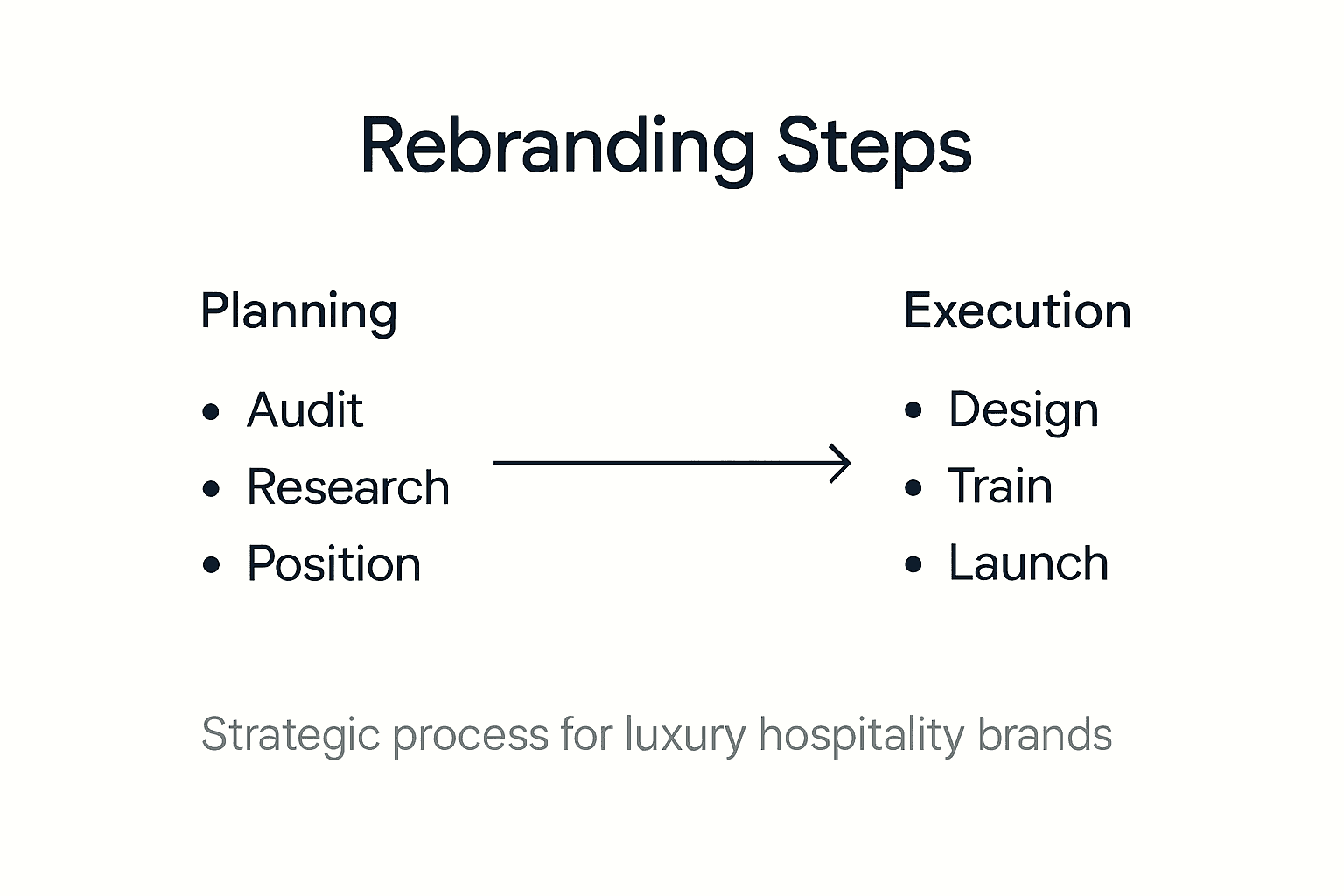
Below is a business impact overview for key rebranding steps:
| Rebranding Stage | Main Activity | Business Value |
|---|---|---|
| Brand Audit | Assess current market status | Identifies strengths/weaknesses |
| Stakeholder Research | Gather feedback and needs | Aligns changes with expectations |
| Positioning Development | Define new brand message | Differentiates from competitors |
| Employee Training | Align staff with new brand | Ensures consistent experience |
Pro Tip: Develop a cross-functional rebranding team that includes representatives from marketing, operations, human resources, and customer experience to ensure holistic and integrated brand transformation.
Risks, Costs, and How to Mitigate Them
Rebranding in luxury hospitality involves substantial financial and operational risks that require strategic navigation. Key risks include potential customer alienation, significant financial investments, and employee resistance to organizational change, making comprehensive risk assessment a critical initial step in any transformative brand strategy.
Financial Considerations represent one of the most significant challenges in luxury hospitality rebranding. Comprehensive risk mitigation demands proactive project management, detailed stakeholder engagement, and strategic implementation approaches, with potential costs ranging from visual identity redesign to comprehensive operational restructuring. Organizations must budget for multiple expense categories, including market research, design development, employee training, marketing communication, and potential short-term revenue disruptions during transition periods.
Mitigation strategies are essential to minimize potential negative outcomes. Key approaches include conducting thorough market research, developing phased implementation plans, maintaining consistent communication with stakeholders, and creating robust internal change management protocols. Successful luxury hospitality brands often adopt gradual transformation strategies that allow for incremental adjustments, reducing financial strain and minimizing potential customer confusion or resistance to change.
Pro Tip: Create a dedicated rebranding contingency fund representing 15-20% of your total projected budget to address unexpected challenges and maintain financial flexibility during the transformation process.
Measuring Success: ROI and Long-Term Impact
Rebranding success in luxury hospitality extends far beyond aesthetic changes, requiring comprehensive measurement of both financial and experiential outcomes. Empirical research demonstrates that strategic rebranding can generate significant performance improvements, including an average occupancy rate increase of 6.31%, underscoring the tangible financial benefits of a well-executed brand transformation.
Key Performance Indicators for measuring rebranding success encompass multiple dimensions beyond traditional financial metrics. Comprehensive evaluation requires aligning financial performance with guest satisfaction and loyalty indicators, creating a holistic assessment framework. Critical metrics include revenue per available room, customer retention rates, brand perception shifts, market positioning changes, and the depth of emotional connection established with target customer segments.
Long-term impact assessment demands a multifaceted approach that tracks both quantitative and qualitative transformations. Successful luxury hospitality brands develop robust measurement systems that monitor brand performance across short and extended timeframes, examining shifts in customer acquisition costs, average guest spend, repeat booking rates, and brand recognition. This nuanced evaluation helps organizations understand the comprehensive value generated through strategic rebranding, moving beyond immediate financial returns to assess broader strategic positioning and market relevance.
Pro Tip: Establish a dedicated cross-functional measurement team that tracks rebranding performance using both financial and experiential metrics, ensuring a comprehensive understanding of transformation impact.
Transform Your Luxury Hospitality Brand with Strategic Creativity
Rebranding in luxury hospitality is more than a fresh look. It is about reshaping your entire brand identity to stand out in a competitive market while deeply connecting with discerning guests. The challenges highlighted in the article show how critical it is to align your brand narrative, service philosophy, and visual identity to secure sustainable growth and drive revenue. If you are ready to elevate your hotel’s market positioning, overcome ownership transitions, or breathe new life into your service experience Lind Creative offers specialized support tailored to these goals.

Discover how our expert team blends strategic insights with creative excellence in Branding & Identity – Lind Creative. We build compelling brand stories and visual systems that resonate authentically with luxury travelers. Stay ahead of market shifts by exploring the latest innovations with our Industry Trends – Lind Creative. Whether launching your transformation or scaling your presence Lind Creative’s full-service approach is designed to deliver measurable results. Take the next step and partner with us today: visit https://lindcreative.com to start your rebranding journey and watch your luxury hospitality brand thrive.
Frequently Asked Questions
What is the purpose of rebranding in luxury hospitality?
Rebranding in luxury hospitality aims to transform a hotel’s identity and market perception, enhancing its appeal to high-end clients and differentiating it in a crowded market.
How can luxury hotels measure the success of their rebranding efforts?
Success can be measured through key performance indicators such as occupancy rates, customer retention, brand perception shifts, and financial performance, alongside qualitative feedback from guests.
What are the common challenges faced during the rebranding process in hospitality?
Common challenges include financial risk, potential alienation of existing customers, and resistance to change from employees, which require thorough planning and strategic communication to navigate effectively.
What are the types of rebranding strategies luxury hotels can adopt?
Luxury hotels can adopt several rebranding strategies, including ownership transition rebrands, service repositioning, visual identity overhauls, and comprehensive transformations to enhance market performance and brand alignment.
Recommended
- Digital Branding: Driving Luxury Hospitality Growth – Lind Creative
- Unified Brand Presence: Driving Engagement for Luxury Hospitality – Lind Creative
- Why Personalize User Experience for Luxury Hospitality – Lind Creative
- Why Branding Matters: Complete Guide for Businesses – Lind Creative