
More than 60 percent of American travelers now say a distinct brand experience impacts their booking decisions. With increasing competition among luxury hospitality brands, even established names must adapt fast to stay ahead. This guide reveals how a structured brand refresh can strengthen your identity, align with evolving guest expectations, and drive measurable returns for your American property.
Table of Contents
- Step 1: Assess Current Brand Performance
- Step 2: Define Refreshed Brand Positioning
- Step 3: Redesign Visual and Verbal Identity
- Step 4: Update Digital Touchpoints and Assets
- Step 5: Verify Consistency and Measure Impact
Quick Summary
| Key Insight | Explanation |
|---|---|
| 1. Conduct a Brand Audit | Analyze customer perception, service quality, and digital engagement for a complete brand overview. |
| 2. Refine Brand Positioning | Develop a unique narrative that reflects strengths and resonates with target customers. |
| 3. Redesign Visual Identity | Create cohesive visual and verbal elements that represent your brand’s core values. |
| 4. Update Digital Presence | Enhance online platforms to meet modern expectations and improve guest engagement. |
| 5. Measure Brand Impact | Track performance metrics consistently to validate brand refresh success and inform adjustments. |
Step 1: Assess Current Brand Performance
Evaluating your hospitality brand’s current performance requires a strategic and comprehensive approach. The goal is to gain a clear understanding of where your brand stands in the competitive marketplace and identify potential opportunities for improvement and growth.
Begin by conducting a thorough brand audit that examines multiple dimensions of your current identity. Hospitality trends research from leading institutions suggests analyzing key performance indicators such as customer perception, service quality, digital engagement, and market positioning. This means diving deep into metrics like customer satisfaction scores, online reviews, social media sentiment, and comparative performance against industry benchmarks.
Utilize a combination of quantitative data and qualitative insights to create a holistic view of your brand. Review customer feedback channels, conduct surveys, analyze website and social media analytics, and evaluate your brand’s visual and communication consistency across different touchpoints. Cornell University’s hospitality research reports recommend paying special attention to how your brand resonates with target demographics and whether your current positioning effectively communicates your unique value proposition.
Professional Insight: Create a standardized scorecard that tracks your brand performance metrics quarterly to maintain consistent monitoring and enable agile strategic adjustments.
Here is a summary of key metrics to assess during a hospitality brand audit:
| Metric Category | Example Indicator | Business Value |
|---|---|---|
| Customer Perception | Net Promoter Score (NPS) | Reveals brand advocacy strength |
| Service Quality | Guest Satisfaction Ratings | Tracks operational effectiveness |
| Digital Engagement | Website Bounce Rate | Shows online experience quality |
| Market Positioning | Competitor Benchmarking | Identifies areas for improvement |
Step 2: Define Refreshed Brand Positioning
Defining a refreshed brand positioning is a critical strategic process that transforms how your hospitality brand communicates its unique value and connects with target customers. The objective is to articulate a compelling narrative that differentiates your brand in an increasingly competitive marketplace.
Industry research on hospitality trends emphasizes the importance of developing a positioning strategy that reflects your brand’s distinctive strengths and resonates with specific customer expectations. This means conducting a deep analysis of your current market perception, identifying gaps in your existing brand narrative, and crafting a positioning statement that clearly communicates what makes your hospitality experience unique.
To develop a robust brand positioning, start by understanding your target audience’s evolving preferences and values. Hospitality insights highlight the growing importance of personalization and experiential offerings, suggesting that your refreshed positioning should go beyond traditional service descriptions and focus on creating memorable, tailored experiences. Develop a positioning framework that articulates your brand’s core purpose, unique selling propositions, and the emotional connection you aim to establish with guests.
Professional Insight: Conduct periodic customer interviews and market research to continuously refine your brand positioning and ensure it remains relevant and compelling to your target audience.
Step 3: Redesign Visual and Verbal Identity
Redesigning your hospitality brand’s visual and verbal identity is a transformative process that goes beyond superficial changes. This critical step involves strategically reimagining how your brand communicates and visually represents its core values and unique positioning in the marketplace.

Hospitality research from leading institutions highlights the importance of creating a cohesive visual and verbal language that tells a compelling brand story. This means carefully selecting design elements such as color palettes, typography, imagery, and tone of voice that authentically reflect your brand’s renewed positioning and resonate with your target audience. Consider how each visual and verbal element can communicate your brand’s personality, heritage, and forward thinking approach.
To effectively execute this redesign, focus on creating a comprehensive brand guide that ensures consistency across all customer touchpoints. Luxury hospitality insights emphasize the need for authentic and personalized communication strategies that connect emotionally with guests. Develop a robust visual system that includes logo variations, color specifications, typography guidelines, and communication principles that can be seamlessly implemented across digital platforms, print materials, guest interactions, and physical spaces.
Professional Insight: Conduct small focus group tests with your target audience to validate your new visual and verbal identity before full implementation to ensure it genuinely resonates with your intended market.
Step 4: Update Digital Touchpoints and Assets
Updating digital touchpoints and assets is a crucial strategic initiative that ensures your hospitality brand remains competitive and engaging in a rapidly evolving digital landscape. This process involves comprehensively transforming your online presence to reflect your refreshed brand identity and meet modern guest expectations.
Hospitality technology trends demonstrate the critical importance of digital platform enhancements that create seamless and intuitive guest experiences. This means systematically auditing and upgrading your website, mobile applications, social media channels, and digital marketing materials to ensure they not only look visually consistent but also provide intuitive user interactions that showcase your brand’s unique value proposition. Pay special attention to responsive design, loading speeds, user interface clarity, and integration of interactive features that facilitate smooth guest engagement.
Consider implementing advanced digital solutions that align with contemporary hospitality expectations. Industry insights highlight the growing significance of integrated digital technologies that support contactless interactions, personalized experiences, and sustainability considerations. This might include developing AI powered chatbots, implementing seamless online booking systems, creating virtual tour capabilities, and ensuring your digital platforms communicate your brand story authentically across every digital interaction point.
Professional Insight: Conduct comprehensive user experience testing with actual guests to identify and resolve any potential friction points in your digital platforms before full implementation.
Step 5: Verify Consistency and Measure Impact
Verifying brand consistency and measuring the impact of your brand refresh requires a systematic and data driven approach. This critical phase transforms your strategic efforts into measurable outcomes that validate your brand transformation and provide actionable insights for future refinement.
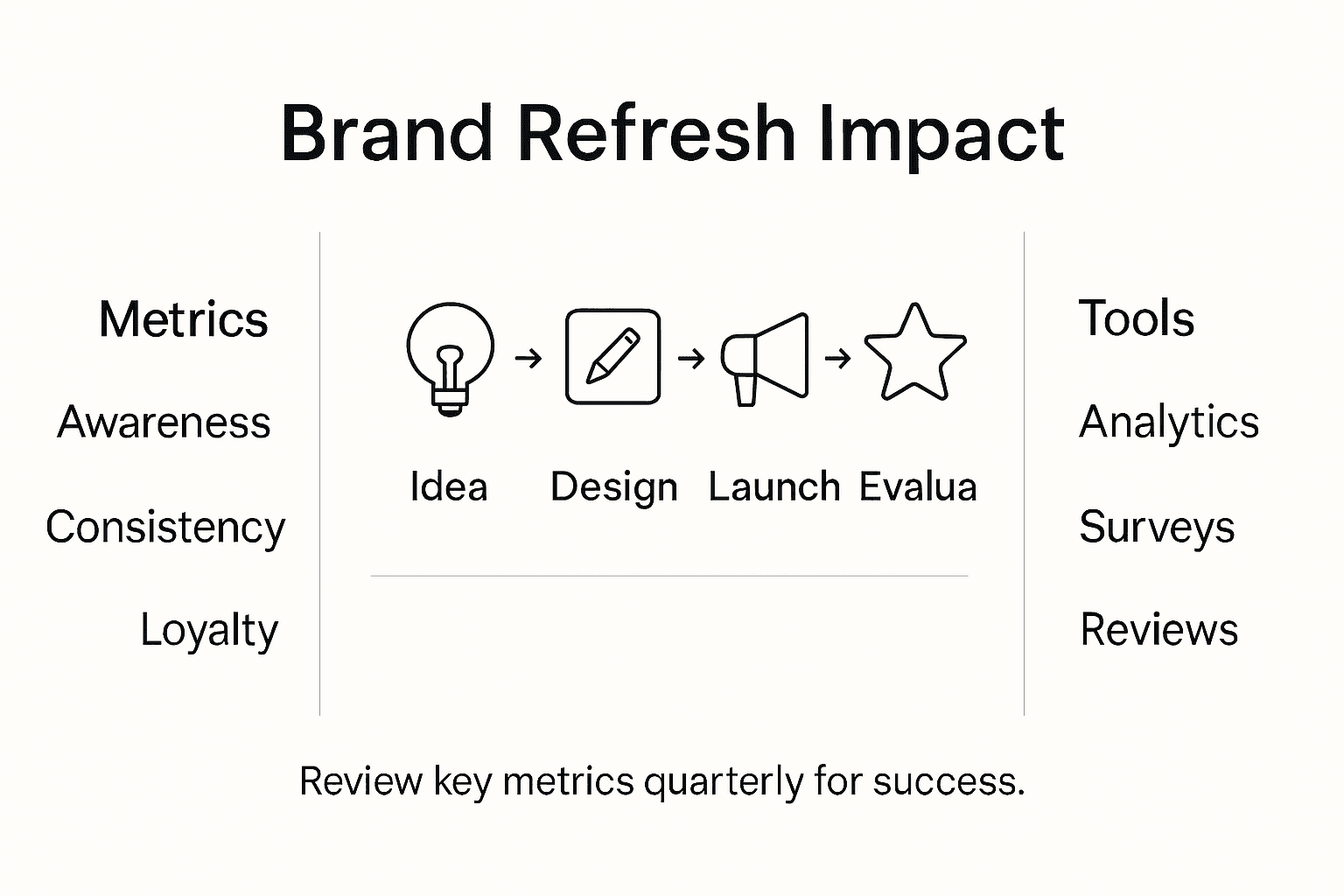
Performance evaluation frameworks from hospitality research institutions recommend establishing comprehensive metrics that track brand consistency across multiple dimensions. This involves developing a robust measurement strategy that captures guest perceptions, operational performance, digital engagement, and financial indicators. Create a structured scorecard that evaluates how effectively your refreshed brand resonates through customer interactions, online presence, service delivery, and overall market positioning.
Leverage advanced analytics and customer feedback mechanisms to generate meaningful insights about your brand refresh. Research from leading hospitality centers highlights the importance of continuous performance monitoring to understand the tangible impact of your branding initiatives. Implement sophisticated tracking tools that measure brand equity, customer loyalty, sentiment analysis, and comparative performance against industry benchmarks. This data driven approach allows you to make informed adjustments and demonstrate the concrete value of your strategic brand transformation.
Professional Insight: Establish a quarterly review process that goes beyond surface metrics and deeply analyzes the qualitative and quantitative signals of your brand refresh success.
Compare the focus of each step in the brand refresh process:
| Step | Primary Focus | Main Outcome |
|---|---|---|
| Assess Brand Performance | Current gaps and strengths | Baseline for improvements |
| Define Refreshed Positioning | Unique value narrative | Differentiated brand message |
| Redesign Visual/Verbal Identity | Brand look and language | Cohesive, modern identity |
| Update Digital Touchpoints | Online experience | Improved guest engagement |
| Verify Consistency & Measure Impact | Impact tracking | Measurable brand success |
Elevate Your Hospitality Brand with Precision and Creativity
Refreshing your hospitality identity requires more than just aesthetic changes. The article highlights challenges like maintaining brand consistency across digital touchpoints, articulating a unique value narrative, and leveraging data to measure impact. These goals demand a strategic partner who understands the nuances of branding & identity and the critical role of compelling design in creating memorable guest experiences.
At Lind Creative, we combine creative expertise with data-driven strategy to tackle these pain points head-on. Our full-service agency helps you redefine your brand through cohesive visual and verbal identities, seamless website experiences, and measurable marketing systems. We focus on delivering real results by automating your lead capture and optimizing engagement so your refreshed hospitality brand not only looks outstanding but truly connects with your audience. Discover the latest industry trends that shape successful brand transformations and apply them with confidence.
Take the first step to transforming your hospitality brand today.
Ready to elevate your brand identity and drive tangible growth? Visit Lind Creative to explore how our strategy-driven solutions can turn your brand refresh into a lasting competitive advantage.
Frequently Asked Questions
How do I assess my hospitality brand’s current performance?
To assess your brand’s current performance, conduct a comprehensive brand audit focusing on key metrics like customer perception, service quality, and digital engagement. Gather data from customer feedback channels and analyze guest satisfaction scores to identify strengths and weaknesses within 30 days.
What steps should I take to define a refreshed brand positioning?
To define a refreshed brand positioning, analyze your market perception and identify gaps in your current brand narrative. Create a clear positioning statement that communicates your unique value proposition and resonates with your target audience, ideally within 60 days.
How can I redesign my hospitality brand’s visual and verbal identity?
Redesigning your brand’s visual and verbal identity involves selecting design elements like color palettes and typography that reflect your renewed positioning. Develop a comprehensive brand guide to ensure consistency across all customer touchpoints, aiming for completion in about 90 days.
What digital touchpoints should I update during my brand refresh?
Update key digital touchpoints such as your website, mobile applications, and social media channels to align with your refreshed brand identity. Prioritize enhancing user experience features like responsive design and loading speeds to improve guest engagement within 30 days.
How can I measure the impact of my brand refresh?
Measure the impact of your brand refresh by establishing a comprehensive set of metrics that track customer perceptions and operational performance. Create a structured scorecard and conduct quarterly reviews to analyze the success of your branding initiatives over time.
Recommended
- Unified Brand Presence: Driving Engagement for Luxury Hospitality – Lind Creative
- Why Refresh Brand Visuals – Driving Growth and Engagement – Lind Creative
- Digital Branding: Driving Luxury Hospitality Growth – Lind Creative
- Why Personalize User Experience for Luxury Hospitality – Lind Creative