
Most American companies underestimate how much a simple update to their brand’s look can influence growth. Over 50 percent of consumers report noticing when a business refreshes its visual identity, and this awareness impacts both trust and engagement. As the marketplace shifts, keeping a brand visually current is essential for staying relevant. Discover how a strategic visual refresh helps American brands maintain recognition while embracing modern design trends.
Table of Contents
- What Brand Visual Refresh Really Means
- How Outdated Visuals Impact Growth
- Key Reasons to Update Brand Identity
- Aligning Visuals With Evolving Audiences
- Avoiding Common Brand Refresh Mistakes
Key Takeaways
| Point | Details |
|---|---|
| Brand Visual Refresh | A visual refresh is a strategic update of existing design elements, preserving core brand values while modernizing appearance. |
| Impact of Outdated Visuals | Maintaining outdated visuals can hinder growth, as they are associated with stagnation and may deter potential customers. |
| Audience Alignment | Regularly assess and adapt visual communication to ensure it resonates with changing audience preferences and demographic trends. |
| Common Refresh Mistakes | Avoid abandoning legacy visuals and lack of audience research, as these errors can dilute brand recognition and engagement. |
What Brand Visual Refresh Really Means
A brand visual refresh represents a strategic evolution of a company’s visual identity, not a complete overhaul. According to strategic branding research, this process involves updating key design elements to modernize appearance while preserving core brand values.
Unlike a total rebranding, a visual refresh is more nuanced. It involves subtle yet meaningful modifications to existing visual components like logos, color palettes, typography, and imagery. Minor design updates help brands stay current with market trends without losing the fundamental recognition and emotional connection established with their audience.
The core objective of a brand visual refresh is reconnecting with customers through contemporary design language. This might mean adjusting color schemes to feel more modern, refining logo proportions for better digital scalability, or updating typography to enhance readability across multiple platforms. Such strategic updates signal a brand’s responsiveness and commitment to staying relevant.
Pro Tip for Successful Refresh: Conduct thorough audience research before making visual changes to ensure your design updates genuinely resonate with your target demographic and align with their evolving preferences.
Here’s a comparison of visual refresh versus full rebranding for businesses:
| Aspect | Visual Refresh | Full Rebranding |
|---|---|---|
| Scope of Change | Targeted visual updates | Complete overhaul |
| Brand Recognition | Maintains current recognition | Creates new brand associations |
| Implementation Speed | Typically faster | More time-intensive process |
| Cost Implications | Lower investment required | Higher financial commitment |
| Customer Response | Subtle signal of progression | Risk of confusing loyal customers |
How Outdated Visuals Impact Growth
Outdated brand visuals can significantly hinder business growth by creating negative perceptual barriers that discourage potential customers. Research on visual complexity demonstrates that user experience deteriorates rapidly when visual elements fail to meet contemporary design standards, directly impacting conversion rates and overall brand perception.

Visual design plays a critical role in user engagement and retention. Empirical studies reveal that increased visual complexity correlates with higher user dropout rates, meaning businesses with stale or cluttered visual identities risk losing potential customers before they even fully understand the brand’s value proposition. Modern consumers expect sleek, intuitive, and professionally designed visual experiences that communicate competence and relevance.
The consequences of maintaining outdated visuals extend beyond immediate user interactions. Potential clients and partners unconsciously associate visual design with brand quality, innovation, and professionalism. An aging visual identity signals stagnation, suggesting the business might be out of touch with current market trends, technological advancements, or evolving customer expectations. This perception can lead to decreased trust, reduced credibility, and missed opportunities for growth and expansion.
Pro Tip for Visual Modernization: Conduct a comprehensive visual audit annually, analyzing your current design assets against industry benchmarks and emerging design trends to ensure your brand remains visually competitive and appealing to your target audience.
Key Reasons to Update Brand Identity
Brand identity updates inject critical momentum into business growth, signaling to the marketplace that a company remains dynamic, innovative, and responsive to evolving customer expectations. This strategic refresh goes beyond cosmetic changes, representing a deliberate signal of organizational adaptability and forward-thinking leadership.
Businesses benefit from periodic brand identity updates in multiple strategic dimensions. Contemporary brand refreshes help companies sharpen their competitive edge by realigning visual communication with current market trends, technological advancements, and shifting consumer preferences. Such updates communicate organizational vitality, demonstrating that the brand understands and anticipates customer needs rather than becoming stagnant or disconnected.
The psychological impact of a well-executed brand identity update cannot be overstated. Potential clients and partners unconsciously interpret visual design as a reflection of a company’s professionalism, innovation, and commitment to excellence. A refreshed visual identity suggests continuous improvement, technological relevance, and a proactive approach to meeting market demands. This perception can significantly influence customer trust, engagement, and ultimately, conversion rates across various touchpoints.
Pro Tip for Strategic Refresh: Conduct comprehensive customer and market research before updating your brand identity to ensure the new visual language genuinely resonates with your target audience and effectively communicates your brand’s core values and unique positioning.
Aligning Visuals With Evolving Audiences
Understanding audience evolution is crucial for maintaining brand relevance, as consumer preferences, design expectations, and demographic characteristics continuously transform. Successful brands recognize that visual communication must dynamically adapt to reflect these shifting audience characteristics, ensuring their brand remains engaging and meaningful across different generational and cultural perspectives.
Market demographics undergo significant transformations over time, requiring brands to consistently reassess and realign their visual narrative. This adaptive approach goes beyond aesthetic updates, representing a strategic dialogue with emerging audience segments who bring distinct visual literacy, technological expectations, and emotional resonance to brand interactions. Younger generations, in particular, demand visual experiences that are authentic, inclusive, and immediately comprehensible across multiple digital platforms.
The process of visual realignment involves deep audience research, understanding emerging trends, and interpreting subtle shifts in cultural communication. Brands must develop a nuanced approach that balances heritage and innovation, creating visual systems that feel contemporary yet familiar. This delicate equilibrium requires continuous learning, empathy, and a willingness to challenge existing design paradigms while maintaining the core emotional connection that originally defined the brand’s identity.
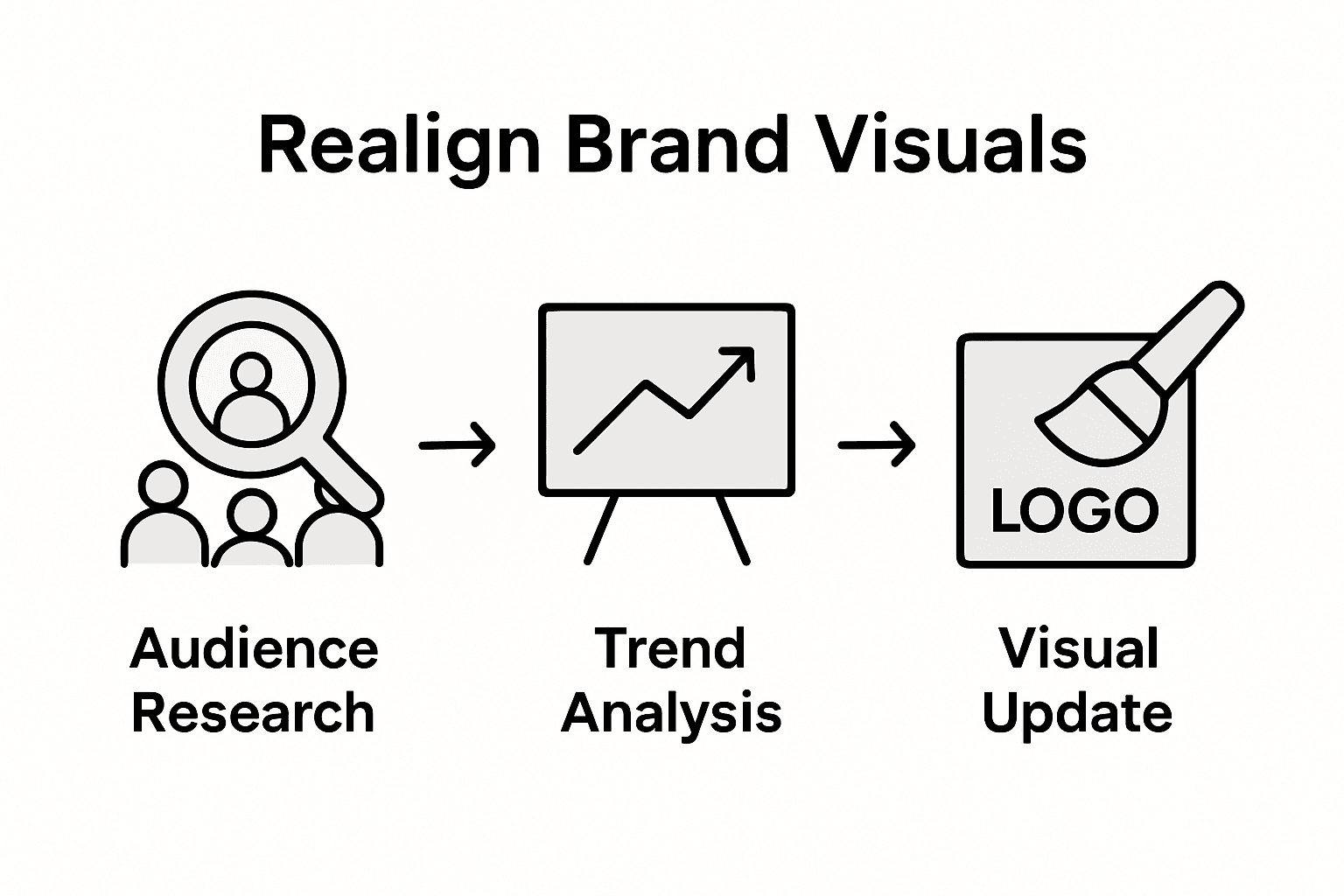
Pro Tip for Audience Alignment: Conduct periodic generational and demographic research to map evolving audience preferences, using insights to incrementally refine your visual communication strategy and maintain authentic, resonant brand representation.
Avoiding Common Brand Refresh Mistakes
Brand visual refreshes require strategic precision to avoid costly missteps that could alienate existing customers or dilute brand recognition. Digital branding strategies emphasize that a successful refresh demands careful navigation between innovation and familiarity, ensuring that visual updates feel evolutionary rather than disruptive.
One critical mistake businesses frequently make is completely abandoning their existing visual identity instead of thoughtfully evolving it. Dramatic changes can confuse loyal customers and inadvertently signal organizational instability. Successful brand refreshes maintain core visual DNA while introducing subtle, meaningful updates that communicate growth and contemporary relevance. This approach respects the emotional connection customers have already established with the brand while signaling forward momentum.
Another common pitfall involves conducting a brand refresh without comprehensive audience research. Businesses must deeply understand their target demographic’s visual preferences, technological interactions, and emotional triggers before making design modifications. Superficial updates that fail to genuinely resonate with the intended audience can result in diminished engagement, reduced brand trust, and potentially significant financial repercussions. The most effective visual updates emerge from a nuanced understanding of audience psychology and evolving market dynamics.
Pro Tip for Strategic Refresh: Conduct multiple rounds of audience testing and gather qualitative feedback before finalizing your brand visual updates, ensuring the new design language authentically connects with your target market’s expectations and aspirations.
The table below summarizes common mistakes and their business impact during a brand refresh:
| Mistake | Potential Impact | Prevention Tip |
|---|---|---|
| Abandoning legacy visuals completely | Alienates loyal customers | Evolve instead of replacing entirely |
| Insufficient audience research | Misaligned updates, reduced engagement | Conduct in-depth audience analysis |
| Rushing the refresh process | Overlooks brand values, quality issues | Allow time for careful review |
| Ignoring digital usability needs | Poor digital experience | Optimize for key online platforms |
Transform Your Brand Visuals to Ignite Growth and Engagement
Struggling with outdated brand visuals that hold your business back from connecting with evolving audiences? This article highlights the critical need to strategically refresh your visual identity through thoughtful updates that preserve brand recognition while signaling innovation and relevance. Key pain points include losing customer trust due to stale design, missing growth opportunities, and the challenge of aligning your brand with shifting market trends and audience expectations.
At Lind Creative, we specialize in turning these challenges into opportunities by crafting strategy-driven design solutions that not only refresh your brand but also drive measurable results. Explore how our Graphic Design services bring cutting-edge aesthetics and functional design together to elevate your brand. Stay ahead of market shifts with insights from our Industry Trends – Lind Creative and empower your growth journey with proven strategies available at Lind Creative.
Ready to rejuvenate your visual identity and spark new business growth? Connect with Lind Creative today to start a collaborative process that transforms your brand visuals into powerful engines of engagement. Visit us now to learn more and take the first step toward a brand that truly resonates and converts.
Frequently Asked Questions
What is a brand visual refresh?
A brand visual refresh is a strategic update of a company’s visual identity that involves subtle modifications to design elements like logos, color palettes, and typography while preserving core brand values.
How does updating brand visuals drive business growth?
Updating brand visuals signals organizational dynamism and responsiveness to customer needs, enhancing brand perception, trust, and engagement, which can lead to increased conversion rates and overall business growth.
What are the signs that a brand’s visuals need a refresh?
Signs include decreased customer engagement, negative perceptions of professionalism, and a general sense that the brand feels outdated compared to competitors or market trends.
What common mistakes should be avoided during a brand refresh?
Common mistakes include completely abandoning existing visual identities, conducting insufficient audience research, rushing the refresh process, and ignoring digital usability needs, all of which can alienate customers and dilute brand recognition.
Recommended
- The Essential Guide to Visuals in Branding – Lind Creative
- Visual Branding Workflow for Powerful Brand Impact – Lind Creative
- How to Create Branded Visuals for Maximum Impact – Lind Creative
- 7 Creative Advertising Examples to Inspire Business Growth – Lind Creative