
Most American websites lose nearly half their visitors if pages take longer than three seconds to load. For brands competing online, site speed shapes more than just first impressions. Fast, responsive sites build trust, improve search rankings, and directly impact revenue. This guide breaks down what really drives website performance, clears up widespread myths, and reveals practical steps every American business can take to keep users happy and stay ahead of competitors.
Table of Contents
- Website Speed Defined and Common Myths
- How Site Speed Impacts User Experience
- SEO and Ranking Effects of Site Speed
- Conversion Rates and Revenue Implications
- Major Causes of Slow Website Performance
- Proven Strategies to Improve Site Speed
Key Takeaways
| Point | Details |
|---|---|
| Website Speed is Essential | Fast-loading websites improve user experience and are critical for maintaining engagement, search rankings, and revenue. |
| Impact of Delays on Performance | Even slight delays can lead to significant abandonment rates and losses in conversion, so optimization is crucial. |
| Technical Factors Matter | Optimizing server response time, image sizes, and code efficiency can dramatically enhance website performance. |
| Continuous Improvement is Key | Website speed optimization should be an ongoing process, incorporating regular audits and proactive strategies to maintain performance. |
Website Speed Defined and Common Myths
Website speed represents how quickly web pages load and display content for users across different devices and network conditions. In today’s digital ecosystem, it functions as a critical performance metric that directly influences user experience, search engine rankings, and business outcomes.
Contrary to popular misconceptions, website speed involves more than just raw loading time. Extensive research demonstrates that even millisecond delays can dramatically impact user engagement and conversion rates. Most users expect websites to load within two seconds, and anything beyond that risks significant audience abandonment. For growing brands, this means every second of loading time represents potential lost revenue and diminished customer trust.
Some common myths about website speed persist in the digital marketplace. Many business owners believe that minor delays are inconsequential or that users will patiently wait for content to appear. However, comprehensive performance studies consistently reveal that users have increasingly short attention spans. In fact, a one-second delay can reduce page views by 11% and customer satisfaction by 16%.
The technical components driving website speed include server response time, image optimization, code efficiency, and content delivery network (CDN) performance. Successful brands recognize that website speed is not just a technical metric but a critical component of their overall digital strategy and user experience design. By prioritizing fast, responsive web experiences, businesses can significantly enhance user engagement, improve search engine visibility, and ultimately drive higher conversion rates.
How Site Speed Impacts User Experience
User experience goes far beyond visual design, with website speed serving as a critical determinant of how visitors perceive and interact with digital platforms. Recent research reveals that modern users have increasingly low tolerance for slow-loading websites, with expectations of near-instantaneous access to information.
The psychological impact of site speed cannot be overstated. Slow-loading pages trigger immediate frustration and signal potential unprofessionalism to users. Innovative studies from Stanford suggest that strategic loading animations can actually mitigate perceived wait times, demonstrating that user experience is not simply about raw speed but about managing cognitive expectations.
Specifically, website speed influences several key user experience metrics. Page load times directly correlate with bounce rates, conversion potential, and overall user satisfaction. A delay of mere seconds can cause significant dropoffs – research indicates that 53% of mobile users will abandon a site if it takes longer than three seconds to load. This means brands lose potential customers not through content or design, but through technical performance.
Moreover, website speed impacts broader digital interactions. Search engines like Google factor site speed into ranking algorithms, meaning slower websites not only frustrate users but also receive lower visibility in search results. By optimizing website design strategies, businesses can create seamless, responsive experiences that retain users, improve engagement, and ultimately drive meaningful digital interactions.
SEO and Ranking Effects of Site Speed
Search engine optimization represents a complex ecosystem where website performance plays a critical role in digital visibility. Website speed directly impacts search ranking algorithms, with search engines like Google prioritizing fast-loading websites that deliver superior user experiences.
Modern search algorithms have become increasingly sophisticated in evaluating website performance. A single second of delay can dramatically reduce a website’s search rankings, potentially pushing brands several positions lower in search results. This means businesses are not just fighting for content relevance, but also technical performance. Some key metrics search engines consider include mobile loading speed, server response time, and overall page performance across different devices.
The consequences of slow website speed extend beyond immediate search ranking penalties. Research indicates that a one-second delay can decrease conversions by 7%, translating to significant potential revenue loss. Brands must recognize that site speed is not merely a technical consideration but a critical business strategy. Responsive design principles become essential in creating websites that not only load quickly but maintain performance across various platforms and screen sizes.
To optimize SEO performance, businesses should focus on several key technical improvements. These include minimizing server response times, compressing images, leveraging browser caching, and reducing unnecessary code. By treating website speed as a strategic priority, brands can improve their search engine visibility, enhance user experience, and ultimately drive more meaningful digital interactions that translate into tangible business growth.
Conversion Rates and Revenue Implications
Conversion rates represent the critical intersection where website performance directly translates into business revenue. Web performance studies demonstrate that user expectations are razor-sharp, with most visitors abandoning sites that fail to load within two to three seconds.

The financial implications of slow website speed are staggering. Research indicates that a mere one-second delay can reduce conversion rates by 7%, representing potential revenue losses that can cripple growing businesses. Customer retention studies highlight that faster websites build trust, encouraging repeat visits and reducing bounce rates which directly impact bottom-line performance.
E-commerce and service-based businesses face particularly acute challenges with site speed. Online shoppers have unprecedented choices, and slow-loading pages represent an instant disqualification. Consider that 40% of users will abandon a site entirely if it takes more than three seconds to load, transforming what could have been a potential sale into a lost opportunity. This means businesses are not just competing on product quality or pricing, but on technical performance and user experience.
To mitigate revenue risks, brands must adopt a proactive approach to website optimization. This involves continuous performance monitoring, investing in robust hosting infrastructure, implementing content delivery networks, and regularly auditing site speed across different devices. Responsive design principles become crucial in creating seamless experiences that convert visitors into loyal customers, ultimately transforming technical performance into a strategic business advantage.
Major Causes of Slow Website Performance
Website performance involves a complex ecosystem of technical factors that can dramatically impact loading speeds. Advanced research on browser performance reveals multiple intricate elements that contribute to sluggish website experiences, ranging from hardware inefficiencies to software design challenges.
Understanding these performance bottlenecks requires examining several key technical dimensions. Inefficient server configurations, oversized image files, and unoptimized code represent primary culprits in website slowdowns. Crowdsourced web performance measurements highlight that content delivery mechanisms and runtime environments play crucial roles in determining website speed, with resource contention and software library inefficiencies creating significant performance barriers.
The most common technical causes of slow website performance include uncompressed media files, excessive external scripts, complex database queries, and poorly configured hosting environments. Websites loaded with multiple third-party plugins, complex animations, and heavyweight JavaScript frameworks can exponentially increase load times. Each additional script or plugin introduces potential latency, creating a compounding effect that degrades overall site performance.
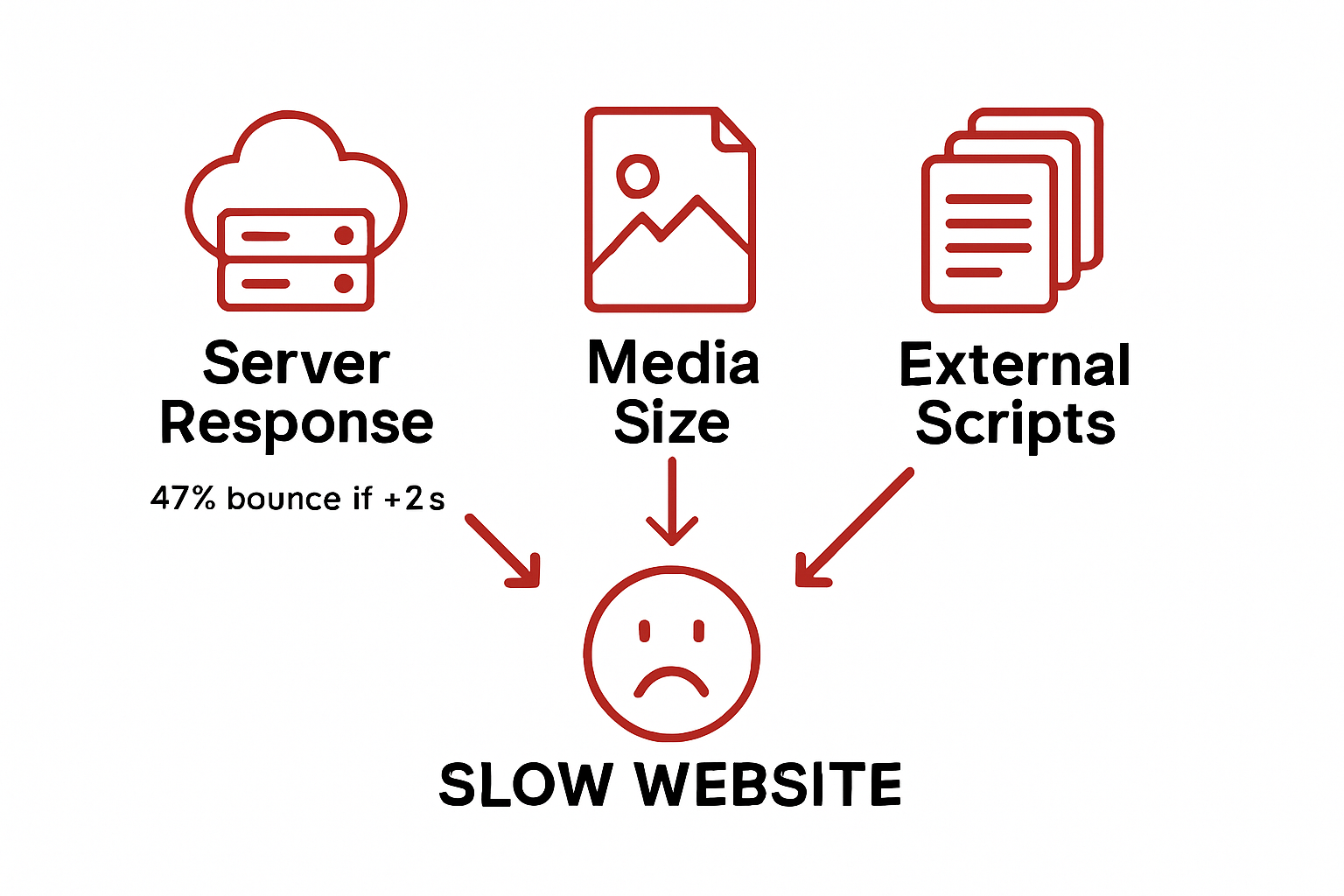
To address these challenges, brands must adopt a proactive optimization strategy. Website design principles become critical in creating streamlined, efficient digital experiences. This involves regular performance audits, implementing content delivery networks, minimizing external script dependencies, leveraging browser caching, and selecting hosting solutions that provide robust, scalable infrastructure capable of handling dynamic content delivery efficiently.
Proven Strategies to Improve Site Speed
Website optimization requires a strategic, multifaceted approach that addresses technical performance from multiple angles. Performance optimization research emphasizes treating speed improvements as an ongoing development process rather than a one-time technical fix.
Practical site speed enhancement strategies encompass several critical technical interventions. Image compression represents a fundamental optimization technique, with businesses able to reduce file sizes by 60-80% without sacrificing visual quality. Leveraging browser caching, minimizing HTTP requests, and utilizing content delivery networks can dramatically reduce load times. Advanced techniques like lazy loading for images and implementing efficient JavaScript loading mechanisms allow websites to prioritize critical content rendering.
Technical performance optimization requires continuous measurement and refinement. Developers should implement performance budgets that establish clear loading time thresholds, conduct regular speed audits, and use tools like Google PageSpeed Insights for comprehensive analysis. Automated testing frameworks can help identify performance bottlenecks before they impact user experience, ensuring consistent website responsiveness across different devices and network conditions.
To transform technical strategies into tangible business outcomes, brands must integrate website design principles that prioritize performance. This involves selecting robust hosting solutions, implementing efficient code practices, and creating a culture of continuous improvement. By treating website speed as a critical component of digital strategy, businesses can enhance user satisfaction, improve search engine rankings, and ultimately drive more meaningful customer interactions.
Boost Your Website Speed and Grow Your Brand with Lind Creative
Is slow website speed holding your brand back from reaching its true potential Online users expect lightning-fast load times and seamless experiences to build trust and drive conversions At Lind Creative, we understand that boosting site speed goes beyond technology — it directly impacts your bottom line and search rankings Our expert team specializes in Web Design – Lind Creative and Web Development – Lind Creative, crafting fast, responsive websites that captivate visitors and keep them engaged

Don’t let slow load times cause lost revenue or damaging bounce rates Take action today with Lind Creative and transform your site into a high-performing digital asset. Visit Lind Creative now to start building a faster, smarter website that attracts customers and drives lasting growth.
Frequently Asked Questions
What is website speed and why is it important for brands?
Website speed refers to how quickly web pages load and display content for users. It’s crucial for brands because fast-loading websites enhance user experience, improve search engine rankings, and can lead to increased conversion rates.
How does website speed impact user experience?
Website speed significantly influences user experience; slow-loading pages can frustrate users and lead to higher bounce rates. Research shows that users expect pages to load within two seconds, and any delay can result in loss of visitors and trust.
What are some common causes of slow website performance?
Common causes of slow website performance include unoptimized images, excessive HTTP requests, inefficient server configurations, and poorly coded scripts. These factors can lead to increased loading times, which can deter users from engaging with the site.
What strategies can brands implement to improve website speed?
Brands can improve website speed by compressing images, leveraging browser caching, utilizing content delivery networks, and minimizing the use of external scripts. Regular performance audits and implementing performance budgets are also effective strategies.
Recommended
- Complete Guide to Website Optimization Strategies – Lind Creative
- 7 Essential Ecommerce Website Design Tips for Growth – Lind Creative
- 7 Essential Website Design Tips for Business Growth Success – Lind Creative
- Why Build a Scalable Website: Complete Guide – Lind Creative