
Over 70 percent of businesses see traffic spikes that strain their websites every year. As your company grows, so do user expectations for speed and reliability. If your website can’t keep up, you risk missing out on sales and losing customer trust. Understanding website scalability gives you the tools to handle growth smoothly while protecting your brand’s reputation and future opportunities.
Table of Contents
- Defining Website Scalability and Core Concepts
- Key Benefits of Building a Scalable Website
- Types of Scalability and Growth Scenarios
- How Scalability Drives Business Performance
- Costs, Risks, and Common Pitfalls to Avoid
Key Takeaways
| Point | Details |
|---|---|
| Scalability is Essential | Website scalability is crucial for growing online platforms, allowing them to handle increased user demands without compromising performance. |
| Types of Scaling | Businesses can adopt horizontal, vertical, or hybrid scaling strategies based on their specific needs and growth projections. |
| Performance Optimization | A scalable website enhances performance by enabling rapid resource allocation, ensuring stability during traffic spikes. |
| Strategic Implementation | Successful scalability requires careful planning to avoid common pitfalls such as over-engineering and cost overruns. |
Defining Website Scalability and Core Concepts
In the digital business landscape, website scalability represents a fundamental strategic capability that determines how effectively your online platform can grow, adapt, and perform under increasing user demands. According to research from ijerd.com, scalability fundamentally involves designing web architectures that balance performance, security, and usability across expanding digital environments.
At its core, website scalability means building a digital infrastructure capable of handling growth without compromising user experience or system performance. This isn’t just about technical capacity – it’s about creating a flexible, responsive platform that can seamlessly accommodate more traffic, more transactions, and more complex interactions as your business evolves. Springer Research highlights that scalability patterns aren’t one-size-fits-all but require strategic selection based on specific business needs.
Key scalability characteristics include:

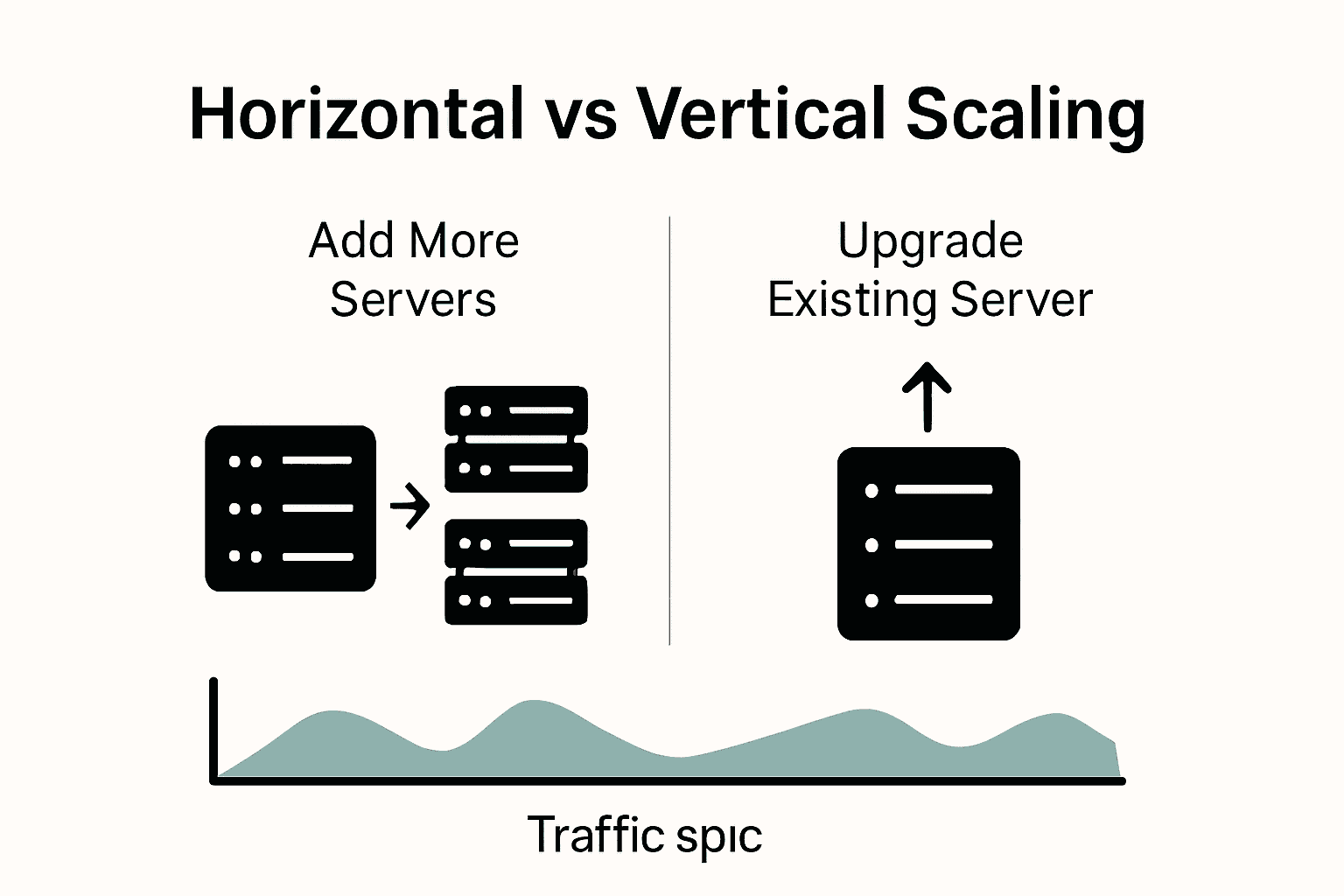
- Horizontal Scaling: Ability to add more servers or nodes to distribute workload
- Vertical Scaling: Increasing computational power of existing infrastructure
- Elastic Performance: Dynamic resource allocation based on real-time demand
- Minimal Latency: Maintaining fast response times even under heavy traffic
Building a scalable website isn’t just a technical exercise – it’s a strategic investment in your digital future. By prioritizing scalability from the beginning, businesses can create online platforms that grow alongside their ambitions, without requiring complete system overhauls or experiencing performance bottlenecks.
Learn more about our comprehensive website design strategies and how we help businesses build adaptable, high-performance digital experiences.
Key Benefits of Building a Scalable Website
Building a scalable website isn’t just a technical upgrade – it’s a strategic business transformation that delivers profound competitive advantages. According to Transputec, scalable systems enable organizations to dynamically allocate resources, dramatically improving performance and reliability while providing unprecedented business agility.
Performance Optimization emerges as the primary benefit of scalable web architectures. When your website can seamlessly handle traffic spikes without compromising speed or user experience, you’re positioning your digital presence for sustainable growth. This means your online platform can smoothly transition from handling hundreds to thousands of concurrent users without system degradation.
Key benefits of scalable website design include:
- Rapid Resource Allocation: Instantly adjust computational resources based on real-time demand
- Cost Efficiency: Pay only for the resources you actually use, avoiding overprovisioning
- Global Responsiveness: Deploy and scale resources across different geographic regions
- Competitive Advantage: Maintain superior website performance during peak traffic periods
Moreover, scalability directly impacts business continuity and customer trust. A website that remains stable and responsive during high-traffic moments signals professionalism and technological sophistication. Learn more about our website optimization strategies to understand how we help businesses build resilient digital platforms that grow alongside their ambitions.
Types of Scalability and Growth Scenarios
Navigating the complex landscape of website scalability requires understanding the different approaches businesses can take to accommodate digital growth. According to Wikipedia’s Scale Cube model, there are three fundamental methods for scaling technology platforms: X-axis replication, Y-axis service segmentation, and Z-axis component partitioning – each offering unique strategies for managing increased computational demands.
Horizontal Scaling represents the most flexible approach to website infrastructure expansion. As explained by Online Design Teacher, this method involves adding more servers to distribute workload, which provides superior redundancy and fault tolerance compared to traditional scaling methods. By creating multiple identical server instances, businesses can seamlessly handle traffic spikes and maintain consistent performance across their digital platforms.
The primary scalability approaches include:
- X-Axis Scaling: Creating multiple identical copies of the entire application
- Y-Axis Scaling: Splitting different functional components across separate services
- Z-Axis Scaling: Partitioning data and traffic based on specific attributes
- Vertical Scaling: Increasing computational power of existing infrastructure
Choosing the right scalability strategy depends on your specific business requirements, expected growth trajectory, and technological infrastructure.
 Learn more about our comprehensive website design strategies to understand how we help businesses build adaptable, high-performance digital experiences that can evolve with their ambitions.
How Scalability Drives Business Performance
Business performance in the digital age is intrinsically linked to technological adaptability. According to Transputec, cloud scalability has transformed how organizations respond to market dynamics, enabling rapid global resource deployment and unprecedented business continuity.
Scalability isn’t just about handling more traffic – it’s about creating strategic technological resilience. When businesses can instantly shift operations, spin up backup systems, and replicate data within minutes, they minimize potential downtime and maintain competitive momentum. This approach allows companies to seamlessly adapt to unexpected market changes, seasonal demand fluctuations, or sudden growth opportunities without experiencing technical limitations.
Key performance drivers through scalability include:
- Operational Flexibility: Quickly adjust computational resources in real-time
- Risk Mitigation: Rapidly deploy backup systems during potential disruptions
- Global Responsiveness: Support international expansion without infrastructure constraints
- Cost Optimization: Pay only for resources actively used
Ultimately, scalable websites transform technological infrastructure from a potential bottleneck into a strategic accelerator. Learn more about our website optimization strategies to understand how we help businesses build resilient, high-performance digital platforms that turn technological capability into competitive advantage.
Costs, Risks, and Common Pitfalls to Avoid
Scalability isn’t a one-size-fits-all solution, and businesses must carefully navigate potential challenges to ensure successful implementation. As Online Design Teacher highlights, the choice between horizontal and vertical scaling isn’t just technical – it’s a strategic decision with significant implications for performance, cost, and future growth.
Technical complexity represents one of the most significant risks in building scalable websites. Many businesses underestimate the architectural challenges of creating truly adaptive digital infrastructure. While horizontal scaling offers superior redundancy and fault tolerance, it introduces additional layers of complexity in system design, data synchronization, and resource management. This means businesses must invest not just in technology, but in skilled professionals who can architect and maintain these sophisticated systems.
Common pitfalls to anticipate include:
- Over-Engineering: Adding unnecessary complexity that reduces system performance
- Inadequate Planning: Failing to forecast potential growth scenarios
- Cost Overruns: Implementing scaling solutions without proper budget management
- Performance Bottlenecks: Creating new constraints while attempting to solve existing ones
Successful scalability requires a holistic approach that balances technological capability with strategic foresight. Learn more about our comprehensive website design strategies to understand how we help businesses build adaptable, cost-effective digital platforms that grow intelligently with their ambitions.
Unlock Your Website’s True Potential with Scalable Design
Building a scalable website goes beyond handling more traffic. It is about creating a resilient, high-performing foundation that grows with your business ambitions. From managing horizontal scaling challenges to avoiding costly performance bottlenecks, the article highlights the importance of strategic scalability for sustained growth and competitive advantage. If you are facing technical complexity or worried about future-proofing your online presence, these are exactly the challenges we help solve.
Take control of your digital future today by partnering with a full-service agency that blends creativity, technology, and strategy. Our approach ensures your website stays fast, flexible, and reliable at every stage of growth. Explore our Digital Marketing – Lind Creative resources for insights on performance optimization and growth strategies.
Ready to transform your website into a powerful, scalable asset? Visit Lind Creative now to discover how our signature Growth Engine and strategy-driven design deliver measurable results. Learn more on how we help ambitious businesses build adaptable, high-performance digital experiences in our Resources – Lind Creative section. Don’t wait for bottlenecks to slow your progress. Act now to unlock scalable success.
Frequently Asked Questions
What is website scalability?
Website scalability refers to the ability of a digital platform to grow and handle increased user demands without compromising performance or user experience. It involves the design of web architectures that can effectively manage higher traffic and complex interactions.
What are the key benefits of building a scalable website?
Key benefits of a scalable website include performance optimization during traffic spikes, cost efficiency by paying only for used resources, global responsiveness for faster deployment across regions, and maintaining a competitive advantage during peak times.
What are the different types of scalability?
The main types of scalability are horizontal scaling, which adds more servers to distribute workload; vertical scaling, which enhances the power of existing infrastructure; and the Scale Cube model, which includes X-axis replication, Y-axis service segmentation, and Z-axis component partitioning to manage increased demands.
How does scalability drive business performance?
Scalability enhances business performance by providing operational flexibility, reducing downtime risks, supporting global responsiveness, and optimizing costs. It transforms technology from a bottleneck into a strategic advantage, allowing businesses to adapt quickly to market changes and growth opportunities.
Recommended
- Website Design: Everything You Need to Know – Lind Creative
- 7 Essential Website Design Checklist Steps for Business Growth – Lind Creative
- Step by Step Website Launch Guide for Business Growth – Lind Creative