
Did you know that over 75 percent of website credibility comes from design and strategy choices? An effective website does far more than just exist online. It acts as a digital storefront, helping you attract the right visitors and achieve business growth. With the right approach, each step from goal setting to launch shapes a user-friendly platform that delivers real results and sets your brand apart.
Table of Contents
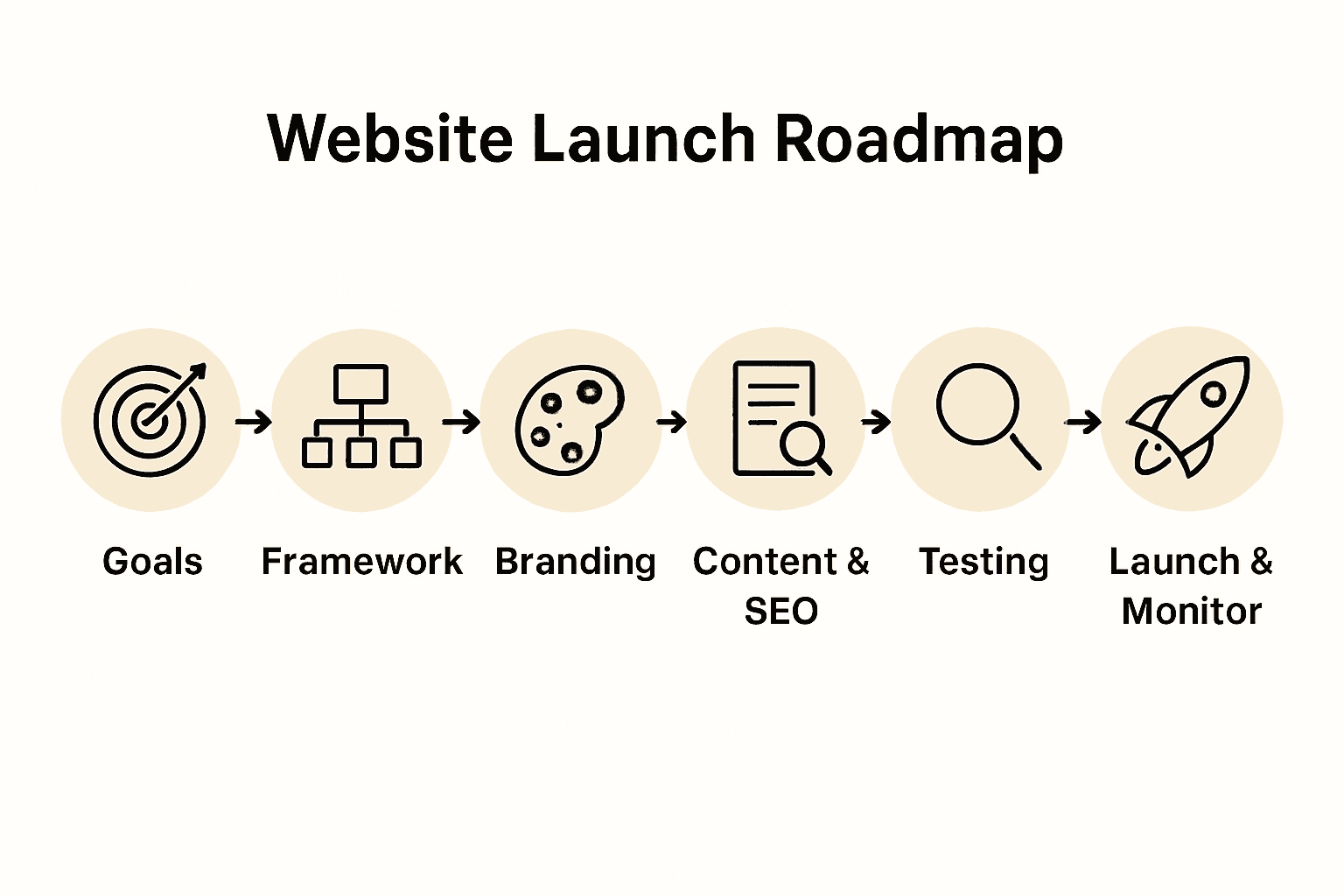
- Step 1: Define Goals And Map Website Strategy
- Step 2: Build And Design Your Website Framework
- Step 3: Integrate Branding And Marketing Assets
- Step 4: Optimize Content And Configure Seo
- Step 5: Test Functionality And Ensure Reliability
- Step 6: Launch Site And Monitor Performance
Quick Summary
| Key Point | Explanation |
|---|---|
| 1. Define Clear Goals | Specify website objectives that align with business strategy to guide development effectively. |
| 2. Construct an Intuitive Framework | Plan your site’s architecture for logical navigation and user-friendly experience, ensuring a smooth user journey. |
| 3. Integrate Brand Identity Consistently | Embed branding elements throughout the website to reflect your unique identity and connect with your audience emotionally. |
| 4. Optimize for SEO and Engagement | Conduct keyword research and create quality content that meets user needs while improving search engine visibility. |
| 5. Test and Monitor Website Performance | Conduct comprehensive testing across devices and browsers, then use analytics to continually refine your site based on user feedback. |
Step 1: Define goals and map website strategy
Building a successful website starts with crystal clear goals that transform your digital presence from a generic online placeholder to a strategic business asset. According to research from Mozilla Developer Network, before initiating any web project, you must define specific objectives and understand exactly how your website will drive your business forward.
Start by sitting down and listing out what you want your website to accomplish. Are you looking to generate leads? Sell products directly? Build brand awareness? Provide customer support? Each goal requires a different strategic approach. Break down these objectives into specific measurable targets. For instance instead of saying “I want more customers” try “I want to increase qualified lead generation by 25% in the next six months”.
Next create a strategic map that connects each goal to specific website features and content strategies. If lead generation is your primary objective your site might need robust contact forms compelling calls to action and valuable content that attracts potential clients. Research from Columbia University emphasizes the importance of ensuring all website elements support your organizational mission and values.
Pro Tip: Your website goals should directly align with your broader business strategy. Think of your website as a digital storefront that reflects and amplifies your brand’s core mission.
Once you have mapped out your goals prioritize them. Not every objective carries equal weight some will be more critical to your immediate business needs. Rank your goals based on potential impact potential resources required and alignment with your overall business strategy.
In the next step we will translate these strategic goals into a comprehensive website design and content plan that transforms your vision into a powerful digital platform.
Step 2: Build and design your website framework
With your strategic goals now clearly defined its time to transform those objectives into a thoughtful website framework that seamlessly guides users toward your desired outcomes. According to research from Michigan State University Digital Experience Studio, developing an effective website framework requires strategic planning that maps user journeys and creates smooth process flows.
Start by sketching out your website architecture. Think of this as creating a blueprint where each page and section serves a specific purpose aligned with your previously established goals. Begin with core pages like home about services contact and any unique landing pages specific to your business objectives. Consider the user experience flow how will visitors move through your site and take the actions you want them to take?
Next focus on creating a logical navigation structure. Your menu should be intuitive and reflect how potential customers think about your services. Group related content together and use clear descriptive labels that immediately communicate what users will find. Avoid industry jargon or clever but confusing terminology. Remember users should understand your navigation at a glance.
Pro Tip: Always design your website framework from the perspective of your ideal customer. What information would they need? What path would make their journey most smooth and compelling?
Pay special attention to your websites information hierarchy. The most critical information and calls to action should be most prominent. Use visual design principles like size color and placement to guide users attention exactly where you want it. This means your most important conversion goals whether thats booking a consultation purchasing a product or signing up for a newsletter should be immediately visible and accessible.
In the next step we will dive into selecting the right design elements and visual components that will bring your strategic website framework to life.
Step 3: Integrate branding and marketing assets
Now its time to breathe life into your website by weaving your unique brand identity seamlessly throughout your digital platform. According to research from the Small Business Administration, building a professional website requires strategically integrating branding elements and marketing assets to effectively represent your brand and attract customers.
Begin by gathering all your core branding materials. This includes your logo color palette typography brand guidelines and any existing marketing collateral. Your website should serve as a visual and messaging extension of your brand identity. Every element from headers to button colors should reflect your unique brand personality and communicate your core values.

Focus on creating consistent visual storytelling. Your brand colors should be used strategically across pages ensuring a cohesive look that feels intentional and professional. Consider how your visual elements guide user attention and create emotional connections. Your imagery text and design should work together to tell a compelling narrative about who you are and what you offer.
Pro Tip: Think of your website as your digital storefront. Every visual element should welcome visitors and make them feel confident about choosing your brand.
As SBA research suggests understanding your audience is critical when planning website content and functionality. Ensure your marketing assets speak directly to your ideal customer. This means using language tone and visuals that resonate with their needs motivations and aspirations. Dont just showcase what you do highlight the transformative value you provide.
In the next step we will refine your websites technical infrastructure to ensure smooth performance and optimal user experience.
Step 4: Optimize content and configure SEO
With your website framework and branding in place its time to ensure your digital presence attracts and engages your target audience through strategic content optimization and search engine configuration. According to research from the University of Minnesota, effective website content requires understanding your goals identifying stakeholders and establishing clear objectives that align with your websites purpose.
Start by conducting thorough keyword research relevant to your business and target audience. Identify the terms and phrases your potential customers are searching for and strategically integrate these into your website content. This means creating informative compelling copy that naturally incorporates these keywords without feeling forced or sacrificing readability. Think about answering the questions your ideal customers are actually asking.
Focus on creating high quality original content that provides genuine value. Search engines reward websites that offer comprehensive informative and unique content. Each page should target specific user intents whether thats providing information solving a problem or showcasing your products and services. Write with your audience in mind not just search engine algorithms.
Pro Tip: Quality trumps quantity. One well researched in depth article is more valuable than multiple shallow pieces of content.
Take time to optimize technical SEO elements. This includes crafting descriptive page titles writing compelling meta descriptions using header tags appropriately creating clean URL structures and ensuring your website loads quickly. Remember search engines reward websites that offer excellent user experience. Consider optimizing your sites responsive design to improve both user engagement and search engine rankings.
In the next step we will test and fine tune your website to ensure everything works seamlessly before your official launch.
Step 5: Test functionality and ensure reliability
With your website nearly ready its time to become a digital detective and meticulously verify every aspect of your online platform. According to Coursera’s guided website development research, comprehensive testing involves establishing a thorough development environment and building a foundation that ensures user friendly and accessible site performance.
Begin with comprehensive cross browser testing. This means checking how your website looks and functions across different browsers like Chrome Safari Firefox and Edge. Pay attention to layout responsiveness navigation menus form interactions and overall visual consistency. Each browser interprets website code slightly differently so what looks perfect in one might appear broken in another.
Next conduct thorough functionality testing. Click through every single link button and interactive element. Verify that contact forms submit correctly that navigation menus work smoothly and that all multimedia elements load without issues. Test your website on multiple devices smartphones tablets and desktop computers to ensure a consistent user experience across different screen sizes and platforms.
Pro Tip: Recruit friends family or colleagues to help test your website. Fresh eyes often catch issues you might accidentally overlook.
Perform speed and performance checks using tools like Google PageSpeed Insights. These will highlight potential loading time issues image optimization needs and technical performance bottlenecks. A slow website can frustrate users and negatively impact search engine rankings so addressing these issues before launch is critical. Look for ways to compress images minimize code and improve overall site speed.
In the final step we will prepare for your official website launch and create a strategic rollout plan that maximizes your digital debut.
Step 6: Launch site and monitor performance
Congratulations youve reached the exciting moment of bringing your digital platform to life. According to Small Business Administration research, launching your website is just the beginning of understanding and optimizing your online presence by continually assessing feature effectiveness and audience engagement.
Start by setting up comprehensive analytics tools like Google Analytics to track visitor behavior. These tools will provide insights into how people interact with your website revealing which pages attract the most attention where visitors spend the most time and potential areas for improvement. Pay close attention to metrics like bounce rate time on site and conversion rates to understand your websites performance.
Create a systematic approach to performance monitoring. This means checking your websites technical health regularly looking for potential issues like broken links slow loading pages or unexpected errors. Use tools like Google Search Console to track your search engine performance and identify any technical problems that might prevent potential customers from finding or using your site effectively.
Pro Tip: Treat your website like a living organism. Regular check ups and minor adjustments can prevent major problems down the road.
Establish a feedback loop with your audience. Add mechanisms for visitors to provide comments or report issues directly from your website. This not only helps you identify potential improvements but also demonstrates that you value user experience. Consider implementing brief user surveys or feedback forms to gather qualitative insights about how people perceive and interact with your digital platform.
In the ongoing process of growing your online presence youll want to continuously refine and optimize your website based on real world performance and user feedback.
Here’s a summary of the key steps for building a successful website:
| Step | Key Focus | Actions Involved |
|---|---|---|
| Define Goals & Strategy | Set website objectives | Identify goals Map strategy Prioritize targets |
| Build Framework | Plan site structure | Sketch architecture Organize navigation Establish hierarchy |
| Integrate Branding | Apply brand identity | Use logo/colors Maintain consistency Craft storytelling |
| Optimize Content & SEO | Enhance content for visibility | Keyword research Technical SEO Quality writing |
| Test & Ensure Reliability | Verify performance | Browser/device testing Functionality checks Speed optimization |
| Launch & Monitor | Go live and analyze | Set up analytics Monitor performance Gather feedback |
Take Your Website Launch Further with Expert Guidance
Launching a website that truly drives business growth demands more than just a plan. You face the challenge of aligning your goals with effective design, content, and marketing while ensuring flawless performance and user experience. This guide highlights the importance of setting clear objectives, building a strategic framework, integrating authentic branding, optimizing SEO, thorough testing, and monitoring launch success.
Feeling overwhelmed by all the moving parts? You are not alone. Let Lind Creative step in to transform this complex process into a streamlined, ROI-driven journey. Our full-service digital agency specializes in crafting high-converting websites built around your unique business goals. We blend creativity, technology, and strategy so your website not only looks amazing but attracts and converts your ideal customers.
Explore our Web Development – Lind Creative solutions to see how thoughtful architecture and performance testing bring stability and speed to your site. Combine that with our Digital Marketing – Lind Creative expertise to deploy powerful growth systems that automate lead capture and nurture.
Don’t wait to turn your website launch into lasting business growth. Visit Lind Creative now and take the first step toward launching a professional website that works as hard as you do. Get in touch today to start building your strategic digital platform with a partner who cares about results.
Frequently Asked Questions
What are the first steps to take when launching a website for business growth?
Begin by defining your website goals, such as generating leads or improving brand awareness. List your objectives and create a strategic map that connects these goals to specific website features and content.
How can I ensure my website effectively engages visitors?
Design your website framework with user experience in mind. Create a clear navigation structure and prioritize the most important information, ensuring visitors can easily find what they need.
What should I include in my website’s branding and marketing elements?
Integrate core branding materials like your logo, color palette, and typography. Consistently apply these elements throughout your website to create a cohesive and professional look.
How do I optimize my website content for search engines?
Conduct thorough keyword research and incorporate these terms naturally into your website content. Focus on creating high-quality, original content that answers the questions your target audience is asking.
What is the importance of testing my website before launching?
Testing ensures your website functions correctly across various browsers and devices. Perform cross-browser testing and functionality checks to identify and fix any issues before your official launch.
How can I monitor my website’s performance after launch?
Set up analytics tools to track visitor behavior and site performance metrics. Regularly check for broken links or slow-loading pages, and gather user feedback to make ongoing improvements.
Recommended
- Lind Creative
- Case Studies – Lind Creative
- Top Strategies for Website Growth in 2025: Boost Traffic & Results