
Every hospitality brand faces the challenge of presenting a seamless identity across countless guest touchpoints. Without clear direction, even the most sophisticated properties risk sending mixed messages that dilute their reputation. A comprehensive set of standards known as a style guide brings structure to both visual design and brand voice, shaping how guests perceive and trust your property. Developing a detailed style guide empowers your team to deliver unified, premium experiences guests remember.
Table of Contents
- Defining A Style Guide In Branding
- Core Elements Of An Effective Style Guide
- Types And Key Applications For Hospitality
- Building Consistency And Customer Trust
- Avoiding Common Style Guide Mistakes
Key Takeaways
| Point | Details |
|---|---|
| Importance of a Style Guide | A style guide is essential for maintaining consistent branding across all communication channels in the hospitality industry. |
| Key Components | Effective style guides must include typography standards, color palettes, voice and tone guidelines, and logo usage specifications. |
| Accessibility and Usability | Style guides should be easily accessible, organized by department, and updated regularly to reflect any branding changes. |
| Consistency Builds Trust | Consistent branding across different guest touchpoints fosters reliability and encourages repeat visits and positive reviews. |
Defining a Style Guide in Branding
A style guide is a comprehensive set of standards that governs how your hospitality brand communicates visually and verbally across every platform. It’s not just a document you create and file away—it’s your brand’s rulebook for consistency.
Think of it as the operating system for your brand. Just as a well-designed property management system keeps operations running smoothly, a style guide establishes uniformity and consistency across all guest touchpoints, from website copy to email campaigns to in-property signage.
At its core, your style guide answers a critical question: How do we want to be perceived?
Key Components of a Style Guide
A comprehensive style guide for upscale hospitality includes:
- Typography standards: Font families, sizes, line heights, and spacing for websites, menus, and printed materials
- Color palette: Primary and secondary colors with specific hex codes, ensuring your brand looks identical across digital and physical spaces
- Voice and tone guidelines: How your brand speaks to guests—whether formal, warm, sophisticated, or personable
- Logo usage: Minimum sizes, clear space requirements, and where the logo can (and cannot) appear
- Photography and imagery style: Visual aesthetic that represents your brand (moody or bright, minimalist or ornate)
- Writing standards: Grammar preferences, sentence structure, and how to write headlines, descriptions, and calls-to-action
A style guide creates psychological trust. When guests experience consistent messaging and visual design across all interactions, they perceive your brand as organized, reliable, and premium.
Why This Matters in Hospitality
Your brand voice carries enormous weight. A luxury boutique hotel in Charleston communicates differently than a wellness resort in Arizona. Both are upscale, but their style guides reflect entirely different brand personalities.
When your team references a shared style guide, booking pages sound like your website. Email confirmations match your visual brand. Guest communications feel intentional, not scattered.
The consistency builds brand recognition. Studies show guests are more likely to return to hospitality brands that deliver cohesive experiences. Your style guide is what makes that possible.
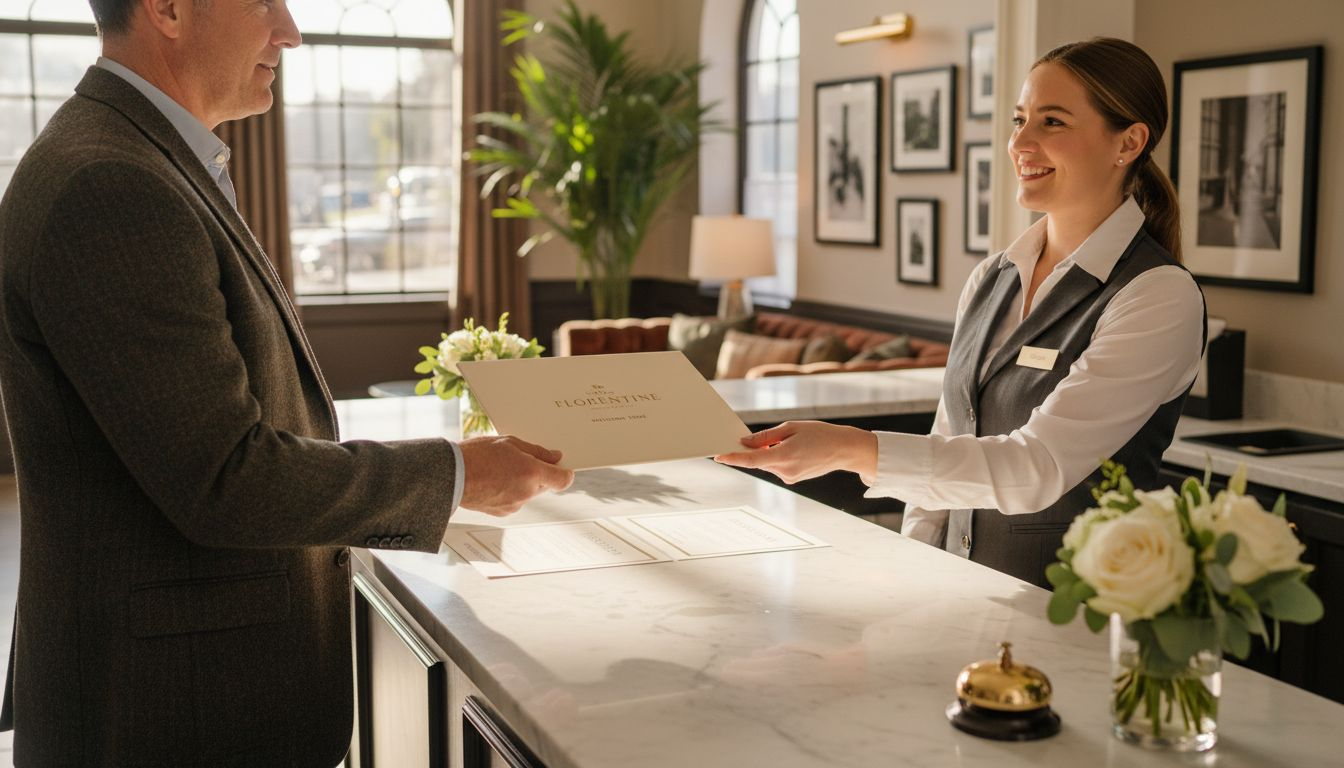
The Document Itself
Your style guide should be accessible and usable. This means:
- Create a living document your team can reference daily
- Include visual examples, not just rules
- Provide before-and-after examples of what not to do
- Make it searchable and organized by department (marketing, operations, guest services)
- Update it as your brand evolves
Many hospitality brands build their style guides as digital portals or PDFs that team members access through the marketing platform.
Pro tip: Start your style guide by documenting your current brand voice and visual standards, even if they’re inconsistent. This audit reveals gaps and helps your team understand why standardization matters before building new guidelines.
Core Elements of an Effective Style Guide
An effective style guide goes beyond listing fonts and colors. It’s a comprehensive framework that addresses every way your hospitality brand communicates—written, visual, and experiential.
The most powerful style guides contain specific, actionable rules rather than vague suggestions. Your team shouldn’t have to guess whether to use “Sincerely,” “Best regards,” or “Warmly” in an email—your guide tells them.
Writing and Grammar Standards
Your style guide should establish clear rules for grammar, punctuation, and usage across all communications. This includes:
- Preferred spelling variations (organize vs. organise—American English standards apply)
- Punctuation rules (Oxford comma usage, em dash vs. hyphen)
- Abbreviations and acronyms (how to handle “Mr.,” “Dr.,” property names)
- Capitalization rules (when to capitalize “Guest” or “Manager”)
- Tone and voice specifications (formal, conversational, warm, professional)
For upscale hospitality, consistency in how you address guests matters enormously. A luxury resort shouldn’t shift between formal and casual voice across its website, emails, and in-property materials.
Visual Brand Elements
Your style guide must address visual presentation with precision:
- Logo specifications: Exact dimensions, clear space, where it cannot appear
- Color standards: RGB and hex codes to match digital and print perfectly
- Typography hierarchy: Which fonts for headers, body text, navigation
- Image style: Photography tone, lighting, composition preferences
- White space and layout: Grid systems, margins, spacing rules
A visual style guide prevents costly mistakes. One hotel chain spent $50,000 reprinting materials because their “brand orange” didn’t match across print and digital versions—a detailed color specification would have prevented this.
Bias-Free Language and Ethical Standards
Modern hospitality demands inclusive communication. Your style guide should include rules for bias-free language that ensure your team writes respectfully about diverse guests and employees.
This means establishing guidelines for pronouns, cultural references, accessibility language, and representation in examples and imagery.
Brand Voice and Messaging
Define how your brand personality translates into language. Answer these questions for your team:
- What adjectives describe your brand voice?
- How formal or casual should communications be?
- What topics or language should we avoid?
- How do we respond to complaints or concerns?
- What’s our stance on industry issues?
A boutique luxury property communicates entirely differently than a family-friendly resort. Your guide makes that distinction crystal clear.
Implementation and Accessibility
Your style guide only works if your team actually uses it. Make it:
- Digital and searchable (not a 200-page PDF nobody reads)
- Organized by department or use case
- Full of examples and before/after comparisons
- Updated regularly as your brand evolves
Pro tip: Create quick-reference cards for your front-desk and housekeeping teams—they don’t need the full style guide, just the guest-facing communication standards relevant to their roles.
Use this table to understand core elements and their impact in a hospitality style guide:
| Element | Main Focus | Why It Matters |
|---|---|---|
| Typography | Consistent type choices | Enhances readability, brand feel |
| Color Palette | Specific brand colors | Creates memorable visual identity |
| Voice & Tone | Defined brand language | Sets guest expectations |
| Inclusive Language | Bias-free and respectful terms | Welcomes all guests, builds trust |
Types and Key Applications for Hospitality
Not all style guides are created equal. The type you need depends on your property’s size, brand positioning, and operational complexity.
Corporate vs. Property-Level Guides
Corporate style guides apply across entire hotel chains or multi-property operators. A major hospitality group might maintain one master guide governing all 50 properties, ensuring guests experience identical branding whether they’re in Phoenix or Portland.
Property-level guides adapt the corporate standards to local markets and property-specific needs. A Charleston luxury boutique hotel uses the corporate color palette but customizes voice and imagery to reflect the property’s historic character.
Most upscale hospitality brands benefit from both—a parent guide plus property-specific supplements.
Here’s how corporate and property-level style guides differ in hospitality:
| Aspect | Corporate Guide | Property-Level Guide |
|---|---|---|
| Scope | Applies chain-wide | Customized for one location |
| Consistency | Ensures brand uniformity | Mirrors local character |
| Flexibility | Limited for individuality | Greater adaptation |
| Key Users | Marketing, executives | On-site teams, managers |
Marketing and Guest Communication
Your style guide shapes how guests perceive your property before arrival and throughout their stay. Style guides ensure consistency in written and visual materials, which directly impacts how guests judge quality and professionalism.
Applications include:
- Website copy: Booking pages, room descriptions, amenity explanations
- Email campaigns: Confirmations, upsells, post-stay follow-ups
- Social media: Instagram captions, Facebook posts, LinkedIn updates
- Print materials: Brochures, menus, in-room directories
- Signage: Wayfinding, welcome materials, promotional displays
When your website promises “personalized service” and your welcome email feels robotic, guests notice the disconnect. Your style guide prevents that friction.
Operational Communication
The hospitality sector benefits from specialized guides that address service standards, not just marketing. Your style guide should include:
- Staff communication templates (how to handle complaints, special requests)
- Guest-facing scripts (check-in procedures, room explanations)
- Training materials formatting
- Internal memos and notices
- Crisis communication protocols
When housekeeping, front desk, and concierge teams use consistent language, guests experience a seamless property personality.
Visual and Brand Applications
Your style guide governs:
- Room signage and wayfinding consistency
- Marketing photography standards
- Social media visual aesthetic
- Printed collateral (business cards, stationery, gift bags)
- Website design and layout
- Event materials for conferences and weddings
A unified visual style across all touchpoints signals professionalism and quality. Guests unconsciously associate consistent branding with competence and trust.
Service Standards Documentation
Include guidelines for service language and procedures. How should staff address guests? What terminology should they use? How formal or casual? Your guide answers these questions for every department.
Pro tip: Build separate quick-reference versions of your style guide for different departments—marketing teams need brand voice details, while housekeeping needs operational and guest-facing communication standards only.
Building Consistency and Customer Trust
Consistency is the bridge between brand promise and guest experience. When everything aligns—your website matches your emails, your social media reflects your in-property aesthetic, your staff language echoes your brand voice—guests feel confident.
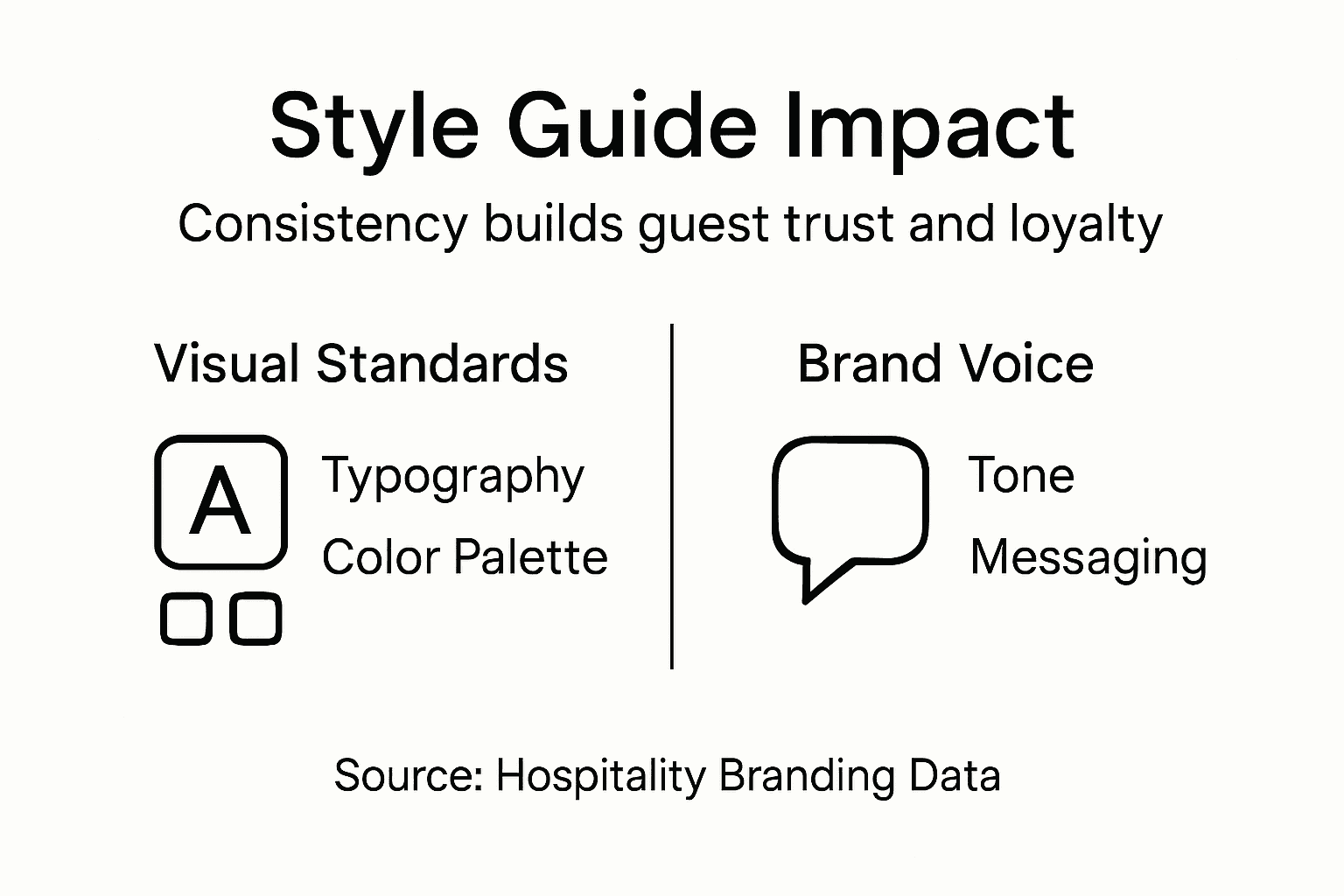
That confidence translates directly to bookings, repeat visits, and positive reviews.
The Psychology of Consistent Branding
Consistency in brand messaging is essential for creating a strong, trustworthy brand identity. When guests encounter your brand across multiple touchpoints and experience the same professionalism, tone, and visual identity each time, they develop confidence in your property.
Inconsistency signals unprofessionalism. A luxury boutique hotel with polished website copy but sloppy in-room materials creates cognitive dissonance. Guests wonder: “Which version represents the real hotel?”
Building Trust Through Reliability
Trust develops through consistent behavior and communication. Your style guide ensures this consistency happens automatically, not by chance.
When your concierge team responds to emails in the same professional tone your website uses, guests perceive reliability. When your Instagram aesthetic matches your lobby photography, guests feel the brand is intentional.
This creates psychological safety—guests feel confident booking because they know what to expect.
Practical Trust-Building Applications
Your style guide builds trust through:
- Unified voice: Every team member sounds like “your hotel,” not like individuals improvising
- Visual recognition: Guests instantly identify your brand across platforms
- Professional standards: Consistent quality signals you care about details
- Predictable experience: Guests know what they’ll encounter before arrival
- Brand reliability: Consistent messaging over time builds credibility
When a guest’s confirmation email matches the website they booked from, which matches the welcome signage in the lobby, which matches the in-room materials—they experience a brand that knows itself. That clarity builds trust.
Impact on Guest Loyalty
Consistent branding doesn’t just attract guests; it keeps them coming back. When guests experience seamless, consistent communication and visual identity throughout their stay, they’re more likely to return and recommend your property.
This is measurable. Hotels with consistent brand experiences see higher review scores, better online reputation, and stronger direct booking rates.
Internal Alignment Matters Too
Your team’s trust in the style guide matters as much as guest trust. When staff understand why consistency matters, they enforce it naturally.
Include context in your guide:
- Why each standard exists
- How consistency impacts guest perception
- Real examples of effective vs. ineffective implementation
- Stories of how consistency solved problems
Team members who understand the “why” become brand ambassadors, not rule-followers.
Pro tip: Audit your current brand touchpoints (website, emails, social media, in-property materials) and document existing inconsistencies before building your style guide—this shows your team exactly why standardization matters.
Avoiding Common Style Guide Mistakes
Even the best intentions produce poor results when style guides miss the mark. The most common pitfalls aren’t about what you include—they’re about how you structure and maintain your guide.
Mistake 1: Creating a Document Nobody Uses
The biggest mistake is building a 50-page PDF that lives on a shared drive nobody accesses. Your style guide only works if your team actually references it.
Instead, create:
- A searchable digital format (not static PDFs)
- Department-specific quick-reference cards
- Visual guides with examples, not just rules
- Easy-to-scan sections (not dense blocks of text)
A 5-page visual guide your team uses beats a 50-page manual collecting digital dust.
Mistake 2: Lacking Clarity and Examples
Common mistakes in style guides include lack of clarity and failing to address diverse audiences. When your guide says “use professional tone,” different team members interpret that differently.
Specific examples eliminate ambiguity. Instead of “write warmly,” show actual email examples:
- Good: “We’d love to help you plan your stay. Let’s talk about what matters most.”
- Avoid: “Please complete the form to request information about accommodations.”
Examples transform abstract rules into actionable standards.
Mistake 3: Inconsistent Application of Standards
Mistakes in applying guidelines often involve inconsistent punctuation, capitalization, and citation errors. Your brand standards mean nothing if nobody enforces them consistently.
Assign accountability:
- Marketing reviews all external communications
- One person audits social media monthly
- Design approval required before printing
- Style guide references built into templates
Without enforcement, your guide becomes suggestions, not standards.
Mistake 4: Making It Too Complex
Don’t create a guide for every possible scenario. Focus on what actually matters for your brand and audience.
Your hospitality guide should address:
- How you speak to guests
- Visual brand standards
- Logo and color usage
- Service language for common situations
- How to handle complaints
Leave academic punctuation rules to academic guides. Your team doesn’t need them.
A great style guide solves real problems your team faces daily. If nobody asks the questions your guide answers, you’ve built the wrong guide.
Mistake 5: Never Updating It
Your brand evolves. Your style guide should evolve with it. Guidelines created five years ago likely don’t address social media voice, mobile design, or emerging service standards.
Schedule quarterly reviews. Update for:
- New platforms or channels
- Shifting brand direction
- Feedback from teams using the guide
- Industry changes or trends
A living document stays relevant. A static one becomes obsolete.
Mistake 6: Ignoring Inclusive Language
Modern hospitality demands guides that reflect diverse guests and staff. Outdated language or assumptions alienate people.
Include guidelines for pronouns, cultural sensitivity, accessibility language, and representation in examples and imagery.
Pro tip: Test your style guide with actual users before finalizing it—give it to your front-desk team, marketing manager, and housekeeping lead and watch them try to apply it, then fix whatever confuses them.
Build Consistency and Trust with Expert Branding Solutions
The article highlights a critical challenge for upscale hospitality brands achieving consistent brand voice and visual identity through a well-defined style guide. You understand how vital it is to maintain uniform messaging, cohesive typography, and inclusive language across every guest touchpoint to build trust and drive loyalty. Without clear standards, your brand risks confusion and diluted perception, which impacts guest confidence and revenue.
At Lind Creative we specialize in helping businesses like yours bridge this gap with strategy-driven design and marketing. Our team creates powerful brand identities and high-converting websites that reflect your unique voice and ensure visual consistency. We also deploy our signature Growth Engine that automates and aligns your marketing across channels so every communication feels intentional and professional.
Ready to transform your hospitality brand into a trusted, recognizable leader that guests come back to again and again Visit Lind Creative now to explore how our tailored branding and digital solutions can standardize your style guide and elevate every guest interaction. Don’t let inconsistent messaging hold you back Discover how our full-service agency delivers creativity technology and strategy in one seamless process that gets real results. Start growing your brand presence today with proven expertise by your side.
Frequently Asked Questions
What is a style guide?
A style guide is a comprehensive set of standards that governs how a brand communicates visually and verbally across various platforms, ensuring consistency in branding and messaging.
Why is a style guide important for hospitality brands?
A style guide is crucial for hospitality brands because it creates uniformity across guest touchpoints, helping to build brand recognition and trust among guests, which can lead to repeat bookings and positive reviews.
What should be included in a hospitality style guide?
A hospitality style guide should include typography standards, color palettes, voice and tone guidelines, logo usage rules, photography styles, and writing standards to maintain consistent branding across all materials.
How can a style guide impact customer trust?
A style guide impacts customer trust by ensuring consistent messaging and visual identity across all guest interactions, making guests feel confident in their choice and enhancing their overall experience.
Recommended
- Role of Brand Guidelines: Ensuring Consistency and Growth – Lind Creative
- Visual Branding Workflow for Powerful Brand Impact – Lind Creative
- The Essential Guide to Storytelling in Branding – Lind Creative
- How to Create Branded Visuals for Maximum Impact – Lind Creative