
Facing another year of fierce competition among American luxury hospitality brands, the challenge is clear. Guests expect flawless online experiences, but if your website’s search visibility is lacking, reservations can slip away without notice. Assessing your current SEO foundation is more than technical housekeeping—it sets the stage for meaningful growth in 2025. This guide reveals actionable steps for building a stronger SEO baseline, including a comprehensive SEO audit, uncovering real opportunities to enhance visibility and drive high-value leads.
Table of Contents
- Step 1: Assess Current Website SEO Foundation
- Step 2: Implement Essential On-Page Optimizations
- Step 3: Enhance User Experience and Mobile Performance
- Step 4: Integrate Advanced Technical SEO Strategies
- Step 5: Verify Results and Monitor Ongoing Performance
Quick Summary
| Main Insight | Description |
|---|---|
| 1. Conduct a thorough SEO audit | Evaluate your website’s current SEO status to identify strengths and weaknesses before implementing changes. |
| 2. Optimize on-page elements effectively | Update title tags, meta descriptions, and headers for better visibility and engagement from potential guests. |
| 3. Enhance mobile user experience | Ensure your website is fully functional and fast on mobile devices, as most bookings occur via smartphones. |
| 4. Implement technical SEO best practices | Use clean URLs, structured data, and regular crawl audits to improve site visibility and search rankings. |
| 5. Regularly track performance metrics | Monitor keyword rankings, organic traffic, and conversion rates to fine-tune your SEO strategy continually. |
Step 1: Assess current website SEO foundation
Your first move is understanding where your luxury hospitality website stands right now. This isn’t about perfection; it’s about honest assessment. You need to know what’s working, what’s broken, and what’s been overlooked. This baseline becomes your roadmap for 2025 improvements. Think of this as a health checkup for your website’s search visibility before you invest time and resources into optimization.
Start by conducting an SEO audit that examines your website’s technical setup, content quality, and user experience. Open Google Search Console and look at which keywords your pages currently rank for, your average position in search results, and your click-through rates. Check your website’s loading speed using Google PageSpeed Insights. Tools like SEMrush or Ahrefs will show you your backlink profile and how it compares to competitors in the luxury hospitality space. You’re looking for patterns: Are your property pages ranking for location-based searches? Are guests finding your contact information easily? Does your site work properly on mobile devices? Pay special attention to your technical foundation—crawl errors, XML sitemap issues, and broken internal links are silent revenue killers that most teams miss entirely. Don’t just skim the surface. Dive into your analytics and see which pages perform best, where visitors drop off, and what search terms bring people to your site. This data tells a story about what your target audience actually wants versus what you think they want.
Once you’ve gathered this information, organize your findings into categories: technical issues that need fixing, content gaps where competitors rank but you don’t, and quick wins you can implement immediately. Your luxury hospitality website has unique SEO opportunities—location targeting, amenity-specific keywords, and seasonal search trends that other industries don’t capture. Understanding your current foundation lets you leverage those advantages strategically.
Here’s a concise comparison of key SEO audit tools for luxury hospitality websites:
| Tool | Primary Strength | Ideal Use Case | Added Value for Hospitality |
|---|---|---|---|
| Google Search Console | Keyword tracking & errors | Monitoring site health and ranking | Reveals high-value guest behavior |
| SEMrush | Backlink analysis | Competitor research & link building | Uncovers local competitor strengths |
| Ahrefs | Comprehensive SEO data | Tracking keyword and link growth | Benchmarks unique amenities keywords |
| Google PageSpeed Insights | Site speed diagnostics | Optimizing technical performance | Ensures fast, mobile-first booking |
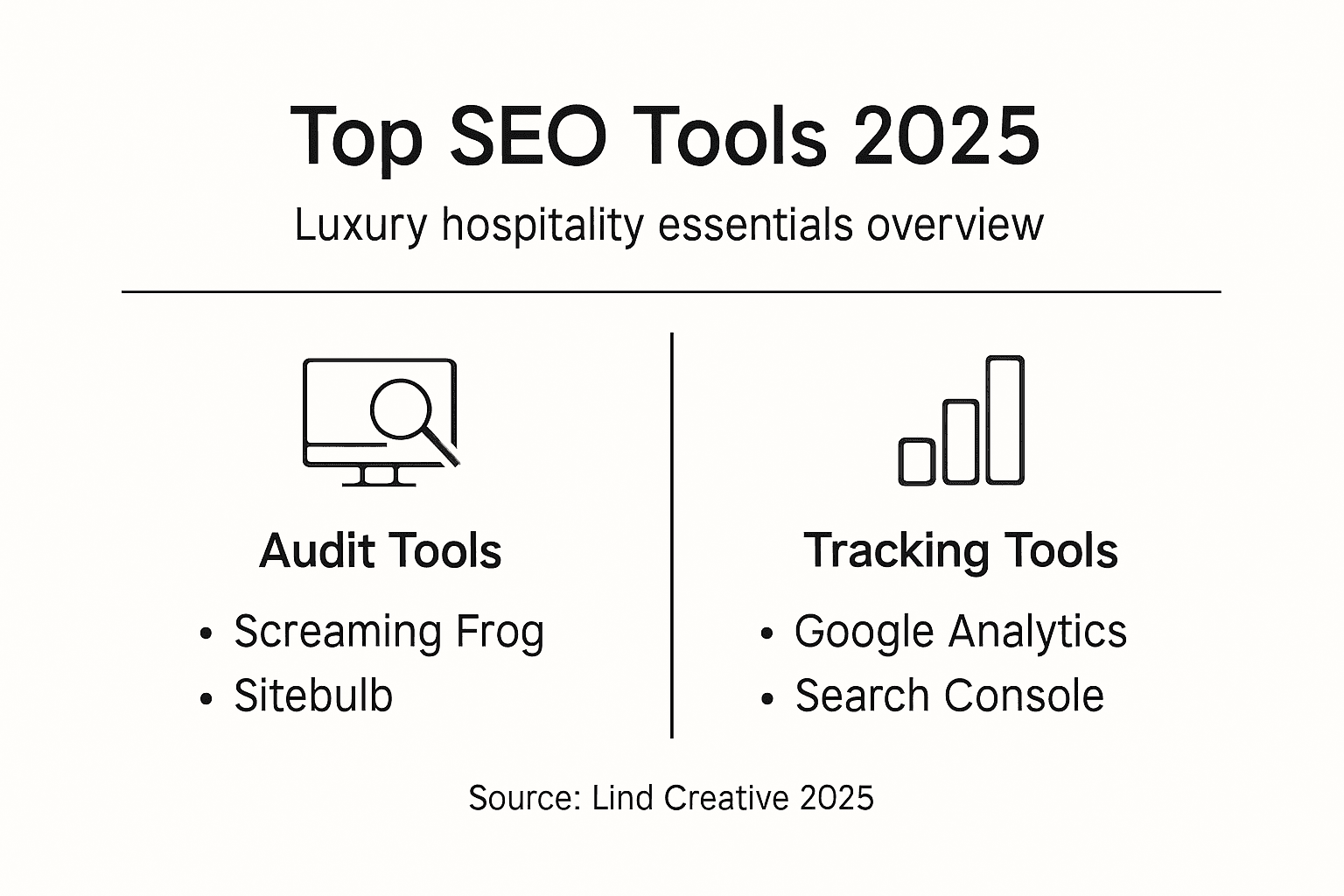
Pro tip: Create a simple spreadsheet tracking your top 20 target keywords, current rankings, and search volume to monitor progress monthly—this becomes your accountability tool for 2025 optimization efforts.
Step 2: Implement essential on-page optimizations
Now that you understand your current SEO position, it’s time to optimize the elements within your direct control. On-page optimization is where most luxury hospitality websites either win or lose ground in search rankings. These are the tactical improvements that tell search engines exactly what your pages are about and why guests should book with you.

Start with your title tags and meta descriptions. These are the headlines and snippets guests see in Google search results, and they need to be compelling while naturally including your target keywords. For a luxury resort in Scottsdale, your title might be “Luxury Desert Resort in Scottsdale, Arizona” rather than something generic like “Home.” Your meta descriptions should preview what makes your property unique and include a soft call to action. Next, optimize your headers using proper hierarchy. Your H1 should match your page’s main topic, and your H2 and H3 headers should break down different sections logically. When creating on-page SEO optimizations, ensure your target keywords appear naturally throughout your content without forcing them awkwardly. Think about how a potential guest would search for you. If you’re a boutique hotel in Charleston with a spa, you want content addressing searches like “Charleston spa hotel” and “romantic weekend getaway Charleston.” Optimize your images by adding descriptive alt text. Search engines can’t see pictures, so alt tags tell them what’s in your images while also improving accessibility for guests using screen readers. An image of your oceanfront terrace should have alt text like “oceanfront terrace at sunset with lounge seating” rather than just “image1.jpg.” Don’t overlook internal linking, which helps search engines understand your site structure and keeps guests engaged longer. Link from your homepage to your popular amenities pages, and connect related content like linking your spa page to packages and promotions.
Your content quality matters more than keyword density. Write for your guests first, search engines second. A detailed, helpful guide to “What to Pack for a Luxury Beach Resort” is more valuable than a keyword-stuffed page that reads like a robot wrote it. Guests spend time on helpful content, and search engines reward pages with higher engagement and longer time on site. Make sure your pages load quickly, especially on mobile devices, since most guests book from their phones.
Pro tip: Create a simple spreadsheet for each page listing its target keyword, title tag, meta description, and H1 tag, then audit quarterly to catch optimization drift as content changes.
Step 3: Enhance user experience and mobile performance
Your website’s user experience directly impacts both guest satisfaction and search rankings. Google’s algorithm now heavily weights how quickly your pages load and how easily visitors navigate your site. For luxury hospitality brands, this is non-negotiable. Your guests expect seamless experiences across all devices, and slow, clunky websites send them straight to your competitors.
Start by auditing your mobile experience since most luxury hotel bookings happen on phones and tablets. Test your website on actual devices, not just browser simulations. Can guests easily find your booking engine? Does your menu collapse properly? Are your images loading quickly? Page speed matters enormously for both user experience and SEO. Use Google PageSpeed Insights to identify performance bottlenecks, then work with your development team to compress images, minimize code, and leverage browser caching. Reduce unnecessary plugins that slow down your site. Mobile technology adoption is critical in hospitality, so ensure your checkout process works flawlessly on mobile and that guests can complete reservations in under two minutes. Navigation should be intuitive, buttons should be thumb-friendly, and text should be readable without pinching and zooming. Your luxury resort’s ten amenity pages mean nothing if guests bounce because they can’t find the booking button.
Beyond mobile optimization, focus on overall user experience elements that keep guests engaged. Your homepage should immediately communicate what makes your property unique, not bury it under generic hospitality jargon. Include high-quality photography that showcases your space, clear calls-to-action for bookings and inquiries, and simple pathways to information guests actually want. Consider your guest journey. Someone searching for a mountain lodge in Colorado might be looking for nearby ski resorts, hiking trails, or fine dining options. If your website doesn’t address these interests through helpful content and intuitive navigation, you’ve lost an opportunity. Make sure your forms are simple and non-intrusive. Asking for 15 pieces of information before showing a room rate will kill conversions. Test your forms on mobile to ensure they’re easy to complete. Load times under three seconds are your target, and anything over five seconds will significantly hurt your rankings and bounce rates. Pay attention to readability on mobile by increasing font sizes and adding white space around content blocks.
Pro tip: Use heatmaps and session recordings tools like Hotjar to watch how real guests interact with your site, then prioritize fixing the friction points where visitors drop off during the booking process.
Step 4: Integrate advanced technical SEO strategies
Technical SEO is the foundation that allows search engines to crawl, index, and rank your website effectively. While on-page optimization gets the attention, technical SEO is what prevents your content from being invisible to Google. For luxury hospitality websites built with modern frameworks and interactive features, this step separates the hotels that dominate search results from those that languish on page three.
Start with your site structure and URL organization. Search engines prefer clean, logical URLs that reflect your content hierarchy. Instead of example.com/p=412, use descriptive URLs like example.com/luxury-suites/oceanfront-penthouse. This clarity helps both search engines and guests understand what they’re getting. Next, ensure your XML sitemap is properly formatted and submitted to Google Search Console. Your sitemap acts like a roadmap for search engine crawlers, helping them discover every important page on your website. If you’re using modern JavaScript frameworks, pay attention to JavaScript SEO optimization because many hospitality websites use JavaScript to load room availability, pricing, and booking forms. If Google can’t render and understand this content, you’re losing ranking potential. Work with your development team to ensure critical content is either server-side rendered or properly indexed through structured data markup.
Structured data is your secret weapon. Use schema markup to tell search engines exactly what information lives on your pages. For a luxury hotel, implement LocalBusiness schema to include your address, phone number, and ratings. Use AggregateOffer schema for pricing information on your rooms and packages. This structured data helps Google understand your content and can enable rich snippets in search results, which significantly increase click-through rates. Don’t neglect your internal linking architecture. Establish a clear hierarchy where your homepage links to category pages like rooms, dining, and amenities, which then link to specific property pages. This structure distributes authority throughout your website and helps search engines understand which pages matter most. Check for duplicate content issues, redirect chains, and broken internal links regularly. A 404 error on a page linking to your spa packages costs you both user experience and SEO value. Fix your canonical tags if you have multiple versions of the same content, and ensure your robots.txt file doesn’t accidentally block search engines from indexing important pages. Finally, monitor your Core Web Vitals through Google Search Console. These metrics measure loading speed, interactivity, and visual stability, and Google explicitly uses them as ranking factors. Aim for good ratings on all three metrics.
Pro tip: Set up monthly technical SEO audits using Screaming Frog or DeepCrawl to catch crawl errors, duplicate content, and broken links before they damage your rankings.
This table summarizes advanced technical SEO tactics and their business impact:
| Technical SEO Element | What It Does | Impact for Luxury Hospitality |
|---|---|---|
| Structured Data Markup | Gives search engines detailed page context | Increases rich snippets & reservation CTR |
| Clean URL Structures | Optimizes readability for users & bots | Boosts trust and organic ranking |
| Regular Crawl Audits | Identifies hidden errors regularly | Prevents lost bookings due to broken links |
| Core Web Vitals Monitoring | Tracks loading & interaction quality | Improves guest satisfaction on all devices |
Step 5: Verify results and monitor ongoing performance
SEO is not a set-it-and-forget-it endeavor. Your luxury hospitality website needs continuous monitoring to ensure your optimizations are working and to catch problems before they tank your rankings. The real value of SEO appears when you track performance over time, understand what’s driving bookings, and adjust your strategy based on actual data rather than assumptions.
Start by setting up comprehensive tracking in Google Analytics and Google Search Console. These tools are free and they tell you everything you need to know about your organic traffic. In Google Search Console, monitor your top performing keywords and watch for sudden drops in impressions or clicks, which often signal algorithm changes or technical issues. Track your average position for key terms. A drop from position three to position seven might seem small, but it typically means a 30 to 40 percent decrease in clicks. Set up dashboards in Google Analytics to monitor organic traffic trends, conversion rates from organic searches, and revenue generated from organic visitors. This last metric is critical for luxury hospitality because it connects SEO directly to your bottom line. You need to answer the question: Are your SEO efforts actually generating revenue? Create a simple spreadsheet tracking your target keywords monthly. Document their current ranking position, search volume, and whether they convert into bookings. Performance tracking helps identify which SEO efforts are working and which need adjustment. Some keywords might rank well but never convert because they don’t match your ideal guest profile. Other keywords might have lower volume but consistently drive high-value reservations.
Beyond rankings and traffic, monitor your user behavior metrics. High bounce rates on your homepage suggest your title tags and meta descriptions aren’t accurately representing your content, or your page speed is too slow. Monitor pages that receive organic traffic but have low conversion rates. These are opportunities to improve your content or fix friction in your booking process. Check your backlink profile monthly using tools like Ahrefs or SEMrush. Lost backlinks can indicate problems with sites linking to you, and new backlinks show you where potential partners are mentioning your property. Review your technical performance quarterly using crawl audits to catch new issues with broken links, duplicate content, or crawl errors. Set baseline metrics for 2025 and compare results every quarter. You should expect organic traffic to grow month over month if your SEO strategy is solid, though the growth rate will vary seasonally. Luxury hospitality sees traffic spikes around holidays and peak travel seasons, so compare year over year rather than month to month to get a clearer picture of progress.
Pro tip: Create a simple monthly reporting dashboard that shows your board or stakeholders three metrics: organic traffic growth, top ranking keywords, and revenue from organic bookings, keeping everyone aligned on SEO’s business impact.
Elevate Your Luxury Hospitality SEO with Expert Strategy and Execution
Facing challenges like improving your website’s search visibility, fixing technical SEO issues, and delivering seamless mobile experiences can feel overwhelming. This article highlights the crucial steps luxury hospitality brands must take to optimize search rankings and increase bookings. You need to fix crawl errors, enhance on-page elements like meta descriptions and headers, improve site speed, and implement structured data—all while ensuring a smooth user experience that converts visitors into guests.
At Lind Creative, we understand these specific pain points. Our team combines creative design, technical expertise, and strategic marketing to help you solve these problems efficiently. From conducting comprehensive SEO audits to implementing advanced technical SEO and mobile optimization, we build high-performing websites tailored to luxury hospitality needs. Our Digital Marketing – Lind Creative solutions amplify your online presence with targeted tactics designed around your unique guest profile. We also deliver flawless Web Development – Lind Creative that ensures fast loading times and intuitive navigation on all devices.
Don’t let SEO challenges block your growth or allow your competitors to capture your guests. Discover how Lind Creative helps luxury hospitality brands like yours convert searchers into loyal customers with strategy-driven design and marketing automation. Visit us at https://lindcreative.com now to start your journey toward measurable results and sustainable business growth.
Frequently Asked Questions
What is the first step in the Website SEO Checklist for Luxury Hospitality Brands?
Start by assessing the current SEO foundation of your website. Conduct an SEO audit to examine your technical setup, content quality, and user experience. This provides a baseline to identify areas for improvement in your 2025 strategy.
How can I optimize my title tags and meta descriptions for better search visibility?
Create compelling title tags and meta descriptions that naturally include your target keywords. Ensure they clearly communicate the uniqueness of your property, as these elements serve as the first impression in search results. Aim to include a soft call to action in your descriptions to entice potential guests.
What key aspects should I focus on for enhancing mobile performance?
Prioritize a seamless mobile experience, as most bookings happen on mobile devices. Ensure your site loads quickly, your menu is easy to navigate, and your booking options are straightforward to use. Test these features on actual mobile devices to ensure functionality and user satisfaction.
How can I improve the technical SEO of my luxury hospitality website?
Focus on clean URL structures, proper XML sitemap setup, and structured data markup. Ensure search engines can crawl and index your content effectively, as technical SEO lays the groundwork for visibility. Regularly audit your site to catch any issues that could hinder performance.
What metrics should I track to verify the results of my SEO efforts?
Monitor key metrics like organic traffic growth, search rankings for target keywords, and revenue generated from organic bookings. Set up tracking in your analytics tools to evaluate these metrics regularly, adjusting your strategy based on performance trends and visitor behavior. Aim for consistent growth month over month to ensure your efforts are effective.
How often should I conduct an SEO audit for my website?
Conduct SEO audits on a quarterly basis to ensure your site remains optimized and to identify any new issues. This allows you to address problems such as broken links, duplicate content, or crawl errors promptly, helping maintain strong search visibility throughout the year.
Recommended
- What Is User Experience and Its Impact on Luxury Hospitality – Lind Creative
- Why Rebrand: Elevating Luxury Hospitality Success – Lind Creative
- Digital Branding: Driving Luxury Hospitality Growth – Lind Creative
- How to Build a Brand for Luxury Hospitality Success – Lind Creative
- Posizionamento motori di ricerca SEO indicizzazione Teramo