
Over $320 billion in annual spending is tied to the luxury market, yet many American hospitality brands struggle to turn ordinary offerings into symbols of aspiration. For brand managers seeking an edge, understanding the core meaning of luxury branding is critical. This article unveils how heritage, emotional storytelling, and exclusivity shape customer loyalty, giving you actionable strategies to elevate your brand’s presence among the world’s most discerning guests.
Table of Contents
- Core Meaning Of Luxury Branding
- Types Of Luxury Brands In Hospitality
- Essential Traits And Brand Positioning
- Creating Exclusivity And Emotional Appeal
- Common Mistakes And Market Challenges
Key Takeaways
| Point | Details |
|---|---|
| Luxury Branding as Experience | Luxury branding transcends product sales, focusing on creating aspirational lifestyle experiences through emotional narratives. |
| Types of Luxury Brands | The luxury hospitality sector includes various brands, such as ultra-luxury resorts and boutique hotels, catering to different high-end consumer needs. |
| Essential Traits | Successful luxury brands emphasize uncompromising quality and emotional storytelling, transforming products into symbols of identity and aspiration. |
| Challenges and Mistakes | Luxury brands must adapt to global market dynamics while maintaining exclusivity and authenticity to meet evolving consumer expectations. |
Core meaning of luxury branding
Luxury branding goes far beyond selling products or services – it represents a sophisticated strategy of creating an aspirational lifestyle experience that transcends traditional marketing approaches. At its core, luxury branding involves crafting powerful emotional narratives that connect deeply with consumers’ desires, values, and self-perception.
The fundamental essence of luxury branding centers on building extraordinary brand equity that transforms products from mere commodities into symbols of status, identity, and exclusive cultural capital. By strategically leveraging heritage, craftsmanship, and meticulous design, luxury brands communicate a narrative of exceptional quality that justifies premium pricing. These brands do not simply sell products – they sell carefully curated experiences and membership into an elite world that consumers aspire to inhabit.
Successful luxury branding requires an intricate understanding of psychological positioning. Rather than competing on functional features, luxury brands build deep consumer connections through symbolism that speaks to consumers’ deepest identity aspirations. This means creating visual language, storytelling, and brand touchpoints that consistently reinforce exclusivity, refinement, and unparalleled quality. The most effective luxury brands make consumers feel they are not just purchasing a product, but investing in a transformative lifestyle statement.
Pro tip: When developing luxury brand positioning, focus more on emotional storytelling and less on product specifications – consumers buy the dream, not just the details.
Types of luxury brands in hospitality
The luxury hospitality sector encompasses a diverse range of innovative brand categories that cater to discerning travelers seeking extraordinary experiences. These brands are strategically segmented to meet different high-end market needs, ranging from ultra-premium accommodations to exclusive culinary destinations. The primary types include ultra-luxury destination resorts, boutique lifestyle hotels, wellness retreats, and gourmet dining establishments.
Ultra-luxury destination resorts represent the pinnacle of hospitality experiences, offering comprehensive service ecosystems that extend far beyond traditional lodging. These brands differentiate themselves through immersive environments, personalized guest experiences, and exceptional amenities that create transformative travel moments. Boutique lifestyle hotels, by contrast, focus on unique design aesthetics, local cultural connections, and intimate service models that appeal to sophisticated travelers seeking authentic and curated experiences.
Wellness and sustainable luxury brands have emerged as significant market segments, targeting health-conscious and environmentally aware affluent consumers. These brands integrate holistic wellness programming, sustainable practices, and cutting-edge design to create immersive hospitality experiences that align with contemporary lifestyle values. Specialty dining venues within the luxury hospitality sector further expand brand diversity, offering meticulously crafted culinary experiences that transform dining into an art form, complete with exceptional service, innovative menus, and extraordinary ambiance.
Here’s a summary of key luxury hospitality brand categories and their main differentiators:
| Brand Category | Main Focus | Unique Elements | Target Customer |
|---|---|---|---|
| Ultra-luxury destination resort | Comprehensive experiences | Personalized service, immersive environment | Global elite |
| Boutique lifestyle hotel | Design & culture | Local flavor, intimate service | Sophisticated travelers |
| Wellness/sustainable luxury | Holistic wellbeing | Eco-friendly, innovative programming | Health-conscious |
| Gourmet dining establishment | Culinary excellence | Artistic menus, exceptional ambiance | Discerning diners |
Pro tip: When developing a luxury hospitality brand, focus on creating a distinctive narrative that goes beyond physical amenities and connects emotionally with your target audience’s aspirations and lifestyle preferences.
Essential traits and brand positioning
Luxury brands cultivate a distinctive set of essential positioning traits that transcend traditional marketing strategies. These traits are carefully constructed to communicate exclusivity, superior quality, and an aspirational lifestyle that resonates deeply with discerning consumers. At the core of luxury brand positioning lies a strategic approach that transforms products from mere commodities into powerful symbols of identity, status, and personal achievement.
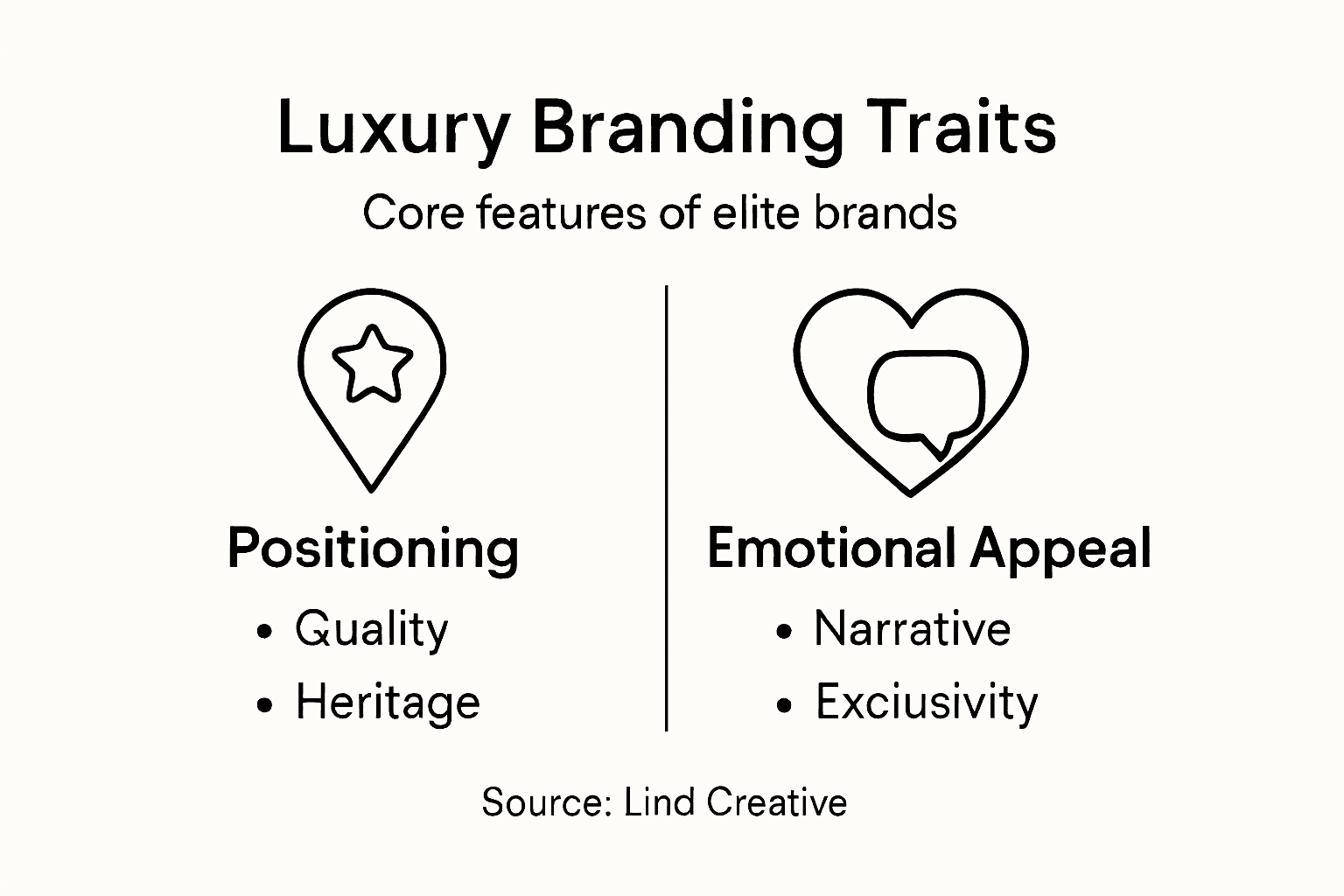
The foundational elements of luxury brand positioning include uncompromising quality, heritage, and a unique narrative that distinguishes the brand from competitors. Visual identity plays a crucial role, with brands meticulously designing every touchpoint to communicate sophistication and exclusivity. This includes carefully curated color palettes, typography, imagery, and brand messaging that create a cohesive and compelling brand experience. Brand purpose and narrative consistency emerge as critical differentiators, allowing luxury brands to forge emotional connections that extend far beyond functional product attributes.

Emotional positioning represents the most sophisticated dimension of luxury branding. Successful luxury brands do not simply sell products; they sell experiences, dreams, and membership into an exclusive world. By aligning their brand narrative with consumers’ deepest aspirations and self-perception, these brands create a powerful psychological connection that transcends traditional marketing approaches. This positioning strategy transforms purchasing decisions from rational transactions into emotional investments that reflect personal identity and social status.
Below is a comparison of essential luxury brand positioning traits and their business impact:
| Positioning Trait | Market Benefit | Brand Impact |
|---|---|---|
| Uncompromising quality | Premium pricing justification | Increased brand equity |
| Strong heritage | Emotional consumer connection | Longevity, loyalty |
| Unique narrative | Standout market identity | Memorable experiences |
| Sophisticated visual identity | Instant recognition | Perceived exclusivity |
Pro tip: Develop a brand positioning strategy that tells a compelling story, focusing on the emotional journey and lifestyle aspiration rather than just product features.
Creating exclusivity and emotional appeal
Luxury brands masterfully craft brand personalities that foster deep emotional connections with their target audiences. By creating an aura of sincere trustworthiness and unique belonging, these brands transform consumer relationships from transactional interactions into profound psychological experiences. The essence of exclusivity lies not just in product rarity, but in the sophisticated narrative that makes consumers feel uniquely understood and valued.
The strategic development of emotional appeal involves intricate storytelling and carefully curated brand experiences that transcend traditional marketing approaches. Luxury brands deliberately construct psychological territories that represent more than physical products – they become symbols of personal aspiration and social identity. This approach requires an nuanced understanding of consumer desires, creating brand narratives that speak directly to individual dreams, status aspirations, and deeper emotional needs.
Brand passion emerges as a critical driver of consumer engagement in luxury markets. By embedding authentic values and compelling storytelling, brands cultivate enthusiastic commitment that goes beyond mere product appreciation. The most successful luxury brands understand that they are selling an experience, a lifestyle, and a sense of belonging – transforming consumption into an emotional investment that reflects personal identity and social positioning.
Pro tip: Design brand experiences that create emotional resonance by understanding your audience’s deepest aspirations and crafting narratives that make them feel uniquely understood.
Common mistakes and market challenges
Luxury brands face significant challenges in maintaining their strategic brand positioning and integrity across diverse global markets. The most critical errors emerge from inconsistent messaging, overextension, and failure to preserve the core elements of exclusivity that define their brand identity. Brands that dilute their prestige by attempting to broaden market appeal often compromise the very essence of their luxury positioning.
Global market dynamics create complex challenges for luxury brands, particularly in navigating cultural nuances while maintaining a consistent brand narrative. Operational complexities in global branding demand sophisticated strategies that balance local market adaptations with the preservation of core brand values. Counterfeiting represents another significant threat, requiring brands to implement robust authentication and protection mechanisms that safeguard their reputation and perceived value.
Consumer expectations have dramatically transformed, presenting nuanced challenges for luxury brands. Modern consumers demand authenticity, sustainability, and meaningful brand experiences that go beyond traditional luxury markers. This shift requires brands to innovate continuously, demonstrating social responsibility and genuine commitment to ethical practices while simultaneously maintaining their exclusive positioning. The delicate balance involves creating meaningful connections without sacrificing the aspirational quality that defines luxury brand appeal.
Pro tip: Develop a flexible yet consistent global brand strategy that allows for cultural adaptation while maintaining your core brand identity and exclusivity.
Elevate Your Brand to True Luxury Status Today
Understanding the emotional power behind luxury branding is key to transforming your products or services into coveted lifestyle experiences. If you face challenges in creating a cohesive brand narrative that captures exclusivity and connects deeply with your audience’s aspirations, you are not alone. Pain points like inconsistent messaging, diluted brand identity, or lack of emotional storytelling can hold your business back from commanding premium positioning and fostering lasting consumer loyalty.
At Lind Creative, we specialize in bringing luxury brand positioning to life through strategy-driven design and compelling storytelling. Our expertise in Branding & Identity – Lind Creative ensures your visual language and narrative communicate sophistication and authenticity that resonate. With our comprehensive solutions blending creativity, technology, and strategic marketing, we help you craft emotionally powerful brands that justify premium pricing and inspire brand passion.
Don’t let common pitfalls undermine your luxury brand aspirations. Discover how to create immersive, aspirational experiences that stand out by partnering with Lind Creative. Visit Lind Creative now to start building your unforgettable luxury brand or explore our Graphic Design – Lind Creative services to ensure every touchpoint reflects your exclusivity. The time to captivate and convert discerning customers is now.
Frequently Asked Questions
What is luxury branding?
Luxury branding refers to a sophisticated strategy of creating aspirational lifestyle experiences that connect deeply with consumers’ desires and values, transforming products into symbols of status and identity.
Why is emotional storytelling important in luxury branding?
Emotional storytelling is crucial because it helps luxury brands create deep consumer connections that resonate with their aspirations and self-perception, turning purchasing decisions into emotional investments rather than mere transactions.
What are the different types of luxury brands in hospitality?
Different types of luxury brands in hospitality include ultra-luxury destination resorts, boutique lifestyle hotels, wellness and sustainable luxury brands, and gourmet dining establishments, each catering to distinct high-end market needs.
What challenges do luxury brands face in global markets?
Luxury brands face challenges such as inconsistent messaging, overextension, cultural navigation complexities, and rising consumer expectations for authenticity and sustainability while maintaining their core identity and exclusivity.
Recommended
- 7 Key Benefits of Branding for Luxury Hospitality Success – Lind Creative
- Digital Branding: Driving Luxury Hospitality Growth – Lind Creative
- How to Build a Brand for Luxury Hospitality Success – Lind Creative
- Why Rebrand: Elevating Luxury Hospitality Success – Lind Creative
- Cos’è un Gin Premium? I fattori che lo definiscono | Gin Niro