
Over 85 percent of American businesses believe their website could convert better, yet many overlook what truly drives users to act. In a crowded digital space where every click counts, understanding which strategies boost conversions can be the difference between growth and missed opportunities. This guide reveals practical principles any American brand can use to turn more visitors into loyal customers using proven design and psychology-backed tactics.
Table of Contents
- What Makes A Website High-Converting
- Core Elements Driving Conversion Success
- Design Strategies That Influence User Actions
- Role Of Automation In Capturing Leads
- Common Pitfalls That Undermine Conversion Rates
Key Takeaways
| Point | Details |
|---|---|
| High-Converting Websites | These sites utilize intentional design and user experience to transform visitors into customers effectively. |
| Core Conversion Elements | Understanding user psychology, social proof, and strategic design can significantly enhance website engagement. |
| Automation’s Role | Implementing intelligent automation tools streamlines lead capture and enhances customer interaction. |
| Avoiding Common Pitfalls | Addressing design clutter, slow loading speeds, and unclear value propositions is crucial for maintaining high conversion rates. |
What Makes a Website High-Converting
A high-converting website is a strategic digital platform designed to transform casual visitors into active customers through intentional design and user experience principles. More than just an online presence, these websites function as powerful conversion engines that guide potential clients toward specific actions with precision and clarity.
Successful high-converting websites share several critical characteristics. Website optimization strategies focus on creating intuitive pathways that align user expectations with business objectives. Key elements include:
- Clear and Compelling Headlines: Immediately communicate value proposition
- Strategic Calls-to-Action: Prominent, visually distinct buttons guiding user behavior
- Streamlined Navigation: Minimal clicks required to access critical information
- Trust Signals: Customer testimonials, certifications, and social proof
Website conversion hinges on understanding user psychology and removing potential friction points. Effective landing pages incorporate design principles that reduce cognitive load, making decision-making intuitive for visitors. This means presenting information hierarchically, using clean visual layouts, and ensuring mobile responsiveness.
Ultimately, a high-converting website transforms your digital real estate from a passive online brochure into an active sales representative. By implementing strategic design principles, businesses can create powerful online platforms that consistently drive meaningful engagement and generate tangible results.
Core Elements Driving Conversion Success
Successful website conversion relies on a sophisticated blend of strategic design, psychological triggers, and user-centered experiences. Understanding the core elements that motivate user action is critical for transforming website visitors into engaged customers who are compelled to take meaningful steps.
Psychological principles play a fundamental role in driving conversion success. These principles leverage human behavior patterns to create compelling digital experiences that naturally guide users toward desired actions. Key psychological elements include:
- Social Proof: Displaying testimonials, client logos, and success stories
- Scarcity: Creating urgency through limited-time offers or exclusive opportunities
- Reciprocity: Offering valuable content or resources in exchange for user engagement
- Authority: Showcasing credentials, awards, and professional certifications
Designing conversion pathways requires a nuanced approach that balances aesthetic appeal with strategic functionality. Websites must create seamless user journeys that anticipate and address potential barriers, making the conversion process feel intuitive and effortless. This means developing clear navigation structures, minimizing form complexity, and providing transparent value propositions that immediately communicate potential benefits.

Ultimately, high-converting websites transform complex psychological insights into elegant, user-friendly design. By understanding and implementing these core conversion elements, businesses can create digital platforms that not only attract visitors but effectively guide them toward meaningful interactions and sustained engagement.
Design Strategies That Influence User Actions
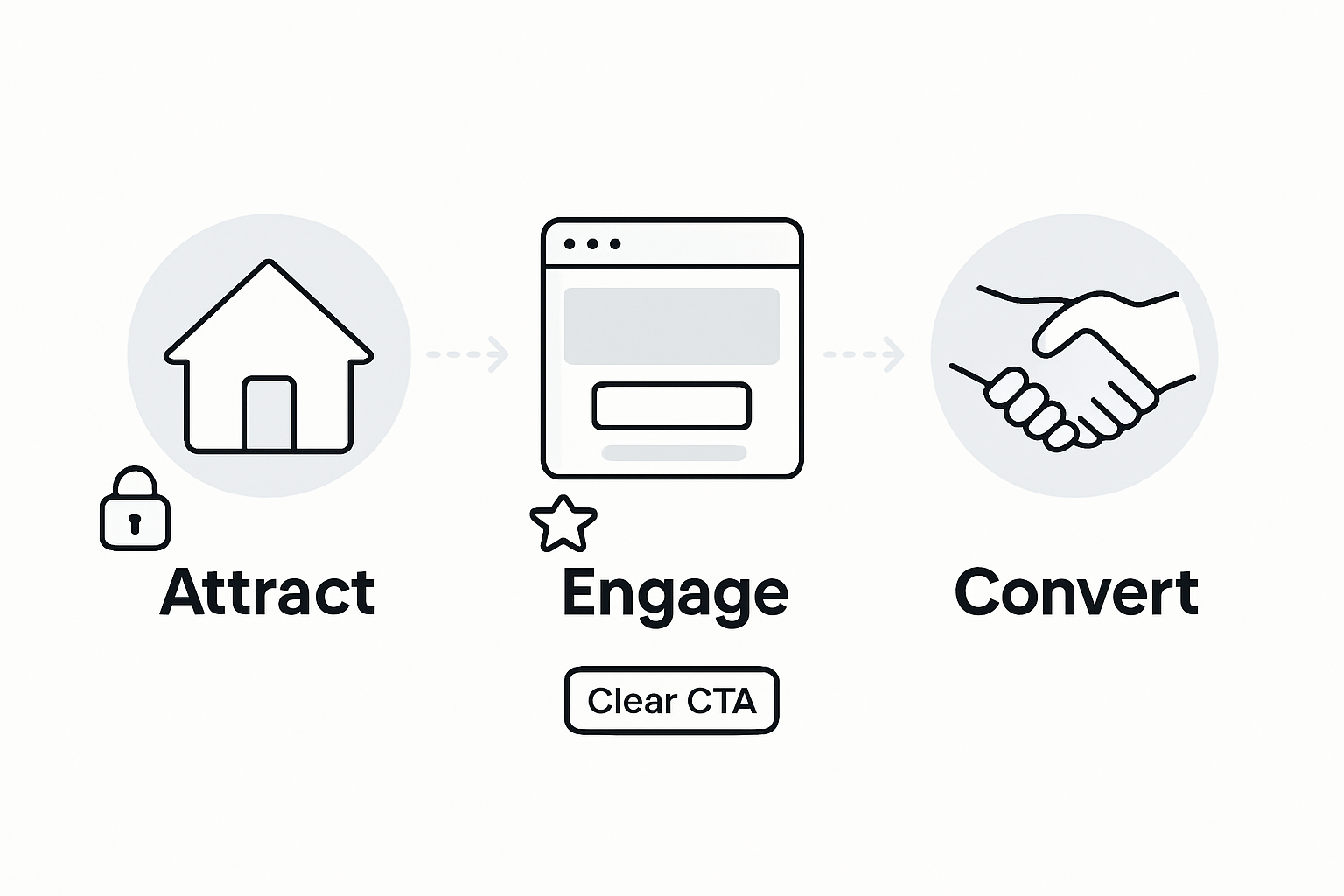
Designing a website that effectively influences user actions requires a strategic approach that goes beyond aesthetic appeal. Successful digital experiences are meticulously crafted to guide visitors through intentional pathways that feel natural and compelling.
Key design elements transform websites from passive information platforms into active conversion engines. These strategic components work together to create intuitive user experiences that anticipate and address visitor needs. Critical design strategies include:
- Personalization: Tailoring content and experiences to individual user preferences
- Storytelling: Creating narrative frameworks that emotionally connect with visitors
- Visual Hierarchy: Strategically organizing information to guide user attention
- Compelling Calls-to-Action: Designing clickable elements that feel irresistible
Website security and navigation play pivotal roles in building user trust and facilitating seamless interactions. Effective design approaches prioritize transparent navigation structures that help users intuitively understand how to move through the site. This means creating clear menu systems, reducing cognitive load, and providing predictable interaction patterns that make users feel comfortable and confident.
Ultimately, successful design strategies are about creating digital experiences that feel human-centered and purposeful. By understanding user psychology, implementing strategic visual techniques, and prioritizing intuitive interactions, businesses can develop websites that not only attract attention but actively guide visitors toward meaningful engagement and conversion.
Role of Automation in Capturing Leads
Automation has transformed digital lead capture from a manual, time-consuming process into a sophisticated, intelligent system that anticipates and responds to potential customer interactions. Modern businesses recognize that strategic automation is no longer optional but essential for efficiently converting website visitors into qualified leads.
Automation tools have revolutionized how businesses engage potential customers. These intelligent systems create seamless, personalized experiences that adapt in real-time to user behavior. Key automated lead capture strategies include:
- Intelligent Chatbots: Providing instant, personalized customer support
- Behavioral Tracking: Monitoring user interactions to customize content
- Dynamic Email Sequencing: Sending targeted communications based on specific user actions
- Personalized Content Recommendations: Delivering relevant information automatically
High-performing digital platforms leverage automation to create predictive, responsive user experiences. This means implementing sophisticated tracking mechanisms that transform raw visitor data into actionable insights, enabling businesses to understand and anticipate customer needs before traditional engagement methods would allow.
The future of lead capture lies in intelligent, context-aware automation that feels natural and supportive. By integrating advanced technologies that understand user intent, businesses can create digital experiences that not only capture leads but nurture them through personalized, timely interactions that feel genuine and responsive.
Common Pitfalls That Undermine Conversion Rates
Website conversion is a delicate ecosystem where seemingly minor design and functional missteps can dramatically reduce user engagement and potential sales. Understanding these critical vulnerabilities allows businesses to proactively protect their digital platforms from performance-limiting mistakes.
Website optimization strategies reveal several fundamental pitfalls that consistently compromise conversion potential. Common critical errors include:
- Cluttered Design: Overwhelming users with excessive information and visual noise
- Slow Page Loading: Creating friction through extended wait times
- Unclear Value Proposition: Failing to immediately communicate unique business benefits
- Complex Navigation: Making it difficult for users to find essential information
- Weak Call-to-Action: Using passive, unconvincing action prompts
Mobile responsiveness represents another significant conversion challenge. Websites that do not seamlessly adapt across different device types automatically alienate substantial audience segments. This means ensuring visual consistency, maintaining functional interactions, and preserving content readability regardless of screen size.
Successful digital platforms treat conversion optimization as an ongoing process of refinement. By continuously analyzing user behavior, testing design elements, and eliminating friction points, businesses can create websites that not only attract visitors but systematically guide them toward meaningful interactions and long-term engagement.
Unlock the Power of a High-Converting Website for Real Growth
Many businesses struggle with turning website visitors into loyal customers because their sites lack clear value propositions, strategic calls-to-action, or user-friendly navigation. This article highlights the need for thoughtful design and psychology-based strategies that not only attract attention but actively guide users toward meaningful actions. If you recognize these conversion challenges and want to transform your website into a powerful growth engine Lind Creative has the solutions you need.
With expertise in Web Design – Lind Creative and proven Digital Marketing – Lind Creative strategies we help you build websites focused on clarity trust and seamless user journeys. 
Don’t let slow pages unclear messaging or poor automation hold your business back Discover how our full-service digital agency at https://lindcreative.com blends creativity technology and strategy to create high-converting websites that perform and grow your bottom line Contact us today to start turning visitors into customers and get measurable results now
Frequently Asked Questions
What is a high-converting website?
A high-converting website is a digital platform designed to convert visitors into customers through strategic design and user experience principles that create a seamless and engaging journey for users.
What key elements contribute to website conversions?
Key elements that enhance website conversions include clear and compelling headlines, strategic calls-to-action, streamlined navigation, and trust signals such as testimonials and certifications.
How does design influence user actions on a website?
Design influences user actions by creating intuitive pathways that guide visitors through their journey. This includes personalized content, storytelling, visual hierarchy, and compelling calls-to-action that make navigation feel natural and engaging.
What role does automation play in lead capture for websites?
Automation plays a crucial role in lead capture by providing personalized experiences through tools like chatbots, behavioral tracking, targeted email sequencing, and tailored content recommendations that adapt to user behavior in real time.
Recommended
- The Essential Guide to Website Role in Business Growth – Lind Creative
- Complete Guide to Website Optimization Strategies – Lind Creative
- 7 Essential Business Website Must-Haves for Strong Growth – Lind Creative
- 7 Essential Website Design Checklist Steps for Business Growth – Lind Creative
- Understanding the Importance of Customer Communication – My WordPress