
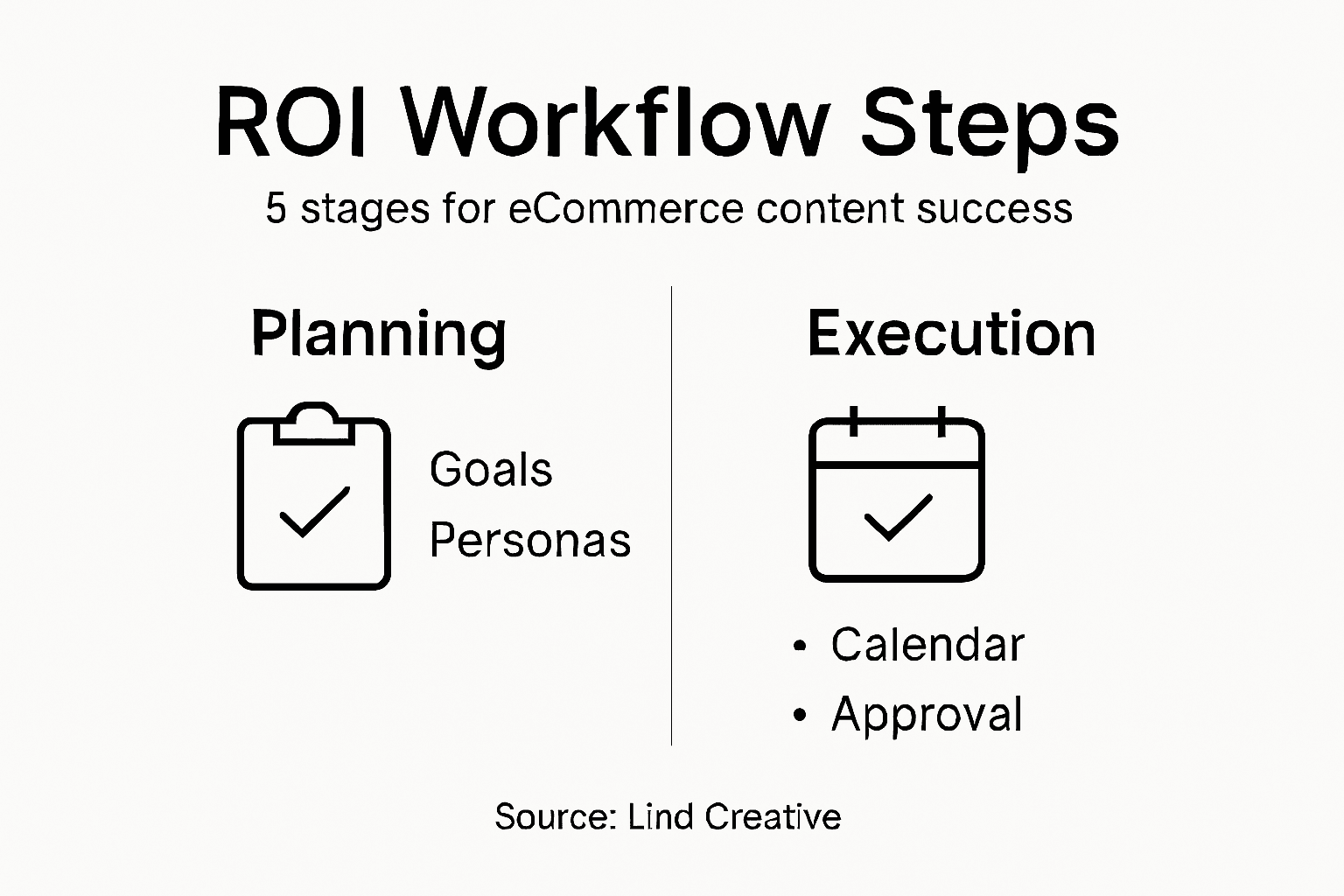
Every American eCommerce business knows the struggle of juggling multiple content priorities while keeping ROI front and center. Pinpointing clear objectives and truly understanding your audience turns chaotic output into targeted buyer personas and measurable strategies. When you align each message with defined goals and customer data, your workflow gets faster, your team collaborates better, and your marketing efforts start producing stronger results.
Table of Contents
- Step 1: Define Content Goals And Target Audience
- Step 2: Develop An Actionable Content Calendar
- Step 3: Assign Tasks And Streamline Collaboration
- Step 4: Produce, Optimize, And Approve Content
- Step 5: Publish Content And Analyze Performance
Quick Summary
| Key Point | Explanation |
|---|---|
| 1. Define specific content goals | Establish clear, measurable objectives that align with overall business strategies to enhance ROI through content. |
| 2. Create detailed buyer personas | Develop comprehensive profiles that capture demographics, interests, and pain points for more effective audience targeting. |
| 3. Implement a structured content calendar | Use a systematic approach to plan and organize content delivery across channels for consistent messaging. |
| 4. Foster effective collaboration | Assign clear roles and use project management tools to enhance team cooperation and streamline content creation. |
| 5. Analyze performance metrics regularly | Track key performance indicators and conduct monthly reviews for continuous improvement of content strategy. |
Step 1: Define content goals and target audience
Defining precise content goals and understanding your target audience are foundational steps for creating an effective eCommerce content strategy that drives real ROI. By developing clear objectives and deeply understanding who you’re creating content for, you’ll craft messaging that resonates and converts.
To start, you’ll want to develop comprehensive buyer personas that go beyond basic demographics. Developing targeted buyer personas requires analyzing customer data like age, occupation, lifestyle, and purchase behaviors. Break down your audience research into several key components:
- Demographic information (age, gender, income)
- Professional background and interests
- Online behaviors and content consumption preferences
- Specific pain points and challenges
- Purchasing motivations and decision-making patterns
Next, establish concrete content goals that align with your broader business objectives. These might include:
The table below highlights how each content goal directly benefits eCommerce businesses:
| Content Goal | Business Benefit | Key Success Metric |
|---|---|---|
| Generate sales leads | Expands potential customer base | Qualified leads count |
| Increase email subscribers | Grows marketing audience | New subscribers per month |
| Improve social engagement | Boosts brand awareness | Social interactions growth |
| Drive product sales | Increases revenue | Online sales volume |
| Build brand authority | Enhances credibility | Share of voice in niche |
- Generating qualified sales leads
- Increasing email list subscribers
- Improving social media engagement
- Driving direct product sales
- Building brand authority in your niche
Your content goals should be specific, measurable, and directly tied to revenue generation.
Mapping content goals to specific audience segments ensures you’re creating targeted, high-conversion materials. By understanding exactly who you’re speaking to and what they need, you can develop content that feels personalized and compelling.

Pro tip: Regularly update your buyer personas every 6-12 months to ensure they reflect current market dynamics and customer preferences.
Step 2: Develop an actionable content calendar
Creating an actionable content calendar is crucial for maintaining a consistent and strategic approach to your eCommerce content marketing. This systematic planning tool will help you map out content across multiple channels, ensuring you’re delivering the right message to the right audience at the right time.
Developing a comprehensive content calendar involves several key strategic components that go beyond simple scheduling. Your content calendar should include:
- Specific content topics and themes
- Target keywords and SEO considerations
- Planned publication dates
- Content types (blog posts, social media, emails)
- Assigned content creators
- Alignment with marketing campaigns
Structure your content calendar with these essential steps:
- Identify key content types for your eCommerce business
- Map content to buyer personas and journey stages
- Balance timely and evergreen content
- Align content with seasonal trends and business goals
- Create flexibility for reactive content opportunities
A well-designed content calendar transforms random content creation into a strategic marketing tool.
To maximize effectiveness, leverage both human creativity and technological tools. While AI can help generate initial content suggestions, human insight ensures the material truly resonates with your specific audience and brand voice.
Pro tip: Use collaborative spreadsheet tools or dedicated content management platforms to create a dynamic, shareable content calendar that allows real-time updates and team coordination.
Step 3: Assign tasks and streamline collaboration
Transforming your content creation workflow into a well-oiled machine requires strategic task assignment and intentional collaboration. Your goal is to create a seamless process where team members understand their responsibilities and can work together efficiently.
Effective team collaboration depends on clear communication, defined roles, and a cooperative team culture. Break down your content creation process into specific, manageable tasks that align with each team member’s strengths:
- Identify individual team member skills and expertise
- Match tasks to each person’s core competencies
- Create clear accountability mechanisms
- Establish realistic deadlines
- Define specific output expectations
- Set up regular check-in points
Implement your collaboration strategy through these key steps:
- Document each team member’s specific role
- Use project management tools for tracking
- Establish transparent communication channels
- Create shared performance metrics
- Develop a feedback-rich environment
Successful collaboration transforms individual contributors into a unified team.
To maximize productivity, leverage digital collaboration platforms that allow real-time communication and transparent task management. These tools help eliminate communication silos and ensure everyone remains aligned with project goals.
Pro tip: Rotate collaboration responsibilities periodically to prevent burnout and encourage cross-functional understanding of your content creation workflow.
Step 4: Produce, optimize, and approve content
The final stage of your content creation workflow transforms your strategic planning into compelling, high-performing digital assets that drive eCommerce success. Your goal is to create content that not only looks great but delivers measurable results for your business.
Content production requires strategic optimization that goes far beyond basic writing. Develop a rigorous process that ensures every piece of content meets your brand’s quality standards and audience expectations:
- Align content with predefined buyer personas
- Maintain consistent brand voice and messaging
- Implement robust SEO optimization techniques
- Ensure technical accuracy and credibility
- Create multiple content formats
- Integrate relevant internal and external links
Execute your content production workflow through these critical stages:
- Draft initial content with clear purpose
- Conduct comprehensive keyword research
- Optimize for search engine visibility
- Perform thorough editorial review
- Validate against brand guidelines
High-quality content is the bridge between audience interest and business conversion.
Each piece of content should undergo a meticulous approval process that checks for accuracy, brand alignment, and strategic relevance. This ensures your digital assets are not just publishable, but truly exceptional.
This table summarizes the key content approval stages and their primary objectives:
| Approval Stage | Main Objective | Responsible Role |
|---|---|---|
| Editorial review | Ensure accuracy & clarity | Editor |
| SEO check | Maximize search visibility | SEO specialist |
| Brand guideline validation | Maintain consistent voice | Brand manager |
| Final publish approval | Confirm readiness | Project lead |
Pro tip: Create a standardized content scorecard that objectively measures each piece against predefined quality and performance metrics.
Step 5: Publish content and analyze performance
The final stage of your content creation workflow transforms strategic efforts into measurable insights that drive continuous improvement and ROI. Publishing is more than simply releasing content – it’s about strategic distribution and comprehensive performance tracking.
Analyzing content performance requires setting clear key performance indicators and implementing robust tracking mechanisms. Your performance analysis should encompass multiple dimensions of content effectiveness:
- Engagement metrics (views, time on page)
- Conversion rates
- Social media sharing
- Audience interaction levels
- Revenue generated from content
- Search engine rankings
Develop a systematic approach to content performance analysis:
- Select appropriate performance metrics
- Set up comprehensive tracking tools
- Establish baseline performance benchmarks
- Monitor real-time content performance
- Conduct periodic in-depth reviews
Data-driven insights transform content from a cost center to a revenue generator.
Utilize advanced analytics dashboards that provide comprehensive, visual representations of your content’s impact. These tools help you understand not just what happened, but why it happened and how to improve future content strategies.
Pro tip: Create a monthly performance review process that includes both quantitative metrics and qualitative feedback to gain holistic insights into your content’s effectiveness.
Elevate Your eCommerce Content Strategy with Lind Creative
Struggling to transform your eCommerce content creation workflow into a reliable engine for ROI growth? This article highlights the challenges of defining clear content goals, developing actionable calendars, and streamlining collaboration that often hold businesses back from driving real sales and brand authority. Key pain points like mapping buyer personas, maintaining consistent brand messaging, and analyzing content performance all require expert handling to unlock true marketing success.
At Lind Creative, we specialize in helping businesses overcome these challenges through our Branding & Identity – Lind Creative solutions and strategy-driven marketing systems.

Ready to move from planning to measurable results? Visit Lind Creative to see how our Growth Engine automates your lead capture, funnels, email, and ads. Explore actionable tips in our Resources – Lind Creative to keep your content strategy fresh and aligned with Industry Trends – Lind Creative. Don’t wait for success to find you. Start building high-converting content workflows today for a stronger, smarter eCommerce brand.
Frequently Asked Questions
How do I define clear content goals for my eCommerce business?
To define clear content goals, start by aligning them with your overall business objectives. Focus on specific outcomes, such as generating leads or improving social engagement, and ensure these goals are measurable.
What key components should I include in my buyer personas?
Your buyer personas should include demographic information, professional backgrounds, online behaviors, pain points, and purchasing motivations. Identify at least three distinct personas to better tailor your content strategy and increase conversion rates.
How can I create a content calendar that enhances my eCommerce strategy?
To create an effective content calendar, list specific content topics, define target keywords, and set publication dates. Include various content types and ensure the calendar aligns with marketing campaigns to keep your messaging consistent and timely.
What steps are involved in producing high-quality eCommerce content?
Producing high-quality content involves drafting with a clear purpose, conducting keyword research, and optimizing for search visibility. Implement an editorial review process to ensure accuracy and alignment with your brand’s voice before publication.
How do I analyze content performance effectively?
Analyzing content performance requires setting key performance indicators, tracking engagement metrics, and monitoring conversion rates. Conduct monthly reviews to identify trends and make adjustments as needed to improve future content strategies.
Recommended
- How to Optimize Website Conversions for eCommerce Success – Lind Creative
- Build a High-Converting Digital Marketing Workflow – Lind Creative
- How to Design Ecommerce Homepage for Conversions – Lind Creative
- 7 Essential Ecommerce Website Design Tips for Growth – Lind Creative
- Sustainable Fashion Workflow: Transforming Ethical Accessories – The Cork Store