
Every established eCommerce business faces mounting pressure to keep up with rapidly shifting customer expectations and advancing technology. As digital ecosystems grow more complex, relying on outdated strategies can leave even well-known brands behind. This article explains how a bold, adaptable digital strategy—one centered on technology, automation, and customer insight—can set the foundation for higher conversion rates and automated lead generation, putting your American eCommerce brand ahead of the competition.
Table of Contents
- Defining Digital Strategy for eCommerce Success
- Types of Digital Strategy and Key Distinctions
- Core Elements: Technology, Automation, and Customer Focus
- Building and Executing a Digital Strategy Roadmap
- Common Mistakes and How to Avoid Them
- Measuring ROI and Long-Term Impact
Key Takeaways
| Point | Details |
|---|---|
| Develop a Flexible Digital Strategy | A dynamic approach allows businesses to adapt to emerging technologies and changing consumer expectations effectively. |
| Integrate Across Departments | Breaking down silos in technology, marketing, and operations enhances organizational alignment and execution of digital strategies. |
| Focus on Customer Experience | Tailoring digital interactions to create seamless and personalized experiences increases customer retention and loyalty. |
| Measure ROI Beyond Finances | Using diverse KPIs helps to assess the multifaceted impact of digital strategies on business growth and operational efficiency. |
Defining Digital Strategy for eCommerce Success
A digital strategy for eCommerce represents a comprehensive roadmap that guides online businesses in leveraging technology, data, and digital channels to drive growth, enhance customer experiences, and optimize operational efficiency. At its core, this strategy transforms how companies approach online selling, moving beyond simple transactional platforms to creating dynamic, intelligent ecosystems that anticipate and respond to customer needs.
The landscape of eCommerce strategy has evolved dramatically, driven by technological advancements and changing consumer behaviors. Digital marketing infrastructure now requires sophisticated approaches that integrate multiple touchpoints, from search engine optimization to personalized recommendation systems. Successful digital strategies must encompass several critical components:
- Customer Journey Mapping: Understanding and designing seamless interactions across digital platforms
- Data Analytics: Utilizing advanced insights to personalize experiences and predict consumer behavior
- Technological Integration: Implementing robust platforms that support scalable, adaptive commerce solutions
- Omnichannel Engagement: Creating consistent experiences across web, mobile, and social channels
Effective digital strategies also recognize that technology is not just a tool, but a fundamental driver of competitive advantage. Information discovery algorithms now play a crucial role in connecting consumers with precisely targeted products, transforming how businesses approach online retail.
Pro tip: Develop a flexible digital strategy that can quickly adapt to emerging technologies and changing consumer expectations.
Types of Digital Strategy and Key Distinctions
Digital strategies are not one-size-fits-all solutions, but rather nuanced frameworks tailored to specific business objectives and technological capabilities. Digital platform governance reveals multiple strategic approaches that organizations can adopt to drive digital transformation and competitive advantage.
The primary types of digital strategies can be categorized into distinct yet interconnected domains:
- Customer Experience Strategy: Focusing on creating seamless, personalized digital interactions
- Operational Efficiency Strategy: Leveraging technology to streamline internal processes and reduce costs
- Innovation and Growth Strategy: Using digital platforms to develop new revenue streams and business models
- Data-Driven Strategy: Utilizing advanced analytics and machine learning to inform decision-making
Technological Transformation represents a critical distinction in digital strategy. Digitalization mechanisms demonstrate that successful strategies go beyond mere technological implementation, requiring deep organizational change and cultural adaptation. This involves not just adopting new technologies, but fundamentally reimagining how businesses operate in a digital ecosystem.
Understanding these strategic distinctions allows businesses to develop more targeted, effective approaches that align technological capabilities with specific business goals and market opportunities.
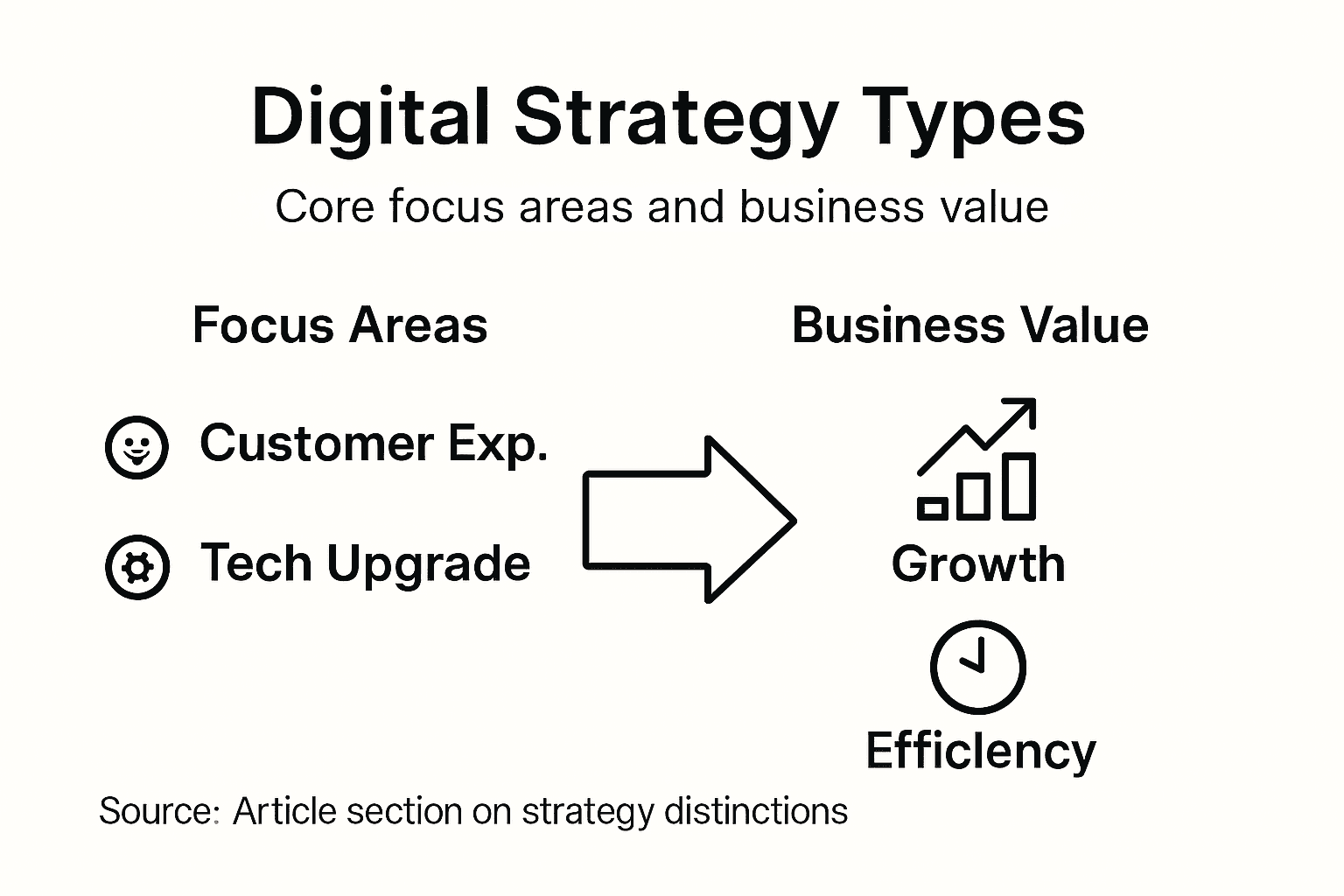
Here’s a comparison of the main types of digital strategy and the value each brings:
| Strategy Type | Primary Focus | Key Business Value |
|---|---|---|
| Customer Experience | Seamless digital interactions | Higher retention and loyalty |
| Operational Efficiency | Streamlined processes | Reduced costs, faster execution |
| Innovation & Growth | New models and revenue streams | Competitive differentiation |
| Data-Driven | Advanced analytics and insights | Better decisions, agile response |
Pro tip: Regularly audit and reassess your digital strategy to ensure alignment with emerging technologies and shifting market dynamics.
Core Elements: Technology, Automation, and Customer Focus
Modern eCommerce strategies are fundamentally built upon three interconnected pillars: advanced technology, intelligent automation, and a laser-focused approach to customer experience. AI-driven transformation strategies demonstrate how these elements work synergistically to create powerful digital ecosystems that adapt and respond to market dynamics.
The core technological elements driving digital strategy include:
- Artificial Intelligence: Enabling predictive analytics and personalized experiences
- Machine Learning: Creating adaptive systems that continuously improve performance
- Cloud Computing: Providing scalable infrastructure for seamless operations
- Advanced Data Integration: Connecting disparate systems for holistic insights
Automation represents the critical mechanism that transforms technological potential into operational excellence. By streamlining processes and reducing manual interventions, businesses can achieve unprecedented levels of efficiency. Customer experience technologies play a pivotal role in this transformation, shifting from transactional interactions to meaningful, personalized engagement.

Successful implementation requires a holistic approach that balances technological capabilities with human-centric design, ensuring that automation enhances rather than replaces human creativity and strategic thinking.
Pro tip: Continuously map customer journeys and use technology to remove friction points, not create additional complexity.
Building and Executing a Digital Strategy Roadmap
Developing a comprehensive digital strategy roadmap requires a systematic approach that transforms organizational vision into actionable technological initiatives. Digital transformation frameworks emphasize the critical importance of creating a structured plan that aligns technological capabilities with strategic business objectives.
A robust digital strategy roadmap typically encompasses the following key components:
- Strategic Alignment: Defining clear business goals and technology objectives
- Current State Assessment: Evaluating existing technological infrastructure and capabilities
- Gap Analysis: Identifying technological limitations and opportunities for improvement
- Resource Allocation: Determining budget, talent, and technological investments
- Implementation Timeline: Creating phased rollout strategies with measurable milestones
Execution Methodology demands a dynamic and adaptive approach. Strategic technology planning highlights the need for continuous monitoring, performance evaluation, and strategic recalibration. Successful implementation requires cross-functional collaboration, breaking down silos between technology, marketing, sales, and operations teams.
The roadmap should remain flexible, allowing for rapid adjustments in response to emerging technologies, market shifts, and evolving customer expectations. Regular review and iterative refinement are crucial to maintaining strategic relevance and competitive advantage.
Pro tip: Create a living document that allows for quarterly strategic reviews and real-time adaptations of your digital strategy.
Common Mistakes and How to Avoid Them
Digital strategy implementation is fraught with potential pitfalls that can derail even the most well-intentioned initiatives. Strategic leadership challenges reveal that many organizations struggle with fundamental approach errors that can compromise their digital transformation efforts.
The most critical mistakes in digital strategy development include:
- Siloed Thinking: Treating technology, marketing, and operations as separate domains
- Lack of Clear Ownership: Failing to establish definitive leadership and accountability
- Rigid Implementation: Creating inflexible strategies that cannot adapt to market changes
- Overlooking Cultural Transformation: Neglecting the human aspects of digital change
- Insufficient Data Integration: Failing to create comprehensive, interconnected data ecosystems
Organizational Alignment represents the most challenging aspect of digital strategy execution. Digital strategy integration requires breaking down traditional departmental barriers and creating a unified approach that aligns technological capabilities with overarching business objectives. This means moving beyond technical implementation to create a holistic transformation that touches every aspect of the organization.
Successful digital strategies demand continuous learning, agile methodologies, and a willingness to experiment, pivot, and reimagine traditional business processes. Leaders must cultivate a culture of innovation that embraces technological change as a fundamental driver of business growth.
Pro tip: Conduct quarterly cross-departmental workshops to ensure ongoing alignment and break down organizational silos.
Measuring ROI and Long-Term Impact
Effective digital strategy assessment requires a comprehensive approach that goes beyond traditional financial metrics. eCommerce performance statistics provide critical insights into understanding the multifaceted impact of digital investments across various business dimensions.
Key performance indicators for measuring digital strategy ROI include:
- Revenue Growth: Tracking direct and indirect revenue generated through digital channels
- Customer Acquisition Cost: Analyzing the efficiency of digital marketing and sales strategies
- Operational Efficiency: Measuring productivity gains from technological implementations
- Customer Engagement Metrics: Assessing improvements in user experience and interaction
- Market Expansion: Evaluating new market penetration and growth opportunities
Long-term Impact Assessment involves a holistic view that considers both quantitative and qualitative transformations. Digital strategies fundamentally reshape organizational capabilities, creating value that extends far beyond immediate financial returns. This requires developing nuanced measurement frameworks that capture technological maturity, cultural adaptation, and strategic agility.
Below is a summary of digital strategy KPIs and what they reveal about success:
| KPI | What It Measures | Strategic Insight |
|---|---|---|
| Revenue Growth | Digital sales increase | Effectiveness of digital channels |
| Customer Acquisition Cost | Cost of gaining new customers | Efficiency of marketing spend |
| Operational Efficiency | Productivity improvements | Impact of technical investments |
| Engagement Metrics | User interaction quality | Customer experience improvements |
| Market Expansion | New market reach | Success in extending brand |
Successful organizations treat ROI measurement as a dynamic, iterative process. They continuously refine their measurement approaches, recognizing that digital transformation is an ongoing journey of technological and organizational evolution.
Pro tip: Develop a balanced scorecard that integrates financial, customer, internal process, and learning perspectives to comprehensively measure digital strategy effectiveness.
Empower Your eCommerce Growth with a Winning Digital Strategy
Struggling to translate your digital strategy into real eCommerce growth? This article highlights common challenges such as siloed thinking, lack of clear ownership, and inflexible implementation that stall automation and customer engagement. If you want to transform your business using data-driven insights, automation, and seamless customer experience technologies then you need a partner who understands how to align technology with your unique goals.
Unlock measurable results with Digital Marketing – Lind Creative where our strategy-driven design and marketing solutions help businesses build high-converting websites and deploy automated growth engines.

Take the next step toward scalable success today by visiting Lind Creative. Get expert guidance on creating a flexible, innovative digital roadmap that delivers real ROI, breaks down organizational silos, and drives continuous growth. Don’t wait for digital disruption to leave you behind. Contact us now to start growing smarter and faster.
Frequently Asked Questions
What is a digital strategy in eCommerce?
A digital strategy in eCommerce is a comprehensive roadmap that guides businesses in leveraging technology, data, and digital channels to drive growth, optimize operational efficiency, and enhance customer experiences.
How can data analytics improve eCommerce success?
Data analytics helps businesses personalize customer experiences, predict consumer behavior, and make informed decisions by utilizing insights gathered from customer interactions and transactions.
What are the key components of an effective digital strategy?
Key components of an effective digital strategy include customer journey mapping, data analytics, technological integration, and omnichannel engagement, all of which help create a seamless and engaging online shopping experience.
Why is it important to continuously assess a digital strategy?
Continuously assessing a digital strategy is crucial to ensure it remains relevant and effective in adapting to emerging technologies, market shifts, and changing customer expectations, allowing businesses to maintain a competitive edge.
Recommended
- Growth Marketing for eCommerce – Driving Scalable ROI – Lind Creative
- How to Optimize Website Conversions for eCommerce Success – Lind Creative
- 7 Essential Ecommerce Website Design Tips for Growth – Lind Creative
- Remarketing Strategies: Boosting eCommerce Recovery – Lind Creative
- 7 slimme tips voor efficiënte e-commerce verzending – Send with Parcel International