
Over eighty percent of American online shoppers expect a homepage to reflect a brand’s unique identity within seconds. In the world of mid-sized luxury lifestyle brands, a cluttered or generic Shopify homepage can make even loyal customers hesitate. Discover how clear strategic objectives and bold brand positioning turn your digital front door into an experience that builds trust and drives higher conversions.
Table of Contents
- Step 1: Define Strategic Objectives And Brand Positioning
- Step 2: Plan Homepage Structure And User Flow
- Step 3: Select Visual Elements And Craft Brand Messaging
- Step 4: Implement High-Impact Conversion Features
- Step 5: Test Homepage Usability And Measure Performance
Quick Summary
| Key Takeaway | Explanation |
|---|---|
| 1. Define Strategic Objectives | Establish who you serve and what problem you solve. Align these objectives with your brand’s visual storytelling. |
| 2. Plan Homepage Structure | Organize your homepage into strategic zones that guide users naturally from entry to purchase. |
| 3. Select Visual Elements | Use color psychology and typography to reflect your brand identity while ensuring high-quality imagery for products. |
| 4. Implement Conversion Features | Integrate prominent call-to-actions and trust indicators to build user confidence and drive conversions. |
| 5. Conduct Usability Testing | Regularly measure user experience through various methods to identify optimization opportunities and enhance engagement. |
Step 1: Define strategic objectives and brand positioning
Successfully designing an ecommerce homepage starts with crystal clear strategic objectives and a robust brand positioning framework. Your homepage represents the digital front door of your brand experience, requiring precise alignment between business goals and visual storytelling.
To craft a strategic approach, you need to understand your unique value proposition and how it translates visually. This means diving deep into brand positioning strategies that drive digital marketplace success. Start by defining three core strategic objectives: who you serve, what problem you solve, and why customers should choose you over competitors. Consider your target audience demographics, purchasing behaviors, and emotional triggers.
Your brand positioning must communicate these objectives instantly through visual hierarchy, color psychology, and messaging that resonates with your ideal customer. This involves selecting imagery, typography, and design elements that reflect your brand’s personality while guiding users toward key conversion points. Break down your homepage design into strategic zones highlighting your unique selling propositions: hero section, product categories, social proof, and call to action areas.
Here’s how key homepage strategic zones serve distinct business goals:
| Zone Name | Primary Purpose | Business Impact |
|---|---|---|
| Hero Section | Introduce brand, capture attention | Boosts initial engagement |
| Product Categories | Organize offerings visually | Improves product discoverability |
| Social Proof | Display reviews and trust signs | Builds user confidence |
| Call to Action | Direct visitors to conversion | Increases sales and sign-ups |
Pro tip: Conduct a competitive analysis of top ecommerce sites in your industry to understand how leading brands visually communicate their strategic positioning and objectives.
Step 2: Plan homepage structure and user flow
Creating an effective ecommerce homepage requires strategic planning of your site’s structure and user navigation pathways. Your goal is to design an intuitive journey that guides potential customers seamlessly from initial landing to final purchase.
Usability guidelines for ecommerce website design emphasize the critical importance of creating clear, accessible page elements that minimize user friction. Start by mapping out your homepage into distinct strategic zones: hero section, featured products, category navigation, social proof, and prominent call to action areas. Each zone should serve a specific purpose in guiding users toward conversion. Consider implementing a logical visual hierarchy that draws the eye naturally through important information touchpoints, using size, color, and placement to direct user attention.
Your homepage structure must balance aesthetic appeal with functional navigation. This means creating comprehensive navigation best practices that allow users to find products quickly and intuitively. Implement a clear, descriptive main navigation menu that categorizes products logically, use engaging visual cues like icons and imagery to help users understand each section, and ensure that critical information is accessible within two to three clicks from the homepage.

Pro tip: Conduct user testing with heat mapping and screen recording tools to understand exactly how visitors interact with your homepage structure and identify potential navigation obstacles.
Step 3: Select visual elements and craft brand messaging
Crafting a compelling visual narrative for your ecommerce homepage requires intentional design choices that communicate your brand’s unique personality and value proposition. Your visual elements are the first language of communication with potential customers.
Comprehensive UI and UX design research demonstrates how strategic visual choices profoundly impact user engagement and retention. Select color palettes that align with your brand identity, using psychology to evoke specific emotional responses. For instance, blues communicate trust and professionalism, while warm oranges suggest energy and excitement. Choose typography that reflects your brand’s character—sleek sans serif fonts for modern brands, elegant serif fonts for luxury offerings. Integrate high quality product imagery that showcases items from multiple angles, ensuring visual clarity and enabling customers to examine details closely.
Your brand messaging must work harmoniously with visual design, creating a cohesive narrative that guides users through their purchasing journey. Visual marketing research reveals that tailored imagery and text can significantly influence consumer perceptions across different product categories. Craft concise, powerful headlines that communicate unique value propositions, use imagery that represents your target demographic, and ensure that every visual element supports your core brand story. The essential guide to visuals in branding can provide additional insights into creating impactful visual communication.
Pro tip: Create a brand style guide that documents your visual language, ensuring consistent messaging and design across all homepage elements.
Step 4: Implement high-impact conversion features
Transforming your ecommerce homepage into a conversion powerhouse requires strategic implementation of features that guide users seamlessly from initial interest to final purchase. Your goal is to create an intuitive, trust-building environment that reduces friction and encourages immediate action.
Comprehensive research on ecommerce site design features reveals specific elements that dramatically improve conversion rates. Prioritize prominent, compelling call-to-action buttons that stand out visually and use action-oriented language like “Shop Now” or “Get Your Deal.” Integrate trust indicators such as security badges, customer reviews, and satisfaction guarantees near critical conversion points. Implement a streamlined search function that allows quick product discovery, and include social proof elements like customer testimonials and real-time purchase notifications to build credibility.
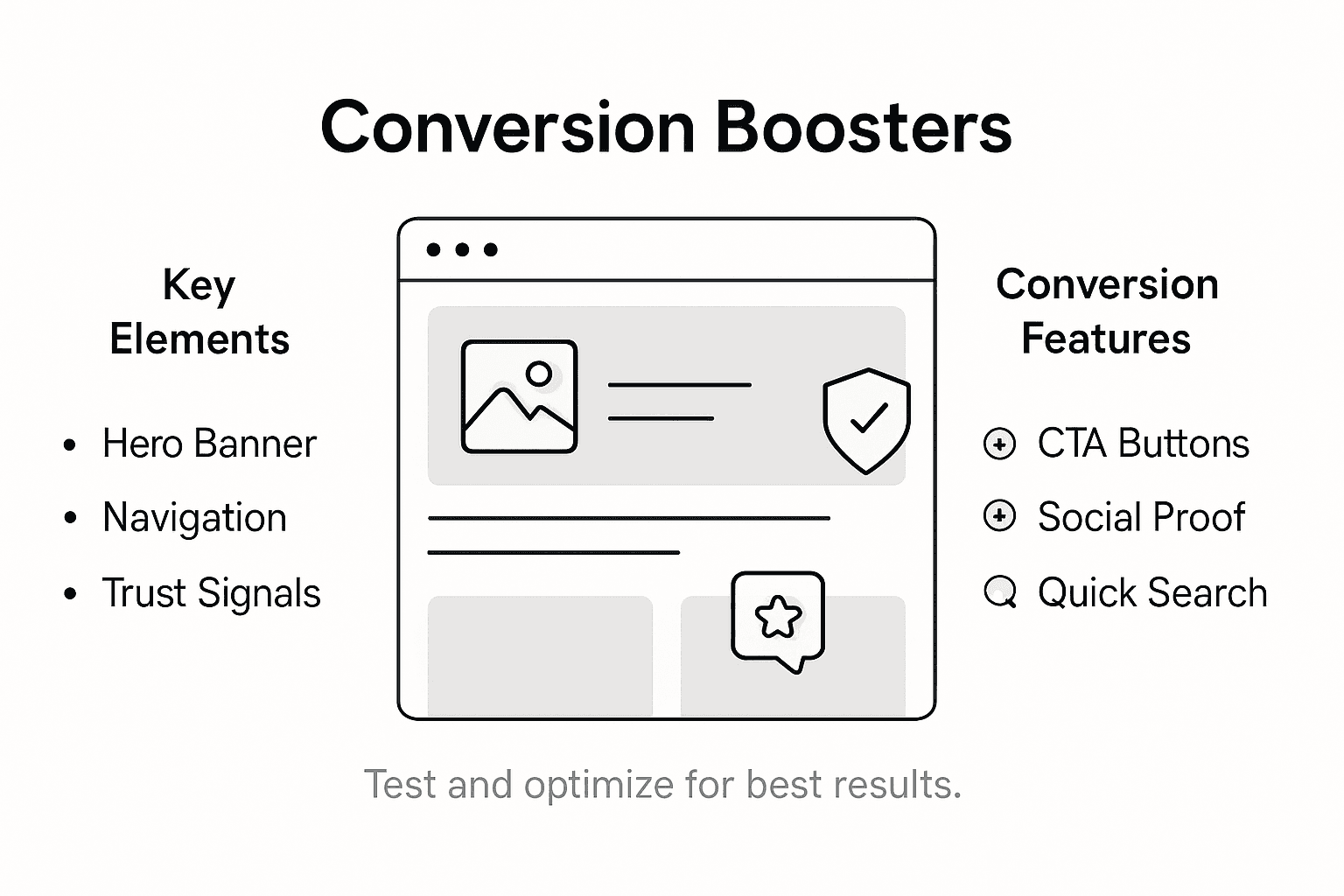
User journey optimization requires careful design of conversion touchpoints. Digital retail conversion frameworks recommend creating clear value propositions that immediately communicate unique benefits. Develop interactive elements like size guides, product comparison tools, and personalized recommendation widgets that help users make informed decisions. Website conversion optimization for Shopify success can provide additional strategies for implementing these high-impact features effectively.
Pro tip: Continuously A/B test your conversion features, tracking metrics like click-through rates and time-on-page to incrementally improve homepage performance.
Step 5: Test homepage usability and measure performance
Validating your ecommerce homepage requires a systematic approach to measuring user experience and identifying potential optimization opportunities. Your goal is to transform raw user interaction data into actionable insights that drive continuous improvement.
Comprehensive usability testing methods reveal critical strategies for evaluating homepage effectiveness. Implement a multi-dimensional testing approach that combines quantitative metrics and qualitative user observations. Track key performance indicators such as task completion rates, time spent on page, click-through percentages, and user satisfaction scores. Utilize tools like heatmaps, session recordings, and structured user task completion tests to gain deep insights into how visitors interact with your homepage.
Evaluating website performance goes beyond surface level metrics. Advanced performance measurement frameworks suggest analyzing nuanced indicators like navigational success rate, content engagement, interactive element responsiveness, and likelihood of return. Implement user satisfaction surveys, conduct moderated usability testing sessions, and leverage analytics platforms to create a comprehensive understanding of your homepage’s user experience. Complete guide to website optimization strategies can provide additional techniques for translating these insights into tangible improvements.
Compare methods for measuring ecommerce homepage performance:
| Measurement Method | What It Tracks | Strengths | Limitations |
|---|---|---|---|
| Analytics Platforms | Quantitative user data | Large data sets, reporting tools | May miss qualitative factors |
| Usability Testing | User tasks and feedback | Reveals friction, deep insights | Time-intensive, smaller groups |
| Heatmaps | User interaction patterns | Visualizes engagement hotspots | Lacks detailed reasoning |
| Surveys | User satisfaction and intent | Direct customer perspectives | Subjective, response bias |
Pro tip: Schedule regular usability testing sessions every quarter to ensure your homepage continues to meet evolving user expectations and technological standards.
Unlock High-Converting Ecommerce Homepage Designs with Lind Creative
Designing an ecommerce homepage that truly converts requires more than just attractive visuals. The challenge is aligning your strategic objectives with intuitive user flow and impactful conversion features that resonate with your target audience. If you find it difficult to create a homepage that communicates your brand positioning clearly while guiding users seamlessly towards purchase, you are not alone. Key goals include crafting a strong visual hierarchy, integrating trust signals, and optimizing navigation to boost engagement and sales.
At Lind Creative, we specialize in transforming these goals into reality through expert Web Design – Lind Creative solutions. Our strategy-driven approach blends creativity and technology to build powerful ecommerce homepages that capture attention, build confidence, and drive action. Whether you need a fresh site or want to enhance your existing platform, our full-service digital agency supports every step of your ecommerce journey with measurable ROI.
Make your homepage work harder for your business today.
Explore how Lind Creative can help you design a homepage that converts by visiting https://lindcreative.com. Take the first step towards a website that attracts, converts, and grows with expert digital strategies and exceptional design. Learn more about the latest Industry Trends – Lind Creative and forward-thinking Web Development – Lind Creative techniques that elevate ecommerce experiences.
Frequently Asked Questions
What are the key elements to include on an ecommerce homepage for conversions?
To maximize conversions, ensure your homepage includes strategic zones such as a compelling hero section, clearly organized product categories, social proof elements, and prominent call to action areas. Start by visually guiding users through these sections to enhance their shopping experience and streamline their paths to purchasing.
How can I create an effective hero section on my ecommerce homepage?
Design an impactful hero section by introducing your brand and capturing visitors’ attention with high-quality imagery and concise messaging. Use a strong headline that communicates your unique value proposition to engage visitors right away.
What are the best practices for structuring my ecommerce homepage?
Structure your ecommerce homepage by mapping it into distinct zones that each serve a specific purpose, such as featured products, category navigation, and social proof. Use a logical visual hierarchy to guide users’ attention, making sure important information is easily accessible within two to three clicks.
How do I select colors and typography that convert?
Choose colors and typography that align with your brand and evoke the desired emotional response from your audience. For instance, use blue for trust and warm colors for energy; select fonts that reflect your brand’s personality to create a cohesive visual identity.
What features should I implement to boost conversions on my ecommerce homepage?
Incorporate high-impact features such as prominent call-to-action buttons, trust indicators, and social proof elements like customer reviews near conversion points. Start A/B testing different features to identify which version attracts more clicks and reduces abandonment rates by at least 10%.
How can I measure the effectiveness of my ecommerce homepage?
Measure your homepage effectiveness by tracking key performance indicators like click-through rates, task completion percentages, and user satisfaction scores. Regularly conduct usability testing to gather qualitative data and adjust your homepage based on user feedback to enhance overall performance.
Recommended
- How to Optimize Website Conversions for eCommerce Success – Lind Creative
- Website Conversion Optimization Guide for Shopify Success – Lind Creative
- Defining High-Converting Websites for Results-Driven Growth – Lind Creative
- 7 Essential Ecommerce Website Design Tips for Growth – Lind Creative
- News – Myzabka