
Most American guests notice brand inconsistencies faster than ever, with studies showing that over 80 percent say a unified hotel experience shapes their loyalty. For marketing directors at luxury hotels in California, building trust requires more than polished visuals—it demands total alignment at every guest touchpoint. This introduction reveals fresh strategies for achieving true brand consistency, helping you foster deeper loyalty and confidently drive conversion rates in today’s competitive hospitality market.
Table of Contents
- Defining Brand Consistency For Hotels
- Core Elements Of Brand Consistency
- Types Of Brand Expressions In Hospitality
- Why Consistency Boosts Guest Trust And Loyalty
- Common Pitfalls Undermining Brand Efforts
Key Takeaways
| Point | Details |
|---|---|
| Brand Consistency is Crucial | A unified brand experience enhances guest trust and loyalty, differentiating hotels in a competitive market. |
| Core Elements Matter | Key dimensions like Visual Identity, Brand Voice, and Emotional Connection must be consistently integrated to form a cohesive guest journey. |
| Digital and Physical Harmony | Synchronizing online and offline brand expressions creates a seamless guest experience and strengthens brand perception. |
| Avoid Common Pitfalls | Addressing issues such as inconsistent communication and staff misalignment is essential to maintain brand integrity and trust. |
Defining Brand Consistency for Hotels
Brand consistency in hospitality represents the strategic alignment of visual, communicative, and experiential elements that create a unified and recognizable identity for a hotel. At its core, brand consistency means delivering a seamless and predictable experience across every guest touchpoint, from digital marketing channels to physical interactions within the hotel environment.
Research indicates that maintaining a cohesive brand narrative is critical for building guest trust and loyalty. Sustainable hospitality standards highlight how consistent brand presentation helps hotels differentiate themselves in a competitive market by establishing credibility and meeting evolving guest expectations. This goes beyond merely having matching logos or color schemes—it involves crafting a holistic brand experience that resonates emotionally with guests.
Successful brand consistency requires careful integration of multiple components, including:
- Visual identity (logos, color palette, typography)
- Communication tone and messaging
- Service standards and staff training
- Digital and physical brand representations
- Customer interaction protocols
Pro tip: Create a comprehensive brand guidelines document that serves as a definitive reference for all team members, ensuring consistent interpretation and execution of your hotel’s unique brand identity.
Core Elements of Brand Consistency
Building a robust brand consistency framework requires understanding the fundamental components that shape a hotel’s unique identity and guest experience. Brand hierarchy frameworks reveal that successful brands strategically define and integrate core elements to create a cohesive narrative across all customer interactions.
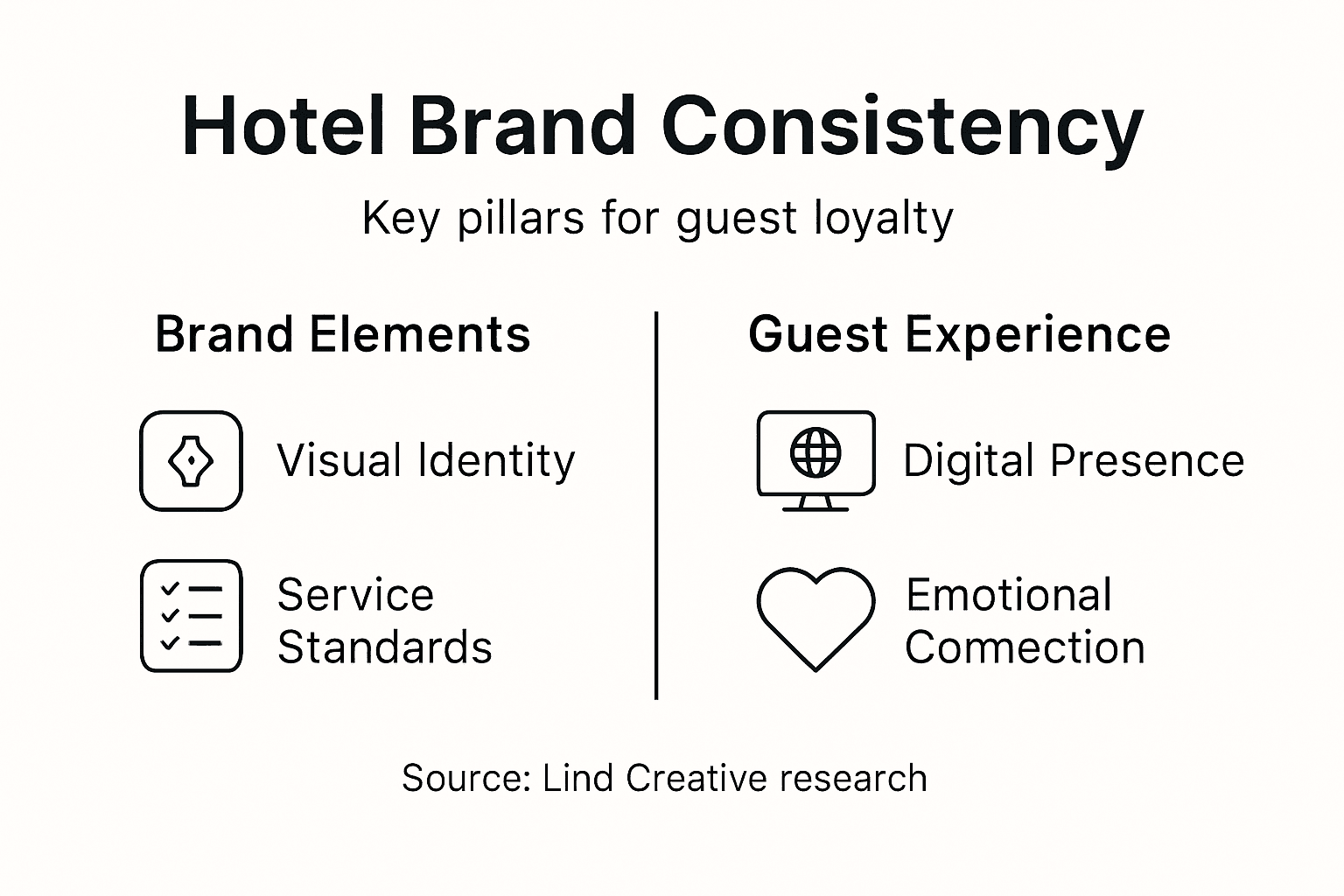
The primary core elements of brand consistency in hospitality encompass five critical dimensions. Visual Identity involves maintaining a uniform aesthetic through logos, color palettes, typography, and design elements that instantly communicate the hotel’s personality. Brand Voice represents the consistent communication style, tone, and messaging that reflects the hotel’s values and emotional positioning. Service Standards ensure that every staff interaction, from reservation to checkout, delivers a predictable and aligned experience that matches the brand’s promise.
Additionally, Digital Presence and Physical Environment play crucial roles in brand consistency. This means synchronizing online platforms, social media, websites, and marketing materials with the physical hotel spaces, ensuring guests encounter a seamless brand experience whether they’re browsing online or walking through the lobby. The digital and physical representations must communicate the same core narrative, reinforcing the hotel’s unique value proposition.
The final element involves Emotional Connection, which transcends visual and operational consistency. This dimension focuses on creating memorable experiences that resonate with guests on a deeper level, transforming transactional interactions into meaningful relationships that drive long-term loyalty and positive word-of-mouth recommendations.
Pro tip: Conduct quarterly brand audits to ensure all brand elements remain aligned and relevant, allowing for strategic refinements that keep your hotel’s identity fresh and engaging.
Here’s a summary of the core elements and their roles in hotel brand consistency:
| Core Element | Key Role | Business Impact |
|---|---|---|
| Visual Identity | Shapes immediate impressions | Enhances recognition and market differentiation |
| Brand Voice | Sets communication standards | Builds emotional connection and guest trust |
| Service Standards | Guides guest interactions | Improves satisfaction and loyalty |
| Digital Presence | Extends brand to online spaces | Increases reach and boosts guest engagement |
| Physical Environment | Creates on-site experience | Strengthens overall brand perception |
| Emotional Connection | Forges lasting memories | Drives repeat visits and recommendations |
Types of Brand Expressions in Hospitality
Brand language in hospitality represents a sophisticated system of communication that goes far beyond simple visual elements. These expressions serve as critical touchpoints that transform a hotel’s identity from an abstract concept into a tangible, memorable experience for guests. Brand expressions encompass both tangible and intangible elements that collectively narrate the hotel’s unique story.
The primary types of brand expressions include Visual Expressions, which involve graphic elements like logos, color palettes, typography, and design standards. Verbal Expressions capture the hotel’s voice through carefully crafted messaging, taglines, communication tone, and written content across all platforms. These linguistic choices communicate the brand’s personality, whether it’s sophisticated, playful, minimalist, or luxurious.
Emotional and experiential brand expressions represent more nuanced communication channels. These include staff interactions, service quality, environmental design, and the overall sensory experience guests encounter. From the welcome greeting to room ambiance, from website navigation to social media interactions, each touchpoint becomes an opportunity to reinforce the brand’s core identity and values.
Digital and physical brand expressions must work in harmony, creating a seamless narrative that builds trust and emotional connection. Social media posts, marketing materials, website design, and physical signage should all speak the same visual and tonal language, ensuring guests recognize and resonate with the brand across different contexts and interaction points.
Pro tip: Create a comprehensive brand expression guidebook that details every communication nuance, ensuring consistency across all team members and platforms.
Why Consistency Boosts Guest Trust and Loyalty
Research in luxury hospitality demonstrates that brand consistency is a critical psychological mechanism that transforms casual interactions into lasting emotional connections. When hotels deliver predictable, high-quality experiences, they create a sense of reliability that goes beyond mere transactional services. Trust emerges from the repeated confirmation that a hotel will meet or exceed expectations across every interaction.
The psychological foundation of guest loyalty rests on Emotional Predictability. Guests seek environments where they can anticipate not just the physical amenities, but the entire emotional journey of their stay. Consistent brand experiences signal to guests that they are entering a familiar, safe, and dependable space. This predictability reduces cognitive friction, allowing guests to relax and fully engage with the hotel’s unique value proposition.
Consistent brand messaging and experience directly impact guest perception through multiple interconnected dimensions. Perceived service quality, brand equity, and emotional trust work synergistically to create a comprehensive loyalty framework. When every touchpoint—from website navigation to room service interactions—communicates a unified narrative, guests develop a deeper sense of connection and commitment to the brand.
Moreover, consistency serves as a powerful differentiation strategy in a saturated hospitality market. By maintaining unwavering standards across visual, verbal, and experiential channels, hotels can transform occasional visitors into passionate brand advocates who not only return but actively recommend the experience to others.
Pro tip: Develop a comprehensive brand consistency scorecard that objectively measures alignment across all guest interaction points, enabling continuous refinement of your brand experience.
Common Pitfalls Undermining Brand Efforts
Strategic management research reveals several critical pitfalls that systematically erode brand consistency in hospitality. These challenges often emerge subtly, gradually undermining a hotel’s carefully constructed brand identity and guest trust. Understanding these potential points of failure is crucial for developing a resilient and authentic brand strategy.
One primary pitfall is Inconsistent Communication. This occurs when different departments or team members communicate disparate brand messages, creating confusion and diluting the core brand narrative. For instance, marketing materials might promise a luxurious, personalized experience, while front-desk interactions feel impersonal and transactional. Such disconnects create cognitive dissonance for guests, weakening their emotional connection to the brand.
Another significant challenge is Staff Misalignment. High staff turnover and inadequate training can lead to wildly inconsistent service experiences. When employees are not thoroughly integrated into the brand’s core values and expected behavioral standards, each interaction becomes a potential risk to brand reputation. The human element of service delivery becomes unpredictable, undermining the fundamental promise of consistent quality.
Digital and physical brand touchpoints must also maintain perfect synchronization. Misalignments between online representations and actual guest experiences can rapidly erode trust. A beautifully designed website promising seamless, sophisticated service loses credibility if the actual stay fails to meet those expectations. These gaps between promised and delivered experiences represent profound brand integrity risks.
Compare common pitfalls with recommended preventative strategies for hotel brand efforts:
| Pitfall | Risk to Brand | Prevention Strategy |
|---|---|---|
| Inconsistent Communication | Guest confusion, trust erosion | Centralized messaging and guidelines |
| Staff Misalignment | Unpredictable guest experience | Ongoing training and value alignment |
| Digital/Physical Gaps | Decline in credibility | Regular audits and cross-channel syncing |
Pro tip: Implement a comprehensive brand training program that goes beyond operational skills, deeply embedding your brand’s emotional essence and communication standards into every team member’s understanding.
Strengthen Your Hotel’s Brand Consistency for Lasting Guest Loyalty
Maintaining brand consistency is essential for hospitality businesses aiming to build trust and emotional connections with guests. This article highlights key challenges such as inconsistent communication, staff misalignment, and gaps between digital and physical brand expressions that can weaken your hotel’s identity and guest loyalty. At Lind Creative, we understand that aligning your visual identity, brand voice, and guest experience is critical to creating predictable and memorable stays that keep guests coming back.
Take control of your hotel’s brand story with expert guidance from our Branding & Identity – Lind Creative specialists. Our full-service digital agency blends strategy-driven design and marketing to deliver a seamless and compelling brand presence across all guest touchpoints. Whether you need a complete brand refresh or a new digital strategy, our team helps you eliminate inconsistencies and build emotional trust. Start your journey towards enhanced guest loyalty today by visiting Lind Creative and explore our Graphic Design – Lind Creative solutions tailored for hospitality brands.
Frequently Asked Questions
What is brand consistency in hospitality?
Brand consistency in hospitality refers to the strategic alignment of visual, communicative, and experiential elements that create a cohesive and recognizable identity for a hotel. It ensures a seamless experience across all guest touchpoints.
Why is brand consistency important for hotels?
Brand consistency is crucial for hotels as it builds guest trust and loyalty, differentiates the hotel in a competitive market, and helps meet evolving guest expectations by delivering a predictable high-quality experience.
What are the core elements of brand consistency in hotels?
The core elements include visual identity, brand voice, service standards, digital presence, physical environment, and emotional connection, all of which contribute to a unified brand experience.
How can hotels maintain brand consistency across different channels?
Hotels can maintain brand consistency by creating comprehensive brand guidelines, conducting regular audits, and ensuring that all staff members are trained to align with the hotel’s brand values and communication standards.
Recommended
- Unified Brand Presence: Driving Engagement for Luxury Hospitality – Lind Creative
- Brand Voice: Shaping Luxury Hospitality Experience – Lind Creative
- Why Customer Experience Matters for Luxury Hotels – Lind Creative
- 7 Key Benefits of Branding for Luxury Hospitality Success – Lind Creative
- How to Improve Client Retention for Service Businesses – Jarrod Harman