
Most people think branding is just about having a catchy logo, yet over 60 percent of consumers say they feel closer to brands that share a clear purpose and identity. In a crowded marketplace, a strong brand builds trust, loyalty, and sets you apart from competitors. Understanding what true branding means and avoiding common myths can help your business create lasting connections and drive real growth.
Table of Contents
- Branding Defined: Core Concepts And Misconceptions
- Major Types Of Branding And Brand Strategies
- Branding’s Role In Customer Trust And Loyalty
- Impact Of Branding On Business Growth And Roi
- Common Branding Pitfalls And How To Avoid Them
Key Takeaways
| Point | Details |
|---|---|
| Branding is Comprehensive | Branding extends beyond visual design and encompasses the holistic identity of a business, including values, mission, and customer experience. |
| Ongoing Process | Effective branding is a continuous strategic effort that requires alignment with business goals and deep understanding of the target audience. |
| Trust and Loyalty | Branding fosters customer trust and loyalty through consistent messaging, emotional connections, and transparency about values. |
| Strategic Investment | Investing in branding can drive business growth and ROI by enhancing market differentiation and enabling premium pricing. |
Branding Defined: Core Concepts and Misconceptions
Branding is far more than just a logo or visual design. Branding represents the comprehensive strategic approach businesses use to create a distinctive, memorable identity that resonates with their target audience. According to research from RCET, effective branding goes beyond surface-level aesthetics and encompasses a holistic representation of an organization’s values, mission, and unique positioning.
At its core, branding involves crafting a narrative that distinguishes your business from competitors. This means developing a consistent set of experiences, visual elements, messaging, and emotional connections that communicate who you are and what you stand for. Many entrepreneurs mistakenly believe branding is a one-time effort or simply designing a nice-looking website. In reality, branding is an ongoing process of strategic communication that requires continuous refinement and alignment with your business goals.
Key misconceptions about branding include:
- Thinking branding is only about visual design
- Believing a brand can be created overnight
- Assuming branding is unnecessary for small businesses
- Treating brand identity as a static concept
Successful branding requires understanding your target audience deeply, articulating your unique value proposition, and consistently delivering on your brand promise across all customer touchpoints. Learn more about creating a memorable brand identity to build trust and differentiate your business in a competitive marketplace.
Major Types of Branding and Brand Strategies
Branding is a nuanced discipline with multiple strategic approaches tailored to different business objectives. According to research from RCET, businesses can leverage various brand strategies that address unique market positioning and organizational goals.
Key types of branding strategies include:
- Personal Branding: Focuses on building an individual’s professional reputation
- Corporate Branding: Establishes an overall organizational identity and reputation
- Product Branding: Develops distinct identities for specific product lines
- Geographical Branding: Creates regional or location-specific brand associations
- Service Branding: Differentiates service-oriented businesses through unique value propositions
Each branding approach requires careful strategic planning and consistent execution. Learn more about developing a comprehensive brand strategy that aligns with your business objectives and target audience expectations. Successful brands understand that their strategy must evolve, adapting to market changes while maintaining core identity and values.
The most effective brand strategies integrate multiple approaches, creating a holistic narrative that resonates across different touchpoints. Whether you’re a startup or an established enterprise, selecting the right branding strategy can significantly impact your market perception, customer loyalty, and long-term business growth.

Branding’s Role in Customer Trust and Loyalty
Customer trust is the cornerstone of long-term business success, and branding plays a pivotal role in establishing and maintaining this critical connection. According to insights from Indeed, ethical branding has emerged as a powerful strategy for building deeper customer relationships by promoting transparency, social responsibility, and authentic values.
The mechanisms of trust-building through branding are multifaceted:
- Consistent Messaging: Delivering a uniform brand experience across all touchpoints
- Transparency: Openly communicating business practices and values
- Emotional Connection: Creating narratives that resonate with customer experiences
- Reliability: Demonstrating consistent quality and performance
- Social Responsibility: Showing commitment to broader societal and environmental goals
Build a brand identity that fosters genuine customer loyalty by understanding that trust is not just about what you say, but how consistently you demonstrate your core values. Successful brands recognize that loyalty is earned through meaningful, ongoing interactions that go beyond transactional relationships.
In today’s competitive marketplace, customers seek more than just products or services. They want to engage with brands that align with their personal values, show genuine understanding of their needs, and demonstrate a commitment to making a positive impact. By prioritizing trust and authenticity in your branding strategy, you transform casual customers into passionate brand advocates who not only buy from you but actively recommend and defend your brand.
Impact of Branding on Business Growth and ROI
Branding is not just a marketing expense but a strategic investment that directly influences business growth and financial performance. According to research from Indeed, strategic brand positioning can significantly enhance market competitiveness and drive measurable returns on investment by aligning closely with consumer values and expectations.
Key financial impacts of effective branding include:
- Premium Pricing Power: Stronger brands can command higher prices
- Customer Retention: Reduced customer acquisition costs
- Market Differentiation: Increased competitive advantage
- Reduced Marketing Expenses: More efficient customer attraction
- Enhanced Perceived Value: Higher customer willingness to purchase
Learn how to build a brand identity for growth-focused businesses that translates strategic positioning into tangible financial outcomes. The most successful companies understand that branding is a long-term investment that compounds over time, creating sustainable competitive advantages and driving substantial economic value.
In today’s complex business landscape, companies that strategically invest in their brand experience can see remarkable returns. By creating a compelling narrative, delivering consistent value, and building emotional connections, businesses transform branding from a cost center into a powerful growth engine that attracts customers, builds loyalty, and ultimately drives profitability.
Common Branding Pitfalls and How to Avoid Them
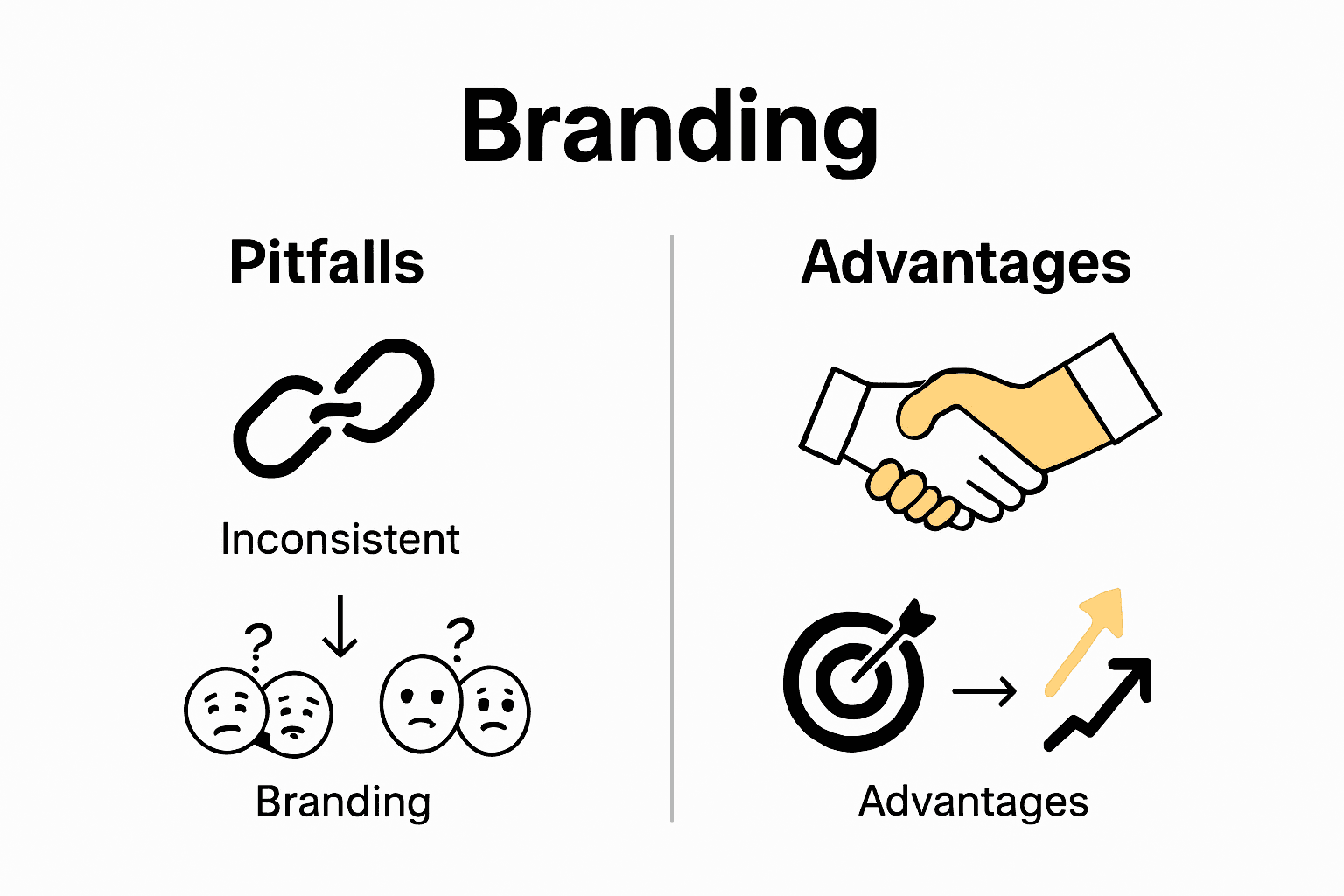
Branding is a complex strategic endeavor fraught with potential missteps that can derail a company’s market positioning. According to research from RCET, brand identity inconsistency represents one of the most critical challenges businesses face when developing their market presence.
Common branding pitfalls to avoid include:
- Lack of Differentiation: Blending in with competitors instead of standing out
- Inconsistent Messaging: Sending mixed signals across different communication channels
- Inauthentic Positioning: Creating a brand persona that doesn’t reflect actual business values
- Neglecting Target Audience: Failing to deeply understand customer needs and preferences
- Visual Identity Confusion: Inconsistent design elements that weaken brand recognition
Learn how to develop a consistent branding process for professionals that minimizes these risks and creates a cohesive, compelling brand narrative. Successful brands recognize that avoiding pitfalls requires continuous monitoring, strategic alignment, and a commitment to authentic representation.
Navigating the complex landscape of brand development demands both strategic insight and creative flexibility. By proactively addressing potential weaknesses, businesses can transform potential pitfalls into opportunities for deeper customer connection and more robust market positioning. The key is to remain adaptable, continuously listen to your audience, and ensure that every aspect of your brand communication reinforces your core value proposition.
Elevate Your Brand With Strategy-Driven Solutions
Struggling to create a brand that truly connects and builds trust can leave your business blending into the background. The article highlights common challenges like inconsistent messaging and lack of authentic positioning that hold many companies back. If your goal is to craft a memorable identity that fosters loyalty and drives measurable growth you need a partner who understands these pain points and the power of a cohesive brand strategy.
Discover how Branding & Identity – Lind Creative transforms these obstacles into opportunities.

Take control of your brand story today with Lind Creative a full-service digital agency that blends strategy, creativity, and technology to deliver real ROI. Whether you are launching fresh or scaling up our signature Growth Engine automates lead capture email and advertising to turn your brand promise into customer loyalty. Start building a powerful brand that performs by visiting Lind Creative and explore expert insights in our Resources to make informed, confident decisions now.
Frequently Asked Questions
What is the importance of branding for a business?
Branding is crucial for businesses as it creates a distinctive identity, helps establish trust with customers, enhances customer loyalty, and differentiates a business from its competitors.
How can branding impact customer trust and loyalty?
Branding builds customer trust through consistent messaging, transparency, and the ability to create emotional connections. A strong brand fosters loyalty by aligning with customer values and showing commitment to quality and social responsibility.
What are common mistakes businesses make in branding?
Common branding mistakes include lack of differentiation, inconsistent messaging, inauthentic positioning, neglecting target audience needs, and having a confusing visual identity.
How can a business develop a successful branding strategy?
A successful branding strategy involves understanding the target audience, clearly articulating the unique value proposition, maintaining consistent messaging, and continuously refining the brand based on market feedback.
Recommended
- Brand Strategy Explained: Key Elements and Impact – Lind Creative
- Branding Process for Lifestyle Brands: Step-by-Step Success – Lind Creative
- Branding Process for Professionals: Step-by-Step Success – Lind Creative
- The Essential Guide to Visuals in Branding – Lind Creative