
Nearly 90 percent of american small businesses believe strong branding helps them stand out in a crowded market. Building a memorable brand goes beyond picking colors or a catchy name. Clear brand elements give your business a foundation for trust, recognition, and deeper customer connections. From story to style, learning how to shape and share your brand sets you up for success and long-term growth.
Table of Contents
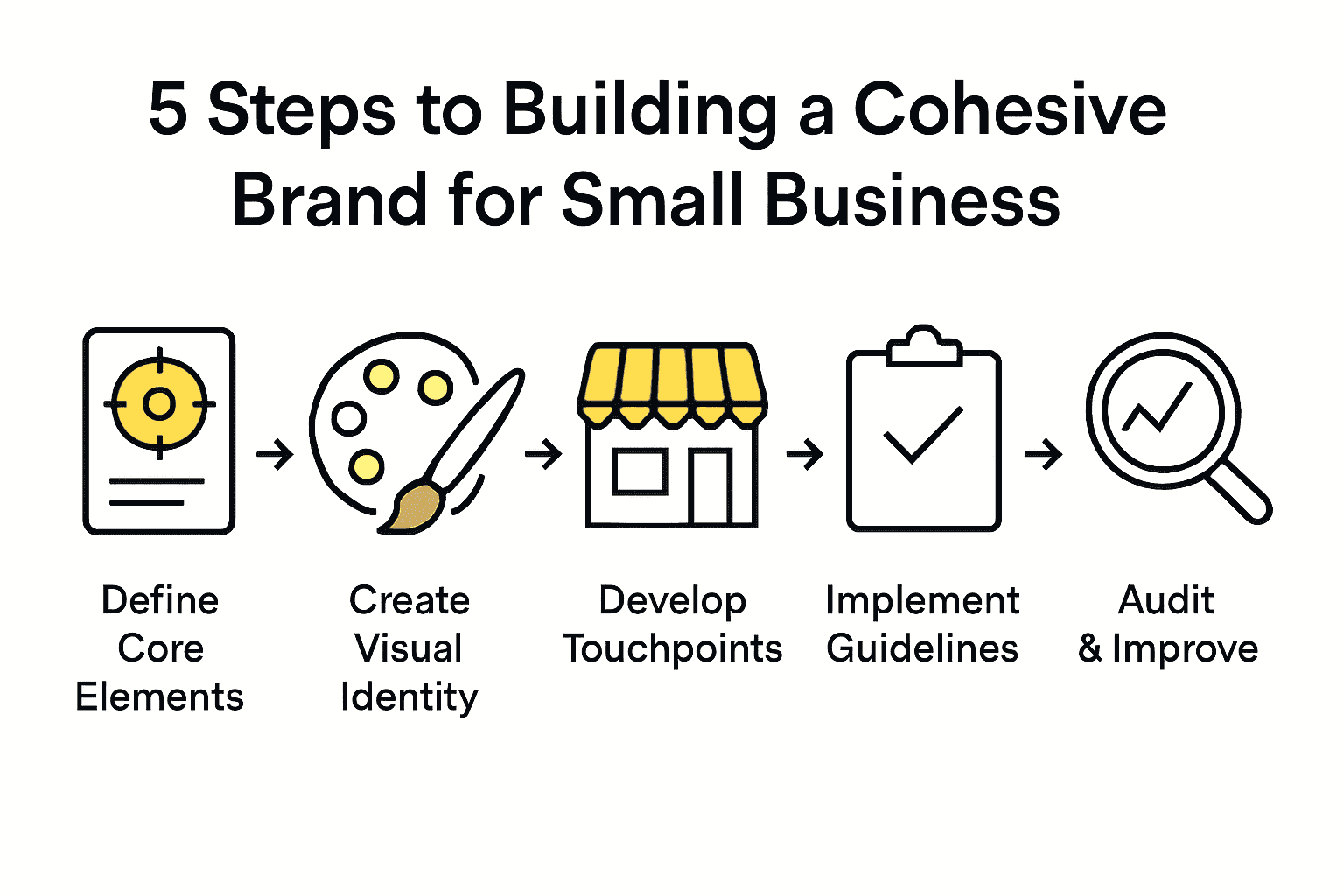
- Step 1: Define Your Core Brand Elements
- Step 2: Craft A Visual Identity And Messaging
- Step 3: Develop Consistent Brand Touchpoints
- Step 4: Implement Brand Guidelines Across Channels
- Step 5: Verify Brand Consistency And Make Improvements
Quick Summary
| Key Insight | Explanation |
|---|---|
| 1. Define Core Brand Elements | Identify your brand story, name, visual design, and communication voice to differentiate your brand in the market. |
| 2. Create a Visual Identity | Develop a cohesive visual system with colors, typography, and imagery to express your brand’s personality consistently across platforms. |
| 3. Implement Brand Guidelines | Ensure consistent application of brand guidelines across all channels through training and a centralized asset library for team access. |
| 4. Conduct Regular Brand Audits | Review all brand materials regularly to maintain consistency and address any discrepancies in messaging and visual identity. |
| 5. Gather Feedback for Improvement | Solicit internal and external feedback to identify areas for enhancement, keeping your brand relevant and aligned with customer perception. |
Step 1: Define Your Core Brand Elements
Defining your core brand elements is the foundational process of creating a memorable and authentic brand identity. According to research from SpringerLink, establishing a clear brand orientation helps small businesses articulate what makes them unique in their marketplace.
Start by mapping out the fundamental components of your brand identity. As The Branding Journal highlights, these elements include your brand story, name, visual design, and communication voice. Your brand story should connect deeply with your target audience by revealing your mission, values, and the problem your business solves. Consider questions like: What inspired you to start your business? What makes your approach different from competitors?
Your visual identity requires careful consideration. Select a color palette that resonates with your brand personality color psychology principles. Choose typography that reflects your brand tone professional and approachable or sleek and modern. Develop a logo that encapsulates your brand essence visually. Remember that consistency across these elements builds recognition and trust with your potential customers. Each choice should feel intentional and aligned with the core message you want to communicate.
Pro tip: Create a simple brand guidelines document that outlines these core elements. This will serve as a reference for everyone involved in representing your brand and ensure a cohesive visual and messaging approach.
Step 2: Craft a Visual Identity and Messaging
Crafting a compelling visual identity and messaging is crucial for establishing your brand’s unique personality and connecting with your target audience. Research from arXiv reveals that visual characteristics like color, patterns, and shapes play a significant role in defining a brand’s distinctive visual language.
Begin by developing a comprehensive visual system that goes beyond just a logo. Your visual identity should include a carefully curated color palette, consistent typography, imagery style, and graphic elements that work together seamlessly. According to computational design research from arXiv, modern brands can leverage dynamic design approaches to create flexible yet cohesive visual modules that adapt across different platforms and mediums.
When crafting your messaging, focus on creating a unique brand voice that resonates with your target audience. This involves defining key communication principles that reflect your brand’s personality whether that’s professional and authoritative, friendly and approachable, or innovative and cutting edge. Your messaging should tell a consistent story across all touchpoints from your website and social media to marketing materials and customer interactions.
Pro tip: Create a brand style guide that documents your visual identity and messaging guidelines. This resource will ensure consistency and help anyone representing your brand maintain a unified communication approach.
Step 3: Develop Consistent Brand Touchpoints
Developing consistent brand touchpoints is essential for creating a unified and memorable brand experience that resonates with your target audience. According to research from SpringerLink, consistent use of brand elements across various platforms significantly enhances consumer recognition and strengthens brand identity.
Start by mapping out all the potential touchpoints where customers interact with your brand. These include your website, social media profiles, email communications, physical marketing materials, customer service interactions, packaging, and any digital or print advertisements. Each of these channels should reflect a cohesive visual and messaging approach. arXiv research emphasizes that maintaining consistency across these touchpoints is crucial for building long term brand loyalty.
To achieve this consistency, develop a comprehensive brand style guide that provides clear guidelines for visual and verbal communication. This document should outline specific rules for logo usage, color palette, typography, imagery style, tone of voice, and key messaging principles. Ensure that every team member and external partner understands and follows these guidelines. By presenting a unified brand experience, you create a professional and trustworthy image that helps customers easily recognize and connect with your business.
Pro tip: Conduct periodic brand audits to ensure all your touchpoints remain aligned with your core brand identity. As your business evolves, your brand guidelines may need subtle refinements to stay current and compelling.
Step 4: Implement Brand Guidelines Across Channels
Implementing brand guidelines consistently across multiple channels is crucial for creating a unified and professional brand presence. According to research from ScienceDirect, digital era marketing strategies demand consistent messaging and visual representation across all platforms to maintain a strong brand identity.
Begin by creating a comprehensive implementation plan that breaks down your brand guidelines for different digital and physical touchpoints. This means adapting your visual and verbal brand elements to fit each specific channel while maintaining core consistency. arXiv research highlights the importance of structured inputs in ensuring brand coherence, particularly when using diverse marketing platforms and communication tools.
Training is key to successful implementation. Schedule workshops with your team to walk through the brand guidelines, explaining not just the rules but the reasoning behind them. Provide clear examples of correct and incorrect brand usage across different channels like social media, email, website, print materials, and customer interactions. Develop a system for reviewing and approving marketing materials to ensure they align with your established brand identity. This might involve creating a checklist or approval workflow that team members can follow.
Pro tip: Consider creating a digital brand asset library with approved logos, color palettes, typography samples, and messaging templates. This centralized resource makes it easier for team members to access and apply brand guidelines consistently.

Step 5: Verify Brand Consistency and Make Improvements
Verifying brand consistency is an ongoing process that requires systematic evaluation and strategic refinement. According to research from arXiv, continuous assessment of branding strategies is crucial for maintaining brand loyalty and ensuring your messaging remains aligned with your core identity.
Develop a comprehensive brand audit process that systematically reviews all marketing materials, digital platforms, and communication channels. Create a detailed checklist that examines visual elements like logo usage, color consistency, typography, and imagery alongside verbal elements such as tone of voice, messaging alignment, and communication style. Conduct these audits quarterly to catch any deviations early and ensure your brand representation remains cohesive across all touchpoints.
Encourage feedback from both internal team members and external stakeholders to gain diverse perspectives on your brand consistency. This might involve anonymous surveys, focus groups, or informal conversations with customers and employees. Pay special attention to areas where your brand messaging might feel disconnected or where visual elements do not align with your core brand identity. Use these insights to make incremental improvements that keep your brand fresh and relevant while maintaining its fundamental character.
Pro tip: Document all brand audit findings and improvements in a centralized repository. This creates an institutional memory of your brand evolution and helps track the strategic decisions that shape your brand identity over time.
Build a Cohesive Brand That Truly Connects with Your Audience
Creating a consistent and authentic brand identity can feel overwhelming when tackling everything from visual elements to messaging across multiple channels. The struggle to define your brand core, maintain visual harmony, and tell a powerful story is real. You want your brand to stand out and build trust but need expert guidance to translate these complex steps into clear actions that deliver results. The good news is you do not have to do it alone.
Lind Creative specializes in helping small businesses like yours craft strong, memorable brands through strategy-driven design and marketing. Whether it is defining your brand identity, establishing a dynamic visual system, or implementing cohesive messaging across all touchpoints, our team blends creativity and technology to fuel your growth. Explore our Branding & Identity – Lind Creative solutions for expertly crafted brand strategies that align with your goals.
Start building a brand that truly represents your mission and attracts loyal customers today. Visit Lind Creative and take the next step toward a unified, high-impact brand presence. Unlock the full potential of your small business by partnering with experts who make your brand not only look great but perform and grow.
Frequently Asked Questions
How do I define my small business’s core brand elements?
To define your core brand elements, map out components like your brand story, name, visual design, and communication voice. Start by answering questions about your mission and values, and what sets you apart from competitors, creating a foundational outline within 30 days.
What should be included in my small business’s visual identity?
Your visual identity should include a color palette that reflects your brand personality, consistent typography, imagery style, and graphic elements. Choose visuals that resonate with your audience and create a unifying look across all platforms within two weeks.
How can I ensure consistency in my brand touchpoints?
To ensure brand consistency, identify all customer interaction points such as your website, social media, and marketing materials. Create and distribute a brand style guide that outlines the visual and messaging rules to be applied across these touchpoints within 60 days.
What steps should I take to implement brand guidelines effectively?
Develop a clear implementation plan that translates your brand guidelines for various channels. Schedule training sessions for your team to discuss the guidelines, providing examples of correct usage and establishing an approval process for all communications within 30 days.
How often should I conduct brand audits to verify consistency?
Conduct brand audits at least quarterly to review all marketing materials and communication channels for consistency. Use a checklist to evaluate visual and verbal elements, and make adjustments based on your findings to improve alignment with your brand identity over time.
Recommended
- Why Branding Matters: Complete Guide for Businesses – Lind Creative
- How to Create a Memorable Brand Identity: Forging Lasting Connections with Your Audience – Lind Creative
- How to Build a Brand Identity for Growth-Focused Businesses – Lind Creative
- The Essential Guide to Investing in Branding – Lind Creative
- Impact Du Contenu Vidéo Sur Le Branding : Guide Complet