
Nearly one in four adults in the United States has a disability, yet many websites remain out of reach for this large group. Website accessibility matters because inclusive design opens digital spaces for everyone, regardless of ability. Uncovering the truth about accessibility and the myths that surround it helps businesses not only avoid legal risks but also connect with more users and create better online experiences for all.
Table of Contents
- Defining Website Accessibility And Common Myths
- Types Of Disabilities And User Needs Online
- Core Principles And Features Of Accessible Websites
- Legal Requirements And Compliance For Us Businesses
- Common Accessibility Mistakes And How To Avoid Them
Key Takeaways
| Point | Details |
|---|---|
| Inclusivity is Essential | Website accessibility ensures that digital experiences are available to everyone, regardless of their abilities or disabilities. |
| Myths Undermine Accessibility | Common misconceptions about web accessibility hinder implementation; these myths include the belief that it concerns only a small audience and is too expensive. |
| Legal Compliance Is Crucial | Accessibility is a legal requirement for U.S. businesses, necessitating adherence to standards like the ADA and WCAG to avoid legal repercussions and enhance user experience. |
| Strategic Implementation Matters | Businesses should adopt a holistic approach by avoiding common accessibility mistakes, emphasizing user testing, and integrating accessibility from the initial design phase. |
Defining Website Accessibility and Common Myths
Website accessibility is about creating digital experiences that can be perceived, understood, navigated, and interacted with by people of all abilities and disabilities. It goes beyond simply making a website functional – it’s about inclusive design that ensures everyone, regardless of physical or cognitive limitations, can access and engage with online content.
Contrary to popular misconceptions, web accessibility is not a niche concern affecting only a small segment of users. According to digitalpolicy.gov.hk, there are several persistent myths that prevent businesses from implementing robust accessibility strategies:
- Myth 1: Only a tiny audience needs accessible websites
- Myth 2: Accessible websites are inherently boring and unattractive
- Myth 3: Implementing accessibility is prohibitively expensive
These myths couldn’t be further from the truth. As accessibility.psu.edu clarifies, accessibility benefits a much broader audience than many realize. People with disabilities represent a significant user group, and accessible design actually improves the experience for everyone, not just those with specific needs.
Moreover, accessible websites aren’t limited to basic, uninspired designs. They can be visually stunning, interactive, and engaging while still maintaining clear navigation and usability. By considering accessibility from the start of the design process, businesses can create websites that are both beautiful and functional. The key is understanding that accessibility is not a limitation, but an opportunity to reach more users and create more inclusive digital experiences.
Implementing web accessibility doesn’t require extensive technical expertise or massive budget allocations. Simple adjustments like providing alt text for images, ensuring proper color contrast, creating keyboard-navigable interfaces, and using clear, descriptive link text can dramatically improve a website’s accessibility. These strategies not only help users with disabilities but also enhance overall user experience and can positively impact search engine optimization (SEO).
Types of Disabilities and User Needs Online
Web accessibility encompasses addressing the diverse needs of users with different types of disabilities, recognizing that digital experiences must be designed with universal inclusivity in mind. According to the World Report on Disability, disabilities are not a monolithic experience but a complex spectrum of physical, sensory, cognitive, and mental health conditions that significantly impact how individuals interact with digital content.
The primary disability categories that affect online interaction include:
- Visual Impairments: Ranging from color blindness to complete blindness, requiring screen reader compatibility, high contrast interfaces, and alternative text descriptions
- Hearing Impairments: Necessitating captions, transcripts, and visual communication alternatives
- Motor Disabilities: Demanding keyboard navigation, voice control options, and adaptive input methods
- Cognitive and Neurological Differences: Requiring simplified interfaces, clear navigation, and reduced cognitive load
Specifically for neurodivergent individuals, emerging research is transforming our understanding of digital accessibility. arxiv.org highlights the Guiding Empowerment Model, which emphasizes technology-enabled features that remove barriers for neurodivergent learners in online environments. This approach recognizes that accessibility is not about creating separate experiences, but about designing flexible digital spaces that accommodate diverse cognitive processing styles.
Understanding these varied needs requires moving beyond a one-size-fits-all approach. Web designers and developers must think holistically about user experience, considering how different disabilities might interact with digital interfaces. This means creating websites that are not just technically accessible, but genuinely usable and comfortable for everyone. By implementing thoughtful design strategies like clear typography, predictable navigation, customizable interfaces, and robust assistive technology compatibility, businesses can create digital experiences that truly welcome and empower all users.

Core Principles and Features of Accessible Websites
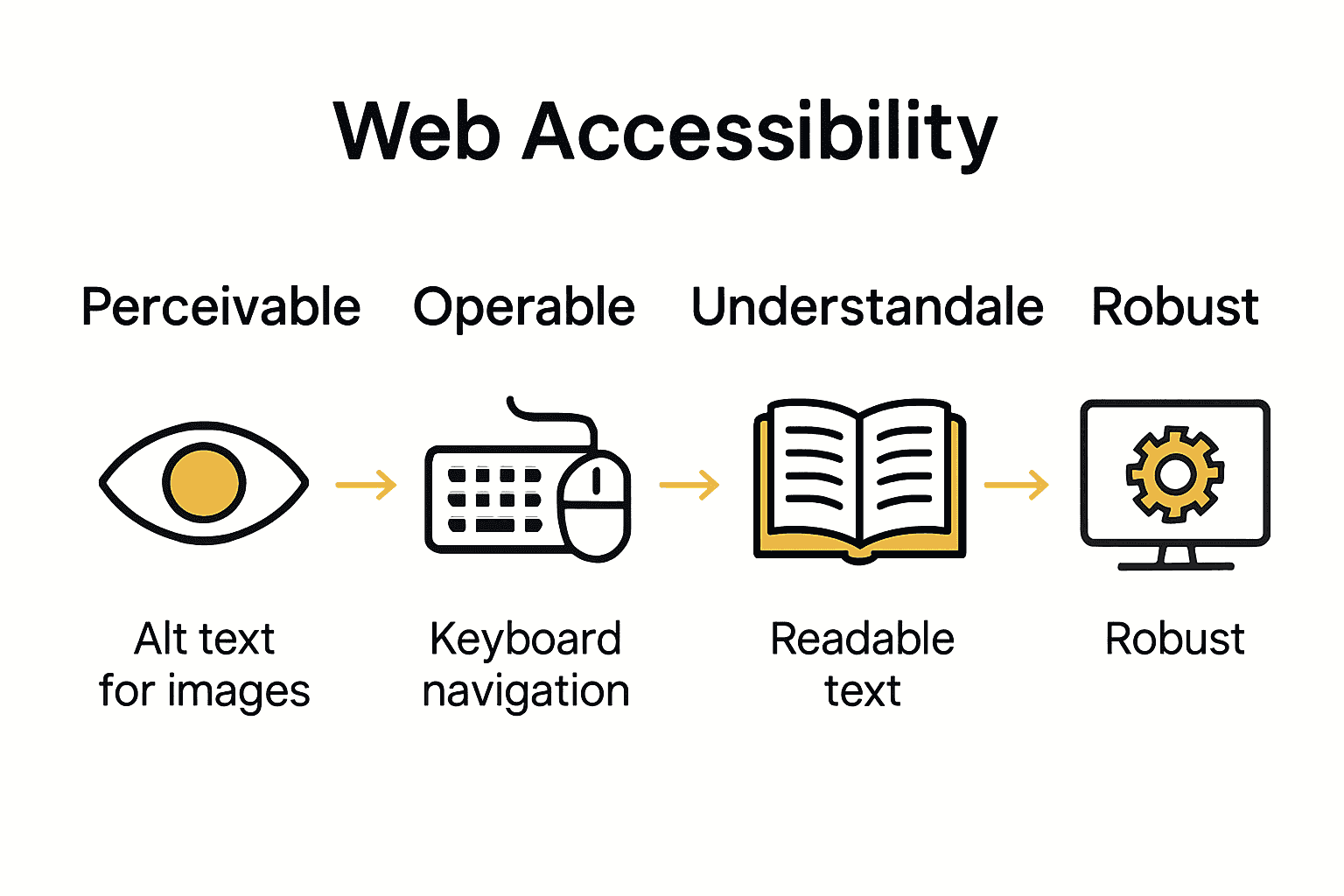
Web accessibility is fundamentally about creating digital experiences that are universally usable for everyone, regardless of their abilities or technological limitations. According to Wikipedia’s Web Accessibility, there are four core principles that define an accessible website: websites must be perceivable, operable, understandable, and robust.
The key features of an accessible website include:
- Semantic HTML Structure: Using proper heading hierarchies and meaningful markup
- Alternative Text Descriptions: Providing detailed descriptions for images and visual content
- Keyboard Navigation Support: Ensuring complete website functionality without mouse interaction
- Color Contrast Compliance: Maintaining sufficient color contrast for readability
- Responsive Design: Creating interfaces that adapt to different devices and screen sizes
Web Accessibility Initiative guidelines emphasize the importance of developing websites that seamlessly accommodate diverse user needs. This means going beyond basic compliance and creating truly inclusive digital experiences. Developers must think holistically about how different users interact with content, considering factors like screen reader compatibility, input method variations, and cognitive processing differences.
Practical implementation of these principles requires a multifaceted approach. Web designers must focus on creating flexible interfaces that offer multiple ways of accessing information. This includes providing text alternatives for multimedia, ensuring logical content structure, designing predictable navigation systems, and building websites that can be easily interpreted by assistive technologies. By prioritizing accessibility from the initial design phase, businesses can create digital experiences that are not just technically compliant, but genuinely welcoming and empowering for all users.
Legal Requirements and Compliance for US Businesses
Web accessibility is no longer just a best practice—it’s a legal imperative for businesses operating in the United States. Section 508 Amendment mandates that federal agencies, and by extension many private businesses, ensure their electronic and information technology is fully accessible to individuals with disabilities. This legislation requires that all digital content provide equivalent access and functionality for people with diverse abilities.
The key legal considerations for US businesses include:
- Americans with Disabilities Act (ADA) Compliance
- Web Content Accessibility Guidelines (WCAG) Standards
- State-Level Digital Accessibility Regulations
- Risk of Potential Litigation
- Mandatory Accessibility for Government Contractors
However, businesses must understand that compliance is not a one-time checkbox. As W3C clarifies, meeting WCAG standards does not automatically guarantee full accessibility. It requires ongoing evaluation, continuous improvement, and a genuine commitment to creating inclusive digital experiences. This means regular accessibility audits, user testing with diverse populations, and proactively updating digital platforms to remove potential barriers.
The consequences of non-compliance extend beyond legal risks. Inaccessible websites can result in significant financial penalties, damage to brand reputation, and exclusion of potential customers. Moreover, businesses that prioritize accessibility often discover unexpected benefits: improved SEO, broader market reach, and enhanced user experience for all users. By viewing accessibility as an opportunity for innovation rather than a regulatory burden, companies can transform their digital presence into a more inclusive, engaging, and legally sound platform.
Common Accessibility Mistakes and How to Avoid Them
Web accessibility is a nuanced field where well-intentioned efforts can often fall short without careful consideration. W3C emphasizes that simply meeting technical standards does not guarantee a truly accessible digital experience. Many businesses inadvertently create barriers by misunderstanding the fundamental principles of inclusive design.
The most common accessibility mistakes include:
- Relying Exclusively on Automated Testing: Automated tools catch only 30-50% of potential accessibility issues
- Neglecting Keyboard Navigation: Failing to ensure full website functionality without a mouse
- Poor Color Contrast: Using color combinations that are difficult for visually impaired users to distinguish
- Inadequate Alternative Text: Providing generic or unhelpful image descriptions
- Complex Navigation Structures: Creating confusing or unpredictable website layouts
According to Digital Policy, many businesses mistakenly believe that accessibility compromises design aesthetics or is prohibitively expensive. In reality, accessible design can be both visually appealing and cost-effective when integrated from the beginning of the design process. The key is to view accessibility not as a constraint, but as an opportunity to create more intuitive, user-friendly digital experiences.
Avoiding these mistakes requires a holistic approach. Businesses should invest in comprehensive accessibility strategies that go beyond technical compliance. This means conducting regular manual audits, engaging users with disabilities in testing, providing multiple ways to access information, and maintaining flexibility in design. By prioritizing user experience and continuously learning, companies can create digital platforms that are not just technically accessible, but genuinely inclusive and welcoming to all users.
Unlock Inclusive Digital Success with Expert Web Design and Development
Ensuring your website is accessible means overcoming technical and legal challenges like ADA compliance and the Web Content Accessibility Guidelines. If you want to transform your online presence into an inclusive experience that welcomes all users while enhancing usability and boosting SEO, you need a partner who understands these nuances. At Lind Creative, we specialize in Web Design and Web Development that prioritize accessibility from the start, blending creativity with strategy for real results.

Don’t wait until compliance risks cost you customers or brand reputation. Visit Lind Creative today and discover how our full-service digital agency can help you build an accessible, high-performing website that grows your business. Reach out now and take the first step toward a digital presence everyone can use and love.
Frequently Asked Questions
What is website accessibility?
Website accessibility refers to designing digital experiences that can be easily accessed and interacted with by individuals of all abilities and disabilities. It ensures that everyone can perceive, understand, navigate, and engage with online content.
What are the common myths about web accessibility?
Common myths about web accessibility include the belief that only a small audience needs accessible websites, that accessible sites are boring and unattractive, and that implementing accessibility features is prohibitively expensive. In reality, accessibility benefits a wide range of users and can enhance the overall user experience.
Which core principles should be followed for creating accessible websites?
The four core principles of accessible websites are: 1) Perceivable – information must be presented in ways that all users can access; 2) Operable – the website must be navigable and functional for all users; 3) Understandable – content and operations must be clear and straightforward; 4) Robust – content should be compatible with current and future user tools.
What are the legal requirements for businesses regarding web accessibility?
Businesses must comply with laws such as the Americans with Disabilities Act (ADA) and the Web Content Accessibility Guidelines (WCAG) standards. Compliance is critical to ensure accessibility for individuals with disabilities and to avoid potential legal consequences from non-compliance.
Recommended
- The Impact of Responsive Design on User Experience: Optimizing for a Multi-Device World – Lind Creative
- Modern Website Design Explained: Key Elements & Trends – Lind Creative
- What Is a Responsive Website? Complete Guide – Lind Creative
- Complete Guide to Website Optimization Strategies – Lind Creative